Author: Hazel Norman

Japan’s Cannabis Market Expanded Sixfold Between 2019-2023

Japan’s emerging cannabis industry expanded sixfold during four years spanning from 2019 to 2023 according to a new report by Euromonitor International. Japan’s emerging legal cannabis industry currently largely revolves around the buying and selling of CBD products.

In December 2023, Japan’s government lifted a long-time ban on cannabis-derived medications. The approved measure legalized imported, regulated cannabis-derived medical products in Japan.

One such cannabis-derived medication, Epidiolex, has been found to help people who suffer from severe epilepsy. A study conducted in 2019 found that “6.9 per 1000 individuals have epilepsy in the general Japanese population, and that the prevalence of epilepsy increases with age, probably because of elderly onset cerebrovascular diseases.”

The new report by Euromonitor International regarding Japan’s emerging cannabis industry was insightful. Per excerpts from The Japan Times:

Japan’s cannabis market expanded sixfold over four years to ¥24 billion ($154 million) in 2023, a trend that is expected to accelerate with the amendment in December of cannabis laws, market research firm Euromonitor International said in a recent report.

The growing sales of products using CBD (cannabidiol), a compound found in marijuana, are attributed to the rising demand for products that offer relaxation, sleep and stress relief, the firm said, estimating the current number of CBD users in Japan at 588,000.

“The year 2023 marked a pivotal moment for cannabis in Japan, signaling a potential turning point for the country’s CBD market. Recent legal reforms have opened doors for further CBD establishment and development, with the sector gaining attention as a high-growth industry. The increasing utilization of CBD across various sectors, including health, beauty, beverages, and edibles, is expected to reshape societal perceptions of CBD and cannabis.” Euromonitor stated about its new report.

Back in December, the same month that Japan’s government lifted its ban on cannabis-derived medications, the nation’s Health Ministry banned products containing one or more specific synthetic cannabinoids. Six synthetic cannabinoids total were listed in the new ban.

A March 2023 analysis by Comprehensive Research Report found that the global CBD market is projected to reach $59.43 billion by 2030. The researchers estimated that the global CBD market was worth $18.43 billion in 2022.

Cannabis Decriminalization Measure Expected To Be Introduced In Jersey

Cannabis reform on the European continent is shaping up to look different than it does in the Western Hemisphere. In North and South America, cannabis legalization involves large-scale cannabis sales such as what is in place in Uruguay, Canada, and parts of the United States.

Cannabis is sold in pharmacies in Uruguay, and via just about every means imaginable in Canada and the United States, from brick-and-mortar storefronts to home delivery. Adult-use cannabis policies in Europe are more of a patchwork of individual exceptions, experimental pilot programs, and noncommercial cannabis clubs.

Germany, which implemented the first provisions of its adult-use measure on April 1st, will eventually incorporate most of Europe’s legalization components and serves as the best example of what legalization will likely look like in Europe in the coming years. Currently, adults in Germany can cultivate, possess, and consume cannabis. This July, noncommercial cannabis clubs are expected to launch.

Eventually, Germany will also permit regional adult-use cannabis legalization pilot programs, such as what is in place in a limited fashion in Switzerland and the Netherlands. Those various components of Germany’s legalization model combine to demonstrate the limits to legalization in Europe due to European Union agreements.

Jersey is the latest country to consider adult-use cannabis policy modernization efforts. A measure is expected to be introduced this year in Jersey that would update the country’s adult-use enforcement policies. Per IVT:

Deputy Tom Coles is drawing up a proposal that would see cannabis decriminalised for personal use on the island.

The rules around cannabis have already eased this year; repeat offenders in possession of small amounts can be sent to their parish hall to be fined rather than going through the courts.

But this latest move would mean that any personal use of small quantities would be decriminalised.

Jersey, the largest of the Channel Islands between England and France, is an island nation and self-governing British Crown Dependency. Jersey’s economy currently revolves around finance center activities, with such activity accounting for nearly 40% of economic activity in Jersey and 70% of the island nation’s tax revenue.

Home to an emerging legal medical cannabis industry, according to Jersey’s Economic Development Minister medical cannabis will play a key role in the nation’s economy going forward.

Morocco Unveils Logo For Legal Cannabis Products

Last month Morocco’s Agence Nationale de Réglementation des Activités relatives au Cannabis (ANRAC) reported the nation’s first legal cannabis crop, which totaled a reported 294 metric tons. It was a major milestone for a nation that has long been associated with the cannabis trade, albeit the unregulated cannabis trade.

Historically, Morocco is one of the world’s largest sources of unregulated cannabis, with Moroccan cannabis being particularly popular in Europe. The first legal harvest reported last month is part of a new government program in Morocco that was launched to give cannabis farmers in the North African nation a path to join the regulated industry.

Morocco first adopted its current medical cannabis policy in 2021. The measure authorized the legal production of cannabis for medical, cosmetic, and industrial uses, as well as tasked a national agency to oversee the launch and operation of the industry.

In March 2022, Morocco’s government selected three provinces where medical cannabis would eventually be legally cultivated for domestic and export purposes. Roughly three months later, the nation’s national cannabis regulatory agency, ANRAC, met for the first time. In October 2022, Morocco issued its first cannabis production permits.

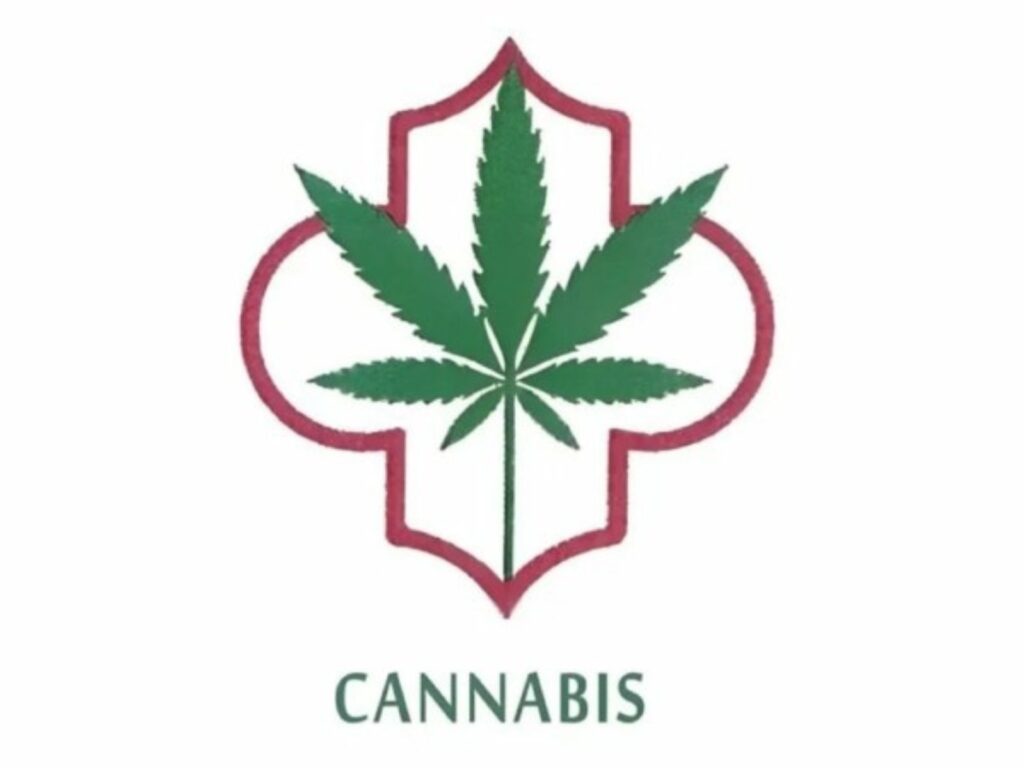
Now, the North African nation has announced that it has adopted an official logo for legal cannabis products created within its borders:

Morocco legal cannabis products logo

Many legal jurisdictions adopt an official symbol for cannabis products for various reasons, not the least of which is to alert people that the product contains cannabinoids. For Morocco, given its long history with the cannabis plant, the logo could eventually become more than just a symbol for legal cannabis products, but rather, a symbol for the nation’s entire emerging legal industry.

According to excerpts from initial reporting by Morocco World News, “The official gazette notice emphasized that the logo should be used as a label on all legalized cannabis products…It further emphasized that if the color used in the logo is not possible, the logo can be used in black and white.

Medical Cannabis To Be ‘Significant’ Part Of Jersey’s Economy According To Deputy

Jersey, the largest of the Channel Islands between England and France, is an island nation and self-governing British Crown Dependency. Jersey’s economy currently revolves around finance center activities, with such activity accounting for nearly 40% of economic activity in Jersey and 70% of the island nation’s tax revenue.

Home to roughly 100,000 people, 66% of the total resident population of Jersey were of working age as of 2021 (women and men aged 16 to 64 years). About a sixth (18%) were above working age and another sixth (16%) were below working age in 2021.

Jersey, like every other country on the planet, can benefit from the economic boost that the emerging legal medical cannabis industry can provide. According to Jersey’s Economic Development Minister medical cannabis will play a key role in the nation’s economy going forward. Per Jersey Evening Post:

JERSEY’s medicinal cannabis industry is still on course to become a “significant” part of the economy – having already generated around £60 million of investment in the Island – the Economic Development Minister has claimed.

Deputy Kirsten Morel said that local growers had contended with high start-up costs and strict regulatory standards, but that his department expected demand for medicinal cannabis to grow as more countries allowed for it to be prescribed.

In 2021, former Economic Development Minister – now Chief Minister – Lyndon Farnham predicted that the industry would start generating “meaningful returns” within five years and that it could become a “mainstay” of Jersey’s economy.

Unfortunately, not everyone is excited about Jersey’s medical cannabis industry. Police Chief Robin Smith is calling for tighter control of the country’s emerging industry, claiming that “entrepreneurial criminals” see the industry as “an opportunity to commit crime.”

“We have one case currently – and we have had others – where we believe that some people are dealing in medicinal cannabis via their prescriptions, or other people’s prescriptions. It is not a huge number but it is inevitable because that’s what happens when criminals get entrepreneurial,” Chief Smith stated according to Jersey Evening Post.

The police chief’s anecdotal evidence is limited at best, and just as many countries around the world are benefitting from a booming medical cannabis industry without any widespread issues, the same will presumably be true in Jersey in the coming years.

Industrial Hemp Bill Is Defeated In Bulgaria

Prior to cannabis prohibition being enacted across the globe, the hemp plant was widely used by many different societies around the world. The hemp plant is arguably the most versatile plant on earth and can be used as an input for everything from textiles to wellness products.

One of the many examples of how the hemp plant can be used is hemp fiber. Humans have used the hemp plant to make fibers for a multitude of purposes for centuries. In fact, archaeologists and historians have confirmed that ancient civilizations in China used hemp fiber to make pottery going as far back as 4,000 BCE.

Many countries around the world have already modernized their policies to permit industrial hemp production and processing, with many more being in the process of making such policy changes. Unfortunately, Bulgaria is not one of them. An industrial hemp processing measure was recently defeated in Bulgaria. Per the Bulgarian News Agency:

In a first-reading procedure on Wednesday, the National Assembly defeated a bill to amend and supplement the Control of Narcotic Substances and Precursors Act moved by MP Rosen Kosturkov of Continue the Change – Democratic Bulgaria (CC-DB). The bill was supported by 49 members of CC-DB. Another 81 MPs voted against, and 31 abstained from voting.

The changes were aimed to provide a possibility to process industrial hemp in Bulgaria in addition to growing the plant. It would make it legal for plants of the hemp family (cannabis), intended for making products without a psychoactive effect, to be processed by permission of the minister of agriculture.

Bulgaria’s Customs Agency helped doom the measure via its opposition, citing a lack of resources to test harvests to see if it has a low enough THC content. A lack of laboratory capacity was specifically cited as part of the agency’s opposition.

From a purely scientific standpoint, hemp is cannabis, which is why many civilizations have often referred to all cannabis as ‘hemp.’ However, in recent years many governments around the globe have created policies and rules that distinguish hemp from non-hemp cannabis, with THC content being the separating criteria.

For instance, currently in the United Kingdom cannabis harvests that contain .2% or lower THC content are considered to be hemp. Above the .2% THC threshold is non-hemp. In the United States, the threshold is .3% THC and many countries around the world permit a 1% THC threshold.

Changes To Industrial Hemp Licensing Coming To The UK

The United Kingdom’s hemp industry is set to undergo some changes, with the UK government recently announcing changes to the industrial hemp licensing process. The changes are being touted as supporting “regulated farmers to grow hemp” and encouraging investment in the UK’s emerging hemp industry.

From a scientific standpoint, hemp is cannabis. However, many governments around the world have created laws that distinguish hemp from non-hemp cannabis, with THC content being the distinguishing feature. In the UK for instance, cannabis harvests that contain .2% or lower THC content is considered to be hemp. Above the .2% THC threshold is non-hemp.

“Under the planned changes, licence holders will be able to grow hemp anywhere on a licensed farm and the maximum period for a licence will be extended from three to six years, subject to compliance with the terms of the licence.” the United Kingdom’s government stated on its website announcing the changes.

The changes will go into effect in 2025, in time for the hemp planting season. The UK government has also asked the Advisory Council on the Misuse of Drugs to advise on whether the threshold for permissible THC levels in industrial hemp could be raised to 0.3%. The United States uses a .3% threshold, whereas many European nations have thresholds as high as 1% THC content.

“This government will always seek to reduce unnecessary regulatory burdens placed on businesses so that they can flourish and grow.” stated Chris Philp, Minister for Crime and Policing about the changes. “The changes outlined today will help farmers and manufacturers in the UK to fully realise the economic potential offered through the safe and legal cultivation of hemp.”

“Industrial hemp has huge potential across the UK to unlock new revenue streams, expand our bioeconomy without permanently removing land from food production, and bring wider environmental benefits.” stated UK Farming Minister Mark Spencer.

“The licensing changes announced today recognise industrial hemp as a field-grown agricultural crop and will enable more farmers to add hemp to their crop rotations, sequester carbon, and sell their harvest to the textile and construction industries.” he also stated.

Non-hemp cannabis is still prohibited in the United Kingdom for recreational use and is currently classified as a Class B controlled drug under Part 2 of Schedule 2 in the Misuse of Drugs Act 1971. Cannabis possession can result in a maximum sentence of up to 5 years imprisonment, a fine, or both in the UK. Illegally distributing cannabis carries a maximum sentence of up to 14 years imprisonment, a fine, or both.

The number of hemp licenses in the United Kingdom has increased from six in 2013 to 136 in 2023. A first-time hemp license in the UK costs £580, and the license is valid for three growing seasons. Growers who apply for subsequent licenses currently pay £326, or less than £109 per year.

The global hemp fiber market revenue alone was estimated to be worth $7.55 billion in 2022 and is anticipated to grow to $73.55 billion by 2030.

Adult-Use Cannabis Commerce Pilot Project Begins In Bern, Switzerland

Back in November 2023, government officials in Bern, Switzerland announced that long-awaited registration was open for adult cannabis consumers who wanted to participate in a regional adult-use cannabis commerce pilot project.

Municipalities in Switzerland are permitted to apply to launch pilot projects under certain conditions in which adult consumers, cultivators, and retail outlets can legally conduct cannabis commerce activities for the purpose of research.

Such projects are already operating in Basel and Zurich with no reported issues. Now adult participants in Bern will also be allowed to participate in the ongoing public policy experiment. Per Swiss Info:

The study is being conducted by the Institute of Primary Health Care at the University of Bern. The cities of Biel/Bienne and Lucerne are also involved. A total of over 1,000 people from the three cities are expected to take part.

Over 900 cannabis users from the Bern region registered and 700 have been included in the study, according to the city of Bern. Of these, 80% are men.

Participants will reportedly be able to make purchases of ten different products as part of the program in Bern. In total, seven trials are underway in Switzerland to some degree, from accepting registrations to being fully operational.

Regional adult-use cannabis commerce pilot projects are also in existence in the Netherlands. Similar to Switzerland, where an estimated 15,000 adults are participating in the trials out of a national population of nearly 9 million people, the cannabis commerce pilots in the Netherlands are fairly small in size and scope.

Germany is also expected to launch regional adult-use cannabis commerce pilot projects, however, the size and scope of Germany’s projects are expected to be much larger comparatively.

60% Of Netherlands Residents Want A Regulated Cannabis Industry

Few places on earth, if any, have as long and as storied of a history with cannabis consumption as the Netherlands. Amsterdam, which was home to the Cannabis Cup international competition for many years, has served as a top international cannabis tourist destination for decades.

Yet, as many parts of the world have successfully modernized their cannabis policies, the Netherlands has lagged behind on such reforms in many ways. Much of the cannabis industry in the Netherlands is still unregulated, with many of the nation’s famed cannabis cafes operating in a legal gray area at best.

According to a recent poll, a strong majority of residents in the Netherlands want to install regulations around the country’s cannabis industry, rather than letting the status quo remain. Per NL Times:

Six in ten Netherlands residents believe that the production, supply, and sale of cannabis and hashish should be legal. It is currently prohibited to grow cannabis, and growers are also not allowed to supply coffee shops, but the government tolerates the sale. Only 11 percent believe this current policy works well and nothing needs to change. That is the conclusion of Kieskompas and ANP based on a survey completed by over 6,000 Dutch people.

In almost all provinces, a majority is in favor of legalization. That group is the largest in Groningen and Flevoland, at around 70 percent. People from Drenthe and Zeeland are the least likely to favor legalization and are also the most likely to think that weed should not be tolerated at all.

Limited regional adult-use cannabis commerce trials are currently in operation in the Netherlands. Such trials permit a limited number of consumers, cultivators, and retailers to conduct cannabis production and purchases. The trials in the Netherlands first launched in December 2023 after a long delay.

For a time earlier this year, it appeared that the trials in the Netherlands would be halted, if not eliminated. However, such proposals have failed to materialize so far. Trials were approved in the Netherlands in Breda, Tilburg, Arnhem, Almere, Groningen, Heerlen, Hellevoetsluis, Maastricht, Nijmegen, and Zaanstad.

 A proposal to expand the cannabis trials to include the Amsterdam-Oost district was recently denied by members of the Netherlands Parliament.

Thailand’s Government Changes Tone About Cannabis Ban

In June 2022, Thailand modernized its cannabis policies to permit adult-use cannabis cultivation and possession in instances involving cannabis varieties that are low in THC. As recently as February of this year, Thailand was expected to go backward on its cannabis policies and re-prohibit all forms of recreational cannabis cultivation and use.

When Thailand reformed its cannabis policies back in 2022, it was a monumental shift for a nation that is located in a region that has long been home to some of the harshest cannabis penalties on earth, including nations that still issue the death penalty for cannabis-only offenses.

At the time of Thailand’s policy shift, the measure was hailed as an amazing achievement for the global cannabis reform movement, with cannabis being removed from Thailand’s list of banned substances.

Thailand’s new approach involved permitting every household in the entire country to sign up to legally cultivate low-THC cannabis plants. There were no plant limits for the government’s cultivation program when it launched, and Thailand’s government even gave away over 1 million cannabis seeds directly to households that signed up.

A broad spectrum of government agencies in Thailand agreed leading up to the implementation to do their part to push Thailand’s emerging cannabis industry forward. Thailand also released thousands of people serving time for cannabis offenses. That all changed in August 2023 when a new prime minister was elected, with the new incumbent vocally opposing cannabis reform.

Members of Thailand’s government have changed their tone about plans for changes to the nation’s cannabis law, although the future result seems to likely be the same. Per excerpts from The Nation:

Public Health Minister Cholnan Srikaew said the government will soon pass a bill that ensures marijuana is used for medical and health purposes only.

Cholnan made this comment on Tuesday to apparently correct Prime Minister Srettha Thavisin, who recently told an online news site that his government will be putting marijuana back on the list of narcotics.

Putting marijuana back on the narcotics list would spark conflicts between coalition leader Pheu Thai and key partner Bhumjaithai.

The rhetoric being thrown around in Thailand is confusing, and largely seems to involve political semantics. If a measure is passed in Thailand that bans recreational cannabis use and limits cannabis to approved medical use only, it will further shut down what was rapidly becoming a thriving industry in Thailand. Only time will tell if/when that proves to be the case.