Author: Johnny Green

Researchers In South Korea Isolate A New Cannabinoid

The cannabis plant contains dozens of cannabinoids, each possessing its own characteristics. Scientists have spent decades isolating cannabinoids and trying to better understand their properties. The first cannabinoid to be isolated, tetrahydrocannabinol, was isolated in the mid-1960s by famed cannabis researcher Dr. Raphael Mechoulam.

A team of health and academic investigators based in the Republic of Korea recently conducted a study involving “a chemical investigation of the flowers of C. sativa.” The team’s findings were published in the academic journal Pharmaceuticals.

“In this study, a chemical investigation of the flowers of C. sativa isolated by using a variety of chromatographic techniques led to the isolation of eleven compounds.” the researchers stated about their methodology. “The compounds were isolated by using chromatographic techniques. Their structures were identified by the examination of spectroscopic methods, including 1D (1H, 13C, and DEPT) and 2D (COSY, HSQC, HMBC, and NOESY) nuclear magnetic resonance (NMR) spectra and mass spectrum, together with the comparison to those reported previously in the literature.”

“Eleven compounds were isolated from the flowers of C. sativa, including two new compounds, namely cannabielsoxa (1), 132-hydroxypheophorbide c ethyl ester (2), and six known cannabinoids (6–11), together with the first isolation of chlorin-type compounds: pyropheophorbide A (3), 132-hydroxypheophorbide b ethyl ester (4), and ligulariaphytin A (5) from this plant.” the researchers stated.

The isolation and identification of the two new compounds are particularly exciting and provide researchers with new elements of the cannabis plant to focus on in future investigations. It will likely be a while before more is known about the new compounds and how their properties may be harnessed to benefit humans.

“The evaluation of the biological activities of compounds showed that compounds 4–10 could be considered as the potential compounds for antitumor effects against neuroblastomas. This is also highlighted by using docking analysis. Additionally, the results of this study also suggest that these compounds have the potential to be developed into antineuroblastoma products.” the researchers concluded.

Cannabis Advocates Demand Further Pardons In Czech Republic

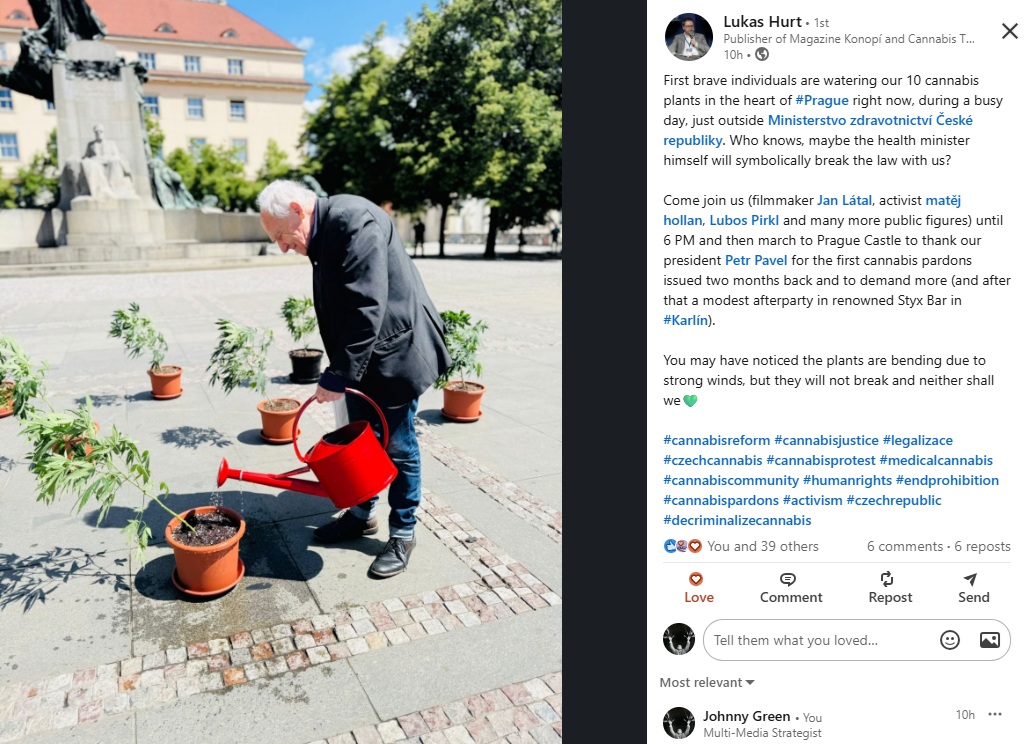
Cannabis advocates staged a peaceful protest today in Prague, Czechia, outside the nation’s Ministry of Health in Palacký Square. The protest, which involved publicly displaying ten cannabis plants as seen in the featured image of this article and the social media post below, was followed by a march.

Longtime Czech cannabis activist Lukas Hurt posted the image and description of the advocacy action on his LinkedIn page:

Lukas Hurt LinkedIn post May 15 2025

“If you can, please join us tomorrow afternoon in the heart of Prague, where my former high school classmate Jan Látal and my colleague from citizen initiative Rodiny proti prohibici (Family Against Prohibition), matěj hollan, and myself are organizing #Konopný #czeXperiment. Join us in a simple act of solidarity: water our 10 cannabis plants in the middle of busy Palacký Square to express support for cannabis prisoners.” Mr. Hurt wrote on his LinkedIn page the day before in a separate post.

“The symbolic watering of our beautiful plants right in the center of Czech capital begins at 5:00 p.m., followed by a peaceful walk to Prague Castle around 6:00 p.m. There, we will thank President Petr Pavel for the first pardons granted to three “cannabis granddads” and symbolically call on the Poslanecká sněmovna Parlamentu ČR to quickly adopt the criminal code reform, which is now going into the 3rd, final reading and which includes crucial changes in cannabis repression.” the Czech cannabis activist also wrote.

Cannabis advocates holding a banner in front of the St. Vitus Cathedral in Prague Czechia

(photo credit: Zuzana Kratochvilova)

In March 2025, Czech President Petr Pavel issued pardons to three men who were imprisoned for cultivating cannabis. All three men who received pardons from President Pavel were over the age of 70 and had initially received prison sentences ranging from 3-4 years before eventually receiving their pardons.

In recent years, a major push has been underway in the Czech Republic to modernize the nation’s cannabis policies to permit cannabis use and other activities by adults. Currently, cannabis is legal for adult use at a national level in Uruguay, Canada, Malta, Luxembourg, Germany, and South Africa.

Starting on April 1st, 2025, all GPs in the Czech Republic can prescribe medical cannabis for chronic pain. certain specialist doctors could do so (oncologists, neurologists, algeziologists). Doctors in the Czech Republic prescribed 318.7 kilograms of medicinal cannabis in 2024 to an average of roughly 3,300 patients per month.

Additionally, starting in July of this year, the Czech Republic wants to regulate sales of cannabis products containing up to one percent THC, but the gouvernement is still waiting for the EU’s opinion and the nation’s traditional hemp sector is in strong opposition to this change because there is a widespread fear of licences fees, ban on advertisement, and other strict limitations designed originally for psychoactive substances such as kratom or HHC, not low-THC hemp products.

A team of researchers affiliated with Charles University in the Czech Republic and the University of New South Wales in Australia recently collaborated on a study that examined the potential ‘social benefit’ effects of adult-use cannabis legalization in Czechia.

“Cannabis is the most commonly used illicit drug worldwide. In countries with repressive drug policies, the costs of its prohibition plausibly outweigh the benefits.” the researchers stated in their study, the findings of which were published in the Journal of Cost-Benefit Analysis.

“We conduct a cost–benefit analysis of cannabis legalization and regulation in the Czech Republic, taking into consideration alternative scenarios designed using parameters from the known effects of cannabis legalization in selected U.S. states, Canada, and Uruguay. Our analysis focuses on tax revenues, law enforcement costs, the cost of treatment and harm reduction, and the value of Quality Adjusted Life Years (QALYs).” the team of international researchers stated about their Czech-focused study’s methodology.

“Under all the projected scenarios, the identified benefits of legalizing cannabis for personal use exceed the potential costs. The estimated net social benefit of legalization is in the range of 34.4 to 107.6 million EUR per year (or between 3.2 and 10.1 EUR per capita), depending on the size of the cannabis market and the development of cannabis prices after legalization.” the researchers concluded.

The World Continues To Learn From Canada’s Modernized Cannabis Industry

When Canada became the second country to adopt a national adult-use cannabis legalization measure in 2018, it was a historic moment for both Canada and the larger international cannabis industry. Uruguay may have legalized recreational cannabis before Canada; however, Canadian legalization has proven to be more significant in many ways.

Whereas Uruguay limits legal adult-use cannabis sales to residents through limited commerce channels, Canada’s recreational commerce model permits sales to anyone of legal age via a multitude of purchasing options. Canada remains the top jurisdiction for cannabis industry and policy research, years after modernized adult-use policies were implemented.

Canada’s emerging legal cannabis industry goes well beyond the nation’s borders, with Canada serving as a major source for cannabis exports to other legal markets around the globe. As the international cannabis industry continues to transition from a patchwork of largely siloed markets to a more harmonized global industry, Canada’s legal market is more important than ever.

Every large national and international industry is built on partnerships and relationships, and lucrative collaborations require effective networking. Additionally, entrepreneurs, investors, policymakers, regulators, and industry service providers have to remain in a constant state of learning and evolving. After all, the cannabis industry and policy landscape are constantly shifting, and people and entities must always stay ahead of the curve if they want to succeed.

With that in mind, two timely events are coming up at the end of this month that everyone serious about the cannabis industry should consider attending. The first is the CannaVision Global Executive Summit taking place on May 26th, 2025, at the Pearson Conference Center in Ontario.

CannaVision is an exclusive event designed for leaders and decision-makers in the cannabis space to engage in high-level discussions, to network, and to collaborate with other executives, entrepreneurs, investors, and experts in the industry. Attendees will have the opportunity to participate in strategic talks, panel discussions, and case studies addressing the latest trends, regulations, market developments, and investment opportunities in the global cannabis market.

Following the CannaVision Global Executive Summit will be the iconic Grow Up Industry Gala Awards, which is also taking place on May 26th, 2025. The Awards Gala, which is now in its 6th year, is one of the most anticipated events on the annual international cannabis industry calendar, where industry pioneers, innovators, and trailblazers gather to celebrate the year’s achievements and the people who made them possible.

The two-day Grow Up Conference and Expo, Canada’s largest and premier cannabis event, will be held on May 27th and 28th, 2025. The event is in its 11th year, and this year’s installment will be bigger and better than ever. With so much going on in Canada’s industry and the wider international cannabis industry, the two-day Grow Up Conference and Expo is a must-attend for anyone wanting to gain a meaningful spot in the most exciting industry on the planet.

A wide range of important topics will be discussed via the event’s numerous presentations, all of which will be led by some of the true experts in the cannabis space. You can see a list of the event’s speakers and schedule at this link here.

The Grow Up Conference is a privately owned Canadian company since 2017, focusing on cultivation, brands, and retail. Event attendees will be surrounded by industry professionals to network with and explore potential collaborations. A limited number of tickets, exhibitor spots, and sponsorship opportunities are still available. Lock in your spot now before it is too late. You can find out more at: growupconference.com.

grow up toronto 2025

South African Province To Prioritize Cannabis Industry Job Creation

South Africa’s government released updated employment data yesterday, with the official unemployment rate increasing by 1.0 percentage point from 31.9% in the fourth quarter of 2024 to 32.9% in the first quarter of 2025.

In response to the high unemployment rate, a province in South Africa is launching an initiative seeking to create new jobs in the nation’s emerging legal cannabis industry. South Africa legalized cannabis last year for adult use in private settings. Medical cannabis use was already legal in South Africa before the legalization of recreational cannabis.

“With grim employment statistics released yesterday, a new cannabis initiative in KwaZulu-Natal aims to unlock job opportunities, especially in rural parts of the province.” reported IOL in its local coverage. “The Department of Economic Development, Tourism and Environmental Affairs (Edtea) has recently detailed its plans for the sector, including a partnership aimed at piloting a Shared Cannabis Processing Facility.”

According to Edtea’s website, “The KwaZulu-Natal Department of Economic Development and Environmental Affairs is mandated to oversee the socio-economic transformation in the province.”

“This project is critical, with at least one municipality, the Okhahlamba (Bergville) Municipality, hinging its hopes on it to address unemployment and boost the municipality’s budget. The central focus of the project is processing cannabis into various products.” IOL also reported.

South Africa is on a short list of countries that have adopted national adult-use cannabis legalization measures, along with Uruguay, Canada, Malta, Luxembourg, and Germany. Back in March of this year, the Department of Health in South Africa announced a complete ban on cannabis and hemp-derived ‘foodstuffs.’

The announcement was met with considerable outcry from the public and members of South Africa’s emerging legal cannabis industry, resulting in the ban being rescinded. Earlier this month, South Africa’s Health Minister Aaron Motsoaledi announced that the government department he oversees will publish draft regulations for the sale of cannabis-infused foods soon.

“The initial ban faced significant criticism from experts and industry leaders, particularly for prohibiting cannabis derivatives like hemp, which were not illegal.” reported Business Insider Africa in its local coverage. “Following intervention from President Cyril Ramaphosa, the controversial regulations which have been condemned for lacking public consultation, were ultimately rescinded.”

At the recent International Cannabis Business Conference in Berlin, Germany, leading international cannabis economist Beau Whitney, founder of Whitney Economics, presented data in which he estimated the potential global medical and adult-use cannabis market to be worth roughly $237.8 billion. Only time will tell how much of that market potential South Africa will be able to tap into.

Study Finds Hemp Is An Eco-Friendly Alternative For Dye Removal

The textile industry often uses toxic chemicals to prepare fabric, especially in fabric dyeing and finishing processes. Industrial dyes, which can create environmental issues, are commonly used because of their intense coloration properties and durability.

A team of researchers affiliated with the University of Banja Luka, the University of Belgrade, and the University of Niš recently collaborated on a study examining if hemp could be used as an effective, eco-friendly alternative for dye removal as a biosorbent for removing Congo Red (CR) and Remazol Brilliant Blue R (RBBR) from wastewater. The study’s findings were published in the academic journal Coatings.

“Due to their toxicity and resistance to degradation, synthetic dyes pose significant environmental challenges, impairing the esthetic quality of aquatic ecosystems, reducing light penetration, inhibiting photosynthesis in algae and plants, and entering the food chain, potentially causing toxicity, mutagenicity, and carcinogenicity.” the researchers pointed out.

“Batch tests were performed in aqueous solutions of CR and RBBR (50–750 mg/L) at an unadjusted pH of 5 under static conditions with magnetic stirring (300 rpm). All experiments were conducted in triplicate, and the results were statistically processed, with the standard error of the mean (SEM) calculated using Microsoft Excel.” the researchers stated about their methodology.

“Unmodified industrial hemp demonstrates moderate but practically relevant adsorption capacities for Congo Red (Qmax = 4.47 mg/g) and Remazol Brilliant Blue R (Qmax = 2.44 mg/g). While these values are lower than specialized adsorbents, hemp offers compelling sustainable advantages as a renewable agricultural byproduct. Compared to other farm residues, raw hemp offers superior structural integrity and stability in aqueous systems, along with native -OH/-COOH functional groups enabling chemical-free dye binding. Versus processed adsorbents, it provides significant cost and energy savings and lower CO2 emissions due to eliminated activation requirements.” the study’s authors wrote.

“This molecular-level understanding highlights the critical roles of cellulose’s hydroxyl groups and lignin’s aromatic domains in enabling distinct binding modes. Such insights pave the way for the targeted optimization of biosorbents for specific pollutant classes, advancing the development of cost-effective and sustainable water treatment solutions.” the researchers concluded.

During a recent presentation at the International Cannabis Business Conference in Berlin by leading international cannabis industry economist, Beau Whitney, founder of Whitney Economics, provided data demonstrating that the value of the global industrial hemp industry could be $456.2 billion.

Hemp being increasingly used for bioremediation and other sustainability practices would further bolster the international hemp market’s potential, including the use of hemp as a biosorbent for removing toxic dye chemicals from wastewater.

Did Cannabis Usage Rates Spike In Uruguay And Canada Post-Legalization?

A common prediction made by cannabis opponents when cannabis policy modernization proposals are being considered is that cannabis consumption rates, particularly cannabis misuse rates, will dramatically increase. Cannabis opponents have made that claim for decades, often going unchallenged.

This scenario is no longer hypothetical, with multiple countries having adopted adult-use cannabis legalization measures. Consumption data generated from those jurisdictions can be examined and analyzed, providing insight into what actually happens when countries adopt modernized recreational cannabis policies.

Uruguay was the first country to ever adopt a national adult-use legalization measure involving cannabis that contains high THC levels. Low-THC production and use (industrial hemp) were permitted in various jurisdictions before Uruguay legalized recreational cannabis in 2013. However, Uruguay was the first nation to legalize high-THC production, possession, and use by adults for recreational purposes.

Over a decade after Uruguay implemented legalization, below is what we know about consumption rates in the South American country via an insightful article by reporter Javier Hasse for Forbes. The data is derived from a presentation by Mercedes Ponce de León, director of Expo Cannabis Uruguay, at the C-Days 2025 conference in Barcelona.:

  • ‘Problematic use’ has remained steady at 2.1% since 2011
  • Overall consumption rates fell from 14.6% in 2018 to 12.3% in 2024
  • The average age of initial cannabis use rose from 18 to 20 years

Uruguay’s legalization model involves permitting adults to legally access regulated recreational cannabis through one of three channels. The first is through the nation’s pharmacies, 40 of which sell adult-use cannabis products containing very specific ratios of THC and CBD. A reported 75,498 consumers are registered to make recreational cannabis purchases from Uruguay’s pharmacies.

The second is through the nation’s licensed member-based cultivation associations, of which there are currently 460 that are active. A reported 15,162 consumers are members of a licensed cultivation association. Lastly, adult consumers can cultivate their own cannabis in their private residences, up to six plants. A reported 11,465 consumers have registered to cultivate cannabis at home.

Canada’s legalization model permits a more robust commerce system, including permitting recreational cannabis sales to non-residents. Uruguay limits recreational cannabis sales to residents of the South American nation only. Canada first implemented its legalization model in 2018.

A team of academic and health researchers based in Canada recently examined reported cannabis consumption data, intending to determine whether cannabis use or misuse changed “among adults in the 5 years following recreational cannabis legalization in Canada.” The researchers’ findings were published in the academic journal Substance Use and Addiction.

“This prospective cohort study included data from community-dwelling adults who participated in up to 11 biannual assessments from September 2018 to October 2023 in Ontario, Canada. Data were analyzed from November 2023 to January 2024.” the researchers stated about their methodology.

“In this prospective cohort study of community-dwelling adults in Canada, cannabis use frequency increased modestly in the 5 years following legalization, while cannabis misuse decreased modestly.” the researchers concluded. “These changes were substantially moderated by prelegalization cannabis use, with more frequent consumers of cannabis before legalization exhibiting the largest decreases in both outcomes.”

Data from both Uruguay and Canada demonstrate that national adult-use cannabis legalization does not automatically result in a massive spike in consumption rates, problematic or otherwise, debunking claims made by cannabis opponents. The same is true for localized adult-use cannabis commerce reform, as demonstrated by the results of research conducted in Switzerland, where regional adult-use cannabis commerce pilot trials are operating.

An interdisciplinary research team affiliated with the Addiction Department of the Department of Health of the Canton of Basel-Stadt, the University of Basel, the University Psychiatric Clinics Basel (UPK), and Psychiatric Services Aargau recently published results from a study that relied on data from the Weed Care pilot trial project in Switzerland.

The study’s findings, which are the first academic reporting of its kind, were published on the University of Basel’s website in addition to being published in the academic journal Addiction.

“We measured the effects of public health-oriented cannabis access compared with the illegal market on cannabis use and related mental health outcomes in adult cannabis users.” the researchers stated about their study. “This was a two-arm, parallel group, open-label, randomized controlled trial. Follow-up outcome measurement took place after 6 months.”

“The primary outcome was self-reported severity of cannabis misuse after 6 months, as measured by the Cannabis Use Disorders Identification Test – Revised (range 0–32). Secondary outcomes involved depressive, anxiety, and psychotic symptoms, cannabis consumption amount, alcohol, and drug use.” the researchers wrote regarding their investigation’s measurements.

“Public health-oriented recreational cannabis access may decrease cannabis use and cannabis-related harms, especially among those using other drugs.” the researchers concluded.

“Furthermore, the study was able to dispel fears that legalization could exacerbate the psychopathological symptoms associated with cannabis consumption in addition to consumption itself: after the first six months, there was no difference between the two study groups in terms of depression, anxiety or other symptoms.” stated the University of Basel on its website.

“The interim assessment after two years of study shows a significant improvement in the mental state of the approximately 300 or so participants who are still taking part.” the University also wrote.

Earlier this year, Marijuana Moment reported that a government-commissioned report found that  Switzerland’s adult-use cannabis legalization pilot program is “running smoothly,” with “no indication of any disturbances to public order.”

“About two years after the pilot program launched in seven municipalities across the country, the Federal Office of Public Health (FOPH) study—carried out by the University of Lausanne and the University of Applied Sciences Northwestern Switzerland—generally determined that the initiative has been a success.” the outlet also reported.

Previously published government data from the United States found that in jurisdictions where adult-use cannabis legalization was adopted, consumption rates among minors had reduced post-legalization compared to pre-legalization.

World’s First President To Legalize Recreational Cannabis Passes Away

National-level recreational cannabis reform has occurred in six countries so far, and hopefully, more will be on the way soon. However, one country will always hold the distinction of being the first to make the public policy change. That country is, of course, Uruguay, and its president at the time will forever be known as the first president to ever legalize recreational cannabis.

Unfortunately, that iconic figure in cannabis history, the former President of Uruguay, José “Pepe” Mujica, has passed away. Mr. Mujica died today at the age of 89.

Global cannabis prohibition spread across the world in the first half of the 1900s, and cannabis remained prohibited at the national level in every country for decades until Uruguay made history in 2013 by approving the first-ever national recreational cannabis legalization law. It was a historic milestone not only for Uruguay but also for the global cannabis movement, and President Mujica made it possible by having the courage to sign off on the measure.

Leading up to legalization in Uruguay, then President Mujica was very vocal and personally championed the issue, telling the mainstream media that cannabis was not a gateway drug when reporters tried to promote that talking point in interviews with him.

“It’s actually the opposite,” President Mujica said in August 2013, roughly 4 months before he signed the legalization measure. “People seek crack and other more dangerous poisons when they have no access to marijuana.”

These days, modernizing national policies to permit recreational cannabis commerce to boost public health outcomes and combat the unregulated market is more common. But prior to Uruguay legalizing cannabis, José Mujica was seemingly the only global leader to be making that argument.

In an interview with CNN host Andres Oppenheimer at the time, Mujica pushed back on a snarky question from the reporter who implied that 30 grams of cannabis was ‘too much’ for one person for a one-month supply.

“It’s 30 grams,” Mujica clarified. “And the advantage [of Uruguay’s legalization policy] is that we can identify who is consuming. If we identify consumers, we can help them. If we criminalize them and keep them underground, we steer them towards drug dealers and wash our hands of responsibility.”

While he was vocal in his push to modernize Uruguay’s national cannabis laws, José Mujica ultimately signed the historic measure with little fanfare. In the world of politics, making history is a golden opportunity to pander to anyone who will listen. Any other leader would have made it all about themselves.

But that wasn’t Mujica’s style. Instead, he quietly signed the measure into law and largely let the world find out about it from other sources and lawmakers. His humility was only rivaled by his courage. Mujica is an inspiration for the global cannabis movement, and he will be missed. Reporter Javier Hasse likely captured it best in his article for Benzinga.

“As the world continues to move toward legalization and regulation, Mujica’s legacy stands as a reminder that real change comes from courage and from putting people first.” Hasse wrote. Javier also wrote a separate piece for Forbes, which contains data highlighting how successful Uruguay’s legalization model has proven to be over the years. It is an insightful article, and I encourage everyone to read it.

Rest in peace, President Mujica. You will remain a hero to many, and your legacy will endure forever.

How Many Legal Medical Cannabis Patients Does Germany Have?

A common question related to Germany’s emerging legal cannabis industry that I see asked online, and hear in person, relates to how many medical cannabis patients the nation’s market serves. The answer to the question ‘how many German medical cannabis patients are there?’ is not as straightforward as some may think due to how the nation’s medical cannabis industry operates.

Medical cannabis is dispensed by German pharmacies, and patients have the option to self-pay or to be reimbursed by insurance companies. Reimbursements are easier to track because of the paper trail that such transactions create. Self-pay transactions are trickier. However, a recent newsletter by leading international cannabis economist Beau Whitney, founder of Whitney Economics, provides some reliable data.

In Beau Whitney’s newsletter, Whitney Wire, he describes how Germany has traditionally had a strong legal medical cannabis market. Even before the adoption of the nation’s CanG law in April 2024, which removed cannabis from Germany’s Narcotics List, Germany was already home to the largest legal medical cannabis market in Europe.

But after the CanG law’s adoption, safe access greatly improved for German medical cannabis patients, and thanks in large part to the rise of medical cannabis telemedicine, Germany’s legal patient base has increased exponentially.

“There has been a consistent number of between 200k – 300k medical patients.” Beau Whitney writes. “As a result of this new innovation, there is now an additional 500k – 600k self-paying consumers participating in the legal market.”

“When combined with 100k cultivation association members, there is approximately 800k legal consumers in the German market right now. For perspective, 800k consumers represents between 10% and 20% of the total market, while the supply and capacity at the end of 2024 represented nearly 15% of all of the supply that the market needs.” Whitney stated.

According to the most recent data published on BCAv’s website, 215 cultivation association applications have been approved so far, out of 626 submitted applications. It is worth noting that not all of the approved cultivation associations are fully operational right now. Presumably, some are in the early stages of launching after receiving approval.

In addition to medical cannabis patients making legal purchases through German pharmacies and/or joining member-based cultivation associations, many adult cannabis consumers in Germany are cultivating their own cannabis in their private residences. Starting on April 1st, 2024, adults in Germany can cultivate up to three plants in their private residences.

The results of a new scientific study, led by Dr. Mira Lehberger and Prof. Dr. Kai Sparke from the Department of Horticultural Economics at Geisenheim University, provide insight into how popular home cultivation is in Germany post-legalization.

The scientific study involved a survey, conducted in December 2024, of 1,500 adults. Study participants were selected from “an existing panel to ensure representation of all age groups and regions of origin (both federal states and urban/rural)” according to initial reporting by Deutscher Hanfverband (DHV), and subjects were divided ‘roughly equally’ between men and women.

Below are key findings from the study:

  • 47% of survey respondents expressed support for legal home cultivation
  • 46.3% indicated agreement with the statement “The legalization of private cannabis cultivation reduces illegal activities in Germany.”
  • 44% of participants see legal home cultivation as ‘an opportunity for better quality control’
  • 41.1% see legal home cultivation as ‘an opportunity for greater sustainability’
  • One in ten participants indicated that they had already legally cultivated cannabis post-legalization
  • 11% of participants who had not cultivated cannabis ‘could imagine’ doing so in the future
  • A majority of participants who stated they had cultivated legal cannabis were male (58.5%)

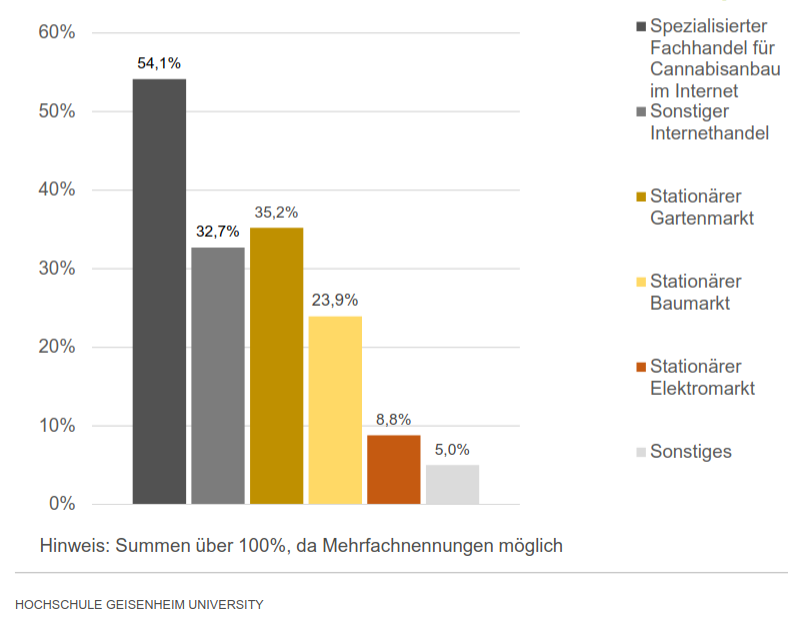
“Growing supplies and seeds were purchased both online and in-store, but specialized online retailers were used most frequently.” stated DHV in its local reporting.

German growing supplies and seeds purchase data

According to DHV’s coverage of the study’s findings, “The median cultivation costs were €30 per plant and €1 per gram of cannabis, which are significantly lower than the prices of cannabis on the black market or medical cannabis in pharmacies.”

A previous YouGov poll in Germany found that 7% of poll participants had already purchased cannabis seeds or cuttings/clones at the time of the polling (May 2024). In addition to the 7% of poll participants indicating that they had already purchased cannabis genetics for their home gardens, another 11% of poll participants responded that they planned to purchase cannabis genetics in the future.

To further economist Beau Whitney’s point mentioned earlier in this article, most of Germany’s cannabis consumer base still relies on the unregulated market. According to data published by Statistisches Bundesamt, Germany’s total population was 84,669,326 at the end of 2023 (the most recent data available). Of that, an estimated 83.1% of the population was of legal cannabis age (18+), or roughly 70.36 million people.

Now, take into consideration data from Germany’s Epidemiological Addiction Survey, which found that roughly 8.8% of Germany’s population reported consuming cannabis at least once within the last year. Applying that percentage to the number of adults in Germany, the total potential legal cannabis consumer base in Germany is nearly 6.2 million people, and that is likely a low-end estimate because presumably some amount of consumers refrained from admitting to the government that they are cannabis consumers out of fear of persecution.

The math is clear – Germany’s legal cannabis market is just scraping the surface from the perspective of gaining potential market share. Until EU agreements are modernized to allow Germany to implement a robust legal commerce model like in Canada, and equally important, domestic German lawmakers adopt such a model when allowed to, the unregulated market will continue to thrive in Germany.

One of the professed goals of German legalization is to sufficiently combat the unregulated market to boost public health outcomes. As demonstrated by a recent data analysis from Canada’s market, consumers and patients will transition to a regulated market when given consistent options to do so, assuming the market provides the types of products that they want.

However, as long as legal purchasing options and product types remain limited in Germany, the European nation will continue to fail at achieving its stated cannabis public policy goals.

Malta’s Parliament Approves Changes To Adult-Use Cannabis Laws

Malta became the first country in Europe to adopt a national adult-use cannabis legalization measure back in 2021. The only countries to approve national recreational cannabis legalization before Malta were Uruguay in 2013 and Canada in 2018.

Roughly four years after Malta implemented its legalization model, the nation’s lawmakers unanimously approved changes to the country’s cannabis laws. Part of the changes clarified the definition of cannabis and put stricter regulations on cannabis associations.

“The bill includes new rules which would require a minimum distance of 250 metres from schools, sports facilities, and youth centres. Any association found allowing minors on site could face a fine of up to €10,000.” reported Malta Independent in its local coverage.

“It also clarifies the definition of what counts as cannabis under Maltese law, with the clearer legal definition including both THC and CBD, and non-psychoactive cannabinoids with less than 0.2% THC will be excluded.” the outlet also stated.

The Malta Authority for the Responsible Use of Cannabis (ARUC) recently introduced an amendment to its regulatory framework to allow Cannabis Harm Reduction Associations, sometimes referred to as cultivation associations, to produce and distribute cannabis concentrates. Concentrates are restricted to solventless extraction methods only.

“This measure addresses a critical gap in the current framework. Until now, individuals who preferred resin had no legal avenue to access it, often turning to unsafe, unregulated sources. By extending legal access to resin, ARUC is supporting informed, responsible use while strengthening the harm reduction aspect of the reform.” ARUC stated on its website in a news release.

“To prevent unintended increases in consumption, ARUC has established clear equivalency rules. One gram of resin will be considered the equivalent of three grams of dried flowers, due to its typically higher potency.” ARUC also stated. “The existing personal possession and distribution limits -7 grams per day and 50 grams per month – will remain in force and will now apply to the combined total of dried flower and resin equivalents.”

Currently, 19 Cannabis Harm Reduction Associations have obtained an operating permit. Although it is worth noting that not all of those are dispensing cannabis to members right now, with some still being in the early stages of operation.