Author: Johnny Green

Analysis Finds Legal Canadian Cannabis Has Largely Displaced Unregulated Market

A major goal of every jurisdiction that has modernized its cannabis policies to permit adult-use cannabis activity is to help combat the unregulated market, including in Canada, where lawmakers adopted a national recreational cannabis legalization measure in 2018.

Since 2018, Canada has served as the largest legal national adult-use cannabis market and remains the only country on earth where anyone of legal age can make purchases of recreational cannabis products, regardless of their residential status. Uruguay, which adopted national legalization in 2013, still restricts legal adult-use cannabis sales to residents only.

A team of investigators affiliated with academic and research institutions based in Canada, the United States, and the United Kingdom recently analyzed data from Canada’s legal cannabis market and determined that Canadian legalization has resulted in the legal industry largely displacing the nation’s unregulated market.

The researchers’ findings were published in the academic publication International Journal of Drug Policy.

“The current analysis used ‘demand-side’ methods to estimate the size of the Canadian cannabis market using data from two sources.” the researchers stated about their study’s methodology. “First, data from the Canadian Community Health Survey were used to estimate the number of Canadians who use cannabis.”

“Second, data on cannabis expenditures from legal versus illegal sources were analyzed from 5656 past 12-month consumers aged 16–100 who completed national surveys conducted in 2022 as part of the International Cannabis Policy Study.” the researchers also stated.

In a regulated cannabis commerce system, cannabis producers, product manufacturers, and retailers must adhere to certain standards, including stringent testing, which ensures that consumables are fit for human use. The same is not true of the unregulated cannabis market, which creates potential public health outcome issues when patients and consumers make their purchases through unregulated sources.

Additionally, unregulated cannabis sales do not generate revenue for public coffers, and profits from such sales often support organized criminal enterprises, which further adds to the potential for public issues that can affect all members of society. With that in mind, the more market share that a legal, regulated cannabis commerce system can gain, the more it benefits all members of the jurisdiction’s society.

“In the 12-month period ending in September 2022, total cannabis expenditures in Canada were estimated at $6.72 billion dollars, including $5.23 billion from legal sources and $1.49 billion from illegal sources for an estimated legal market capture of 78 %.” the researchers stated about the legal Canadian market’s share of the nation’s cannabis purchases.

“In 2022, dried flower accounted for 55 % of total legal expenditures and an additional 2 % was spent on plants and seeds. Concentrates accounted for 12 % of legal expenditures, followed by oral liquids (11 %), vaping liquids (10 %), and edibles (8 %, excluding drinks).” the researchers also stated.

“The findings provide evidence of substantial transition in expenditures from the illegal to the legal market in the five years since legalization of non-medical cannabis in Canada.” the researchers concluded.

Findings from this data analysis provide valuable insight for lawmakers and regulators in other jurisdictions who desire to effectively combat the unregulated market in their areas, including in European jurisdictions where national adult-use commerce models like Canada’s remain prohibited due to current European Union agreements.

Armenia’s Parliament Speaker Says Cannabis Should Be Legalized

Alen Roberti Simonyan has been President of the National Assembly of Armenia since August 2021. During his recent participation in the Deep TALKS program, Mr. Simonyan expressed support for modernizing Armenia’s cannabis laws.

“Today the world is unable to fight marijuana, and that is why it is on the path of legalization to take it under control,” Alen Roberti Simonyan stated, according to original reporting by News.am.

“He explained that he does not initiate the legalization process, as he “knows that he will not be able to convince people.”” the outlet also reported. Currently, cannabis is prohibited in Armenia. Individuals caught with cannabis face stiff penalties.

According to the European Union Drugs Agency’s database listing for drug laws and penalties in Armenia, “Using drugs without a doctor’s prescription may be punished by an administrative fine of 100-200 times the minimum wage.” Certain cannabis offenses in Armenia can also result in potential prison sentences.

Cannabis is currently legal for adult use at a national level in Uruguay, Canada, Malta, Luxembourg, Germany, and South Africa. Recreational cannabis is also legal for adults in two dozen states in the U.S., and regional adult-use cannabis commerce pilot trials are operating in the Netherlands and Switzerland. Court decisions in multiple other countries afford some level of legal protection to adult cannabis consumers.

Dozens of countries around the world have adopted varying forms of medical cannabis legalization, ranging from cannabidiol-only medical cannabis models to fully legalized medical cannabis programs. Most countries around the globe permit industrial hemp.

Australia’s Legal Cannabis Growers Urge Support Of Nation’s Producers

Australia’s legal cannabis farmers are banding together and warning the nation’s government of looming “catastrophic failures” and a “bleak reality” for the emerging Australian medicinal cannabis industry. The Australian Cannabis Cultivators Guild, which represents a reported 80% of the nation’s legal medical cannabis producers, is urging Australian lawmakers to reform the nation’s regulations.

The newly formed organization is demanding that the Australian government prioritize domestic producers, stating that Australia’s legal medical cannabis cultivators are at a disadvantage and unable to compete with cheaper imported medical cannabis products due to a rigorous and expensive licensing process.

“Without change, we expect to see catastrophic failures across local cultivators, resulting in bankruptcies which will impact Australian supply in the long term,” the guild wrote, according to local coverage by ABC.

According to a Guild member named Cade Turland, the director at Hale Farm in Tasmania, as reported by ABC, “Australian farmers pay about $50,000 annually to maintain their medicinal cannabis licences, including costs like random and routine inspections, which were between $4,800 and $12,800.”

The Therapeutic Goods Administration, which oversees Australia’s medical cannabis industry, has no fees for a licence or permit to import medicinal cannabis, according to ABC‘s local reporting. Over 61% of medical cannabis products in Australia were imported in 2023.

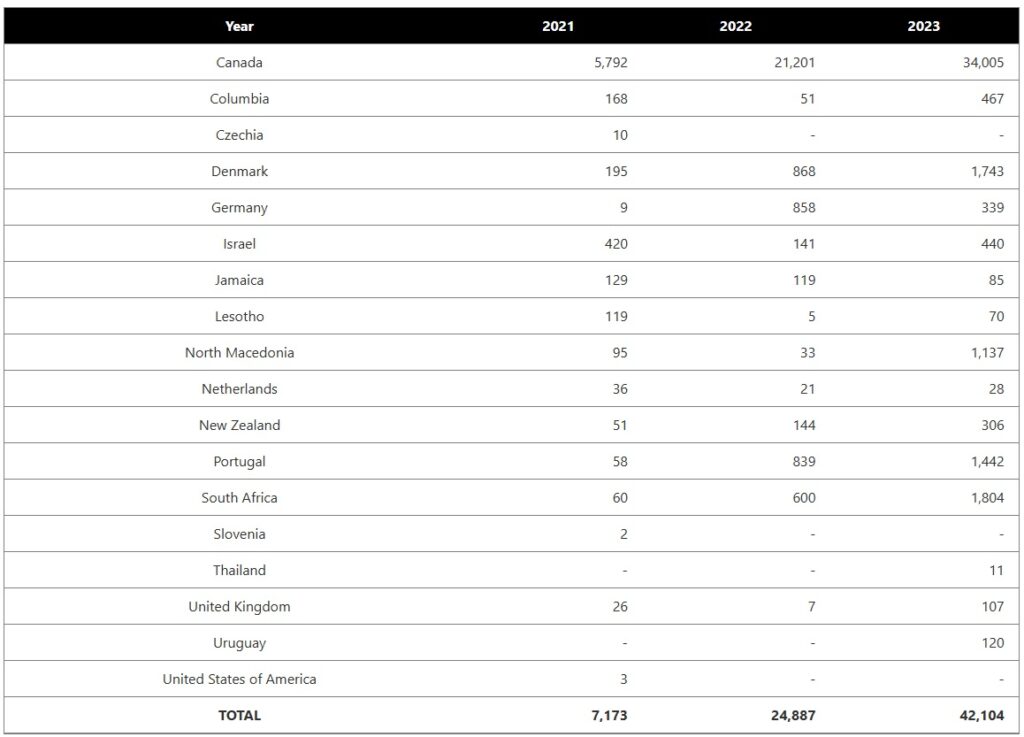
Data from Australia’s government listed Canada as the top source for medical cannabis product imports between 2021 and 2023, with Australia importing 34,005 kilograms of medical cannabis from Canada in 2023. The next closest nation was South Africa at 1,804 kilograms.

Below is a table containing historical Australian government medical cannabis import data broken down by year and originating country:

Australia Cannabis Import Data

By comparison, Australia’s legal medical cannabis producers only exported 1,426 kilograms in 2021, 1,510 kilograms in 2022, and 2,066 kilograms in 2023. In 2023, the most recent year for which government data is available, Australia’s domestic medical cannabis growers produced a total of 26,593 kilograms.

A recent rise in imports from Thailand is further exacerbating the market imbalance, according to Cade Turland of Hale Farm.

“The reality is, the Canadian market is buffered from the global markets because you don’t allow imports,” stated Turland, according to initial reporting by StratCann. “We are the dumping ground of the entire world. We have products here from countries where our wages are ten times higher. We can’t compete with Thailand because their general labour costs are much lower.”

“We’ve definitely come a long way quality-wise, but in the beginning, the reality is we would not have been able to serve Australian patients without Canadian imports. However, it doesn’t take away from the fact that we’re not dealing with a level playing field because of that import ruling on the Canadian side. Australia hasn’t had that luxury.” Turland continued. “But the issues we’re seeing now with countries like Thailand flooding the market, that’s the real concern for us. We’re fine with Canada because it’s been there all along, and you guys ask a fair price for a fair product, but this increased pressure from Thailand’s market is doubling down on how difficult it is to survive here in Australia.”

Industrial Hemp’s Market Potential Is Nearly Double Consumable Cannabis’ Potential

One of the most insightful moments for me at the recent International Cannabis Business Conference in Berlin occurred during leading international cannabis economist Beau Whitney’s presentation. Mr. Whitney, founder of Whitney Economics, provided a keynote address at the event in which he examined a multitude of important industry data points.

As part of his presentation, Beau Whitney compared the market potential of industrial hemp to the market potential for the medical and adult-use cannabis consumables sectors. Industrial hemp has historically been, and continues to be, an important source of material for several large industries.

Whitney listed several major industries that currently rely on industrial hemp as a source material, or that may in the future, including the automotive industry, textiles, building materials, batteries, shopping bags, cutlery equipment, health supplements, skin care, energy drinks, and animal feed.

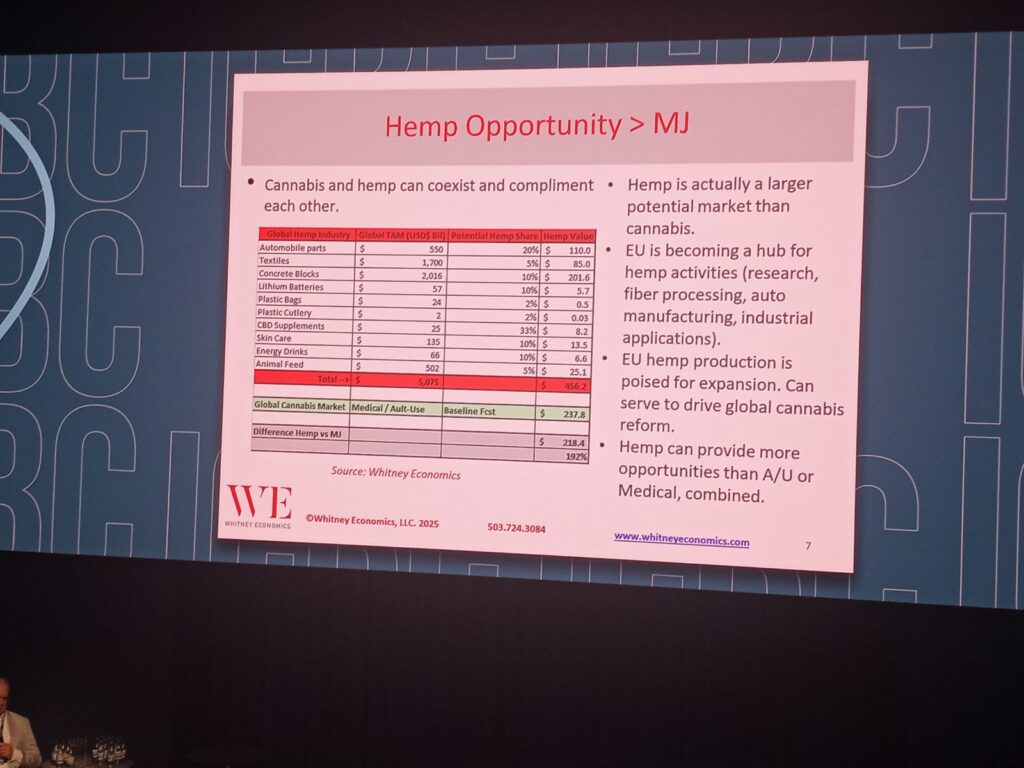
Industrial hemp can also be used for many other purposes, including such things as bioremediation efforts. However, relying on just the previously mentioned large industries and combining hemp’s potential industry share of each of them, Mr. Whitney projected that the value of the global industrial hemp industry could be $456.2 billion.

Whitney compared that market potential to his estimated potential global market value for medical and adult-use cannabis consumables, as seen in the image below:

beau whitney economics hemp opportunities international cannabis business conference berlin 2025

As you can see, Beau Whitney’s estimate for the potential global medical and adult-use cannabis market is roughly $237.8 billion, and the market potential for industrial hemp is about 192% greater in comparison.

Whitney’s presentation slide references the increasing opportunities for industrial hemp in Europe, and many other regions of the world are also experiencing an increase in industrial hemp industry opportunities.

“A new era has begun for Kazakhstan’s agricultural and industrial policy, as the government officially approved the cultivation of industrial hemp and launched a pilot initiative that aims to encourage wider adoption among farmers and manufacturers.” Hemp Today recently reported on the Central Asia nation.

“A source of great anxiety for the cannabis sector, the regulation of hemp cultivation will be published by May 19, confirmed a member of the Ministry of Agriculture and Livestock,” reported Sechat in recent days regarding Brazil’s efforts to boost its domestic industrial hemp industry in South America (translated from Portuguese to English).

On the African continent, Botswana continues to take steps to build its industrial hemp industry, with the nation’s Director of Institute of Energy and Technology Development, Charity Kennedy, recently touting the ‘job creation and environmental healing’ potential of a thriving domestic industrial hemp industry, and that industrial hemp can benefit the nation’s ‘engineering, agriculture, construction, manufacturing, mining rehabilitation, pharmaceuticals, and climate-smart innovations’ industries.

Belgian Researchers: Cannabis Not Associated With Sedentary Lifestyle

Historically, one of the most common stereotypes perpetuated by cannabis opponents, mainstream media, and films is that cannabis consumers are lazy and unmotivated. However, the results of a recent study conducted in Belgium directly contradict that portrayal.

Researchers affiliated with various health and academic institutions based in Belgium conducted a study examining cannabis use and levels of physical activity. The study’s findings were published in the academic publication Journal of Cannabis Research.

“Several studies have suggested a positive effect of occasional cannabis consumption on the frequency of leisure-time physical activity, possibly due to more motivation before, more enjoyment during, and better recovery after engaging in leisure-time physical exercise. While such an effect would contradict the stereotypical image of lower physical activity levels in cannabis users as compared to non-users, evidence has been mixed at best. The current study investigated this proposed association in a representative sample of the Belgian population.” the researchers stated about the focus of their investigation.

“Data from four waves of the Belgian Health Interview Survey (HIS; repeated cross-sectional survey; 2001 – 2018) were used in a regression and propensity matching analysis to examine the association between past-month cannabis use and physical activity levels, while controlling for potentially confounding variables.” the researchers stated about their study’s methodology. “A total of n = 19,936 individuals (48.9% female) aged 15-64 years were included in the analysis. We modelled physical activity in function of past-month cannabis use while adjusting for potential confounders.”

In my discussions with skeptics and cannabis opponents over the years, I often point out that a long list of successful professional athletes have admitted to cannabis use. I previously partnered with 18-year NBA veteran and All-Star Clifford ‘Uncle Cliffy’ Robinson and appeared alongside him in the Netflix film Grass is Greener prior to his tragic passing in 2020. He is a glowing example of someone who consumed cannabis throughout his life and was also very physically active.

One thing that Clifford always said was, “cannabis can absolutely be a part of an active lifestyle,” as evidenced by his lived experience. This recent study in Belgium goes to the heart of Clifford’s claim.

“Both the regression analysis and the propensity-matching analysis revealed no evidence in favor of a positive effect of past-month cannabis use on physical activity level (estimated OR = 0.97, 95% CI = [0.74, 1.28] and estimated RR = 0.90, 95% CI = [0.70; 1.16] respectively). Descriptive analyses of baseline characteristics suggested some clear differences between users and non-users that were in line with previous studies.” the researchers stated about their study’s findings.

“There was no evidence suggesting that past-month cannabis users have better or worse physical activity levels compared to non-users in the Belgian population aged 15-64 years.” the researchers concluded.

Whether someone is physically active or not is dependent on several factors. However, just because someone consumes cannabis does not automatically equate to them being lazy or physically unmotivated.

The results of this Belgian study build on numerous other peer-reviewed studies that have arrived at the same conclusion, in addition to a laundry list of real-world examples of athletes in elite physical shape who have also consumed cannabis during their successful careers.

South Africa To Release New Cannabis Food Regulations After Backlash

South Africa is on a short list of countries that have adopted national adult-use cannabis legalization measures, along with Uruguay, Canada, Malta, Luxembourg, and Germany. Courts in other nations have rendered decisions providing consumers and patients some level of protection, however, the previously mentioned list contains the only countries to pass national recreational legalization measures that go beyond low-THC.

Back in March of this year, the Department of Health in South Africa announced a complete ban on cannabis and hemp-derived ‘foodstuffs.’ The announcement was met with considerable outcry from the public and members of South Africa’s emerging legal cannabis industry, resulting in the ban being rescinded.

This week, South Africa’s Health Minister Aaron Motsoaledi reportedly announced that the government department he oversees will publish draft regulations for the sale of cannabis-infused foods soon.

“The initial ban faced significant criticism from experts and industry leaders, particularly for prohibiting cannabis derivatives like hemp, which were not illegal.” reported Business Insider Africa in its local coverage. “Following intervention from President Cyril Ramaphosa, the controversial regulations which have been condemned for lacking public consultation, were ultimately rescinded.”

It is unclear at this time what the new regulations will specifically contain. South Africa’s President signed a limited adult-use cannabis legalization measure into law back in May 2024.

“President Cyril Ramaphosa has signed into law the Cannabis for Private Purposes Act (“CfPPA”). The CfPPA regulates the cultivation, possession, and use of cannabis by adults in a private setting.” The President’s office stated in a press release at the time.

“The consequent regulatory reform enabled by the CfPPA will, amongst others, entirely remove cannabis from the Drugs and Drug Trafficking Act. This will further enable amendment of the Schedules to the Medicines and Related Substances Act and provide for targeted regulatory reform of the Plant Breeders Rights Act and the Plant Improvement Act, as well as other pieces of legislation that require amendment to allow for the industrialisation of the cannabis sector.” the press release also stated.

Back in 2018, South Africa’s Constitutional Court issued a landmark ruling that deemed cannabis prohibition as it pertained to adult individuals to be unconstitutional. The 2018 decision stemmed from a lower court decision in the Western Cape in March 2017, which determined that a ban on cannabis use by adults at home was unconstitutional.

The 2018 decision in South Africa left many unknowns, including how much cannabis a person could cultivate and possess in a private setting. The Court largely punted many policy decisions to lawmakers, with the lawmaking and regulatory processes experiencing several delays before South Africa’s President signed the legalization measure into law roughly one year ago.

Swiss Study Finds Legal Cannabis Access Reduces ‘Problematic Consumption’

Roughly two years ago, Switzerland launched what was then a unique approach to science-based cannabis commerce research. The European nation launched the first of what has eventually become a series of regional adult-use cannabis commerce pilot trials, which involve permitting local production and sales of recreational cannabis products. Pilot trials now also operate in the Netherlands and are part of Germany’s legalization model, although pilot trials have yet to launch in Germany due to various reasons.

Whereas current European Union agreements prohibit national adult-use cannabis sales like those found in Canada, the agreements do permit member nations to conduct research that is focused on improving public health outcomes, which is the goal of pilot research trials. Pilot trials are aimed at gathering data and insight at a local level to help lawmakers and regulators be better suited when crafting national policies.

An interdisciplinary research team affiliated with the Addiction Department of the Department of Health of the Canton of Basel-Stadt, the University of Basel, the University Psychiatric Clinics Basel (UPK), and Psychiatric Services Aargau recently published findings from a study that relied on data from the Weed Care pilot trial project in Switzerland.

The study’s findings, which are the first academic reporting of its kind, were published on the University of Basel’s website in addition to being published in the academic journal Addiction.

“We measured the effects of public health-oriented cannabis access compared with the illegal market on cannabis use and related mental health outcomes in adult cannabis users.” the researchers stated about their study. “This was a two-arm, parallel group, open-label, randomized controlled trial. Follow-up outcome measurement took place after 6 months.”

“The primary outcome was self-reported severity of cannabis misuse after 6 months, as measured by the Cannabis Use Disorders Identification Test – Revised (range 0–32). Secondary outcomes involved depressive, anxiety, and psychotic symptoms, cannabis consumption amount, alcohol, and drug use.” the researchers wrote regarding their investigation’s measurements.

“Public health-oriented recreational cannabis access may decrease cannabis use and cannabis-related harms, especially among those using other drugs.” the researchers concluded.

A common talking point among cannabis opponents is that legal access to adult-use cannabis products will increase problematic cannabis use in society. This study’s findings contradict that claim. Another common talking point among opponents is the claim that legal cannabis use will lead to a decline in mental health among consumers. This Switzerland study also provided findings that addressed that claim.

“Furthermore, the study was able to dispel fears that legalization could exacerbate the psychopathological symptoms associated with cannabis consumption in addition to consumption itself: after the first six months, there was no difference between the two study groups in terms of depression, anxiety or other symptoms.” stated the University of Basel on its website.

“The interim assessment after two years of study shows a significant improvement in the mental state of the approximately 300 or so participants who are still taking part.” the University also wrote.

“There has never been a controlled, randomized study like this before,” emphasizes Dr. Lavinia Baltes-Flückiger, deputy head of the study at the Psychiatric Services Aargau and lead author of the study, according to the University of Basel’s reporting.

Earlier this year, Marijuana Moment reported that a government-commissioned report found that  Switzerland’s adult-use cannabis legalization pilot program is “running smoothly,” with “no indication of any disturbances to public order.”

“About two years after the pilot program launched in seven municipalities across the country, the Federal Office of Public Health (FOPH) study—carried out by the University of Lausanne and the University of Applied Sciences Northwestern Switzerland—generally determined that the initiative has been a success.” the outlet also reported.

Previously published government data from the United States found that in jurisdictions where adult-use cannabis legalization was adopted, consumption rates among minors had reduced post-legalization compared to pre-legalization. The results of a Canadian study that was published last month found that while reported overall cannabis use in Canadian society increased post-legalization, “misuse decreased.”

Robust Legal Sales Is Vital For Achieving Europe’s Cannabis Goals

The current level of excitement and interest in Europe’s emerging legal cannabis market is remarkable in many ways, as is the interesting public policy model that has developed in Europe in recent years. Whereas current European Union agreements prohibit nationwide adult-use cannabis sales like what is found in Uruguay and Canada, the EU does permit research-based cannabis policies that focus on boosting public health outcomes.

The first European nation to adopt a national adult-use legalization measure was Malta in 2021. Malta’s legalization model is built on allowing adults to cultivate, possess, and consume a personal amount of cannabis in addition to permitting regulated cultivation associations to operate. Malta was followed by Luxembourg in 2023, with Luxembourg adopting a more restrictive model that only permits personal cultivation and possession.

Germany ushered in the next evolution in European cannabis legalization by adopting the historic CanG law in 2024. Germany’s two-pillared approach incorporates personal cultivation and possession freedoms, cultivation associations, and the launch of regional adult-use cannabis commerce pilot trials. The Netherlands and Switzerland also have pilot trials; however, adult-use activity outside of the parameters of the trials remains prohibited in those nations.

In the lead up to Germany adopting the CanG law, German policymakers pushed hard to get the European Union’s permission to let Germany adopt a more comprehensive sales model like what is in place in Canada. In many ways, Germany was not only lobbying on its own behalf, but also on behalf of other European nations that wish to follow in Germany’s policy modernization footsteps.

Unfortunately, the European Union refrained from granting permission for national recreational sales in Germany, thereby limiting the chances of success for Germany and other EU member nations in reaching their cannabis policy goals.

In my ongoing discussions with top European legal cannabis expert Peter Homberg of gunnercooke, he often points out that there are three goals of German cannabis policy modernization efforts. The three goals, which Mr. Homberg touched on in his keynote address on day 1 of the recent International Cannabis Business Conference in Berlin, also extend to other EU markets (paraphrased below):

  1. To protect children.
  2. To boost public health outcomes.
  3. To hinder the unregulated market.

As I have previously stated, the first two items on the above list flow from the third, and success can only be achieved by recognizing the reality that consumers and patients are going to purchase and consume cannabis products, and they must be afforded the legal options to do so. Home cultivation will help alleviate consumer and patient reliance on unregulated sources to a degree, and the same is true for cultivation associations.

However, both of those components of current European legalization models can only go so far. Some amount of consumers and patients will still turn to the unregulated market, either because they do not have the means to cultivate their cannabis at home, or they do not have a sufficient cultivation association option in their area. Even if they do have the ability to cultivate cannabis at home and join a cultivation association, there will no doubt be times when they need to bridge a supply gap.

If they can’t make a legal purchase from a delivery service or brick and mortar, their only option is to turn to the unregulated market. Historical data is clear – most consumers and patients in that situation will not go without, despite what cannabis opponents and certain policymakers would lead people to believe. Until consumers and patients have legal options to purchase the type of cannabis that they prefer, via channels that they prefer, they will continue to turn to the unregulated market, and European cannabis policy modernization goals will never be fully achieved.

Consumers and patients across Europe need to keep the pressure on their policymakers to modernize national laws and EU agreements. They need to educate everyone they can about the harms of cannabis prohibition and the benefits of modernized cannabis policies. Everyone needs to know that cannabis prohibition is a failed public policy, and it harms all members of society, whether they consume cannabis or not. When limited public resources are wasted enforcing failed cannabis prohibition, everyone loses, including taxpayers and members of the criminal justice system.

Individual nations in Europe need to band together and modernize European Union agreements. Additionally, in Germany specifically, domestic policymakers need to allow regional adult-use cannabis commerce pilot trials to proceed. As I previously mentioned, pilot trials are already operating in the Netherlands and Switzerland, and no major issues have been reported. The same will be true in Germany when pilot trials are launched. There is no valid excuse for the continued pilot trial foot-dragging in Germany.

The European Union and European Commission need to recognize that humans are going to consume cannabis, whether it is legal to do so or not. It is clearly better for public health outcomes, taxpayers, local economies, and the criminal justice system when consumers and patients make their cannabis purchases from regulated sources instead of from criminal operations.

European cannabis prohibition has been in place for decades, and it has done nothing to lower consumption rates. All it has done is enrich the unregulated market, much of which is controlled by organized criminal enterprises that do not care about children and public health outcomes. It is beyond time for a more sensible, reality-based public policy approach.

How Common Is Legal Home Cannabis Cultivation In Germany?

Starting on April 1st, 2024, adults in Germany can cultivate up to three plants in their private residences. Before the public policy change and enactment of the nation’s CanG law, cultivating cannabis in Germany was a criminal offense. Home cultivation is one of the major components of Germany’s legalization model.

Until recently, it was largely unclear how many adults in Germany were taking advantage of their new, sensible home cultivation freedom. The results of a new scientific study, led by Dr. Mira Lehberger and Prof. Dr. Kai Sparke from the Department of Horticultural Economics at Geisenheim University, provide insight into how popular home cultivation is in Germany post-legalization.

The scientific study involved a survey, conducted in December 2024, of 1,500 adults. Study participants were selected from “an existing panel to ensure representation of all age groups and regions of origin (both federal states and urban/rural)” according to initial reporting by Deutscher Hanfverband (DHV), and subjects were divided ‘roughly equally’ between men and women.

Below are key findings from the study:

  • 47% of survey respondents expressed support for legal home cultivation
  • 46.3% indicated agreement with the statement “The legalization of private cannabis cultivation reduces illegal activities in Germany.”
  • 44% of participants see legal home cultivation as ‘an opportunity for better quality control’
  • 41.1% see legal home cultivation as ‘an opportunity for greater sustainability’
  • One in ten participants indicated that they had already legally cultivated cannabis post-legalization
  • 11% of participants who had not cultivated cannabis ‘could imagine’ doing so in the future
  • A majority of participants who stated they had cultivated legal cannabis were male (58.5%)

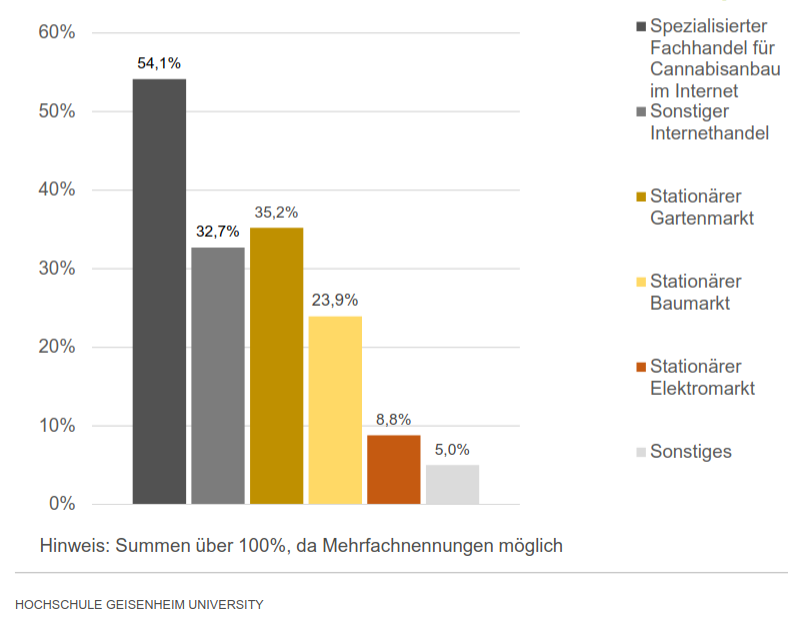
“Growing supplies and seeds were purchased both online and in-store, but specialized online retailers were used most frequently.” stated DHV in its local reporting.

German growing supplies and seeds purchase data

According DHV’s coverage of the study’s findings, “The median cultivation costs were €30 per plant and €1 per gram of cannabis, which are significantly lower than the prices of cannabis on the black market or medical cannabis in pharmacies.”

A previous YouGov poll in Germany found that 7% of poll participants had already purchased cannabis seeds or cuttings/clones at the time of the polling (May 2024). In addition to the 7% of poll participants indicating that they had already purchased cannabis genetics for their home gardens, another 11% of poll participants responded that they planned to purchase cannabis genetics in the future.

Home cultivation provides consumers with numerous benefits, not the least of which is controlling what goes into cultivating the cannabis that they consume. By producing their own cannabis, consumers know exactly what the harvested cannabis contains. Furthermore, home cultivation provides cost savings for experienced home cultivators, as the results of the recent scientific study demonstrate.

Cannabis opponents in Germany are continuing to push for a reversal of the nation’s cannabis legalization law, particularly when it comes to home cultivation. Demands by opponents fail to recognize, either purposefully or out of ignorance, that cannabis is going to be produced in Germany regardless of whether it is legal or not. Allowing personal home cultivation is a more sensible approach to public policy and frees up the nation’s criminal justice system to focus on fighting real crime.

Home cannabis cultivation by adults for recreational purposes is also legal in Uruguay, Canada, Malta, Luxembourg, South Africa, and in many local jurisdictions in the United States. Major court decisions in other nations also provide some level of protection for adults cultivating personal amounts of cannabis.