Author: Johnny Green

Czech Doctors Prescribed 318.7 Kilograms Of Medicinal Cannabis In 2024

According to data from Czechia’s State Institute for Drug Control and as reported locally by BRNO Daily, doctors in the Czech Republic prescribed 318.7 kilograms of medicinal cannabis in 2024 to an average of roughly 3,300 patients per month. Those figures are set to expand in April 2025 when Czech GPs will be permitted to prescribe cannabis for chronic pain.

“GPs will now be able to prescribe medicinal cannabis for chronic pain, and patients can also be prescribed up to a three-month dose per prescription, according to changes to the relevant legislation which will come into force in April this year.” BRNO Daily stated in its reporting.

For context, in 2023 Czech doctors prescribed 258.8 kilograms of medical cannabis, 157.4 kilograms in 2022, and 109.4 kilograms in 2021. Additionally, the Czech Republic’s legal medical cannabis industry served an average of 2,570 patients in 2023, in 2022 it was 1,886, and in 2021 it was 1,389.

The Czech Republic’s medical cannabis expansion occurring later this year comes amidst a push for wider cannabis policy reform in the European nation. In November 2024, the Czech Republic’s cabinet approved a plan that would permit adults to cultivate multiple plants in their private residences and possess a personal amount of cannabis.

The plan, which would legalize the cultivation of up to three cannabis plants and set a maximum possession limit of 50 grams of cannabis, was originally introduced by the Czech Republic’s Ministry of Justice back in September 2024. The plan does not go far enough according to members of the Czech Pirate Party.

“Instead of legalization and money in the budget, today the government presents pasquil. You can grow cannabis, but you can’t harvest it. To be able to grow three cannabis plants and at the same time have a limit of 50 grams that you can have at home is absurd. It’s like you could raise three hens, but they could lay a maximum of one egg, otherwise you’ll be fined or go to jail,” said former Deputy Prime Minister and former head of the Pirates Ivan Bartoš according to previous reporting by Echo24.

Cannabis advocates in Czechia are urging lawmakers to modernize the nation’s cannabis policies in a more comprehensive fashion. More information about their proposal can be found at: www.racionalniregulace.cz.

Starting in July of this year, the Czech Republic will regulate sales of cannabis containing up to one percent THC. The public policy change will also involve permitting regulated sales of kratom.

“The regulation focuses on substances deemed to pose low public health and social risks based on current scientific evidence. These include Kratom and kratom extracts, known for their stimulant and pain-relieving effects; cannabis with up to 1 percent THC, a low-potency form of cannabis with minimal psychoactive effects.” reported Expats CZ in its local coverage.

“Cannabis extracts and tinctures with up to 1 percent THC are also included.” Expats CZ also reportedLow-THC cannabis products will be permitted to be sold in licensed stores starting this summer in Czechia, although certain forms of commerce such as automated vending machines will remain prohibited.

Spain Is Expected To Approve A Medical Cannabis Measure Soon

Lawmakers in Spain are reportedly on track to approve a medical cannabis industry regulation measure before this summer. Spain has long been home to a thriving medical cannabis community and market, however, regulations for the nation’s domestic medical cannabis industry have proved to be elusive for years.

The effort to bring Spain’s medical cannabis policies into the modern age passed a major milestone back in October 2024 when the nation’s Ministry of Health published a draft royal decree focused on medical cannabis. That draft royal decree appears to be moving further along in the process.

“After years of waiting, Spain seems to be finally on its way to regulating medical cannabis. If all goes according to plan, the Royal Decree regulating the use of cannabis for medical purposes could be approved before the summer of 2025.” InSpanje stated in its reporting.

“The Spanish Ministry of Health has sent a draft of the Royal Decree to the European Commission, as required by European regulations. Brussels has three months to respond to the proposal. Once a positive response is received, the Council of State will give its opinion and the government can approve the decree. In total, this process could take up to five months.” the outlet also reported.

“The draft establishes broad restrictions on the medical use of cannabis and specifies very specifically the pathologies for which it can be used: multiple sclerosis (stiffness and muscle spasms associated with the condition); severe forms of refractory epilepsy (certain types of epilepsy that do not respond to conventional treatments); nausea and vomiting caused by chemotherapy; and refractory chronic pain (persistent pain that is not relieved by the usual treatments). In all these cases, experts believe that there is “scientific evidence” of the benefits of medical cannabis.” reported Sur late last year in its domestic coverage.

“The Ministry addresses this regulation based on the conclusions of the Subcommittee of the Congress of Deputies for the analysis of experiences with the regulation of cannabis for medicinal use, which called on the Spanish Agency for Medicines and Health Products to prepare a roadmap to approve the regulation.” Spain’s government stated in a press release about the measure (translated from Spanish to English) late last year.

“The proposed regulation guarantees the quality of the products and the safety of patients, enabling the legal avenues available to have therapeutic compounds based on standardized cannabis preparations that have shown evidence in relieving pain and the suffering of patients, considering the oral administration of these compounds as it is the most appropriate in terms of therapeutic effectiveness and safety for patients.” the government’s press release stated.

“This regulation is designed to evolve dynamically, allowing new elements to be incorporated as more information and the experience of the therapeutic cannabis program becomes available. In addition, it will contribute to generating more and better evidence on the use of cannabinoids for therapeutic purposes.” Spain’s government also stated.

Despite the lack of proper regulations in Spain, the nation’s cannabis industry is thriving, albeit not within a regulated system. Suffering patients deserve to have safe access to safe medical cannabis therapies, and entrepreneurs and investors deserve to operate in a business environment that is built on a strong foundation of certainty.

83 Cannabis Cultivation Associations Have Been Approved In Germany So Far

Germany implemented the first provisions of its new adult-use cannabis legalization model on April 1st, 2024. The initial provisions involved permitting adults to cultivate, possess, and consume personal amounts of cannabis, among other things.

Then, starting on July 1st, 2024, people could start applying to launch a cultivation association in Germany. Cultivation associations, sometimes referred to as cannabis clubs, involve members joining an association from which to legally source their recreational cannabis. Personal provisions and cultivation associations serve as ‘Pillar 1’ of Germany’s legalization model.

According to a recent response from the federal government to an inquiry made by the Left Party in Germany, and as initially reported locally by Frankfurter Rundchau, 83 cannabis club applications were approved nationwide in Germany as of December 2024. An additional 349 applications are being processed, and 12 applications have been rejected so far.

“There are currently no cannabis clubs in either Saarland or Bavaria. Applications have been submitted, in Bavaria, for example, there are 29, but those interested will have to be patient.” Frankfurter Rundchau stated in its reporting. “The CSU-led Bavarian state government has already announced that it will take its time with the approval.”

Currently, cannabis is legal for adult use in Uruguay, Canada, Malta, Luxembourg, Germany, and South Africa. Of those, Uruguay and Malta expressly allow cultivation associations (or ‘clubs’) as part of their legalization models. For contextual purposes, Uruguay currently has 460 registered associations/clubs, and Malta had only three registered cannabis clubs as of last year.

When comparing the populations of Uruguay (roughly 3.4 million) and Malta (roughly 550,000) to that of Germany (over 84 million), it is obvious that Germany needs more cultivation associations to support its adult cannabis consumer base.

However, it is also worth pointing out that Uruguay legalized cannabis in 2013, and Malta in 2021, so both countries have had a significant headstart over Germany when it comes to cultivation association/club implementation.

Cannabis Can Be An Economic Growth Driver In Germany

If properly regulated and allowed to reach its full potential, Germany’s emerging cannabis industry can serve as an economic growth driver, and lawmakers elected in Germany’s upcoming election need to recognize that. That is the premise of a new position paper recently published by the German Cannabis Business Association (BvCW).

The position paper, titled (translated from German to English) ‘Cannabis as a growth driver: Industrial opportunities and policy directions,’ defines three core positions for Germany’s upcoming federal election to be held next month:

  1. Combating organized crime, increasing public safety – enabling commercial supply chains for consumer cannabis.
  2. Complete the liberalization of industrial hemp in order to leverage economic and ecological potential.
  3. Working together to create modern regulations for telemedicine.

“The cannabis industry in Germany has developed into a dynamic and promising industrial sector since the legalization of medical cannabis in 2017. For the medical cannabis sector alone, sales of around 450 million euros are forecast for last year – and the trend is continuing to rise.” BvCW stated in its newsletter this week.

“With the introduction of the Cannabis Act, the market for home cultivation equipment for recreational cannabis has also grown significantly. Industrial hemp also offers diverse and sustainable potential for agriculture, the construction industry, textiles and composites.” the newsletter also stated.

“The cannabis industry is a magnet for foreign investment capital, which creates jobs and generates taxes. The Cannabis Act was an important building block on which politics should continue to build,” explains Dirk Heitepriem, President of BvCW.

“The cannabis industry is growing and has much more potential. In order to exploit this, it is important that the next federal government finally abolishes the intoxication clause for industrial hemp and supports the approval of model projects with professional supply chains,” adds Michael Greif, Managing Director of BvCW.

Germany implemented the first provisions of its new adult-use cannabis legalization model back on April 1, 2024. Regulators then launched the application process for cultivation associations on July 1, 2024. The launch of regional adult-use cannabis commerce pilot trials was initially expected by the end of last year, however, the launch of trials has experienced various delays due to politics.

“While the public debate often remains limited to the area of ​​consumer cannabis, it is primarily the medical cannabis and industrial hemp segments that have developed into an important industrial sector.” BvCW stated in its position paper regarding Germany’s emerging cannabis industry.

“Especially against the background of international legalization projects for medical and, in some cases, consumer cannabis and a weakening German economy, it is crucial to understand this development not only as part of health policy but also as a natural part of future-oriented economic policy.” BvCW also stated in the position paper.

Currently, cannabis is legal for adult use in Uruguay, Canada, Malta, Luxembourg, Germany, and South Africa. Recreational pilot trials are also operating in the Netherlands and Switzerland, and two dozen states in the U.S. have adopted adult-use legalization measures.

With the looming election in Germany on the horizon, and a seemingly shifting political landscape, some cannabis industry members and reform advocates are expressing concern that Germany’s eventual new government may hinder the momentum that Germany’s cannabis movement has experienced in recent years.

“Despite the complete ban on cannabis in recent decades and intensive law enforcement on both the supply and demand sides, cannabis consumption has continued to rise,” BvCW points out in its position paper. “In order to push back the black market with all its negative implications, legal and regulated access routes to quality-assured cannabis products are necessary.”

“This would not only result in a reduction in the burden on law enforcement authorities, more security for consumers and better protection of minors, but also offer the opportunity to benefit from the economic potential in the form of corporate and sales taxes.” states BvCW.

“The Cannabis Industry Association would like to work together with a new federal government to further develop cannabis regulation. Starting with strengthening the resilience of domestic pharmaceutical supply chains, from competitive conditions for agriculture to closely monitored supply chains for consumer cannabis: this is the only way to enable state control and effectively strengthen internal security.” the position paper stated.

BvCW advocates for regulating, and not prohibiting, several sectors of Germany’s emerging cannabis industry in its position paper, from cannabis seeds and genetics to telemedicine and the launch of pilot trials. You can read the full position paper at this link here.

Public UK Cannabis Legalization Support Outpaces MP Support

According to a recent poll conducted by YouGov UK, the level of support for cannabis legalization among adults in the United Kingdom is greater than the level of support for adult-use legalization among lawmakers.

“The results show that 50% of MPs are opposed to cannabis legalisation when asked in a support/oppose format, compared to 39% who would be in support.” YouGov UK stated about their poll’s results. “The large majority of MPs do, however, believe that doctors should be allowed to prescribe cannabis for medical use (83%). Only 7% are opposed.”

“On the binary question of legalising cannabis, the British public are split, with 45% in favour and 42% opposed, making the public slightly more pro-legalisation than MPs.” YouGov UK also stated about the poll results.

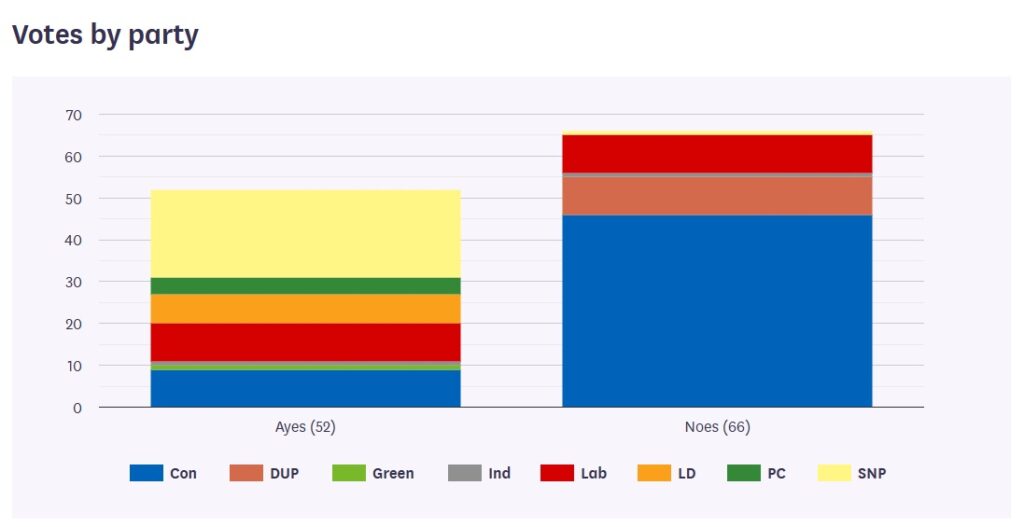
MPs in the United Kingdom voted on a cannabis legalization measure back in December 2018, with the lawmakers defeating the legalization proposal by a vote of 66 ‘no’ votes to 52 ‘yes’ votes. Below is a graphical breakdown of that vote by party via the UK Parliament’s website:

cannabis legalization vote uk 2018

Currently, cannabis is legal for adult use at a national level in Uruguay, Canada, Malta, Luxembourg, Germany, and South Africa. Additionally, recreational commerce pilot trails are operating in the Netherlands and Switzerland, and two dozen states in the U.S. have adopted adult-use cannabis legalization measures.

Where Do Germany’s Political Parties Currently Stand On Cannabis Policy?

Germany’s president previously announced the dissolution of the lower house of parliament. Chancellor Olaf Scholz also lost a confidence vote in December, paving the way for an early election on February 23, 2025.

As the German Cannabis Business Association (BvCW) pointed out in its recent newsletter, the federal election in Germany next month could prove to be “decisive for the future of cannabis legalization in Germany.” Below is a summary of where each major political party stands on cannabis policy in Germany according to BvCW:

  • The CDU/CSU are strictly opposed to legalization and have announced that they will reverse the law if they win the election. They see the current law as a failure that neither limits consumption nor curbs the black market.
  • The SPD wants to stick to the current cannabis law and decided last weekend to also take the necessary steps for legalization in line with European law.
  • The Greens are striving to expand the law and establish licensed specialist shops.
  • FDP is committed to complete legalization and calls for education to ensure responsible consumption.
  • AfD rejects legalization and wants to reverse it immediately. It relies on offers of help for abstinence and emphasizes health policy concerns.
  • The Left is calling for further legalization. It is calling for a general rethink in drug policy and wants to promote prevention and regulate advertising for drugs such as alcohol and tobacco more strictly.

Starting on April 1st, 2024, cannabis possession and cultivation by adults became legal in Germany. Then, starting on July 1st, 2024, people in Germany could start applying to launch cultivation associations. The two components combine to make up ‘Pillar 1’ of Germany’s legalization model.

‘Pillar 2’ of Germany’s legalization model involves launching regional adult-use cannabis commerce pilot trials. The pilot trials serve as local recreational cannabis commerce research projects to help lawmakers and regulators gain data and insight to help when crafting national laws and regulations.

For further analysis of Germany’s upcoming elections and how cannabis policy may be affected, check out the International Cannabis Business Conference’s recent conversation with leading international attorney Peter Homberg of gunnercooke.

High Tide Enters German Medical Cannabis Market Via Acquisition Of Purecan GmbH

High Tide, a leading community-grown, retail-forward cannabis enterprise, has officially entered the medical cannabis market in Germany through a deal with Purcan GmbH. High Tide’s acquisition will give the company a majority stake in Purecan’s operations, German import license, warehousing and logistics infrastructure, and in-development telemedicine portal.

“High Tide intends to leverage its Canadian Licensed cannabis procurement expertise, built on over $1.5 billion of the Company’s cumulative cannabis sales since Canadian cannabis legalization, to build a significant, market-leading German medical cannabis business unit.” the company stated in a news release.

“With German medical cannabis sales increasing rapidly after the adoption of the Consumer Cannabis Act this past April, this acquisition provides a base for the Company to expand into other European medical cannabis markets in due course.” the company also stated.

Lawmakers in Germany adopted the first provisions of the nation’s new adult-use cannabis legalization model on April 1st, 2024, with cultivation association provisions launching in Germany on July 1st, 2024. Medical cannabis was first legalized in Germany in 2017.

“I am thrilled to announce that High Tide is taking a significant step towards becoming a truly global cannabis company. By acquiring a 51% stake in Purecan, including its European wholesale and import license, its fully built warehousing and logistics infrastructure, and in-development telemedicine platform, we are strategically positioned to leverage our robust networks and relationships with Canadian licensed producers. With almost half of all German medical cannabis imports coming from Canada, this acquisition paves the way for us to emerge as a leading supplier of medical cannabis from Canada into Germany, potentially replicating our market share success in Canada.” said Raj Grover, Founder and Chief Executive Officer of High Tide.

“As I’ve said before, our German strategy is multipronged. This highly accretive acquisition provides immediate market entry into Germany while we explore opportunities for consumer research in collaboration with the Food and Drug Agency, aligning with the ordinance recently signed by Germany’s Agriculture Minister,” he also said.

“In addition to capitalizing on Germany’s rapidly expanding medical cannabis market, the Purecan acquisition brings a company with strong cultural and operational alignment into the High Tide family. This alignment has been reinforced through months of in-depth collaboration and is reflected in Purecan’s impressive financials, high margins, and lean operations. We anticipate this business unit will deliver a healthy margin profile, further strengthening our existing Canadian and international business lines,” added Mr. Grover.

“Since our very first meeting with Raj and the High Tide team a few months ago, it became apparent to us that there were significant cultural and operational alignments between our companies. Given that demand for medical cannabis in Germany is currently outpacing supply, this merger provides Purecan with a unique opportunity to tap into High Tide’s unmatched procurement expertise and relationships with Canadian licensed producers who currently provide half of all medical cannabis imports into Germany. We look forward to a fruitful partnership between our two teams to create long-term value for all stakeholders involved,” said Dr. Ehsan Omari, Chief Medical Officer, Purecan GmbH.

Czechia To Start Regulating Low-THC Cannabis This Year

Starting in July of this year, the Czech Republic will regulate sales of cannabis containing up to one percent THC. The public policy change will also involve permitting regulated sales of kratom.

“The regulation focuses on substances deemed to pose low public health and social risks based on current scientific evidence. These include Kratom and kratom extracts, known for their stimulant and pain-relieving effects; cannabis with up to 1 percent THC, a low-potency form of cannabis with minimal psychoactive effects.” reported Expats CZ in its local coverage.

“Cannabis extracts and tinctures with up to 1 percent THC are also included.” Expats CZ also reported. Low-THC cannabis products will be permitted to be sold in licensed stores starting this summer in Czechia, although certain forms of commerce such as automated vending machines remain prohibited.

Additionally, starting on April 1, 2025, general practitioners (GPs) in the Czech Republic will be authorized to prescribe medical cannabis to suffering patients. The policy change is a result of a new decree from the nation’s Ministry of Health.

“The decree allows GPs to prescribe medicinal cannabis for chronic, intractable pain,” Ministry spokesperson Ondřej Jakob previously said according to local reporting by Prague Morning (translated from Czech to English).

Medical cannabis was first legalized in Czechia in 2013, however, only specialists can currently prescribe it resulting in roughly 8,000 patients receiving legal access. There is also a push in Czechia for wider adult-use cannabis legalization. However, that effort must clear various political hurdles before reaching the finish line and becoming law.

The Czech Republic’s cabinet approved a plan late last year that would permit adults in the European nation to cultivate multiple plants in their private residences and possess a personal amount of cannabis.

The plan, which would legalize the cultivation of up to three cannabis plants and set a maximum possession limit of 50 grams of cannabis, was originally introduced by the Czech Republic’s Ministry of Justice back in September 2024. The plan does not go far enough according to members of the Czech Pirate Party.

Cannabis advocates in Czechia are urging lawmakers to modernize the nation’s cannabis policies in a more comprehensive manner. More information about their proposal can be found at: www.racionalniregulace.cz.

Legal Cannabis Expert Peter Homberg Moves to gunnercooke

Renowned international cannabis policy and industry expert Peter Homberg recently announced that after 12 years at Dentons, he is joining international law firm gunnercooke.

“I’m excited to offer my clients truly exceptional service, leveraging gunnercooke’s flexibility, innovation, and collaborative culture to support them closely through their legal challenges, while also shaping and expanding my practice in a direction I’m passionate about.” Peter Homberg stated in a LinkedIn post over the weekend.

Mr. Homberg specializes in life sciences, IP and corporate law, and M&A transactions. Few people on the planet, if any, possess the extensive experience in advising on medical cannabis compliance as Peter Homberg.

gunnercooke is one of the fastest growing international law firms and has offices in the United States, Germany, CEE, Austria, Scotland, and England. The firm is a team of more than 500 professionals and has a client roster that includes Nike, Mercedes, Lidl, Santander and DHL.

Peter Homberg’s awards and recognitions are numerous, and rightfully so. Peter Homberg was already highlighted by Chambers Europe in 2014 as “a brilliant negotiator” who “has huge experience with biotech companies and is really goal driven.”

JUVE Handbook German Commercial Law Firms, mentioned Peter Homberg in 2015/2016 as a highly recommended practitioner. The international directory Best Lawyers ranked him among the best lawyers for Health Care Law and Pharmaceuticals Law in Germany. Global Law Experts (2015, 2016, 2017, 2018), Legal 100 (2021, 2022, 2023), and Leaders in Law (2020,2021) honored Peter Homberg as “Life Sciences Lawyer of the Year in Germany.”

He is a prolific speaker at cannabis industry and policy seminars and conferences, including being a long-time presenter at International Cannabis Business Conference events, and is the author of numerous articles and other publications on corporate and IP law in the areas of life sciences and medical cannabis.

Peter’s new position at gunnercooke will afford him more freedom and flexibility to focus on cannabis policy, industry, and education, as well as to further pursue his passion for life sciences. Medical cannabis and life sciences involve considerable overlap, but also have their own unique facets separate from each other.

I reached out to Peter Homberg this week to discuss his new endeavor and to pick his brain about what to expect in 2025 for German cannabis and the wider European cannabis industry.

“I am very excited about the recent career change.” Peter Homberg told me about his transition to gunnercooke. “I will be able to continue my work in the fields of cannabis and life sciences, and for cannabis specifically, I will be better suited to focus more on it as the industry continues to expand in Germany and in Europe.”

Peter Homberg is a tremendous resource and figure in the cannabis world, helping educate lawmakers and industry members from around the world about important cannabis matters. The significance of his advocacy is beyond measure in my opinion, and I was very happy to learn that not only will he continue his work in this area now that he is a part of gunnercooke, but he will also have more flexibility than ever to do so, including contributing more to Cannabis Law Journal.

“In my new position, I will continue to be an advocate for medical cannabis policy modernization and industry regulation, and for sensible adult-use cannabis reform.” Homberg stated to me in our discussion.

Homberg pointed out that prohibition does not bring humanity further along, and that it is a failed public policy that does not properly prioritize public health outcomes. He indicated that licensed and regulated cannabis shops are needed in Germany and throughout Europe to sufficiently combat the unregulated market.

“Pilot projects are the logical next step in Germany and in Europe and are needed as a steppingstone towards something more comprehensive. It is important that we gather the right data and use it to go to the European Commission to prove that wider regulated cannabis sales are the best way forward.” Homberg stated.

A topic that was prominent in our discussion was Germany’s Pillar 2 of its cannabis model, and with it, how the shifting political landscape in Germany will presumably be impacted by the upcoming election.

“I am confident that the upcoming election will yield a coalition government, and I am moderately optimistic that while recreational legalization’s progress will likely be slowed, it will not be completely reversed.” Homberg explained to me.

“A lot is still unclear. Many statements being made right now from cannabis opponents are being made in an ‘election mode’ and will not necessarily become reality. I expect extreme positions to level out after the election.” Homberg went on to say.

When I asked Peter Homberg to weigh in on what it will take for EU-level agreements to be modernised to permit wider recreational cannabis reform, he was very adamant that data gathering is key.

“Gathering more data from commerce pilot trials demonstrating that regulation works is vital to convincing the European Commission and skeptical member nations that regulation is better than prohibition. Probably 2-4 years’ worth of data from markets like Germany, Switzerland, the Netherlands, and others.” Peter Homberg explained.

“Medical cannabis is here to stay in Europe, and in my opinion, possesses the most potential for entrepreneurs and investors,” Homberg told me. “Medical cannabis has proven that it has its place in the pharmaceutical arena as time has gone on. There used to be a reluctance to accept that cannabis is medicine, however, it is now widely accepted that cannabis is medicine and truly helps suffering patients.”

“It is much more difficult to anticipate what will happen with the future of the recreational cannabis market due to several factors, both in Germany and throughout Europe. It will further develop, but at what rate and in which way is extremely difficult to predict.” Homberg said.

On behalf of the International Cannabis Business Conference team, I want to congratulate Peter Homberg on his new endeavor, and we look forward to what he does next in his career. You can see Peter Homberg present at upcoming International Cannabis Business Conference events and find out more about when and where he will appear at Internationalcbc.com.