Author: Johnny Green

Czechia’s Legalization Model Continues To Take Shape

Europe’s cannabis movement is gaining momentum, and one of the best examples of that can be found in Czechia where a recently leaked document is providing insight into the adult-use legalization model that is being pursued there.

Ever since Germany announced its plans to pursue adult-use legalization, international cannabis policy observers have kept a close eye on the Czech Republic where leaders expressed a strong desire to follow Germany’s lead.

According to the leaked document that recently surfaced, which was provided to the International Cannabis Business Conference by local activists, what is being reportedly pursued in Czechia is a combination of home cultivation, cultivation associations, and ‘a regulated cannabis market.’

Personal cannabis possession and home cultivation are currently legal in multiple European nations – Malta, Luxembourg, and Germany. Cultivation associations are also currently permitted in Malta and Germany.

“The current prohibition leads to the fact that there are more than a thousand people convicted of cannabis crimes in prisons, which burdens the state budget with costs of over CZK 700 million per year,” emphasized Tomáš Vymazal, a member of the Rational Regulation (RARE) board and chairman of the Safe Cannabis Association, in a press release provided to the International Cannabis Business Conference.

The Registered Association Rational Regulation (RARE) was established at the beginning of 2024 with the aim of supporting rational cannabis regulation in the Czech Republic based on scientific knowledge and the best foreign experience. Its founders are the Czech industry cluster CzechHemp, the Legalizace.cz association, and the Safe Cannabis Association, which ‘brings together producers, distributors, and consumers of hemp extracts and hemp products.’

“The new legislation would lead to a significant decrease in the number of persons prosecuted, convicted or imprisoned for possession and cultivation of cannabis, which would result in annual savings of up to 1.2 billion CZK.” Vymazal stated.

The leaked document surfaced as cannabis advocates inside and outside of the Czech Republic continue to grapple with the news that Czech Republic National Anti-Drug Coordinator Jindřich Vobořil is resigning from his position. Vobořil has served as a top advocate for modernizing Czechia’s cannabis policies and regulations.

“We consider the departure of Jindřich Vobořil, a key expert on addictions, to be unfortunate and risky, especially considering the fact that his position in the negotiation of a comprehensive drug policy reform will change, because from the position of the national anti-drug coordinator, he could solve the issue not only professionally, but also cross-party, which is now endangered,” said the chairman of the RARE association, Robert Veverka.

A limiting factor in all legalized European nations, which will also presumably prove to be the case in Czechia to some extent, is current European Union agreements. EU policies limit the level of adult-use cannabis commerce that can be conducted within its member nations to cultivation associations and research pilot trials.

With that being said, if cultivation associations and pilot programs proliferate in Czechia, and adults can cultivate their own cannabis, the end result would effectively be widespread legalization, similar to what is expected in Germany. Regional cannabis pilot trials are already operating in the Netherlands and Switzerland with no reported issues, and are expected to launch in Germany by the end of this year.

According to the European Monitoring Centre for Drugs and Drug Addiction (EMCDDA), nearly 30% of Czech adults have consumed cannabis at least once in their lifetimes and 11.1% report having consumed cannabis within the last year. The average rate for once-a-year consumption across Europe is 8% according to EMCDDA data.

A cannabis reform win in Czechia will add further momentum for overall European reform efforts, which will, in turn, build momentum for global reform efforts. People around the world can support cannabis reform efforts in Czechia by making a donation to the Responsible Reform organization. More information, including how to donate, can be found on the organization’s website.

Czechia’s Cannabis Movement Remains Strong After Recent Political Shakeup

Earlier this week, Czech Republic National Anti-Drug Coordinator Jindřich Vobořil announced that he had submitted an intent to resign from his position. Local media reported that the resignation was accepted by Prime Minister Petr Fiala and that the resignation would become effective “at the end of August.”

Jindřich Vobořil has served as a top cannabis policy modernization advocate in the Czech Republic in recent years. In October 2022, Vobořil publicly applauded German lawmakers’ push for adult-use legalization in their country after German Health Minister Karl Lauterbach held a press conference announcing provisions of Germany’s proposed legalization model.

Per Radio Prague International at the time:

If national anti-drug coordinator Jindřich Vobořil’s proposed plan comes into effect in 2024 as he hopes, Czechia could become the second EU country to legalise the recreational use of cannabis. And not only that – it would even go a step further, also making its sale legal. The anti-drug coordinator presented his plan for combatting addiction – which includes the proposal to legalise cannabis – at a press conference this week.

“At the moment, there is a political consensus for me to create this proposal for the regulation of cannabis, a substance which is illegal at the moment. We want to regulate it with the help of the market and we believe that this regulation will be more effective than the current ban.”

“Germany and the Czech Republic go to a regulated market at the same time.” Jindřich Vobořil stated on his Facebook page the same day Minister Lauterbach made his formal presentation in Germany.

“Today, Germany announced through the mouth of its Minister of Health that it is launching the legislative process. It won’t be quite the free market, as some would expect. For example, colleagues from Germany talk about the allowed amount, they do not have cannabis clubs that we are supposed to. I’m pretty sure I want to hold on to cannabis clubs until my last breath. I find this model very useful, at least for the first years.” Vobořil went on to state in his post.

“However, we are in live contact with our colleagues from Germany and have repeatedly confirmed that we want to coordinate ourselves, even practically by consulting each other on our proposals. I will also want their expert assessment of our proposals, which we will prepare in the above mentioned working expert group.” Vobořil also stated in his Facebook post.

According to domestic reporting in the Czech Republic, Vobořil may have been forced to resign due to his push for a regulated cannabis industry.

“His departure was pushed, for example, by the ruling People’s Party and the head of the ANO opposition movement, Andrej Babiš. Vobořil (1966) worked as an anti-drug coordinator from 2010 to 2018. He returned to his post in February 2022.” stated ČTK in its original coverage (translated from Czech to English).

Despite the announced resignation, Vobořil is expected to stay very active in advocating for cannabis policy modernization efforts in the European nation, and the country’s cannabis movement remains strong, with leaked documents reportedly indicating that some domestic lawmakers are still pushing for a regulated cannabis industry.

“The fight to end cannabis prohibition in #Czechia did not end yesterday—quite the contrary!” stated Lukas Hurt, publisher of Magazine Konopí and Cannabis Therapy Magazine, manager of CzecHemp, in a post on LinkedIn. “I am saying to all of you again: with the departure of Jindřich Voboril as national drug coordinator, nothing is over here, on the contrary – everything is at stake now and the implications could be huge for the whole European cannabis movement.”

Germany’s Medical Cannabis Industry Is Booming

Germany’s emerging medical cannabis industry was already the largest in Europe before the nation’s new CanG law took effect. However, since April 1st, 2024 when the first provisions of adult-use legalization became effective in Germany, the nation’s medical cannabis industry has already grown exponentially.

“Since April 1, the medical cannabis market has almost doubled in Germany,” says David Henn, CEO of the medical cannabis wholesaler Cannamedical, per original reporting by ntv.de.

The recent growth in Germany’s medical cannabis industry is also evident in new data published by Bloomwell Group. The brokerage service company ‘provides both doctors and pharmacies with a digital platform for medical cannabis.’ The company reported a “1,000 percent” increase in business since legalization started in Germany.

A main contributing factor to the recent growth of Germany’s medical cannabis industry was the removal of cannabis from the nation’s Narcotics List, which was a key component of the new CanG law. The removal of cannabis from the list made it easier for doctors to prescribe cannabis in Germany, in addition to improving the medical cannabis supply chain and boosting domestic medical cannabis production.

Medical cannabis is arguably the biggest winner of Germany’s adult-use policy modernization effort so far, and the boost in patient numbers is still very much in the early stages. Prior to April 1st, researchers estimated that Germany had between 200k and 300k active medical cannabis patients. That number is projected to increase to as much as 5 million in the not-so-distant future.

A February 2024 market analysis by Zuanic & Associates determined that if 1% of Germany’s population (roughly 838,000 people) became cash-paying medical cannabis patients, the German medical market ‘could reach €1.7Bn in value by the end of 2025.’ If current trends persist, the 1% threshold could be surpassed far earlier.

The legal German cannabis market is projected to reach an estimated $4.6 billion in value by 2034 according to a recent market analysis by researchers at The Niche Research, which is an impressive sum. However, if Germany’s medical cannabis industry continues to increase at its current rate, the projection could prove to be too conservative as time goes on.

Germany’s medical cannabis industry boom is paralleled by a dramatic increase in the nation’s ancillary cannabis industry, and that increase is having a butterfly effect on other parts of Europe. A recent survey by YouGov found that 7% of surveyed German adults have already purchased cannabis seeds or clones, and another 11% reported that they will in the future.

In a separate nationwide survey conducted in Germany by Pronova BKK, among self-reported ‘regular’ cannabis consumers participating in the survey, 51% selected “Yes, I can imagine having my own cannabis to grow at home” when asked about home cultivation. Another 40% of ‘occasional’ cannabis consumers also selected that option in the survey.

Cannabis seed banks across Europe have reported a significant sales spike due to German home cultivation legalization, and presumably the same is true for companies specializing in home cultivation equipment.

Cannabis opponents in Germany are pointing to the increased size of the nation’s medical cannabis industry and trying to use it to justify their prohibitionist positions. What those opponents fail to recognize is that a boost in patient numbers is not indicative of a ‘broken system.’ Rather, it is a testament to the cannabis plant’s wellness properties and the evolving attitudes of medical professionals.

According to tens of thousands of peer-reviewed studies, countless patient testimonials, and the professional opinions of licensed medical doctors throughout Germany, cannabis is a safe, effective medication that can treat numerous ailments and conditions. Suffering patients deserve to have safe access to therapies that their doctors deem appropriate, and that includes medical cannabis therapies.

Germany’s new medical cannabis policies are working exactly as they should be, regardless of the fear-mongering talking points that cannabis opponents choose to cling to.

Navigating Germany’s Booming Cannabis Market: A Guide for International Companies

The excitement surrounding cannabis in Germany is palpable. With the current government coalition decriminalizing and rescheduling the plant, a wealth of opportunities has arisen for both domestic and international organizations. Events like the International Cannabis Business Conference and Mary Jane Berlin are buzzing with activity, setting new attendance records. However, navigating the German market requires a nuanced understanding of the current regulations to avoid potential pitfalls.

To assist international companies aiming to enter this vibrant market, the largest German Cannabis Business Association (BvCW – Branchenverband der Cannabiswirtschaft, www.cannabiswirtschaft.de) has introduced a specialized format. This initiative is designed to provide critical information and support for businesses looking to establish a presence in Germany. With its comprehensive focus on all aspects of cannabis—medicinal, recreational, and industrial—the BvCW is uniquely positioned to offer valuable insights into the evolving landscape.

Why Germany?

“We understand that there are many eyes on Germany at the moment,” states Dirk Heitepriem, president of the BvCW. “Since April 1st, many opportunities have opened up for international companies looking to sell products and services in Germany! We receive numerous inquiries daily from industry colleagues worldwide. Our goal is to provide them with a platform that will guide them through the process, helping them find the right stepping stones while avoiding inherent traps.”

Key Developments and Opportunities

Benjamin Patock, a member of the Executive Board, adds, “A lot has changed. Access to cannabis as a medicine is easier than ever. Additionally, we are witnessing a significant boom in the recreational home-growing market, with the first cannabis clubs on the horizon. However, some opportunities remain exclusive to EU member states at this point.”

Introducing the BvCW International Briefing

To keep international companies well-informed, the BvCW will host the “BvCW International Briefing” quarterly via Zoom. These sessions will cover recent policy changes, current opportunities and risks, and expected regulatory developments. Participation is free of charge upon registration.

Stay ahead of the curve and ensure your company is well-prepared to tap into Germany’s expanding cannabis market. Register now to join the BvCW International Briefing and gain the insights needed for a successful entry.

For more information and to register, visit

www.cannabiswirtschaft.de/intlbriefing

Study Finds No Increase In Hospitalizations Following Legalization In Canada

Canada became the first G-7 nation to adopt a national adult-use cannabis legalization measure back in late 2018. The only other nation to adopt a national legalization measure prior to Canada was Uruguay in 2013, however, Uruguay still does not permit legal sales to non-residents.

Malta, Luxembourg, Germany, and South Africa have all adopted national legalization measures to some degree since Canada adopted its measure. Yet, Canada remains the only country on the planet where adult consumers can make legal purchases across the nation regardless of their residence status.

A team of researchers recently examined hospitalization data in Canada before and after adult-use legalization was implemented. The researchers determined that there was ‘no increase’ in hospitalizations post-legalization. Below is more information about the study via a NORML news release:

Toronto, Canada: Policies legalizing the use and sale of cannabis products have not led to an increase in marijuana-related hospitalizations, according to data published in the Journal of Addictive Diseases.

Canadian investigators tracked rates of cannabis-related hospitalizations in Alberta in the years prior to and following legalization. Canadian lawmakers legalized the use and sale of cannabis flowers for those ages 18 and older in October 2018. Retailers began engaging in the sales of cannabis concentrates and edible products in 2020.

Researchers identified an increase in hospitalizations among those ages 18 to 24 in the period immediately prior to legalization, but they acknowledged that there were no increases in hospitalizations following legalization among representatives of any age group.

“Legalization was not significantly associated with immediate or ongoing changes in hospitalization rates … for either younger or older adults,” the study’s authors concluded.

Separate Canadian analyses have failed to identify an increase in either traffic-related hospitalizations or ER visits attributable to cannabis-related psychosis following legalization.

Full text of the study, “Cannabis legalization and hospitalizations in Alberta: Interrupted time series analysis by age and sex,” appears in the Journal of Addictive Diseases.

44% Of German Adult Cannabis Consumers Plan To Join A Social Club

In a recent nationwide survey conducted in Germany by Pronova BKK, 44% of self-reported ‘regular’ cannabis consumers indicated that they plan to join one of the country’s social cannabis clubs once they launch this summer. Another 27% of ‘occasional’ cannabis consumers also indicated that they plan to join a club.

The Pronova BKK survey involved 1,000 people in Germany aged 18 and over and was conducted in May 2024. The survey also determined the following (translated from German to English) about Germany’s cannabis consumer base:

  • Over a quarter of Germans consume cannabis at least occasionally, and one in ten consumes it weekly
  • More than half of Generation Z consumes cannabis at least occasionally
  • For a third of cannabis consumers, legalization does not influence consumption behavior
  • Among younger respondents under 45 years of age, one in ten has increased consumption since legalization
  • Eight percent of non-users are considering growing their own cannabis at home

Among self-reported ‘regular’ cannabis consumers participating in the survey, 51% selected “Yes, I can imagine having my own cannabis to grow at home” when asked about home cultivation. Another 40% of ‘occasional’ cannabis consumers also selected that option in the survey.

The results of the Pronova BKK survey were published shortly after the European Monitoring Centre for Drugs and Drug Addiction (EMCDDA) released its annual European Drug Report. The EMCDDA report lists that 34.7% of German adults have consumed cannabis at least once in their lifetime.

YouGov poll that was also conducted in May 2024 found that 7% of surveyed German adults (consumers and non-consumers) have already purchased cannabis seeds or clones. Another 11% indicated in the YouGov survey that they planned to purchase seeds or clones in the future. The YouGov poll involved 3,375 German adults.

The first provisions of Germany’s CanG law took effect on April 1st, 2024. Adults in Germany can now cultivate up to three plants in their private residences and possess up to 25 grams of cannabis when away from their homes.

Additionally, cannabis was removed from the nation’s Narcotics List which is having an immediate impact on Germany’s medical cannabis industry. Germany was already the largest legal medical cannabis market in Europe, and now domestic production quotas are removed, doctors can prescribe cannabis more easily, and the medical cannabis supply chain has fewer hurdles.

In 2023, Germany imported 31,398 kilograms of medical cannabis products according to data from Germany’s Federal Institute for Drugs and Medical Devices (BfArM), a 26.2% increase compared to the previous year’s medical cannabis imports.

With domestic production quotas removed and many patients now cultivating their own medical cannabis, total imports will presumably lower by a considerable amount in Germany in 2024.

The German Cannabis Industry Continues To Evolve

Germany was already home to Europe’s largest legal medical cannabis market before the first provisions of the nation’s adult-use legalization measure took effect on April 1st, 2024. When the first provisions of Germany’s CanG law were enacted at the start of April, the nation also became the largest country on earth to implement national adult-use reform.

The nation’s cannabis policy and industry landscape will forever be measured as occurring before or after 2024 due to how pivotal the year 2024 is proving to be. Nearly every facet of Germany’s industry and cannabis community is evolving this year, with the most notable items listed and discussed below.

Personal Consumption

People in Germany who are 18 years old or older can now consume cannabis in private settings without the fear of prosecution and can possess up to 25 grams of cannabis when away from their residences. Cannabis consumption is not new in Germany, with 4.3% of German adults reporting that they use cannabis on a monthly basis and 8.8% reporting that they have used cannabis at least once in the last year.

However, the way that people consume cannabis in Germany is undergoing a technological revolution, with many device and gadget makers eyeing the German cannabis consumer market with their latest creations. According to a recent analysis by market researchers, the global handheld cannabis vaporizer market is projected to reach $15.9 billion in value by 2031, and Germany will play a big role in the growth of the sector.

Home Cultivation

On April 1st Germany became home to the largest potential home cultivation market in Europe, with Germany’s roughly 70 million adults becoming eligible to cultivate up to three plants in their private residences. Personal cannabis cultivation is already proving to be very popular with adult consumers in Germany, as reflected by a recent YouGov poll which found that 7% of poll participants indicated they had already purchased cannabis clones or seeds since legalization took effect. Another 11% of poll participants stated that they intend to purchase clones or seeds in the future.

In addition to clones and seeds, Germany’s newly afforded home cultivation freedoms are increasing sales of many other sector products, including growing mediums, nutrients, lighting, environmental control systems, odor control, harvesting tools, and drying equipment. Home cultivation educational programs and materials are also experiencing increased demand in Germany.

Social Clubs

Starting next month, Germany will begin permitting social cannabis clubs in many parts of the country. Social clubs are a key provision of ‘Pillar 1’ of Germany’s CanG law and will play a vital role in legally sourcing adult-use cannabis in Germany. Earlier this month the Bundestag approved new policies that afford states more authority to set limits on social cannabis clubs, so the prevalence and scope of clubs will likely vary throughout the country.

It is going to be very interesting to see how creative social cannabis club operators get once clubs are launched. The basic premise of social clubs is for adults to become members and to source legal cannabis through the social clubs that will cultivate cannabis for members. However, cannabis clubs can employ paid workers to carry out various tasks that are not necessarily directly related to the cultivation or distribution of cannabis, and clubs will likely offer ancillary products and services that could prove to be very engaging (and lucrative). Only time will tell what social club operators come up with, and conversely, what local and national regulators will allow.

Pilot Trials

‘Pillar 2’ of Germany’s cannabis legalization model revolves around the launch of regional adult-use cannabis commerce pilot trials. Pilot trials permit a certain number of entities to cultivate cannabis that is then sold to registered customers at licensed outlets. Such pilot trials are already underway in parts of the Netherlands and Switzerland with no reported issues.

Pilot trials in Germany are expected to be more widespread than what is in place in Switzerland and the Netherlands, both in the number of jurisdictions where they operate and the number of participants they will serve. German pilot trials are expected to begin by the end of the year, and when combined with social clubs and home cultivation, will serve as the foundation for legal adult-use cannabis access in Germany.

Medical Cannabis

Often lost in the hype and chaotic nature of the rise of adult-use cannabis in Europe is the fact that Germany’s medical cannabis industry is currently undergoing dramatic changes. Part of Germany’s new CanG law involved the removal of cannabis from the nation’s Narcotics List and the removal of quota limits for domestic medical cannabis production. Doctors in Germany can prescribe cannabis more easily, the medical cannabis supply chain has fewer hurdles and hoops, and domestic production is set to surge.

As a result, the German medical cannabis industry is projected to experience tremendous growth in the coming years. A February 2024 market analysis by Zuanic & Associates determined that if 1% of Germany’s population became cash-paying medical cannabis patients, the German medical market could reach €1.7Bn in value by the end of 2025. Germany’s medical cannabis industry is a major winner of German adult-use legalization.

Voters Approve Adult-Use Cannabis Legalization Measure In Slovenia

(*Editorial note – this article was updated from its original version to reflect updated voting results*)

Support for adult-use cannabis policy modernization continues to gain momentum in Europe, with the latest example occurring on Election Day in Slovenia this weekend with voters in the Central European country approving a personal cannabis cultivation and use referendum measure.

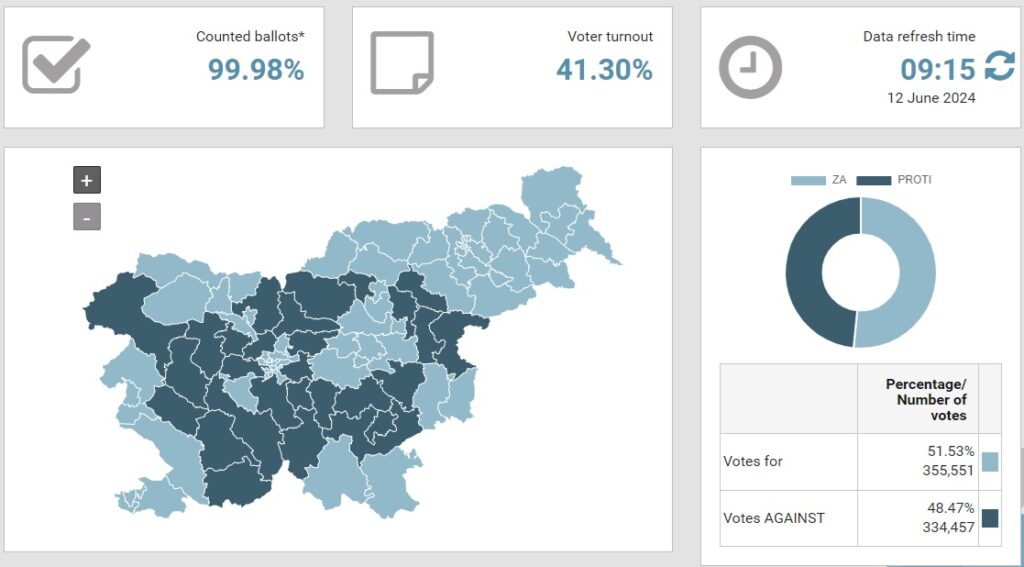
Voters in Slovenia were asked, “Should the Republic of Slovenia allow the cultivation and possession of cannabis for limited personal use on its territory?” With a voter turnout of over 41%, and nearly 700,000 votes cast, the referendum measure was approved.

adult cannabis use slovenia election 2024 results

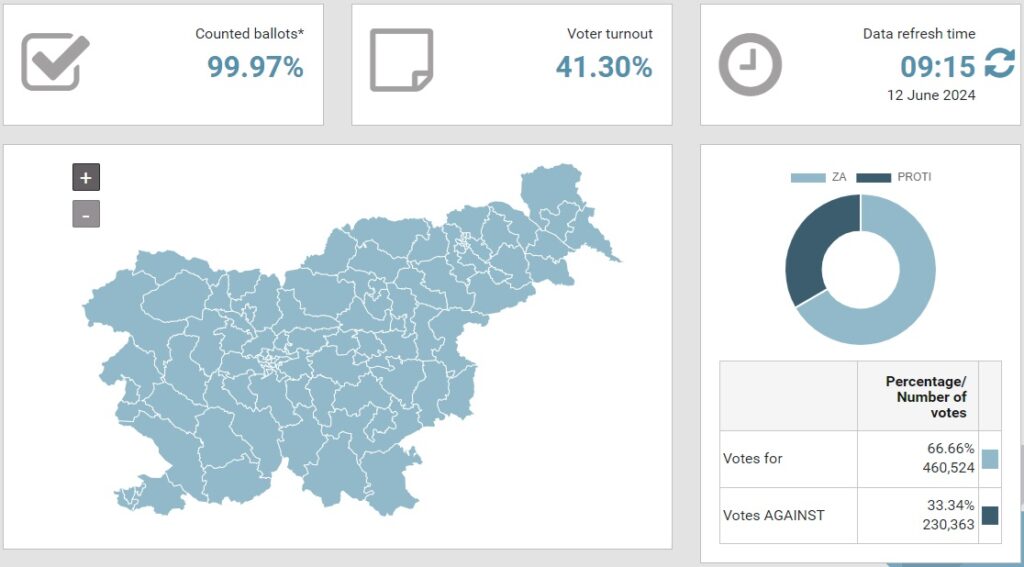
The adult-use referendum measure was one of two measures considered by Slovenia’s voters. A separate measure asked the question, “Should the Republic of Slovenia allow the cultivation and processing of cannabis for medical purposes on its territory?” The medical cannabis measure was overwhelmingly approved by Slovenian voters.

medical cannabis production slovenia 2024 election results

Both measures were consultation measures and are not legally binding. However, the voting results of both referendums send a clear and significant message to lawmakers in Slovenia that it is time to modernize the nation’s cannabis policies.

The historic votes in Slovenia come on the heels of other successful recent cannabis policy modernization efforts in other nations. Last month, South Africa’s President signed a measure that legalized private cannabis cultivation, possession, and use by adults.

On April 1st, 2024 the first provisions of Germany’s adult-use cannabis legalization measure went into effect. Adults in Germany can now cultivate up to three plants in their private residences. Social cannabis clubs are expected to launch in July in Germany, and regional adult-use cannabis commerce pilot trials are expected to begin by the end of the year.

Cannabis is also currently legal for adult use in Uruguay, Canada, Malta, Luxembourg, and in two dozen states in the U.S. Additionally, adult-use cannabis commerce pilot trials are underway in several jurisdictions in the Netherlands and Switzerland.

Slovenia Voters Overwhelmingly Approve Medical Cannabis Referendum Measure

(*Editorial note – this article was updated from its original version to reflect updated voting results*)

Voters in Slovenia appear to have overwhelmingly voted in favor of a medical cannabis referendum measure today. Today’s cannabis vote in Slovenia occurred alongside the wider 2024 European election.

With 92.84% of the votes counted, 65.41% answered ‘for’ when asked the question (translated from Slovenian to English), “Should the Republic of Slovenia allow the cultivation and processing of cannabis for medical purposes on its territory?”

The medical cannabis referendum question was one of two cannabis questions placed before Slovenia’s voters. The second one asked the question, “Should the Republic of Slovenia allow the cultivation and possession of cannabis for limited personal use on its territory?”

The personal adult cultivation and use question was passing by a slim margin with 92.74% of the vote counted, with 50.93% of voters answering ‘for’ and 49.07% answering ‘against’ the adult-use measure. With such a razor-thin margin, the vote is still too close to call. Local cannabis advocates are celebrating the results of today’s vote in Slovenia.

“People are clearly not satisfied with this drug policy. However, problems are not solved by the same people who created the problems. If only half of the voters are in favor of greater use of cannabis, it will be a big eavesdrop on the counter-propaganda financed by the Ministry of Health and doctors,” stated Božidar Radišič according to domestic reporting by Delo (translated from Slovenian to English).

Both cannabis referendum measures are consultation referendums and are not binding. What happens after all of the votes are counted and recorded is up to lawmakers in Slovenia.

Limited medical cannabis activity is currently permitted in Slovenia, although the nation’s program is more restrictive compared to other European nations, with countries such as Germany having incorporated a wider list of qualifying conditions, regulated domestic production, and regulated commerce.

Slovenia already serves as an international research and development hub for several large industries, and the favorable medical cannabis production and processing vote combined with an already existing infrastructure makes Slovenia well-positioned to do the same for the emerging international cannabis industry.

“Thanks to researchers and laboratories, Slovenia could become an intellectual superpower in the field of cannabis according to Alex Rogers,” Delo also stated in its original coverage.

Today’s vote in Slovenia comes on the heels of other successful recent cannabis policy modernization efforts in other nations. Last month, South Africa’s President signed a measure that legalized private cannabis cultivation, possession, and use by adults.

On April 1st, 2024 the first provisions of Germany’s adult-use cannabis legalization measure went into effect. Adults in Germany can now cultivate up to three plants in their private residences. Social cannabis clubs are expected to launch in July in Germany, and regional adult-use cannabis commerce pilot trials are expected to begin by the end of the year.

Cannabis is also currently legal for adult use in Uruguay, Canada, Malta, Luxembourg, and in two dozen states in the U.S. Additionally, adult-use cannabis commerce pilot trials are underway in several jurisdictions in the Netherlands and Switzerland.

***

Update: The medical cannabis production measure was officially approved after receiving 66.66% ‘for’ votes and the adult-use measure was also officially approved after receiving 51.53% ‘for’ votes. Voting turnout was roughly 41.3% for both measures.