
Author: Johnny Green

Uruguay: Research Finds That Youth Cannabis Use Did Not Rise Following Legalization

One of the most popular talking points for cannabis prohibitionists is the claim that if cannabis is legalized for adult use that it will result in a spike in cannabis use by younger people. The ‘what about the children?’ strategy has been in use for many decades by citizens and lawmakers that oppose cannabis reform in virtually every country.

Uruguay is one of two countries to have implemented an adult-use cannabis legalization law, with the other being Canada. Uruguay was the first out of the two, and insightful data is coming out of Uruguay regarding society and cannabis. Recently researchers released the results of a study in which self-reported youth consumption data following legalization in Uruguay was analyzed. Below are some of the study’s findings, per excerpts from La Diaria Salud:

On Monday, the National Drug Board presented the results of the VIII National Survey on Drug Use in Secondary School Students , which showed that marijuana use in middle school students did not increase between 2016 and 2018.

Nor did it find significant changes in the perception of the risk of frequent use, the ease of access, the prevalence of consumption per year and per month. ”The passage of the law did not lead to a greater increase in marijuana use among middle school students,” he reaffirmed.

This is encouraging news for fans of sensible cannabis laws. If there’s one thing that responsible cannabis supporters and cannabis opponents can both agree on, adult-use cannabis should be kept away from children.

Cannabis legalization and regulation is a much better option than prohibition because prohibition obviously does not eliminate use occurring, and legalization provides for conversations and education campaigns aimed at young people that are based in actual reality, and thus much more likely to succeed.

The cannabis industry in Uruguay is built in a way that it will not be as big of a government revenue generator compared to Canada, however, there will still be ample opportunities for the government to harness what public revenue-generating options there may be available, and use any revenues possible to help educate citizens of all ages in Uruguay about cannabis.

That’s a far better option than seeing revenue going to organized crime operations that obviously provide zero public benefits.

Scotland’s First Medical Cannabis Clinic Is Set To Open

Cannabis reform is sweeping across the globe, however, there are still many countries that still prohibit cannabis, even for medical use. Even in countries where medical cannabis is legal, safe access to medical cannabis is not always widespread. An example of that is the situation that is going on in Scotland.

Medical cannabis laws were updated across the United Kingdom in 2018. At the time the reform was passed, medical cannabis advocates expressed fears that legal patient access to medical cannabis would be limited since it relied on a doctor’s prescription.

Time has proven that the fears were well-founded because in Scotland no licensed medical cannabis clinics exist. Fortunately, that is about to change. Per The Times:

Cannabis is set to be legally prescribed in Scotland at the country’s first private clinic for the drug.

The unit, which aims to provide medicinal cannabis for “all conditions acknowledged to benefit from it”, is scheduled to open in Aberdeen.

This is a very big milestone for suffering patients in Scotland. Obviously there is a lot of work left to be done in order to bring safe access to suffering patients throughout Scotland, however, the process has to start somewhere. Hopefully the new clinic helps suffering patients find relief from their conditions and helps build momentum for more clinics to open up.

No valid reason exists for prohibiting patients from responsibly using medical cannabis. Cannabis is more effective and safer than a laundry list of common medications. Patients should be able to make the safer choice if they want to and not have to live in fear because they consume a plant that is safer than alcohol.

How Many People Work In The Legal U.S. Cannabis Industry?

The legal cannabis industry in the United States is still young by many standards, however, that hasn’t stopped the industry from putting up huge numbers in recent years. The medical cannabis industry in the United States started in California in 1996, albeit in a largely ‘gray area’ fashion. The legal adult-use cannabis industry started with the first legal purchase in Colorado at the start of 2014.

Now, in 2020, the legal cannabis industry is operating in every corner of the United States, from Florida to Alaska and Maine to Hawaii. Obviously, not every state allows the legal cannabis industry to operate, but reform is hopefully on the way soon to those remaining jurisdictions which will create a legal cannabis industry framework and regulations.

At our recent conference in San Francisco on February 6-7, Leafly‘s Bruce Barcott unveiled the fourth annual Cannabis Industry Jobs report, which is a stellar way to gauge the size of the emerging legal cannabis industry in the U.S. Below is more information about the report, per Leafly:

Leafly’s annual Cannabis Jobs Report found 243,700 full-time-equivalent (FTE) jobs supported by legal cannabis as of January 2020.

That’s a 15% year-over-year increase. Over the past 12 months the expanding industry has created 33,700 new jobs nationwide, making legal marijuana the fastest-growing industry in America.

This year’s jobs count found Massachusetts, Oklahoma, and Illinois leading the employment expansion. As its adult-use market passed its one-year anniversary, Massachusetts added 10,226 jobs. Meanwhile, Oklahoma’s robust medical marijuana industry added more than 7,300 jobs in the past year.

Those numbers are inspiring. It will be very interesting to see where the numbers are at in 2025, 2030, and beyond. The cannabis industry is the most exciting industry in the country for prospective job candidates, and it’s also the fastest-growing industry in the nation. That is also true at the global level.

The future is bright for cannabis industry employment. Eventually, the entire U.S. will have legal cannabis industries operating within their borders, as well as legal interstate commerce and international imports/exports. People that get in on the ground floor now will be well-positioned to reap the benefits of cannabis industry job opportunities in the decades to come.

Celebrity Cannabis Brands Continue To Struggle In The Cannabis Space

In many non-cannabis industries attaching a celebrity’s name to a brand helps boost the brand’s image, and with it, sales. It’s not exactly rocket science – the celebrity is well known, and their notoriety automatically increases awareness of the product, and in the eyes of some consumers, it boosts the credibility of the product. A celebrity brand, and to a lesser extent a celebrity endorsement, helps ensure success.

However, in the cannabis industry, a high-profile celebrity attaching their name to a brand does not necessarily ensure success for a multitude of reasons. The most recent example of that is Whoopi & Maya. The celebrity cannabis company, which was co-founded by actress Whoopi Goldberg, has reportedly ceased operations. Per CelebStoner:

Founded in 2016, the celebrity marijuana company Whoopi & Maya has closed its doors. The company has stoppped selling, manufacturing and marketing its products that were geared to women due to a split between the principles, co-founder and board member Rick Cusick tells CelebStoner.

“The company is ceasing operations immediately,” he says. “It’s with deep regret that we can no longer provide services to patients.”

The company made significant headlines in 2016 with its launch and was one of a batch of celebrity brands that were launched around that time, many of which are either no longer in business or are struggling to survive in the cannabis industry due to various factors, not the least of which is a skeptical consumer base.

Cannabis is now mainstream, and many cannabis consumers view celebrity cannabis brands as not being genuine. Instead, many consumers view celebrity cannabis brands as being nothing more than greedy cash-grab attempts.

Other issues that make it hard for celebrity cannabis brands are the razor-thin profit margins on products and the patchwork of legal and illegal states in the U.S. In other industries, celebrities can have one or two facilities making products, then ship them all over the country, or they team up with a national distributor with an already-established network of retailers nationwide.

However, in the cannabis industry, national celebrities have to team up with local companies in legal markets to help them produce and distribute products to a limited number of outlets. With already razor-thin profit margins, the situation often turns into a lot of (unsuccessful) cat-herding and with very little profit per unit to show for it.

The cannabis industry will need to significantly mature before successful celebrity cannabis brands become as common as celebrity brands in other industries. In the meantime, expect to see many celebrity cannabis brands come and go in the near future. Obviously, some brands will succeed, but they will likely be the exception versus the rule.

Why Is An Alcohol Company On Top Of The Cannabis Industry?

How Organic Alcohol Upgrades Product Quality in the Cannabis Industry

Cannabis concentrates are becoming more and more popular among consumers and patients with every passing year. According to the results of an industry study that was released last summer, the cannabis concentrates sector of the global cannabis industry was worth an estimated $3.73 billion. The same study projects that the sector will grow to an astounding $13.78 billion by 2026, and time could very well prove that projection to be too conservative.

The legal cannabis industry is still in its infancy by many measures, and even where the cannabis industry is legal in general, there are still many jurisdictions that continue to prohibit cannabis concentrates due to stigma and unfounded hysteria. Over the next 5 to 10 years, inevitably, a more sensible and systematic approach to governing and regulating the legal sale of cannabis will be necessary. That’s why it’s important to align with experts who provide leading-edge products and expertise in developing and using best practices for manufacturing concentrates.

One alcohol company stands above the rest when it comes to quality. The Organic Alcohol Company (OAC), located in Ashland, Oregon, is the first organic distillery in Oregon and among the first organic distilleries in the US. Formerly known as Alchemical Solutions, LLC, the company was founded in 2001. OAC specializes in producing and supplying the highest quality and most premium organic alcohol products available. Their certified organic, pharmaceutical-grade 190-proof and 200-proof neutral corn, grape, wheat, and cane alcohols are ideal for making the best and cleanest concentrates and tinctures. Their line of specialty alcohols from unique organic-based products include coconut, lychee, orange and more.

The Organic Alcohol Company is a long-standing, trusted partner to the cannabis industry with a focus on companies committed to ‘Medicine First’ practices. Founder and CEO of Organic Alcohol Company, Aaren Glover, offers decades of industry experience to address the most pressing concerns in the rapidly emerging cannabis industry. Glover is well versed in all things cannabis from cultivation to processing and manufacturing. As an organic farmer, he apprenticed at a 40-acre bio-dynamic farm in the coastal hills of Sonoma County. Glover has spent decades studying “wholistic” and alternative healing modalities.
Glover says,” We began this business to serve classical Herbalists almost 20 years ago. OAC first started working directly with cannabis extractors in the Medicinal Cannabis market since state legislation was put in place for Medical distribution and use. We are committed to ensuring that manufacturers and producers have access to the highest quality, organic alcohol for their premium quality products and that they can obtain alcohol in a safe and legal manner.”

OAC assists its customers in navigating the complicated rules and regulations for this essential manufacturing input, which has the dual distinction of being a hazardous material as well as the subject of the many regulatory requirements that exist on a federal, state and local level. Managing a business within this complicated landscape is one of the demonstrated specialties that positions Organic Alcohol Company as the go-to expert in this field. The support provided to their customers to maintain compliance and operate with the highest standards of excellence is of paramount importance to OAC.

OAC is committed to supporting the leaders of this industry who are committed to processing this incredible healing plant in a manner aligned with sustainable values and committed to the safety and health of humans and our planet.

Glover shares “The goal is to do our small part within the cannabis industry to assist in upholding and advocating for standards and practices that guide the industry in steering away from petroleum based compounds and chemicals that require costly disposal measures disposal measures and pose unknown risks to people and the environment. This is a key initiative for the Organic Alcohol Company moving forward.”

It’s easy to see why cannabis concentrates are becoming more popular with consumers and patients. They are more potent compared to flower, often result in less odor when combusted or vaporized, and take up less space compared to flower. For many patients and consumers, the effects are more desirable. Concentrates can come in many forms and they are not all created equal. A lot of attention is focused on the flower that is used to make cannabis concentrates, and understandably so. However, what is used to extract the cannabinoids from the flower is just as important. Concentrates can be made using several solvents, such as butane or CO2. Properly made concentrates remove almost all solvents, leaving only trace amounts behind, but the solvents still interact with the flower and that’s not desirable to many people, especially medical users.

Making cannabis concentrates using alcohol is, considered by many, a much better way to ensure that the end product is clean and safe for human consumption while minimizing the environmental impact. Just as all cannabis concentrates are not created equal, the same can be said for common alcohol brands that are used to make cannabis concentrates and tinctures. Making concentrates or tinctures using low-grade alcohol results in a low-grade finished product. There is also concern in the industry about using denatured alcohol also referred to as methylated spirit or denatured rectified spirit. Because this ethanol has undesirable characteristics and can be classified as poisonous even though general practice claims to completely evaporate these toxins. It’s important for manufacturers and producers to cautious about the alcohol they use to craft their products.

In addition to their superior products, OAC’s sustainable business practices set them apart from their competitors. Whereas competitors are often large corporate distilleries and chemical companies that may offer organic products but only care about increasing profits at all costs, OAC is a small business focused on the long-term values of sustainability, which is something that responsible members of the cannabis industry fully embrace.

OAC has a 10-year plan to derive most, if not all, of their power from alternative energy, including generating energy from the alcohol that they produce. The company also donates a portion of its profits to efforts that support regenerative farming, preserving seed diversity, protection pollinators and the remediation and preservation of our waterways.

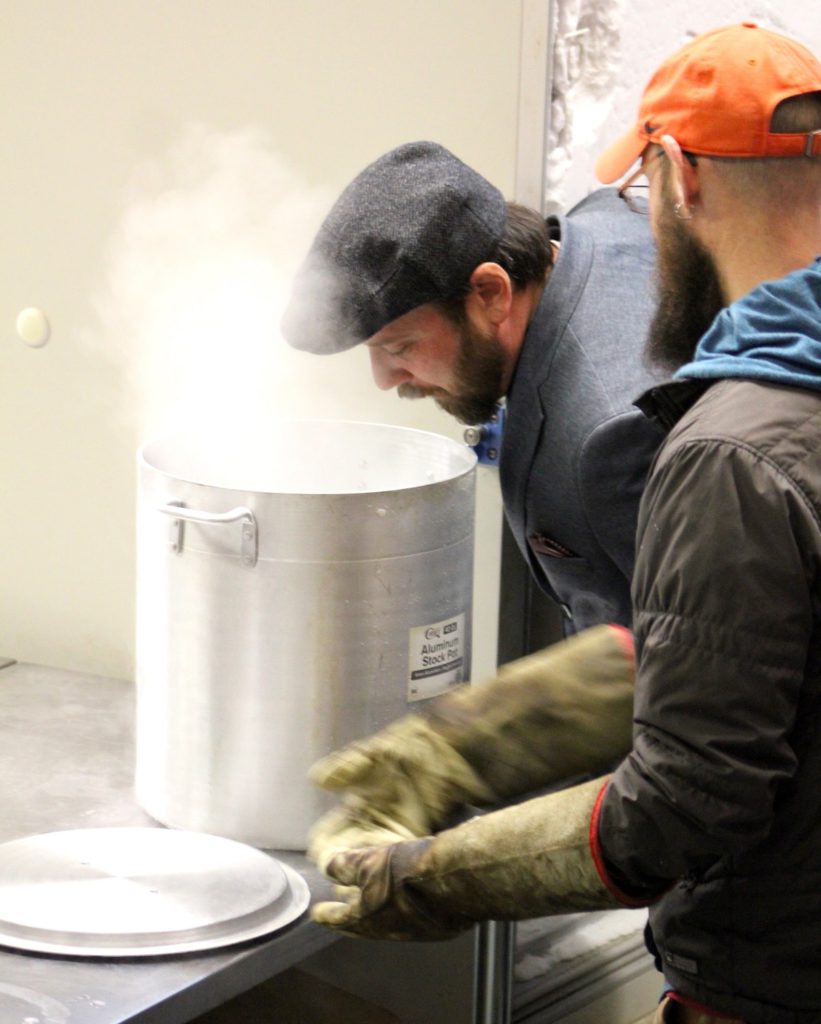
It’s not a coincidence that OAC is relied upon by an increasing number of top cannabis companies – their products help cannabis companies make the best products, and their company model and values are stellar. That’s why we are so proud to have them as sponsors of our upcoming International Cannabis Business Conference in San Francisco on February 6-7. When you are serious about creating the best cannabis concentrates and tinctures, you can order a sample pack online or speak with a knowledgeable sales rep. The team at Organic Alcohol is hands down the best at what they do in the entire cannabis space. Each quarter they feature a Hero Spotlight to showcase customers who are committed to organic best practices. The OAC team recently visited SunGold Botanicals to get a firsthand look at how processing and manufacturing certified organic hemp products are enhanced with organic alcohol.

Co-owner of Sungold, Isaac Daniel says ‘Our alignment with OAC speaks to integrity. We know it’s a word that’s tossed around a lot, but we’re committed to the integrity of organic products and that’s why we’re so aligned. We care about organics, the land and the integrity of the products delivered to the people. Being USDA Certified Organic and using ethanol sourced by Organic Alcohol Company allows us to do what we do in a really straightforward manner. ”

Join the OAC crew in San Francisco next month! In the meantime, you can find out more about the Organic Alcohol Company via their website, on Facebook, Instagram, and Pinterest.
New Zealand To Vote On Cannabis Legalization On September 19th

It’s official – New Zealand will hold its election on September 19th, 2020. Voters in New Zealand will decide whether or not to pass a cannabis legalization measure on Election Day 2020. The New Zealand Electoral Commission announced the official date of the election earlier today.

According to an official government page dedicated to the New Zealand cannabis referendum, “The Government has released a draft Cannabis Legalisation and Control Bill for public consideration. The draft Bill describes the key aspects of proposed rules about growing, selling and purchasing cannabis for recreational purposes. The Government is publishing a draft Bill at this point to ensure that New Zealanders are informed about the direction being taken and the decisions that have been made to date. The final draft Bill, which will be released in early 2020, will contain more detail and take into account feedback on the current draft.”

An official release date for the final draft of the bill has yet to be announced. Until then, below are some of the provisions that were included in the draft version of the bill:

  • Proposed ballot language – “Do you support the proposed Cannabis Legalisation and Control Bill?”
  • Sets legal age at 20 years old
  • Confines consumption to private residences and licensed premises
  • Prescribed conditions for personal cultivation and gifting
  • Licensed supply chain

The referendum is not necessarily binding, at least according to some lawmakers in New Zeland, although lawmakers in New Zealand’s majority have stated previously that they plan to treat the vote as being binding.

According to the previously cited government page, “If more than 50% of the vote is ‘Yes’, recreational use of cannabis won’t become legal straight away. After the election, the incoming Government will need to follow a process to introduce a Bill to Parliament that would make recreational use of cannabis legal. This process would include the opportunity for the public to share their thoughts and ideas on how the law might work.”

To date, only Uruguay and Canada have passed legalization measures and implemented adult-use cannabis legalization. Mexico and Italy have had court decisions rendered that found cannabis prohibition to be unconstitutional, however, neither of the nations have implemented adult-use cannabis legalization.

Panel In Mexico To Make Cannabis Legalization Recommendations

In 2018 Mexico’s Supreme Court ruled that cannabis prohibition was unconstitutional, and tasked lawmakers in Mexico with passing legislation to implement cannabis legalization.

The court decision effectively made Mexico the third country to legalize cannabis for adult-use, with the first two being Uruguay and Canada. Both of those countries passed legislation to legalize cannabis for adult use.

The court decision in Mexico put a deadline in place that lawmakers were bound by – one year from the court ruling. That deadline came and went, yet no legislation was passed by Mexico’s lawmakers.

An extension was granted by the Supreme Court of Mexico, and lawmakers now have until April 30th to make it happen. It is unclear what would happen if the new deadline is missed. Recently Mexico’s President announced that a panel will conduct research and offer up recommendations to lawmakers. Per Marijuana Moment:

The president of Mexico said on Monday that a government panel is being formed in order to make recommendations for a legal marijuana system in the country.

While he didn’t offer many details about the commission, President Andrés Manuel López Obrador said it will be focused on studying public health aspects of legalization.

Only time will tell if some, or any, of the provisions recommended by the government panel will make it into any successful legislation. For that matter, only time will tell if lawmakers succeed in passing legalization legislation prior to the deadline.

For a brief time last year, it appeared that the push for a legalization measure would be successful, however, the effort stalled after special interests made a big push to kill the measure that seemed to have the most potential. April 30th is not far away. Hopefully lawmakers can get the job done this time, and pass sensible legislation.

Cannabis Operators Turn To Hemp For Diversification

The cannabis industry is spreading all over the United States, one jurisdiction at a time. Medical cannabis is particularly widespread now, and adult-use cannabis is hopefully not too far behind to states that still cling to prohibition. The size of the U.S. cannabis industry is enormous, and getting larger with every passing week.

But while the cannabis industry pie might be large, it is made up of an ever-growing number of slices. To make matters even more problematic for entrepreneurs and cannabis companies that focus on high-THC products, cannabis industry regulations can be confusing, conflicting, and are seemingly always changing.

That has led some of those companies to seek out opportunities in the hemp sector. It’s an extremely important trend that everyone in the cannabis industry needs to be mindful of. Our friends at GreenState have an in-depth analysis of this topic that we encourage all of our followers to check out. Below is an excerpt:

“The rules that govern hemp cultivation are far more favorable than those that govern non-hemp cultivation. Whereas a grower in a legal adult-use state like Oregon has a strict canopy limit on the size of their THC garden, farmers in Oregon can, and do, cultivate hemp fields that measure in the dozens or even hundreds of acres. This is true in other states as well. To a cultivator that is limited to square footage canopy for high-THC cultivation, being able to cultivate over 1,000 acres of hemp is an enticing option and a great way to diversify their operations.”

Read more at: https://www.greenstate.com/explained/cannabis-operators-look-to-hemp-for-diversification/

UK’s Justice Secretary: Cannabis Will Not Be Legalized Anytime Soon

Cannabis prohibition is a failed public policy, no matter where it exists, including in the United Kingdom. Cannabis has been found to be 114 times safer than alcohol, however, people in the United Kingdom are having their lives ruined on a regular basis simply because they possessed cannabis.

Even after someone has complied with whatever punishment was handed down against them due to their cannabis offense they are still essentially branded with a ‘cannabis scarlet letter’ because their record will follow them wherever they go, and thus the punishment is ongoing.

A cannabis offense on a person’s record can result in lost employment opportunities, negative ratings from lenders and insurers, and in some cases, it can even prevent a person from having their residential rental application being approved.

The United Kingdom needs to get on the right side of history. Unfortunately, recent comments by the United Kingdom’s Justice Secretary suggest that it could be a while before that happens. Per Twitter from late last week:

It’s truly a shame that in 2020 a top government official in the UK is still making the claim that cannabis is such a dangerous drug that people’s lives need to be ruined simply because they possess it. The claim is essentially stating that law enforcement’s focus should be on investigating and prosecuting cannabis-only offenses rather than being focused on violent crimes because that’s effectively the result of the enforcement approach that is being touted.

Law enforcement resources are not unlimited, and they should be focused on areas that make sense and keep as many people safe as possible. No one is safer because a cannabis consumer is getting investigated and prosecuted by law enforcement. The focus should be directed towards going after actual criminal activity. How many actual crimes could be prevented in the time that it takes to bust a cannabis consumer in the UK? Shouldn’t limited public resources be prioritized in a better way?

The citizens of the UK deserve a sensible cannabis policy that is based on science and compassion, and not on the outdated political views of a minority of government officials.