Canada Brings in $186 Million in Tax Revenue as Sales Continue to Increase

It’s no secret that cannabis sales in Canada have gotten off to a relatively slow start as the government has taken a rather conservative, cautious approach to licensing, as government officials’ public safety concerns have been given top priority. Regulatory hurdles have hindered efforts to open up brick and mortar stores, caused supply chain issues, and completely prohibited the sales of any extracts, concentrates, or infused products. Thankfully, more stores are opening up, the supply chain is improving, and Canadian consumers will finally be able to by hash, oils, edibles, beverages and other cannabis products by the end of the year, so overall sale numbers should continue to climb. And sales are already improving as the federal government collected $186 million in tax revenue when legalization started last October, through March of 2019.

Revenue collection is set to only get better as adult-use cannabis sales jumped up to $19.6 million in Ottawa alone in April, after averaging just under $9 million the previous 5 months as Marijuana Business Daily reported:

Adult-use cannabis sales in Canada’s largest consumer market more than doubled in April on the back of new store openings, representing “powerful evidence” of pent-up demand for regulated marijuana after months of stagnation, according to experts.

Receipts of recreational-use cannabis products in Ontario totaled 19.6 million Canadian dollars ($15.1 million) in the month, recent data from Statistics Canada shows, up from CA$7.6 in March and CA$7.5 million in February.

April’s receipts consider the first monthly sales at fewer than two-dozen physical stores in the province.

Global News covered the overall tax revenue numbers:

The provinces took the lion’s share of that money, with $132 million in combined sales tax and excise tax revenue; the federal treasury took in $55 million.

Governments face a dilemma taxing cannabis, says Brock University business professor Michael Armstrong.

“It’s a tradeoff — the more you increase taxes the more revenue you get, but that increases prices and makes you less competitive with the black market.”

While it is admirable for the Canadian government to place officials’ health and safety concerns over the desire to raise revenue, it is clear to those with a lot of experience with cannabis, that a too burdensome approach isn’t needed. The sky hasn’t fallen in Canada and it won’t fall, as the fear mongering nonsense spouted by Reefer Madness prohibitionists gets proven wrong time and time again. Slowly but surely, regulators, politicians, and policymakers are learning the truth about cannabis and they are easing regulations. You can give more freedom to adult consumers in cannabis, the freedom to choose a safer alternative to alcohol and tobacco, while creating more jobs and revenue. As has been seen in Ottawa, and other provinces, build the cannabis retail stores, and consumers will come. And the sky will still remain high above the Great White North.

The International Cannabis Business Conference in Vancouver this September 15-16 is the industry event to learn the latest and to network with top investors and entrepreneurs. Secure your spot and save by purchasing discounted, early bird tickets by August 21st. 

Full-Time U.S. Cannabis Jobs to Top 175,000, Increasing 34%, in 2019

Earlier this week, an economic report projected global cannabis sales to increase to 36% in 2019, with dramatic growth expected over the next five years, thanks to an expansion of existing markets and future ones not open just yet. That new business growth is good for companies, investors, consumers, tax collectors, and employees. Not surprisingly, bigger market share means more jobs, and U.S. jobs are expected to increase by 34%, with the total number of people employed full-time in the cannabis industry to range between 175,000 to 215,000, up from 130,000 to 160,000, according to a new report. Existing data shows that these cannabis jobs, on average, pay more than other business sectors. If the growth pans out, then there will be more people working full-time cannabis jobs than there are web developers. With markets expanding across the nation, this growth is projected to continue, with more than 385,000 jobs by 2023.

More from MJBizDaily’s Annual Marijuana Business Factbook:

  • Total economic impact of the cannabis industry will be range from $39.2 billion to $48 billion in 2019 – about a 35% increase over 2018.

  • U.S. cannabis sales in 2018 were between $8.6 billion and $10.8 billion – more than U.S. spending on e-cigarettes, the video game Fortnite and Goldfish crackers.

  • U.S. sales of cannabis in 2019 will be about 35% higher than 2018 and could reach $30 billion by 2023.

Cannabis sales in California are certainly due to increase and more states will soon join Illinois in legalizing cannabis, with New York, New Jersey, and Delaware looking to end prohibition for all adults very soon, so it isn’t shocking to know that dramatic job growth is expected. However, the sheer number of full-time cannabis workers is truly astounding, considering the fact that only 11 states and Washington, D.C., have legalized and Vermont and D.C., as of now, don’t yet allow cannabis commerce. It is great to see that the cannabis community is creating more jobs, revenue, and freedom, across the United States, and are work isn’t nearly done yet.

The International Cannabis Business Conference is the best place to learn the latest about the industry and to network with top investors, entrepreneurs, and employers. Next up: Vancouver, British Columbia, Canada, this September 15-16. Be sure to purchase your early-bird tickets by August 21st to save. 


Global Cannabis Sales Could Reach $15 Billion in 2019, $40 Billion by 2024

Based on current sales, as well as reasonable projections regarding new markets, an industry report projects that global cannabis sales could hit about $15 billion this year, with a continued growth rate that might push the market to a whopping $40 billion in just five years. Cautious regulatory approaches in Canada and California provided hurdles for the industry, but both of these major markets are expected to take big leaps the coming years, with the Golden State’s cannabis community continuing to transition to the regulated market and the Great White North starting to sell extracts, concentrates, and cannabis infused-edibles and products this December. Another prospective boom for the overall cannabis industry is the continued growth of the CBD industry and the approval of cannabis-based medicines.

CNN reported:

For the first time, the annual “The State of Legal Cannabis Markets” report evaluated the cannabis industry as the “Total Cannabinoid Market,” meaning it encompassed sales of medical and recreational cannabis at dispensaries; hemp-derived products rich in non-psychoactive cannabidiol, or CBD; and US Food & Drug Administration approved CBD-based pharmaceuticals.
The surge of CBD products coupled with Canada starting legal recreational cannabis sales in 2018 helped to buoy the industry’s growth, according to the report published by the market research arm of cannabis investment firm Arcview Group and data firm BDS Analytics. This was the first full year to evaluate the effects of three significant developments in the cannabis industry: the FDA approval of CBD-based drug Epidiolex, legal adult use sales starting in Canada, and the 2018 Farm Bill giving hemp products more legal standing.
***
The seventh edition of the report — like publications Arcview published previously — includes a calculated gaze into the crystal ball, projecting industry sales. Arcview and BDS’ latest expectations are that cannabis sales in dispensaries, retail stores and pharmacies will hit $44.8 billion globally by 2024.

Some key trends analyzed in the State of the Legal Cannabis Markets:

  • Total legal cannabis spending in regulated dispensaries in the U.S. topped $9.8 billion in 2018, and is forecast to grow to $30 billion in 2024, a compound annual growth rate (CAGR) of 20 percent.
  • Investment capital raised by cannabis companies more than quadrupled to $14 billion in 2018, according to Viridian Capital Advisors.
  • Despite a 55 percent decline in 2018 in New Cannabis Ventures’ Global Cannabis Stock Index, the five largest Canadian licensed producers closed out the first quarter of 2019 at a combined market capitalization of $48 billion.
  • In Canada, which launched adult-use nationwide October 17, 2018, spending on adult-use cannabis is forecast to grow from $113 million in the partial year of 2018 to almost $4.8 billion by 2024.
  • A total of 13 state markets will have passed the $1 billion mark in total annual legal cannabis spending by the end of 2024—by the end of 2018, only three had done so (California, Colorado and Washington).
  • Internationally, more consumers are forecast to gain legal access to non-medical cannabis. In addition to Uruguay’s groundbreaking legal adult-use and Switzerland’s market for products with <1% THC, Luxembourg, Mexico and New Zealand have all given indications that adult-use sales could begin within the forecast period. Adult-use spending in international markets is expected to grow at a 33 percent compound annual growth rate from 2018 to 2024.

Only time will tell, but it is certainly possible that Arcview’s report is a little too bullish on 2019, as a 36% growth for the cannabis industry over 2018 would be a dramatic increase, but it certainly isn’t out of the question. The long term market increase is easy to see as the momentum for cannabis legalization, thanks to the hard work of advocates, only increases by the day. With more states and nations ending prohibition, and existing markets like Canada adding more products, sales will certainly increase over the coming years. When it comes to the current state of the cannabis industry, the question isn’t whether it will grow, but how much will it grow.

The International Cannabis Business Conference in Vancouver, Canada, this September 15-16 is the industry event to learn the latest crucial info and to network with top investors and entrepreneurs. Discounted, early bird tickets are available until August 21st. 

Molson Coors to Brew Cannabis Drinks in Canada, CBD Versions in the U.S.

It was big news when Molson Coors Brewing Company announced that it was forging a partnership to brew non-alcoholic cannabis drinks in Canada, but it shouldn’t have been surprising. Alcohol giant Constellation Brands had already invested heavily in the cannabis industry and it shouldn’t shock anyone that big companies, particularly those involved with alcohol and tobacco, will be looking to join a multi-billion dollar market, especially when the new market cuts into their sales.

Molson Coors’ CEO expects that cannabis beverages will be a $3 billion sector in Canada, and the company has warned shareholders that legal cannabis is a threat to beer companies’ profit margins. The North American beer giant plans to sell a variety of cannabis drinks in accordance with Canada’s new regulations, starting on December 16th, the earliest date possible, before moving into the United States, with a line of CBD beverages. Bloomberg reported:

The maker of Coors Light has partnered with Gatineau, Quebec-based Hexo Corp. to make a variety of non-alcoholic, cannabis-infused drinks for the Canadian market. The joint venture, called Truss, will have “lots of different beverages” for sale on Dec. 16, when the beverages become legal in Canada, said Jay McMillan, Hexo’s vice president of strategic development.

***

Truss plans to offer everything from water to a “beer-like product” and maybe even hot beverages. It has flexible production lines so it can pivot if one type of beverage isn’t selling, he said.

It’s also looking at selling CBD-infused beverages in the U.S., which legalized the non-intoxicating substance late last year, with the goal of having products in eight states by 2020.

While the entry of big alcohol companies into the industry is likely good for consumers who want  a multitude of options to best suit their needs and lifestyle, it also provides an opportunity for smaller companies to find their niche. In many ways Molson Coors will serve as a research department for competitors as they put different types of beverages up for sale. After they find products that work, other companies can follow suit and find an avenue that works for them, such as producing and marketing a craft cannabis version, giving consumers the opportunity to support mom-and-pops. It will be very interesting in mid-December when cannabis beverages and other products hit the shelves and to see how the market shakes out over time.

The International Cannabis Business Conference in Vancouver this September 15-16 is the best place to learn the latest about Canada’s regulations and market, and to network with top investors and entrepreneurs. Don’t miss your opportunity, be sure to purchase early bird tickets by August 21st. 

Keeping Up with Canada? California Moves Towards State Cannabis Banking.

As most folks know by now, a lack of banking services have forced cannabis businesses, including those legal under state law, to deal predominantly in cash due to continued U.S. banking laws that make it nearly impossible to do business with federally chartered financial institutions. There are a few reasons why Canada, the first G7 nation to end cannabis prohibition, gives a leg up to its cannabis entrepreneurs, and normal access to banking services is one of them. Thankfully, the California Senate has moved forward with some sensible legislation that can help its state-regulated businesses and should add pressure on Congress to recognize the will of the people and legalize banking for state-licensed cannabis businesses. CNBC reports:

Under the state legislation, which was approved by a vote of 35 to 1, private banks or credit unions can apply for a limited-purpose state charter so they can provide depository services to licensed cannabis businesses. The measure, Senate Bill 51, still requires approval of the Assembly and California Gov. Gavin Newsom to become law.

***

“It’s hard to imagine an industry that at this point is as large as, like, craft beer that does not have banking as we have come to know it,” said Steve Hawkins, executive director of the Marijuana Policy Project, a national marijuana reform organization. He said the legal marijuana industry lacks access to commercial banking services available to other industries, including payroll, loans and deposit needs.

“As policymakers, we have a duty to further the will of the voters while protecting the public safety of our constituents,” California Senate Majority Leader Robert Hertzberg said last month when introducing SB 51. “This measure is by no means the ultimate solution, but it’s just one small step in the right direction to get some of this money off the streets and into bank accounts.”

Hopefully, this sensible banking legislation will have smooth sailing through the California General Assembly. Governor Newsom, who spoke at an International Cannabis Business Conference reception a few years ago, is certainly expected to sign the bill that should be supported by everyone, including those that oppose legalization as forcing cannabis businesses to use only cash encourages tax evasion and endangers our neighborhoods.

To stay up-to-date on the latest cannabis industry news, and to network with top investors and entrepreneurs, the International Cannabis Business Conference is THE event for you. Next up: Vancouver, Canada, in September and then back to San Francisco, California, next February. Get your early-bird tickets and save!

Former US Senate Majority Leader Joins International Cannabis Board

As the cannabis legalization movement moves more mainstream, and the industry become more profitable, we shouldn’t be surprised to see former policymakers and elected officials join the business sector. Former Republican Speaker of the House John Boehner has been the most prominent American politician to enter the industry while Vicente Fox, the former president of Mexico, remains the most high-profile global politico. Boehner now has company as former United States Senate Majority Leader Tom Daschle, a South Dakota Democrat, has joined the board of an international cannabis investment firm, along with former representative Joseph Crowley, fresh off of his primary loss to rising Democratic star Alexandria Ocasio-Cortez, as The Hill reports:

Former Rep. Joseph Crowley (D-N.Y.) and former Senate Majority Leader Tom Daschle (D-S.D.) have been named to the advisory board of Northern Swan Holdings, an investment firm.

Northern Swan is focused on investments in the cannabis industry internationally and on positive change to the industry overall. It is based in Colombia.

***

“Senator Daschle is a pre-eminent expert in health and wellness whose experience in healthcare policy reform will be invaluable to our company’s expansion in the global medical cannabis market,” Kyle Detwiler, CEO of Northern Swan, told Yahoo.

On one hand, is is very promising for the cause that former politicians are joining the industry as this will only help end cannabis prohibition sooner. However, since these former officials are representing specific businesses, is it understandable to assume that they represent the interests of those that pay him and not the industry at large, thus we have to work hard to ensure that the new laws passed don’t set up monopolies and oligopolies that cut out competition, hurting consumers, patients, and small businesses.

As Marijuana Moment’s Tom Angell notes, these politicians may not have the best record of helping the cannabis community when they were in positions of power to do so, unlike folks like Dana Rohrabacher and Earl Blumenauer who have been leaders on the issue (and have spoken at International Cannabis Business Conference events):

While we probably don’t want to discourage former officials from lobbying their friends in power to end cannabis prohibition, we will certainly need to remain vigilant that fair policies (or as fair as possible) are being enacted in the future. In the meantime, it is great to see that legalization is moving forward step by step.

To learn the latest and network with top investors and entrepreneurs from around the world, the International Cannabis Business Conference is THE industry B2B event to attend. Next up: Vancouver, Canada, this September 15-16. Get your early-bird tickets by August 21st to save. 

Former Congressman Dana Rohrabacher on Reagan, Trump, and Cannabis

The best chance of the United States has of legalizing cannabis in the near future is passing the STATES Act that would end federal interference with state’s legalization laws as Donald Trump has signaled his support for the measure. Former Representative Dana Rohrabacher has stated his belief that Trump agrees with a states’ rights legalization approach, but that he could learn a few tips about uniting voters from Ronald Reagan.

Rohrabacher, who famously led the charge to protect states’ medical cannabis laws from being trampled by Uncle Sam, has taken his message international, keynoting the International Cannabis Business Conference in Zurich. Following our conference in Zurich, the Orange County, California, Republican sat down with Blick, one of Switzerland’s biggest daily newspapers, discussing his past work with Ronald Reagan, Donald Trump, and cannabis:

While Federal President Ueli Maurer (68) was in the USA, there was a high visit from the USA yesterday in Zurich. California Republican Dana Rohrabacher, 71, was a special assistant to US President Ronald Reagan (1911-2004) and a 30-year congressman. Until he was ousted by a Democrat last year.

The conservative Rohrabacher, who has German and English roots, is touring around the world to campaign for the legalization of cannabis – especially in the medical field. So he was yesterday guest speaker at the International Cannabis Business Conference at the Hotel Atlantis. He explains to BLICK: “Every adult should be able to decide for himself what is good for him. In addition, we can use it to eliminate the business of criminals. “He himself had consumed marijuana as a 23-year-old. ”But only a short time, since then I do not take it anymore.”

***

Trump could learn a lot from his old boss, says Rohrabacher. ”Reagan was able to achieve important goals and keep the people together. Trump also gets to his destination, but at the expense of the people’s unity. “Or, as Rohrabacher puts it,” Trump flies, Reagan shook hands. “

Not that long ago, Dana Rohrabacher was virtually all alone among his Republican colleagues regarding cannabis policy. Now that legalization has majority support among voters, across the political spectrum, positive changes are on the horizon. We can expect U.S. cannabis prohibition to end within the next few years, a policy shift that will certainly reverberate around the world, and Rohrabacher was a pioneer that deserves his share of credit.

The International Cannabis Business Conference returns to Vancouver, British Columbia, Canada, this September 15-16. Get your early-bird tickets to secure your spot and save your hard-earned dollars. 

International Cannabis Business Conference Zurich 2019 In Pictures!

The International Cannabis Business Conference made its first venture into Switzerland last week, with a conference in Zurich, and the event was a raging success. A sincere thanks to all of our speakers, attendees, sponsors and CannaTrade, Europe’s oldest hemp fair, for partnering with us. We are already looking forward to returning to Switzerland next year! After an amazing European trek that included Barcelona (in a team-up with the legendary Spannabis conference) and a bigger-than-ever Berlin conference, the International Cannabis Business Conference is looking forward to returning to North America as we next head to Vancouver, British Columbia, Canada, in September to check up on the first G7 nation to legalize cannabis.

It was very exciting to see how Switzerland has advanced, becoming a leader in low-THC, high-CBD products of all types. The future of the cannabis industry in Switzerland is certainly bright as the innovative nation is clearly on the path to continue being a leader of the booming CBD market, with full legalization coming in the near future. From the point that the VIP reception started, the beautiful Atlantis hotel was buzzing with excitement.

Former United States Congressman Dana Rohrabacher set the tone of the conference, explaining his past, present, and future with the cannabis scene, from his days as a vagabond surfer to pioneering politician, to now taking his message of freedom global. Following Rohrbacher were panels and presentations that touched on important topics for Swiss industry participants and international actors alike, including the Trajectory of the Swiss Market, CBD in Switzerland, Cannabis Extracts, International Investing, and much more. The networking continued with another great Bhang-sponsored after party and into CannaTrade following the International Cannabis Business Conference.

As usual, one blog can’t do an International Cannabis Business Conference event justice, but here are some key highlights captured from our VIP reception, conference, and after party. Hope you enjoy these photos, and that we see you in Vancouver (September 15-16).

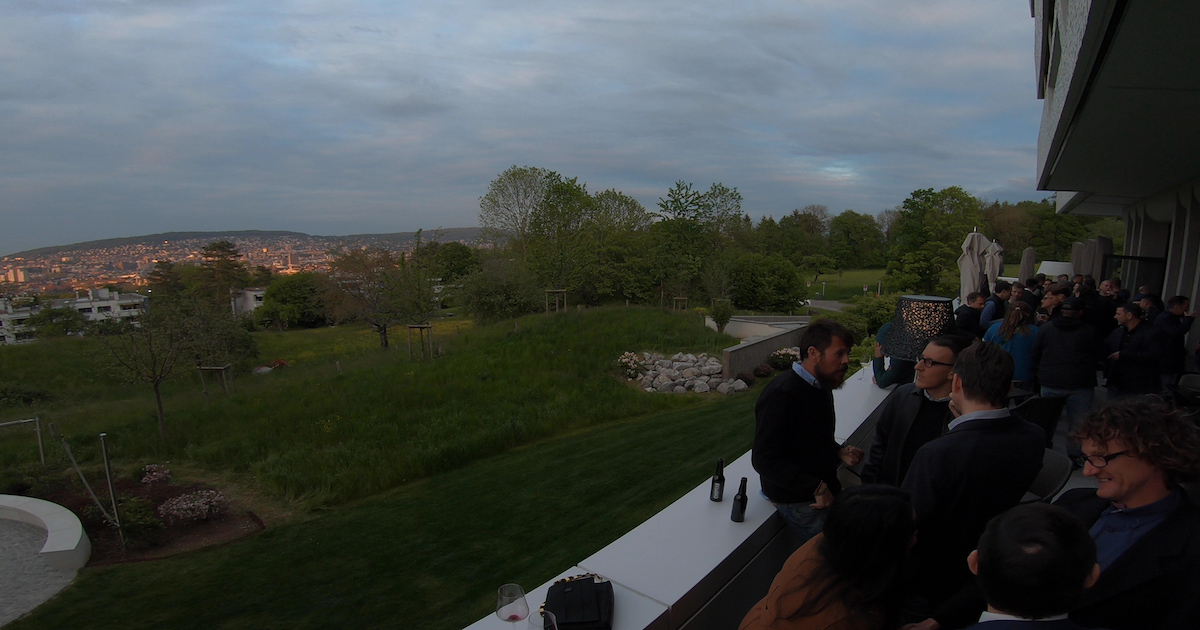
An eclectic group from all facets of the cannabis industry make connections at the VIP reception.
The Atlantis Hotel provided a great venue with interesting views.

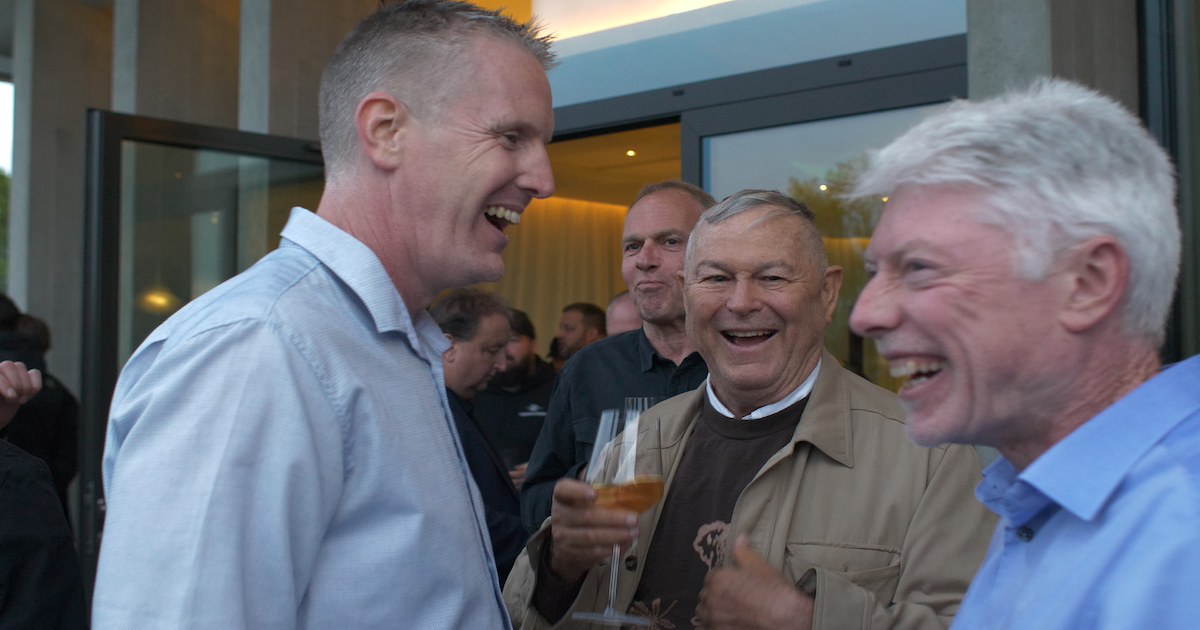
Founder & CEO Alex Rogers speaking with former US Congressman Dana Rohrabacher, and Cloud 9’s Francis Scanlon .
Alex Rogers welcomed the attendees, describing his inspiration for bringing the International Cannabis Business Conference to Switzerland.


An attentive audience packed the conference room to hear from Dana Rohrabacher.
Switzerland is a leader in CBD and the conference featured a panel with top experts in the industry.
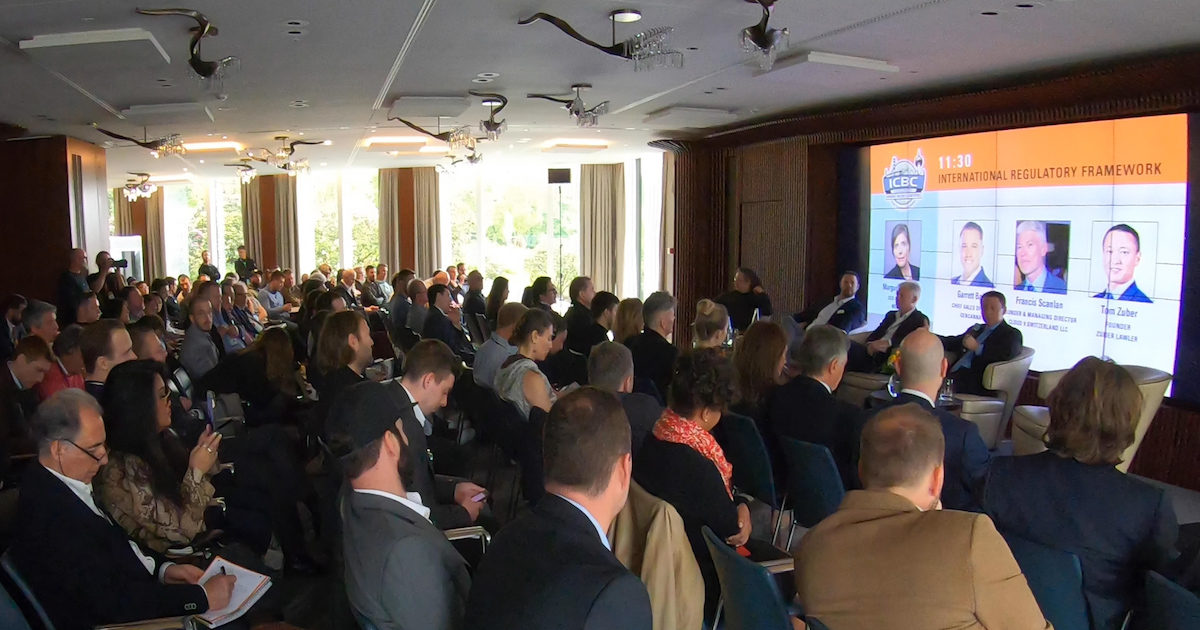
Of course, the International Regulatory Overview panel with esteemed industry lawyers was extremely popular and informative.
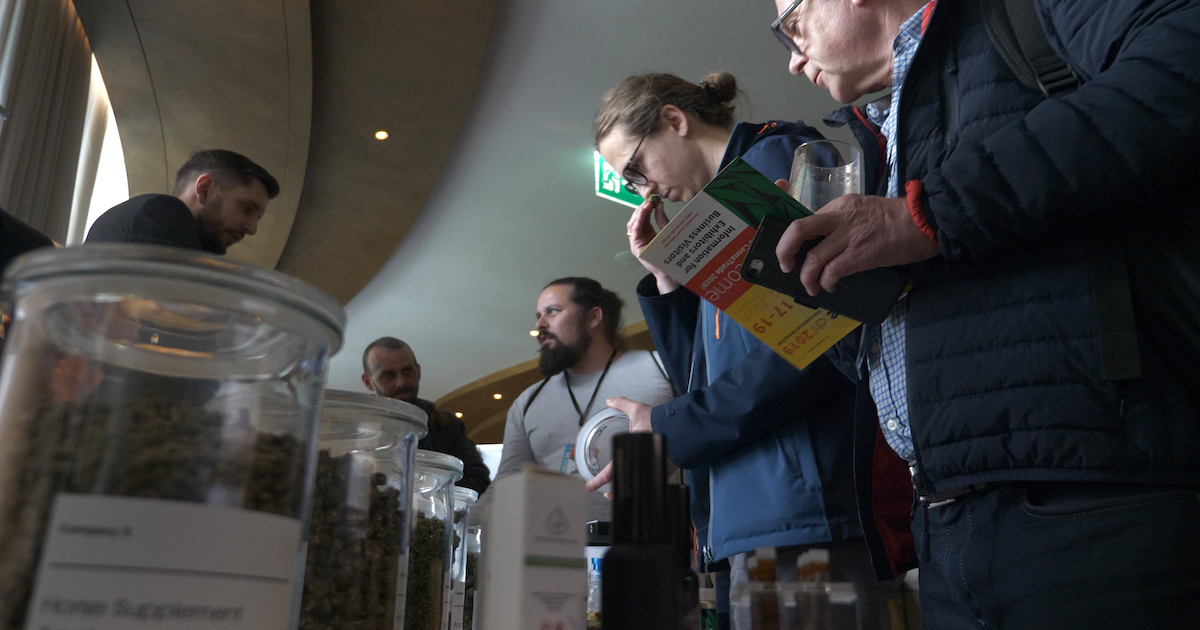
The expo area was bustling and proved to be fertile grounds to interact with potential customers and partners.

International Investing, presented by C3 CEO Nic Easley is always and interesting and engaging topic.
Cannabis Extracts, a growing market, was a very popular topic.
The after party, featuring DJ Leeroy, sponsored by Bhang was, well, banging.

Alex Rogers with DJ Leeroy, best known for his time with The Prodigy.

Dana Rohrabacher Talks Cannabis and Trump’s Support for Legalization

Politics can make strange bedfellows. It is a cliche, but it is simply the truth, especially in the United States. There aren’t many political issues that progressive Oregon Senators Ron Wyden and Jeff Merkley have in common with conservative Kentucky Senators Randy Paul and Mitch McConnell, yet they combined forces to (re-)legalize hemp across the nation. Portland’s liberal icon, Representative Earl Blumenauer didn’t agree with his Orange County Republican counterpart, Dana Rohrabacher, very often, but when they did, it was because they both were congressional leaders working to end cannabis prohibition.

Rohrabacher is no longer in Congress, but his political achievements live on while he takes his post-political message across the globe, starting tomorrow at the International Cannabis Business Conference in Zurich, Switzerland. The Swiss weekly Die Weltwoche asked Rohrabacher about his history, legalization, and Donald Trump in a wide-ranging, extensive interview:

Does the president agree with you on marijuana legalization?

Yes. And, in fact, after we talked at several stops during his campaign (his first campaign), he reconfirmed that position. His position is medical marijuana should be legal. After that, cannabis for adult consumption should be left up to the states.

You even said, “Trump is the greatest hope for future cannabis reforms.”

Absolutely right. A large segment of the Republican Party has opposed any legalization of cannabis laws. I’ve been at this for about 15 or 20 years, now. The roadblock has always been my fellow Republicans. They have been afraid to legalize cannabis, even for medical purposes. Basically, they are afraid their constituency would vote them out.

I know a lot of people who think that Big Pharma has been the evil source nixing cannabis liberalization. It wasn’t Big Pharma that kept it illegal, it was Republican Congress members who were afraid that a majority of their voters would not approve this and they wouldn’t be reelected.

What I did is I found the one way to reach those congressional Republicans so they could defend themselves against political attacks from within their own party. The winning approach was focused on states rights. After years of trying, I finally managed to get a vote on the House floor on restricting the federal government to supersede those laws in the states that legalize the use of medical marijuana. It’s called the Rohrabacher-Farr amendment. [It passed by a 219-189 vote in May of 2014 and was signed into law by President Obama in December, that year.]

(Definitely check out the entire interview with Die Weltwoche.)

Regardless of one’s political leanings on other issues, it takes a bipartisan approach to end cannabis prohibition, just as it did with hemp. Thanks to Dana Rohrabacher, the U.S. is in a much better position today to capture the Republican votes needed to soon end the failed war on cannabis. Hopefully, more politicians will soon get on the right side of history.

There is still time to hear Dana Rohrabacher and a whole host of experts at the International Cannabis Business Conference in Zurich. After our conference, stick around for CannaTrade, Europe’s oldest hemp fair. All Zurich attendees also get admitted to Cannatrade, so get your tickets today!