European Union Reportedly Ready To Supply Medical Cannabis To Ukraine

According to Ukraine Deputy Health Minister Maryna Slobodnichenko, the European Union is ready to supply medical cannabis to Ukraine. The nation’s Deputy Health Minister made the announcement in a recent interview with the Ukrainian News Agency.

“They (the European Union) are very happy about our progress in this area. They say – show the consumers, because they have warehouses of medical cannabis that they are ready to supply to us. But we are talking about medicine, and therefore the consumer is not every person, but patients who suffer from clearly defined diseases,” the official of the Ministry of Health said (translated from Ukrainian to English).

Earlier this year, in August 2024, Ukraine’s medical cannabis program officially launched. Ukraine’s Parliament first approved medical cannabis reform in December 2023, with President Volodymyr Zelensky signing the measure on February 15th, 2024.

Cannabis resin, extracts, and tinctures are excluded from the list of ‘dangerous substances’ in Ukraine under the new policy. The production of medical cannabis, development of medical cannabis therapies, and distribution of medical cannabis products are to be tightly regulated in the European nation.

“In order to implement the Law, the Ministry of Health team, together with the Ministry of Agrarian Policy, the State Medical Service, the Ministry of Internal Affairs, the National Police and other executive authorities, have developed by-laws that regulate all processes in detail and will allow the patient to receive medicine from medical cannabis.” Ukraine’s Ministry of Health stated in a news release announcing medical cannabis legalization’s implementation (translated from Ukrainian to English).

“In order to ensure the cultivation of medical cannabis in Ukraine, Licensing conditions have been developed, which will soon be considered by the Cabinet of Ministers.” the Ministry of Health also stated. “Also, the entire chain of circulation of medical cannabis, from import or cultivation to dispensing to a patient in a pharmacy, will be subject to license control.”

Ukrainian medical cannabis cultivation facilities are required to be operated in ‘closed soil conditions’ with ’round-the-clock video surveillance.’ Additionally, national police must have ‘free access’ to all facilities under the new regulations.

“For cultivation, there is a procedure for purchasing plant seeds – they must have a quality certificate and be registered in the State Register of plant varieties suitable for distribution in Ukraine.” the Ministry of Health stated in its news release in August 2024.

“Medicines from medical cannabis will be made in a pharmacy setting and prescribed by prescription to patients for whom conventional medicines do not have a therapeutic effect or cause adverse reactions that are poorly tolerated.” according to the Ministry of Health. “It will be possible to buy such medicines in Ukraine only with an electronic prescription, which will indicate the dosage form and dosage, the names of the active substances included in their composition. It is expected that medicinal products from medical cannabis will be available to patients in the form of oral drops, hard capsules, and dental pastes.”

“The law allows people entering or leaving Ukraine or transiting through its territory to carry medicinal products based on medical cannabis for their own use in an amount that does not exceed the amount prescribed by a doctor’s prescription.” the Ministry of Health also stated at the time.

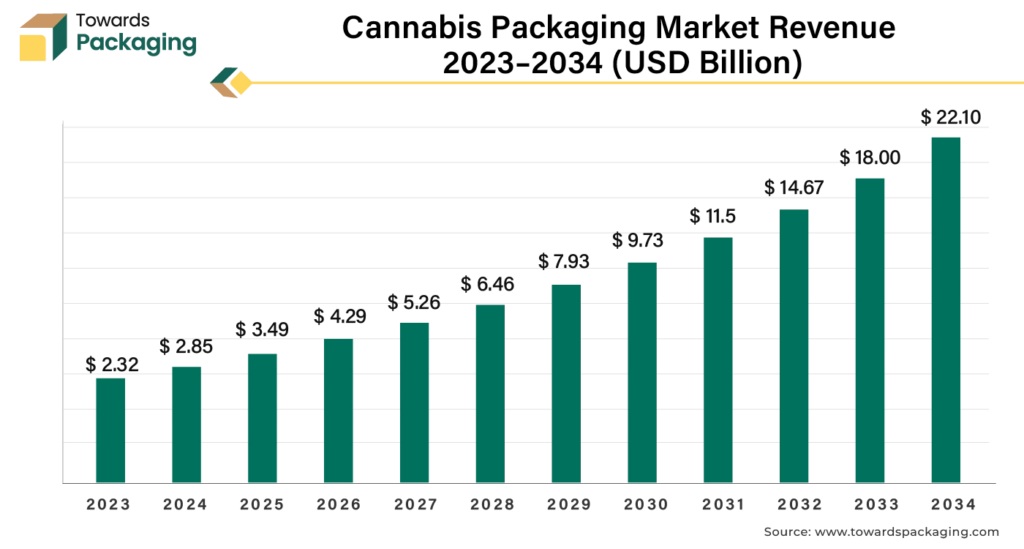
Global Cannabis Packaging Market Projected To Reach $22.10 Billion By 2034

The worldwide cannabis packing market is projected to reach $22.10 billion in value by 2034 according to a recent study conducted by Precedent Statistics. The market analysis values the cannabis packaging market at $3.49 billion in 2025.

“The market was estimated at USD 2.85 billion in 2024 and is projected to expand at a double-digit CAGR of 22.74% between 2024 and 2034.” the analysts stated.

cannabis packaging market projection 2024 to 2034

“The cannabis packaging market revolves around strong and tamper-evident packaging which provides child-resistance protection. Along with this, providing accurate information with labels and providing temperature and humidity resistance are the leading objectives of the market.” Precedent Statistics stated. The market researchers also determined the following:

  • North America holds the largest share and dominates the market due to its well-established regulations and advancement in cannabis packaging
  • Europe is a significant and mature market that drives the cannabis packaging industry by focusing on improving and adopting child-resistant features
  • Asia-Pacific is the fastest-growing market due to its versatile use and demand for the cannabis packaging market

The cannabis packaging sector of the emerging legal cannabis market is one of the most promising sectors due to every legal market requiring that cannabis products be in compliant packaging that includes such labeling information as cannabinoid content, harvest date, and/or production source.

Turkey Sets Hemp Quota For Medical Products

In 2016, hemp cultivation became legal in 19 provinces in Turkey for industrial purposes. Aspiring hemp producers must obtain the country’s Ministry of Food, Agriculture, and Livestock permission before beginning operations. Hemp product permits are valid for a maximum of three years in Turkey.

Regulators in Turkey recently announced that annual hemp cultivation in the country will be limited to 5,000 square meters and 120,000 plants ‘for the production of pharmaceutical active ingredients.’ Many medical cannabis products around the globe incorporate cannabidiol derived from hemp plants.

“Exempt from these restrictions are universities, research institutes within the Ministry of Agriculture and Forestry, and organizations with research permits, which may conduct scientific and R&D projects without being subject to the quota. The Ministry of Agriculture and Forestry will oversee the allocation of the quota.” stated Daily Sabah in its local reporting.

The modern push to boost Turkey’s emerging hemp industry came in 2019 when Turkey’s president, Recep Tayyip Erdoğan, announced that the country would take steps to increase production. Turkey was experiencing an economic crisis, and increased hemp production for the purpose of medical cannabis product exports was established to try to address the problem.

Turkey has a long history of cannabis and hashish production going back many centuries, and it wasn’t until the 1970s that the country outlawed production due to pressure from the United States.

According to a recent market analysis by Spherical Insights LLP, the global industrial hemp market is projected to be worth an estimated $24.30 billion by 2033.

“The Global Industrial Hemp Market Size is to Grow from USD 5.38 Billion in 2023 to USD 24.30 Billion by 2033, at a Compound Annual Growth Rate (CAGR) of 16.27% during the projected period.” the researchers stated in a press release.

Medical Cannabis Patients Report Reduced Pain, Improved Mental Health

Humans have a very long history of harnessing the wellness benefits of the cannabis plant. It wasn’t until the 20th century that the cannabis plant became villainized due to harmful political motivations.

Thankfully, cannabis policies and regulations are being modernized across the globe and more suffering patients are able to use cannabis and cannabis-derived medications to treat their condition(s).

A team of researchers in Australia recently conducted a study examining medical cannabis use, pain, and mental health. Below is information about the study and its findings via a recent news release from NORML:

Melbourne, Australia: Chronic pain patients report physical and mental health improvements following their use of medical cannabis preparations, according to observational data published in the Journal of Pain & Palliative Care Pharmacotherapy.

Australian researchers assessed the use of medical cannabis preparations in 96 chronic pain patients. (Under Australian law, physicians may only authorize cannabis products to patients unresponsive to conventional prescription treatments.) Study participants consumed cannabis formulations either high in CBD, high in THC, or containing equal ratios of both cannabinoids. Patients’ symptoms were assessed at three, six, and 12 months.

Investigators reported: “We identified clear associations between patient commencement of a prescribed medicinal cannabis product and improvements in pain, mental health and sleep difficulties, with the most pronounced therapeutic effects visible within the first six months of treatment. Furthermore, significant improvements were noted across diverse domains of symptom interference on daily functions, suggesting an improved quality of life for patients. In relation to pain management, the majority of patients exhibited a notable decline in their use of both prescription and over-the-counter pain medications. This reduction in the use of other medications is consistent with the substantial improvements in pain severity reported by most patients.”

The most frequently reported adverse events were dry mouth and sleepiness.

The study’s authors concluded: “Overall, we found that the use of medicinal cannabis was associated with reduced pain during the first six months and improved mental well-being over 12 months. … Further longitudinal and controlled studies are necessary to better understand the sustained effects of cannabis-based medications on pain and mental health.”

Similarly designed studies of patients enrolled in the United Kingdom’s medical cannabis access program have reported that medical cannabis treatment is safe and effective for those suffering from chronic painanxietypost-traumatic stressfibromyalgiadepressionmigrainemultiple sclerosisosteoarthritisinflammatory arthritisinflammatory bowel disease, and other afflictions.

Full text of the study, “Changes in mental health symptoms associated with prescribed medicinal cannabis use: A one-year longitudinal study,” appears in the Journal of Pain & Palliative Care PharmacotherapyAdditional information on cannabis and chronic pain is available from NORML’s publication, Clinical Applications for Cannabis & Cannabinoids.

Global Cannabidiol Market Projected To Reach $23.41 Billion By 2031

According to a new report by Coherent Market Insights, the global cannabidiol (CBD) market is projected to reach $23.41 billion by 2031. The analysis predicts the worldwide CBD market will experience a compound annual growth rate (CAGR) of 16.3% from 2024 to 2031.

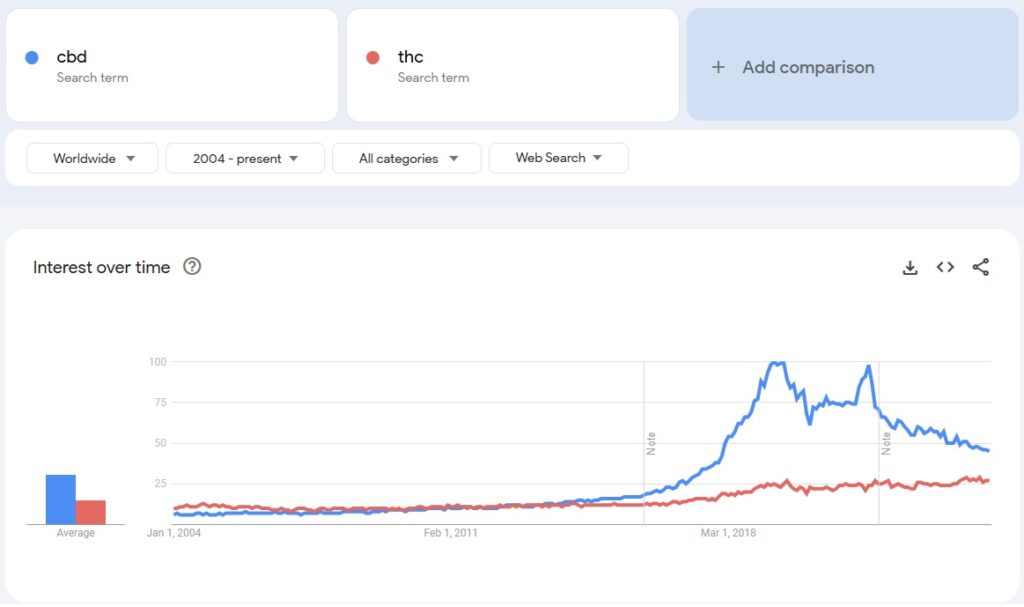
Interest in CBD has increased exponentially in recent years around the world, which is evidenced by how often CBD is searched on Google compared to tetrahydrocannabinol (THC). THC has historically served as the most popular cannabinoid among consumers and patients. Below is a chart demonstrating search trends for both cannabinoids in recent decades:

cbd and thc google search trends

A rise in CBD research and product availability parallels increased interest in CBD among patients and consumers. Additionally, the variety of CBD products patients and consumers can choose from has increased in recent years. CBD is now being infused into everything from edibles to topicals.

Legal CBD products are not just limited to humans. CBD products for pets are also big business these days. The global CBD pet market was worth an estimated $693.4 million in 2023 according to a recent market analysis by Global Market Insights. The CBD pet product market is projected to grow at an estimated 18.2% CAGR from 2024 to 2032.

The global market for hemp-based products is projected to reach $16.2 billion by 2033, growing at a CAGR of 24.5% between 2023 and 2033, according to a separate market analysis by Fact.MR. The researchers estimated that the market was worth $1.8 billion in 2023.

“Europe and North America collectively account for around 70% of the global market share at present and are expected to maintain a similar outlook over the coming years as well.” Fact.MR stated about its market report.

“Rapid legalization of marijuana and CBD products in these regions is expected to be a prominent factor that will help these regions sustain a dominant market share across the forecast period.” the researchers also stated.

Technavio recently published an estimate for the overall global industrial hemp industry. Technavio is a global technology research and advisory company that “focuses on emerging market trends and provides actionable insights to help businesses identify market opportunities and develop effective strategies to optimize their market positions.”

“The global industrial hemp market size is estimated to grow by USD 6.87 bn from 2023 to 2027, according to Technavio. The market is estimated to grow at a CAGR of over 17.1% during the forecast period.” Technavio stated in a press release.

62% Of Canadians Still Approve Of Cannabis Legalization

Canada became the second country on the planet and the first G-7 nation to adopt a national adult-use legalization measure in 2018. The only country to do so before Canada was Uruguay, where lawmakers approved a national adult-use legalization measure in 2013.

However, unlike Uruguay where legal recreational cannabis sales are limited to residents only, Canada permits recreational cannabis sales across the country to anyone of legal age. The legal age for cannabis purchases in Canada at the federal level is 18 years old, although provinces and territories can set a higher age limit.

The recreational cannabis commerce system in Canada is the most robust on earth. In addition to Uruguay and Canada, cannabis is also legal for recreational purposes at a national level in Malta, Luxembourg, Germany, and South Africa. Canada is the only nation on that list that permits nationwide sales to adult non-residents.

Investigators affiliated with Research Co. recently surveyed Canadians to determine the level of support for legalization six years after implementation. The survey results are based on an online survey conducted from October 13 to October 15, 2024, among 1,001 adults in Canada.

“In the online survey of a representative national sample, 62% of Canadians (-2 since a similar Research Co. poll conducted in October 2023) agree with marijuana being legal in Canada, while 33% disagree and 4% are undecided.” Research Co. stated about the results.

“Agreement with legal cannabis in Canada is highest in Quebec (66%), followed by Alberta (64%), Ontario (also 64%), British Columbia (60%), Atlantic Canada (56%) and Saskatchewan and Manitoba (53%).” the researchers also stated.

Research Co. also determined the following:

  • 33% of Canadians report having tried cannabis before it was legal
  • 14% only did so after legalization
  • 51% of consumers report making all of their purchases through licensed retailers
  • 74% support expunging charges for people convicted of possession of cannabis for personal use

Recreational cannabis is currently legal in two dozen states in the U.S. and in Washington D.C. Regional adult-use cannabis commerce pilot trials are operating in the Netherlands and Switzerland, and courts in a handful of other nations have rendered decisions providing some level of protection to adult cannabis consumers.

German Cities Moving Forward With Legal Cannabis Sales Pilot Projects

Germany is currently home to the most progressive cannabis policies in Europe. The German legalization model involves permitting adults to cultivate, possess, and consume cannabis for recreational purposes, as well as to become members of a growing list of cultivation associations.

Another component of Germany’s legalization model involves launching regional adult-use cannabis commerce pilot trials. Pilot trials that are already operating in the Netherlands and Switzerland are research-based and allow lawmakers and regulators to gather local data to be better suited when crafting national policies and regulations.

Both Frankfurt am Main and Hanover, two of Germany’s more populated cities, recently announced plans to launch pilot trials ‘at the beginning of 2025.’

“The pilot project in Hanover, Lower Saxony, will be accompanied by a scientific study carried out by the Hanover Medical School, with around 4,000 people expected to take part.” stated The Local in its coverage.

“The city of Frankfurt in Hesse is also taking part in the pilot project to sell cannabis. Participants will be able to legally purchase cannabis flowers and other products containing tetrahydrocannabinol (THC) for five years in specialised shops set up specifically for this purpose.” the outlet also reported.

Sales outlets involved in Germany’s pilot projects will differ from dispensaries found in North America in that not all adults will be able to make purchases. Anyone of legal age in Canada and legal states in the U.S. can make purchases from licensed dispensaries. In Uruguay, legal sales are limited to residents only.

Adult-use cannabis is also legal in Malta, Luxembourg, and South Africa, although adult-use cannabis sales remain prohibited in those jurisdictions.

Pilot trials in Germany will require adults to register with a local pilot project, at which point they will be able to make legal purchases and participants will be required to provide feedback to regulators for ongoing research purposes. Pilot participants in Germany will still be able to join a cultivation association and cultivate their own cannabis if they choose to.

Lawmakers in Germany initially pushed for a more comprehensive commerce system, akin to what is in place in Canada. However, European Union agreements prohibit such commerce models. German lawmakers opted to implement a multi-pronged approach of permitting home cultivation, cultivation associations, and pilot trials.

The multi-pronged approach in Germany was adopted to boost public health outcomes. A team of researchers associated with Sanity Group recently examined over 300 unregulated cannabis samples from 30 different German cities. According to the results of the study, roughly 80% of the samples of unregulated cannabis were contaminated with various harmful substances, from hairspray to banned pesticides.

“The investigation showed that 74 percent of the samples contained bacteria and viruses, 71 percent contained dangerous pesticides and 65 percent were contaminated with feces. In addition, traces of cocaine were found in 47 percent of cases and hairspray residues in 32 percent. The samples from the major cities of Berlin, Hamburg and Munich were particularly heavily contaminated.” the German Cannabis Business Association (BvCW) stated in a recent newsletter about the study’s findings.

“These worrying results underline the urgency of establishing a comprehensive range of safe, controlled cannabis products in Germany as part of the partial legalization process (“Pillar 2”). This is the only way to ensure the health protection of consumers. The study clearly illustrates the risks of the black market and the need for a regulated supply of cannabis in order to protect the health of consumers.” the association also stated.

Study Finds 80% Of Unregulated Cannabis In Germany Is Contaminated

Starting on April 1st, 2024, adults in Germany can legally cultivate, possess, and consume cannabis for recreational purposes. Germany’s legalization model also includes cultivation associations, and eventually, regional adult-use cannabis commerce pilot trials.

Unfortunately, nationwide adult-use sales like what is permitted in Uruguay and Canada cannot occur in Germany until European Union agreements are modernized to allow such activity. A recent study conducted by Sanity Group highlights why further reform is warranted in Germany and the rest of the EU.

A team of researchers associated with Sanity Group examined over 300 unregulated cannabis samples from 30 different German cities. According to the results of the study, roughly 80% of the samples of unregulated cannabis were contaminated with various harmful substances, from hairspray to banned pesticides.

“The investigation showed that 74 percent of the samples contained bacteria and viruses, 71 percent contained dangerous pesticides and 65 percent were contaminated with feces. In addition, traces of cocaine were found in 47 percent of cases and hairspray residues in 32 percent. The samples from the major cities of Berlin, Hamburg and Munich were particularly heavily contaminated.” the German Cannabis Business Association (BvCW) stated in a recent newsletter about the study’s findings.

“These worrying results underline the urgency of establishing a comprehensive range of safe, controlled cannabis products in Germany as part of the partial legalization process (“Pillar 2”). This is the only way to ensure the health protection of consumers. The study clearly illustrates the risks of the black market and the need for a regulated supply of cannabis in order to protect the health of consumers.” the association also stated.

The main goal of German legalization is to boost public health outcomes, with the main premise being that when adults consume regulated cannabis products instead of unregulated cannabis products they are healthier. To further BvCW’s point, Germany needs a more comprehensive legal cannabis commerce system to achieve the nation’s legalization goal.

Findings from the German study are similar to the results of a separate study conducted in Canada which also found that unregulated cannabis is often contaminated. Whereas regulated cannabis is tested for contaminants and subject to recalls, the same is not true for unregulated cannabis.

Canada implemented the Cannabis Act in late 2018, making it the first G-7 nation to pass a national adult-use cannabis legalization measure. One of the top goals of Canada’s cannabis policy modernization effort was to enact regulations to reduce contamination rates in the products that people were consuming.

“In this study, we describe an expanded 327 multi-residue pesticide analysis in cannabis inflorescence to confirm if the implementation of the Cannabis Act is providing safer licensed products to Canadians in comparison to those of the illicit market.” a team of Canadian researchers stated about their 2023 study.

“An extensive multi-residue method was developed using a modified quick, easy, cheap, effective, rugged, and safe (QuEChERS) sample preparation method using a combination of gas chromatography—triple quadrupole mass spectrometry (GC–MS/MS) and liquid chromatography—triple quadrupole mass spectrometry (LC–MS/MS) for the simultaneous quantification of 327 pesticide active ingredients in cannabis inflorescence.” researchers stated about the testing method used on the samples involved in the study.

“Application of this method to Canadian licensed inflorescence samples revealed a 6% sample positivity rate with only two pesticide residues detected, myclobutanil, and dichlobenil, at the method’s lowest calibrated level (LCL) of 0.01 μg/g.” researchers stated about the regulated samples.

“Canadian illicit cannabis inflorescence samples analysed showed a striking contrast with a 92% sample positivity rate covering 23 unique pesticide active ingredients with 3.7 different pesticides identified on average per sample. Chlorpyrifos, imidacloprid, and myclobutanil were measured in illicit samples at concentrations up to three orders of magnitude above the method LCL of 0.01 μg/g.” researchers stated about the unregulated samples.

The difference in contamination rates largely speaks for itself regarding the effectiveness of regulating cannabis products. In an unregulated market, the number one incentive is to make as much money as possible, and that all but guarantees that humans will cut corners at the expense of consumers.

When consumers are afforded the option to purchase regulated cannabis versus unregulated cannabis in Canada, they choose regulated cannabis more often than not according to the results of a study that was also published in 2023. The same would presumably be true in other markets, including European markets.

Adults are going to consume cannabis whether it is legal to do so or not. Enough time has passed to prove that cannabis prohibition does not lower usage rates. All prohibition does is push consumers to unregulated sources.

Investing In Europe’s Emerging Legal Cannabis Industry

The European continent is the most exciting region for the cannabis industry and policy right now, with several nations working to modernize their cannabis laws and regulations. The most noteworthy example is Germany, where lawmakers enacted the first provisions of a national adult-use legalization measure on April 1, 2024.

Adults in Germany can now cultivate up to three plants in their private residences in addition to being able to possess and consume cannabis for recreational purposes legally. Furthermore, adult consumers in Germany can join a growing list of adult-use cultivation associations.

Before Germany’s legalization, Malta and Luxembourg also adopted national recreational cannabis legalization measures. Regional adult-use cannabis commerce pilot trials are also operating in both the Netherlands and Switzerland. Policy modernization efforts are also gaining traction in other European nations such as in Slovenia and the Czech Republic.

A rise in opportunities for entrepreneurs and investors is paralleling the rise of policy modernization efforts in Europe. Things are moving quickly and it can be difficult to navigate the evolving landscape. Fortunately, there is an opportunity coming up next week in Munich that streamlines the process of identifying and networking with startups and investors.

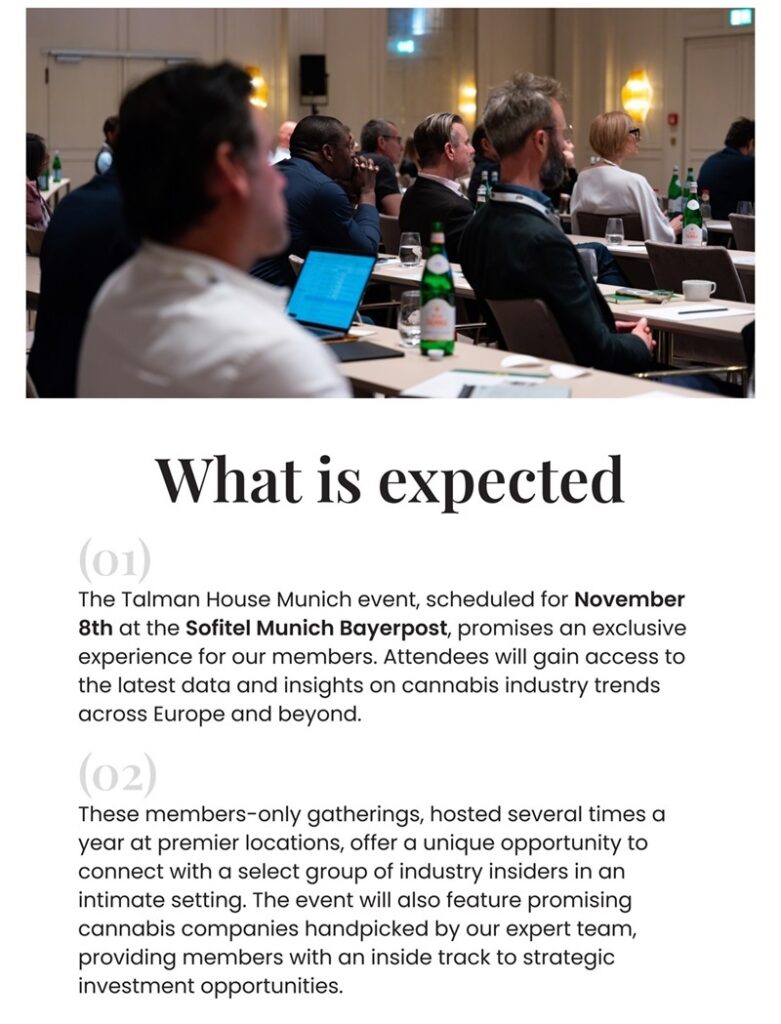
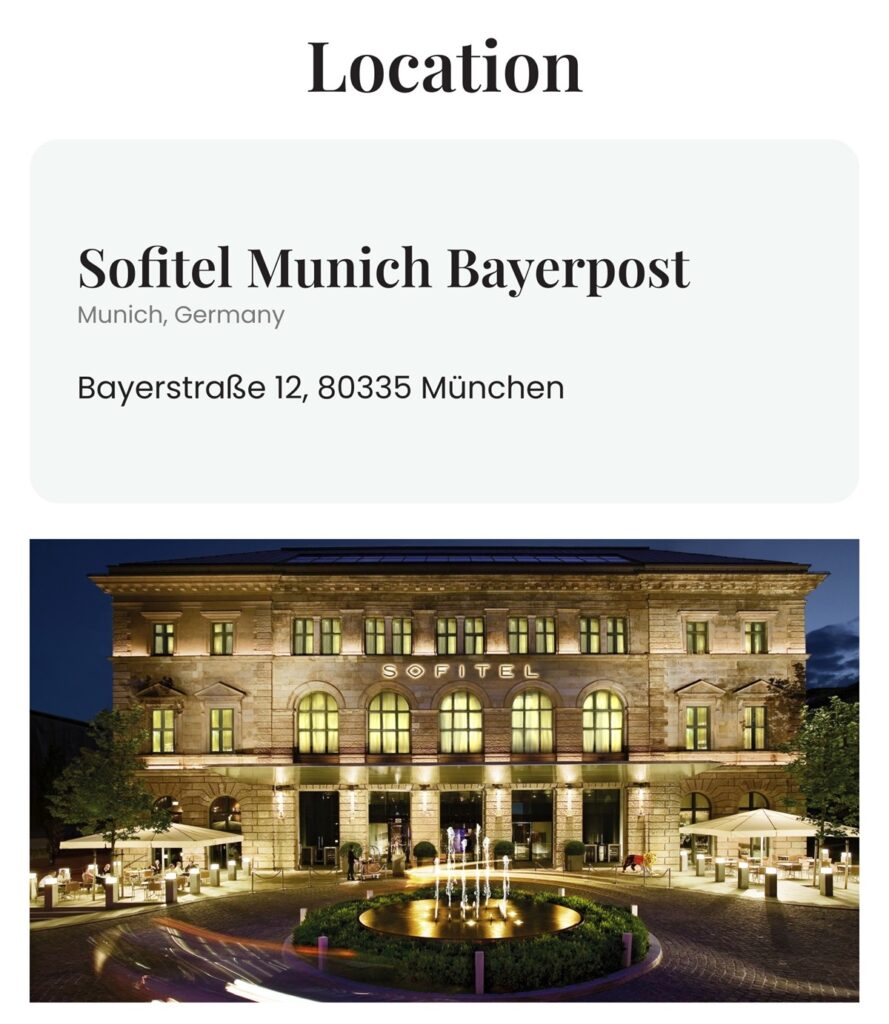
The Talman Group is hosting an investor event in Munich, Germany on November 8, 2024, for Talman House members. Below is a graphic that explains what attendees can expect at the event. To learn more about how you can become a member of the Talman House, click this link here.

Talman House Munich November 2024 1

Talman House Munich November 2024 2

Talman House Munich November 2024 3