Cannabis Extracts Reduce Disease Burden In Israeli Pain Patients

Researchers estimate that roughly 20% of the world’s population suffers from chronic pain. It is possible that due to various factors, many cases go undiagnosed in some regions of the world, and that the actual number of chronic pain sufferers could be much greater.

A patient experiencing temporary pain is not the same as chronic pain. Chronic pain occurs when patients still suffer from it well after the expected recovery time for an injury or illness, sometimes lasting weeks or even years.

Investigators in Israel recently conducted a study in which they examined reported disease burden rates and cannabis extract use among chronic pain patients. Below is more information about the study and its results via a news release from NORML:

Haifa, Israel: Patients’ use of cannabis oil extracts is associated with long-term improvements in their pain intensity and related symptoms, according to data published in the journal Pain Reports.

Israeli researchers assessed the safety and efficacy of cannabis extracts in a cohort of 218 middle-aged chronic pain patients (mean age: 54) over six months. Patients consumed sublingual extracts containing standardized THC and CBD concentrations.

Cannabis treatment was associated with sustained reductions in pain intensity, opioid use, anxiety, depression, and sleep deprivation. Though some subjects did report “mild to moderate” side effects from cannabis, these events did not interrupt their “continuous use” of marijuana extracts throughout the study period.

“Cannabis seems to have an impact on the ‘disease burden’ of chronic pain,” the study’s authors concluded. “It also has a positive effect on functioning and health-related quality of life.”

The researchers’ findings are consistent with those of other larger observational studies involving thousands of pain patients enrolled in medical cannabis access programs.

Full text of the study, “Cannabis oil extracts for chronic pain: What else can be learned from another structured prospective cohort,” appears in Pain ReportsAdditional information on cannabis and chronic pain is available from NORML’s publication, Clinical Applications for Cannabis & Cannabinoids.

Italy’s Push To Ban Hemp Flower Products Is Bad For Public Health Strategies

Cannabis products that are low in THC content, often referred to as ‘cannabis light,’ are very popular throughout Europe. Cannabis light products are derived from the flowers of hemp plants and come in many forms, with CBD products being the most commonly found in the European marketplace.

One country in Europe where cannabis light products are particularly popular is Italy where the nation’s government is pushing for a national ban on such products. Italy’s Ministry of Health tried classifying CBD as a narcotic in October 2020, just to reverse the policy change days after enacting it.

Then, in early 2022, language in a 2018 decree was updated to classify hemp as strictly a medicinal plant, however, cannabis associations sued and the language in the decree was annulled roughly a year after it was adopted. The latest push to ban hemp flowers in Italy is largely led by the country’s Prime Minister. Per Hemp Today:

The Italian government of Prime Minister Giorgia Meloni has taken aim at industrial hemp in legislation that would wipe out CBD and all other products derived from the plant’s flowers.

The proposal would ban hemp flowers from “import, processing, possession, transfer, distribution, trade, transport, dispatch, delivery, sale to the public and for consumption, even in semi-finished, dried or shredded form,” according to language in a draft amendment to country’s controversial Security Bill.

Cannabis is currently legal in Europe for adult use in Malta, Luxembourg, and Germany. All three nations have accepted the reality that people will consume cannabis whether it’s legal to do so or not, and that it is obviously better for adults to consume regulated products instead of unregulated products.

Regulated cannabis products are tested to make sure that they are safe for human consumption, and the same is not true for unregulated cannabis products. Humans consuming unregulated cannabis products, including hemp flowers and products derived from them, is not as good for public health outcomes compared to humans consuming regulated products.

Italy would be wise to reverse course and refrain from its push to ban hemp-derived products. In addition to bans on hemp products being illogical, it likely also violates European law. Hemp businesses have already indicated that they will pursue legal remedies if the ban is enacted.

Leaders in Italy’s hemp industry estimate that the nation is currently home to over 3,000 businesses that employ over 15,000 people.

THC Use Associated With Increased Survival Time In German Cancer Patients

Germany first legalized cannabis for medical use in 2017. Since that time, Germany’s medical cannabis program has become the largest in Europe, with the nation’s program serving hundreds of thousands of suffering patients.

Thanks to the recently implemented CanG law in Germany, medical cannabis in Germany is set to undergo a significant transformation in the coming years, with cannabis no longer being on the nation’s Narcotics List, caps on domestic medical cannabis production being removed (Germany imported over 34 tons of medical cannabis in 2023), and the German medical cannabis supply chain being streamlined.

Researchers in Germany recently examined survival time rates among palliative cancer patients who consumed medical cannabis products containing THC. Below is more information about it via a news release from NORML:

Berlin, Germany: The daily use of 5mg of oral THC is associated with increased survival times in palliative cancer patients, according to data published in the journal Medical Cannabis and Cannabinoids.

German researchers evaluated the impact of THC dosing in a cohort of 9,419 advanced cancer patients enrolled in Specialized Palliative Outpatient Care (SAPC). SAPC offers team-based home care for patients with advanced and progressive diseases whose life expectancies are limited to days, weeks, or months.

Researchers reported that patients’ daily use of 4.7mg of THC was associated with significantly increased survival time, whereas lower doses were not.

The study’s authors concluded: “The data … show a significant impact of THC on survival in ambulatory palliative care patients [who] … use more than 4.7 mg/day. Median survival time was prolonged by 15 days – from survival time of 25 days without THC therapy to 40 days with a daily THC dose higher than 4.7 mg per day. This prolongation by more than two weeks can be considered substantial. In addition to mere survival, patients [treated] with THC become more mentally and physically active. … The increased activity and improved quality of life might enable the patients to renew social contact with relatives and friends and to settle essential affairs before dying.”

The study’s findings are consistent with data published in 2021 that similarly reported that THC was associated with increased survival times in German hospice patients, particularly among women ages 75 and older.

Full text of the study, “The use of tetrahydrocannabinol is associated with an increase in survival time in palliative cancer patients: A retrospective multicenter cohort study,” appears in Medical Cannabis and Cannabinoids.

South Africa’s President Signs ‘Private Setting’ Cannabis Legalization Measure

Back in 2018, South Africa’s Constitutional Court issued a landmark ruling that deemed cannabis prohibition as it pertained to adult individuals to be unconstitutional. The 2018 decision stemmed from a lower court decision in Western Cape in March 2017 which determined that a ban on cannabis use by adults at home was unconstitutional.

The 2018 decision in South Africa left many unknowns, including how much cannabis a person could cultivate and possess in a private setting. The Court largely punted many policy decisions to lawmakers, who then proceeded to drag their feet for several years. Today, after a long delay, South Africa’s President signed a measure to codify the Court’s 2018 decision.

“President Cyril Ramaphosa has signed into law the Cannabis for Private Purposes Act (“CfPPA”). The CfPPA regulates the cultivation, possession, and use of cannabis by adults in a private setting.” The President’s office stated in a press release.

“The consequent regulatory reform enabled by the CfPPA will, amongst others, entirely remove cannabis from the Drugs and Drug Trafficking Act. This will further enable amendment of the Schedules to the Medicines and Related Substances Act and provide for targeted regulatory reform of the Plant Breeders Rights Act and the Plant Improvement Act, as well as other pieces of legislation that require amendment to allow for the industrialisation of the cannabis sector.” the press release also stated.

South Africa joins a growing list of nations that have adopted modernized adult-use cannabis policies. Uruguay legalized cannabis nationally for adults in 2013, with national product sales launching in 2017.

Canada became the second nation to adopt adult-use cannabis legalization in 2018, making it the first G-7 nation to adopt recreational reform. Malta legalized in 2021 followed by Luxembourg in 2023.

Germany is the largest nation to pass a national adult-use legalization measure, with the first provisions of the nation’s CanG law taking effect on April 1st. Social cannabis clubs are expected in Germany in July, and regional adult-use cannabis commerce pilot trials are expected to launch by the end of the year.

South Africa’s recently approved measure does not legalize adult-use cannabis product sales. However, the removal of cannabis from the nation’s Drugs and Drug Trafficking Act is significant.

Somewhat similar to Germany’s recent removal of cannabis from its national Narcotics List, the removal in South Africa will likely have a dramatic impact on its national medical cannabis industry. Researchers estimate that South Africa’s medical cannabis industry has the potential to create a R100 billion-a-year boost to the nation’s economy and create over 130,000 jobs.

Today’s cannabis measure signing in South Africa adds to the growing momentum for global reform.

Cannabis Clones And Seeds Are Already Becoming A Huge Industry In Germany

Germany made history on April 1st, 2024 when it became the largest nation to implement provisions of a national adult-use legalization measure. Starting in April, adults in Germany can legally cultivate, possess, and consume cannabis. Social cannabis clubs are set to launch in July, and regional adult-use cannabis commerce pilot trials are expected to launch by the end of the year.

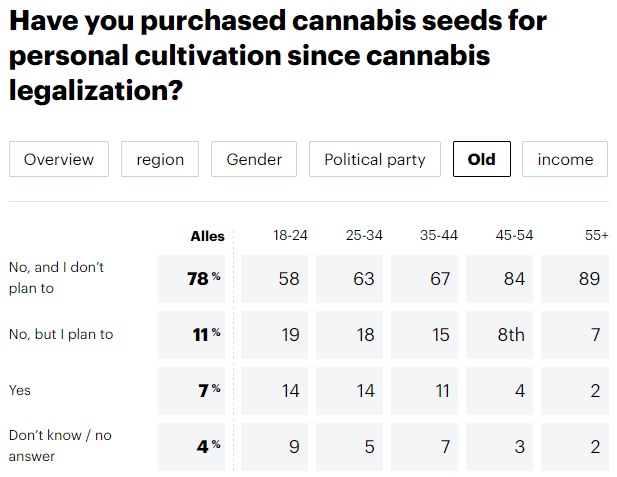
Personal cannabis cultivation is already proving to be very popular with adult consumers in Germany, as reflected by a recent YouGov poll which found that 7% of poll participants indicated that they had already purchased cannabis clones or seeds since legalization took effect.

Commercial sales of cannabis clones and seeds were legalized in Germany as part of the nation’s new cannabis law (CanG). In addition to the 7% of poll participants indicating that they had already purchased cannabis clones or seeds, another 11% of poll participants responded that they plan to purchase cannabis clones or seeds in the future.

When the results are filtered by age, 14% of poll participants aged 18-34 indicated that they had already purchased cannabis clones or seeds. Only 2% of German adults over 55 who participated in the YouGov poll indicated that they had already purchased cannabis clones or seeds.

german cannabis clones seeds purchases

The YouGov poll, which surveyed 3,375 German adults, was conducted on May 13th, 2024. When social cannabis clubs launch in Germany in July, they are expected to be a primary source of cannabis clones and seeds for aspiring German cannabis cultivators, and that will increase access to cannabis genetics.

YouGov’s poll results provide insight into how big the cannabis clones and seeds sector may currently be in Germany, and with it the larger personal cultivation sector. Germany is home to an estimated 70 million adults and if the results of the YouGov poll are indicative of the larger adult German population, that works out to a massive personal cultivation market base.

Cannabis cultivation, even on a small personal scale, requires more than just clones or seeds. Growers need grow mediums for their clones or seeds, nutrients to feed their plants, indoor lighting, environmental control equipment, and/or harvesting and drying equipment too. Many aspiring cultivators also need instructional materials such as books or other educational literature. All of those subsectors create opportunities for entrepreneurs and innovators.

Personal cannabis cultivation is already big business in Germany, and the sector will presumably only get bigger as time goes along. Domestic commercial medical cannabis production is also set to experience tremendous growth in Germany, with historical medical cannabis domestic production quotas being removed as part of the new CanG law.

The rise of personal recreational cultivation and increased domestic commercial medical cannabis production is going to transform Germany’s cannabis industry going forward. In 2023 Germany imported a record 34.6 tons of medical cannabis products from other countries, and clearly, that is going to change.

Osteoarthritis Patients Report Sustained Benefits From Cannabis In UK Study

Osteoarthritis is the most common form of arthritis found in adults around the world. Osteoarthritis is a degenerative joint disease, in which the joint tissues degenerate as the patient ages. The health condition is characterized by chronic pain and loss of mobility.

Global researchers estimate that 595 million people worldwide suffered from osteoarthritis in 2020, which is roughly 7.6% of the world’s population. The 2020 rate is an increase of 132.2% in total cases compared to 1990.

Investigators recently conducted a study in the United Kingdom in which they examined the cannabis plant’s ability to treat osteoarthritis. Below is more information about the study and its results via a news release from NORML:

London, United Kingdom: Patients diagnosed with osteoarthritis report pain-specific improvements following their use of medical cannabis preparations, according to observational data published in the Journal of Pain & Palliative Care Pharmacotherapy.

British researchers assessed the use of cannabis-based medicinal products (CBMPs) consisting of either flower or oil extracts in a cohort of osteoarthritis patients enrolled in the UK Medical Cannabis Registry. (Since 2018, British specialists have been permitted to prescribe cannabis-based medicinal products to patients unresponsive to conventional medications.) Researchers assessed changes in patient-reported outcomes measures over a one-year period.

Patients reported symptom improvements at one-month, three-months, six-months, and at one-year.

“Commencement of CBMP treatment was associated with reductions in pain-specific PROMs [patient-reported outcome measures] at all time points in patients with osteoarthritis,” researchers reported. Patients also reported improved sleep. Contrary to the results of several other studies, patients prescribed opioids did not decrease their opioid intake following their initiation of medical cannabis.

Investigators documented few serious side-effects associated with cannabis. “AEs [adverse events] were mainly mild or moderate in severity,” they wrote. “Fatigue was the most common AE in this study.”

The study’s authors concluded: “These results suggest an improvement in pain-related outcomes for patients with osteoarthritis following the initiation of CBMP treatment. Furthermore, there was an improvement in general HRQoL [health-related quality of life] metrics across the follow-up period. CBMPs also appeared to be well-tolerated at 12-month follow-up. … Hence, this study supports the development of RCTs [randomized clinical trials] for CBMP use in osteoarthritis.”

Other studies assessing the use of cannabis products in patients enrolled in the UK Cannabis Registry have reported them to be effective for those suffering from chronic painanxietypost-traumatic stressdepressionmigraineinflammatory bowel disease, and other afflictions.

Full text of the study, “Assessment of clinical outcomes in patients with osteoarthritis: Analysis from the UK Medical Cannabis Registry,” appears in theJournal of Pain & Palliative Care PharmacotherapyAdditional information on cannabis and arthritis is available from NORML’s publication, Clinical Applications for Cannabis & Cannabinoids.

CBD Effectively Treats Acute Dental Pain In Randomized Clinical Trial

The cannabis plant contains dozens of cannabinoids, each with its own characteristics and potential to provide wellness benefits. For many decades tetrahydrocannabinol (THC) was the focus of much of the cannabis research conducted by scientists.

However, in recent years other cannabinoids have risen in popularity, and that has shifted some of the focus of cannabis researchers. Cannabidiol (CBD) is a very popular cannabinoid these days among consumers, patients, product developers, and researchers.

According to a recent randomized clinical trial conducted in Scotland, CBD can effectively treat acute dental pain. Below is more information about the study via a news release from NORML:

Kilmarnock, Scotland: The administration of a purified formulation of plant-derived CBD (aka Epidiolex) provides significant short-term relief to patients suffering from acute toothaches, according to placebo-controlled clinical trial data published in the journal Evidence-Based Dentistry.

A pair of Scottish scientists assessed the use of Epidiolex versus placebo in 61 patients with moderate-to-severe dental pain. Forty patients received CBD in doses of either 10 or 20 mgs. Twenty-one subjects received a placebo. Patients’ pain was monitored for three hours following dosing.

Patients who consumed CBD, on average, experienced a greater than 50 percent reduction in their pain, investigators reported. By contrast, those receiving placebo experienced a 37.5 percent decrease in pain.

“Based on this randomized clinical trial, pure CBD drug Epidiolex demonstrates effective analgesia against acute toothache,” the study’s authors concluded.

The US Food & Drug Administration approved the prescription use of Epidiolex as an anti-epileptic drug in 2018. The DEA removed Epidiolex from the Controlled Substances Act in 2020.

Full text of the study, “Cannabidiol – an effective analgesic for toothache,” appears in Evidence-Based Dentistry.

Major Shift: German Hemp ‘Intoxication Clause’ Expected To End Soon

Cannabis products that contain high percentages of THC generate a lot of headlines in Germany these days, and rightfully so. Germany recently legalized the cultivation, possession, and consumption of high-THC flower by adults, and the nation’s medical cannabis industry continues to thrive as well.

However, Germany’s domestic hemp industry is making strides too, with consumer demand for hemp-derived products trending upward. Some consumers in Germany prefer CBD products with little to no amounts of THC, as well as products derived from hemp containing ‘alternative cannabinoids’ such as delta-8 THC.

Leadership in Germany recently announced that enforcement authority for the “authorization and monitoring of the use of cannabis for scientific purposes” will be vested in the Federal Agency for Food and Agriculture. Cem Özdemir, the current Federal Minister of Food and Agriculture, has indicated that a major hurdle facing Germany’s emerging hemp industry could be going away soon.

“Cem Özdemir, Federal Minister of Food and Agriculture, announced the abolition of the so-called “intoxication clause” at yesterday’s Parliamentary Evening of the Cannabis Industry. This special German rule means that even very low levels of THC in industrial hemp can lead to criminal liability, raids and plant closures.” stated the Cannabis Industry Association (BvCW) in its initial coverage (translated from German to English).

“In conjunction with other bureaucratic hurdles, this has hindered the use and processing of industrial hemp in Germany. This unnecessary competitive disadvantage is now finally being abolished. The cannabis industry association has campaigned intensively for this in recent years.” the Cannabis Industry Association (BvCW) also stated.

“Imagine if dealers and producers of non-alcoholic beer were subjected to raids and punished because they could distill a schnapps from the remaining alcohol. In practice, such a complex extraction does not take place with industrial hemp,” said BvCW managing director Jürgen Neumeyer. “This senseless noise clause has increasingly led to economic damage and bankruptcies in recent years. The abolition is urgently needed and we are therefore very pleased! This is an important step towards re-establishing the German industrial hemp industry. We look forward to a draft from the BMEL and will continue to support the parliamentary process constructively.”

Soon, Germany will launch social cannabis clubs and adult-use cannabis commerce pilot trials. Adult consumers will be able to become members of a social club and/or join a local pilot trial and legally source cannabis products that contain THC.

As previously mentioned, adults in Germany can already cultivate high-THC cannabis in their homes as of April 1st, 2024. Punishing people for cultivating or consuming hemp-derived products is more ridiculous than ever.

Cannabis advocates have long pushed for this type of reform, including in the lead-up to the passage of the new CanG bill. Unfortunately, opponents were able to maintain the status quo under the premise that consumers could make intoxicating products out of hemp.

“If access to THC-containing flowers is to be made possible through clubs and home cultivation anyway, why should anyone go to the trouble of extracting low doses of THC from CBD flowers for several hours in their own home workshop?” Krautinvest.de pointed out in its initial reporting.

“Speaking at the International Cannabis Business Conference Berlin last year, industry veteran and President of EIHA Daniel Kruse said: “I would simply cancel this clause. All stakeholders will advocate for its abolition.” Business of Cannabis stated in its initial reporting.

“The debate about the ‘misuse of hemp’ needs to be brought to an end. Hemp has huge potential if the clause is abolished. Industrial hemp would lead to more sales than medical and recreational put together in Germany.” Daniel Kruse also stated at the International Cannabis Business Conference in Berlin according to Business of Cannabis.

In addition to causing headaches in Germany, the lack of comprehensive hemp and CBD industry reform has also caused similar issues throughout Europe. The European CBD and hemp-derived consumables industries are here to stay, and governments at all levels would be wise to work toward harmonizing related laws, rules, and regulations.

Cannabis Referendums In Slovenia Deserve A Serious Discussion

Slovenia’s voters will decide on two consulting referendum measures on June 9th pertaining to cannabis policy modernization proposals. The referendum questions were approved for voter referral by Slovenia’s National Assembly in April. Neither measure is binding, however, successful votes for either will help further build upon increasing momentum for Slovenian cannabis reform.

One of the consulting referendum measures involves modernizing Slovenia’s medical cannabis policies. Limited medical cannabis commerce and use are already permitted in Slovenia, however, domestic production is not. Patient advocates are seeking to expand the nation’s medical cannabis program to boost domestic production and safe access, increase product variety selection, improve research policies, and expand the list of Slovenia’s qualifying conditions.

The second consulting referendum measure asks voters about the “cultivation and possession of cannabis for limited personal use” by adults. Personal cultivation, possession, and use by adults are already legal in Malta, Luxembourg, and Germany. Courts in other European countries have also issued rulings that provide similar personal cannabis consumer protections.

Cannabis policy modernization proposals in Slovenia are important topics worthy of constructive public policy conversations. Unfortunately, cannabis opponents in Slovenia seem to prefer using delay tactics and spreading incomplete/misleading information.

An example can be found in a recent article published by Slovenia’s National Institute of Public Health in which the entity expresses opposition to cannabis use and reform in general, but does not specifically call out the upcoming referendum votes. Still, the aim of the article is glaringly obvious.

The Institute’s opposition article largely relies on anti-cannabis talking points that have been recycled for decades and completely disregards very important facts and realities, which makes the Institute’s position come across as disingenuous and unauthentic. The article clearly comes across as more of a political document than it does serving as an objective analysis.

The authors of the article begin by oversimplifying the state of Slovenia’s medical cannabis program and disregarding the ineffectiveness of current medical cannabis policies in Slovenia. The article’s authors are presumably mischaracterizing Slovenia’s current medical cannabis policies to distract and/or confuse the nation’s voters, which is a common cannabis opponent tactic deployed all over the globe.

Yes, technically Slovenia currently permits limited medical cannabis use. However, domestic medical cannabis production is currently limited at best in Slovenia, successfully obtaining effective and regulated medical cannabis products is hard for many patients, and a vast majority of the nation’s suffering citizens do not qualify for legal medical cannabis access under the current policies.

Medical cannabis advocates in Slovenia are seeking to implement medical cannabis policies, rules, and regulations similar to what is already in place in many other parts of the European Union. If other EU member nations can successfully expand their domestic medical cannabis programs without significant issues, so can Slovenia.

The Institute’s article places a heavy emphasis on the harms of adolescent use despite the fact that neither of the referendum measures proposes any changes to Slovenia’s cannabis policies that pertain to adolescent use or furnishing cannabis to minors. The ‘what about the children’ talking point is as old as cannabis prohibition itself, and is nothing more than a scare tactic.

Malta, Luxembourg, and Germany now permit adults to cultivate, possess, and consume cannabis in addition to legalized medical use, and there are no reported major issues in those nations pertaining to youth consumption due to the adult-use policy changes.

The same is true for other scare tactic talking points that the Institute incorporated in its article, such as “passive cannabis use” (public use around others) and driving under the influence. Neither referendum measure proposes changes to Slovenia’s public cannabis use or driving under the influence laws. Both would remain prohibited.

A major macro-level reality that the Institute completely disregards in its positions is that there is no proof that cannabis prohibition lowers cannabis consumption rates. Adults are consuming cannabis in Slovenia every day, just as they have done for many years. The Institute would be well served to acknowledge that reality and advocate for regulation and education instead of continuing to metaphorically stick their heads in the sand and pretend that prohibition works.

Leaders in Malta, Luxembourg, and Germany have taken the position that it is better for public health outcomes when cannabis consumers use home-grown and/or regulated cannabis products versus consuming cannabis products that are sourced from criminal enterprises. Leaders in those nations have also taken the position that it is better to stop wasting precious public resources to enforce failed prohibition policies and instead use those same resources to boost fact-based education and other public programs.

It’s unfortunate that in 2024 cannabis opponents would still rather spread incomplete/misinformation to try to maintain the failed status quo rather than have a constructive public conversation about a more sensible, modern approach to cannabis policies.

With that being said, it is up to cannabis advocates in Slovenia to educate themselves about the true facts regarding cannabis, to tell everyone that they know that the consulting referendum votes will be held on June 9th, and inform them about the objective benefits of modernizing Slovenia’s cannabis policies.

Slovenia does not need to reinvent the wheel. Rather, the Central European nation needs to look to some of its continental peers for policy measures that are already succeeding, such as the policies found in Malta, Luxembourg, and Germany. Cannabis opponents in Slovenia largely benefitted for many years from a lack of successful examples from other EU nations. Those days are now gone, and just as modernized cannabis policies are succeeding in other parts of the EU, the same will prove to be true in Slovenia once lawmakers get the country on the right side of history.