Prevalence Of Cannabis Use Among Canadian Youth “Unchanged” Per New Data

Canada is home to the largest cannabis public policy and regulation experiment in history. Canada became the first G-7 nation to pass a national adult-use cannabis legalization measure in late 2018 and still remains the only G-7 nation to do so.

Joining Canada on the list of legalized nations are Uruguay, Malta, and Luxembourg. However, Canada is the only country on the list that permits sales to anyone of legal age regardless of residency status.

Consumers in Canada are afforded the most robust options for obtaining cannabis by legal means, including dispensaries, delivery services, mail delivery, cannabis clubs, etc. Leading up to the implementation of legalization cannabis opponents issued numerous warnings specific to youth consumption. By all measurements, doomsday predictions have not materialized.

One talking point that cannabis opponents touted leading up to legalization in Canada was that ‘legalization would increase youth consumption rates.’ It’s a popular talking point for cannabis opponents everywhere that cannabis reform is being considered, including medical cannabis reform.

But what does the math say? Health Canada conducts a survey every year to gauge, among other things, how many people report having consumed cannabis.

According to the 2019 survey, the results of which were released in 2020 (bold font added for emphasis), “In 2019, 40% (12.0 million) of Canadians aged 15 years and older reported ever smoking cannabis. The prevalence of ever smoking cannabis was 25% (699,000) among youth aged 15 to 19, 55% (990,000) among young adults aged 20 to 24, and 39% (10.3 million) among adults aged 25 years and over.”

The results of the 2022 Health Canada survey were recently released. According to the survey’s authors (bold font added for emphasis), “In 2022, 39.5% [95% CI: 38.3, 40.7] (12.7 million) of Canadians aged 15 years and older reported ever smoking cannabis, unchanged from 2021…The prevalence of ever smoking cannabis was unchanged among youth aged 15-19 years at 20.1% [95% CI: 18.4, 21.8] (424,000), and adults aged 25 years and older at 40.2% [95% CI: 38.8, 41.6] (11.1 million).

For contextual purposes, the reference to “unchanged” in the 2022 survey results is in regard to the previous year’s (2021) survey results. According to the Canadian government’s own data, between 2019 and 2022 reported lifetime cannabis use declined by nearly 20% since legalization.

That statistic is significant given the fact that cannabis policy modernization efforts are gaining steam across the world right now, and a big hesitation expressed by many voters and lawmakers relates to concerns regarding youth consumption rates.

Canada provides the best cannabis public policy data to analyze given the robust consumer options in Canada, and as you can see from the survey results, regulation appears to be better at curbing youth consumption rates than prohibition.

European Parliament Member Shares Pictures Of His Cannabis Plants On Social Media

A member of the European Parliament (MEP) recently posted pictures of cannabis he is cultivating for personal use. Luke ‘Ming’ Flanagan, MEP for Ireland Midlands North West, shared the following image and message to X/Twitter:

The social media post was overwhelmingly well received based on the replies to the tweet, although there were a handful of comments from people asking why the MEP was posting the content. MEP Flanagan is a long-time proponent of cannabis reform.

Some of the comments questioned how the MEP was not facing charges for the cultivation, however, as other platform users pointed out, MEP Flanagan is based out of Brussels where limited personal cannabis cultivation is not a criminal offense.

The discussion surrounding the social media post by a sitting MEP touches on a larger ongoing continental discussion regarding the need for cannabis policy modernization. What MEP Luke ‘Ming’ Flanagan is doing on his balcony is something that every responsible adult should be able to do, regardless of which European nation they are based in at the time.

Currently, only Malta and Luxembourg have passed national adult-use measures that expressly permit personal cannabis cultivation, possession, and consumption. Germany is currently working to pass a national measure, and regional pilot programs are being launched in Switzerland and the Netherlands.

European cannabis reform is taking on a different form in Europe compared to the Western hemisphere. Canada and Uruguay have passed national legalization measures with robust consumer options, whereas European reform is largely based on personal cultivation.

‘Cannabis light,’ which is cannabis containing a low amount of THC, is legal in many parts of Europe, however, those products are considerably different compared to what is available in truly legal markets such as Canada.

Cannabis Extracts Associated With Sustained Chronic Health Condition Improvements

Anyone who has suffered from one or more health conditions knows that it can negatively impact a person’s quality of life. In some cases, one or more health conditions can completely debilitate the suffering patients’ day-to-day existence.

Part of the negative impact on the patient’s life is due to the health condition(s) that the patient is suffering from, however, in many cases that lower quality of life is compounded by the pharmaceutical medication regimen that the patient is tasked with.

Medical cannabis is being used as an alternative to many traditional pharmaceuticals, and a recent study in Australia found that cannabis extracts were associated with sustained improvements in reported quality of life among patients suffering from a range of conditions. Below is more information about it via a news release from NORML:

Sydney, Australia: The use of plant-derived cannabis extracts is associated with health-related quality of life improvements in patients suffering from pain, fatigue, and other chronic conditions, according to observational trial data published in the journal PLOS One.

Australian investigators assessed the efficacy of cannabinoid extracts in a cohort of 2,300+ patients authorized to use medical cannabis. (Under Australian law, physicians may authorize cannabis products to patients unresponsive to conventional prescription treatments.) Study participants consumed extracts containing varying percentages of THC and CBD for three months.

Consistent with the results of other large-scale observational studies, researchers reported clinically meaningful improvements following cannabis treatment.

“This study found [that] overall HRQL [health-related quality of life] improved over 3-months in patients accessing prescribed MC [medicinal cannabis] in Australia,” authors reported. “Results showed both statistically significant and clinically meaningful improvements in overall HRQL and fatigue for people with chronic health conditions. Similar improvements were found in pain scores for participants with chronic pain; depression scores for patients with depression; and anxiety scores in patients with anxiety.”

They concluded: “Our findings suggest that prescribing MC in clinical practice may alleviate symptoms of pain, fatigue, anxiety, and depression in patients with chronic health conditions and improve overall HRQL. … The findings from this study contribute to the ongoing evidence for decision making both in clinical practice and at policy level.”

Full text of the study, “Health-related quality of life in patients accessing medicinal cannabis in Australia: The QUEST initiative results of a 3-month follow-up observational study,” appears in PLOS One.

Vaporized Cannabis Associated With Reduced Symptoms In PTSD Patients

For many years, medical cannabis patients largely consumed cannabis by smoking flower. However, in recent years the different types of cannabis products and consumption methods have increased considerably.

A popular cannabis consumption method among medical patients that is not new is vaporizing flower. Vaporizers such as the Volcano can provide tremendous relief for patients while limiting the amount of inhaled carcinogens.

Researchers in Canada recently conducted a study involving vaporized cannabis and patients diagnosed with post-traumatic stress. Below is more information about the study via a new release from NORML:

Vancouver, Canada: The short-term use of herbal cannabis consisting of a balanced ratio of THC and CBD is associated with symptom reductions in patients with post-traumatic stress, according to data published in the journal Trials.

Canadian researchers assessed subjects’ use of vaporized cannabis over a three-week period.

Investigators reported, “Comparison of CAPS [Clinician Administered PTSD Scale] scores pre and post treatment identified a trend toward reduction in PTSD symptoms. … However, under-recruitment resulted in low power and prohibited placebo comparison, making these results more suggestive than persuasive.”

They concluded, “Positive trending results and high patient need mandate future studies of cannabis for the treatment of PTSD.”

Two recent observational studies, one from Australia and the other from the United Kingdom, reported that patients diagnosed with post-traumatic stress respond favorably to medical cannabis treatment. By contrast, a 2021 clinical trial reported that the inhalation of marijuana flowers provided limited benefits compared to placebo in treating symptoms of PTSD.

Full text of the study, “A small clinical trial of vaporized cannabis for PTSD: Suggestive results and directions for future study,” appears in Trials. Additional information on cannabis and post-traumatic stress is available from NORML’s publicationClinical Applications for Cannabis and Cannabinoids.

Limited Legal Cannabis Sales Expected To Launch In The Netherlands This December

A long-awaited cannabis public policy experiment is reportedly set to launch on December 15th in two different municipalities in the Netherlands. Limited cannabis sales will be permitted at certain coffee shops in both Tilburg and Breda this winter according to the nation’s cabinet.

Health Minister Kuipers previously announced back in February that Tilburg and Breda would likely be the first of what will eventually be ten municipalities to participate in what is essentially an adult-use cannabis commerce pilot program, similar to what is already underway at the local level in Switzerland.

Germany is also expected to incorporate regional pilot programs into its legalization model. It’s a concept that is gaining in popularity in many European countries that are ramping up cannabis policy modernization efforts.

In theory, permitting local adult-use sales will provide government policymakers and regulators data to examine in order to be better suited to craft eventual national cannabis policies and industry rules and regulations. The concept is in line with continental and international agreements.

The launch of pilot programs in the Netherlands comes after a series of delays, and it wasn’t until the recent announcement that the nation’s government appeared to have backed off of its hardline stance that pilots could not begin until there were at least three cultivators.

Currently, only two cultivators are ready to supply the coffee shops in Tilburg and Breda, yet an exception was made to prevent further delays. Two more licensed cultivators are expected to start providing cannabis to the nation’s pilot program in February 2024. If everything goes as expected with the pilots in Tilburg and Breda, at least eight more municipalities will also launch pilot programs.

Additionally, at least one district in Amsterdam is expected to also become part of the cannabis public policy experiment which will permit coffee shop owners to sell a limited amount of cannabis to adults, although during the ‘start-up phase’ coffee shops are also allowed to sell ‘tolerated products’ from their unregulated suppliers.

Officials in the Netherlands have the authority to shut down the cannabis public policy experiment at any time if ‘abuses’ are found, which is a subjective measure. However, the cultivation facilities and outlets will be watched closely and local officials are optimistic that the experiment will succeed.

“With this start-up phase in Brabant we can gain first experiences, detect teething problems and gather the knowledge to perfect the experiment. In this way, we can make a flying start with the large-scale experiment.” stated Breda Mayor Dr. Paul Depla back in February (translated from Dutch to English).

Compassion Should Be The Goal Of Medical Cannabis Reform

The goal of medical cannabis policy modernization efforts should be obvious – to help suffering patients. If a suffering patient benefits from one or more medical cannabis therapeutics, and the medical professionals treating the patient deem the consumption of such therapeutics to be safe, then the patient should be able to pursue legal options.

Unfortunately, many medical cannabis programs around the world fail to truly put compassion at the heart of their efforts. Instead, lawmakers and/or governments in some countries have implemented medical programs that only help a tiny percentage of suffering patients.

The limited usefulness of the programs is due to various factors that will be discussed below. It is worth noting that some legal access to medical cannabis is technically better than outright prohibition for all. However, for suffering patients who are not able to legally access medical cannabis due to a program’s limitations, outright prohibition may as well be the law of the land.

As countries around the globe continue to work to modernize their cannabis policies, it’s important for advocates to push for key provisions within their borders. Suffering patients deserve meaningful safe access, not performative ‘reform.’

Keep in mind that cannabis prohibitionists in many countries have read the writing on the wall and abandoned hope of keeping prohibition in place. Instead, they are now pivoting to doing everything they can to set up medical cannabis programs for failure, which is obviously not good for patients or governments.

Qualifying Conditions

A nation’s medical cannabis program is only as good as the number of health conditions that a suffering patient can qualify under to legally enter the program. Humans suffer from a wide variety of conditions, and a growing body of peer-reviewed research demonstrates that cannabis therapeutics can help treat a significant number of them.

It should not be up to a politician and/or government bureaucrat to decide which suffering patients get safe access to their medicine and which ones do not. The sensible, compassionate, and humane way to determine if a patient would benefit from cannabis therapeutics is to let the medical professionals who are treating them decide.

Authorized Approvers

Another key component that largely contributes to a medical cannabis program’s success or failure involves the list of people/entities that can approve a patient for a nation’s medical cannabis program. Some countries only permit certain medical doctors to do it, or require medical professionals to obtain a special license. That approach is typically counterproductive.

A country could have every favorable medical cannabis policy provision in place, and yet if everything has to funnel through a select group of professionals that may or may not let their personal biases get in the way, there’s always the chance that problems can arise. Some doctors will refuse to even consider medical cannabis due to stigma.

For many suffering patients, a primary physician is not even who they see for a vast majority of their appointments, particularly in rural areas. Allowing true medical professionals beyond just medical doctors to approve patients ensures that all suffering patients have more options when seeking approval.

Variety of Medications

A big mistake that some countries make when passing medical cannabis reform measures is only permitting patients to use one or a handful of cannabis therapeutics, typically synthetic pharmaceutical cannabis medications. Such medications are expensive, and only help a limited number of patients.

Additionally, countries will sometimes only permit one or two cultivators, which is always a recipe for supply hiccups. If only one cultivator gets a license, and it turns out that they are not as qualified to cultivate cannabis as they claimed and/or issues arise at their facilities, it obviously affects a whole nation’s program. It typically also limits the types of cannabis that are available for research purposes.

Patients are going to seek out the types of cannabis medications that provide them relief, whether that comes from a regulated or unregulated source. For safety and effectiveness purposes, it’s obviously better for patients to obtain medications from regulated sources, however, that’s only possible if a variety of medications are legally available. The supply of legal medical cannabis products must match what patients are actually needing.

Reasonable Regulations

Every reasonable cannabis advocate recognizes the need for certain medical cannabis regulations such as licensing, inspections, and product testing. Such regulations ensure that patients are being provided safe and effective medicine.

Due to stigma, a lack of understanding, and/or outright sabotage, some countries that have passed well-meaning medical cannabis reform measures have witnessed their programs fail by every measure due to their medical cannabis programs getting crushed by regulations.

Nations need to ask themselves ‘what problem are we trying to fix’ when pushing for individual medical cannabis regulations, coupled with ‘does this regulation balance addressing a potential problem with the needs of suffering patients?’ Far too often it seems like no one is truly thinking when passing some medical cannabis regulations that are now found around the world.

Home Cultivation

Allowing suffering patients and/or their caregivers to cultivate medical cannabis gives some policymakers and regulators heartburn, yet, it is a vital component of a successful medical cannabis program. Nations that do not permit home medical cannabis cultivation will always experience gaps in patients receiving their medicine.

Home cultivation alone is not enough to ensure consistent safe access to medical cannabis, just as only allowing medical cannabis to be sold through pharmacies is not enough. Permitting home cultivation of a handful of plants is part of a comprehensive approach to safe access. It allows patients to completely control what goes into their medicine and provides an equitable way for all suffering patients to obtain some level of cannabis therapeutics.

Survey Finds That Many Canadian Nurses Don’t Receive Medical Cannabis Training

Humans have consumed cannabis for many centuries. It’s unknown when the first human discovered the therapeutic benefits of the cannabis plant, however, we know that it was at least several thousand years ago.

It wasn’t until the last century that medical cannabis was prohibited, and the negative impact of that prohibition cannot be overstated. In addition to making criminals out of patients, cannabis prohibition also significantly hindered medical cannabis research.

Additionally, cannabis prohibition has created a situation in which medical professionals are woefully uneducated on the topic of cannabis. With so many humans consuming cannabis, there’s no excuse for medical professionals to know little to nothing about the cannabis plant.

A recent survey conducted in Canada highlights the problem, with most participating Canadian nurses indicating that they did not receive any training about medical cannabis. Below is more information about it via a news release from NORML:

Winnipeg, Canada: Fewer than four in ten Canadian nursing students say that they receive information about the use of medical cannabis during their training, according to survey data published in the journal Nurse Education Today.

Over three hundred nursing students participated in the survey. Only 38 percent acknowledged “receiving any education on cannabis in their nursing program.” Over 90 percent of respondents acknowledged that they would feel uncomfortable discussing cannabis with their patients without further educational training.

“Education on both medical and non-medical cannabis is needed to support future nurses addressing cannabis use in their clinical practice,” the study’s authors concluded. “Nursing institutions must implement and evaluate curricula to ensure nursing students are adequately prepared to address cannabis use in their clinical practice and their own fitness to practice.”

Cannabis has been legally available in Canada via a doctor’s authorization since 2001. The Canadian government legalized marijuana products for adults in 2018.

The study’s findings are consistent with those of prior surveys of health professionals in Canada and the United States which report that most doctors and nurses believe that they receive insufficient training with regard to cannabis.

Full text of the study, “Baccalaureate nursing students’ knowledge, attitudes, educational needs, and use of medical and non-medical cannabis at five institutions in Manitoba, Canada: A cross-sectional analysis,” appears in Nurse Education Today.

Cannabis History Is Made In Slovenia At International Event

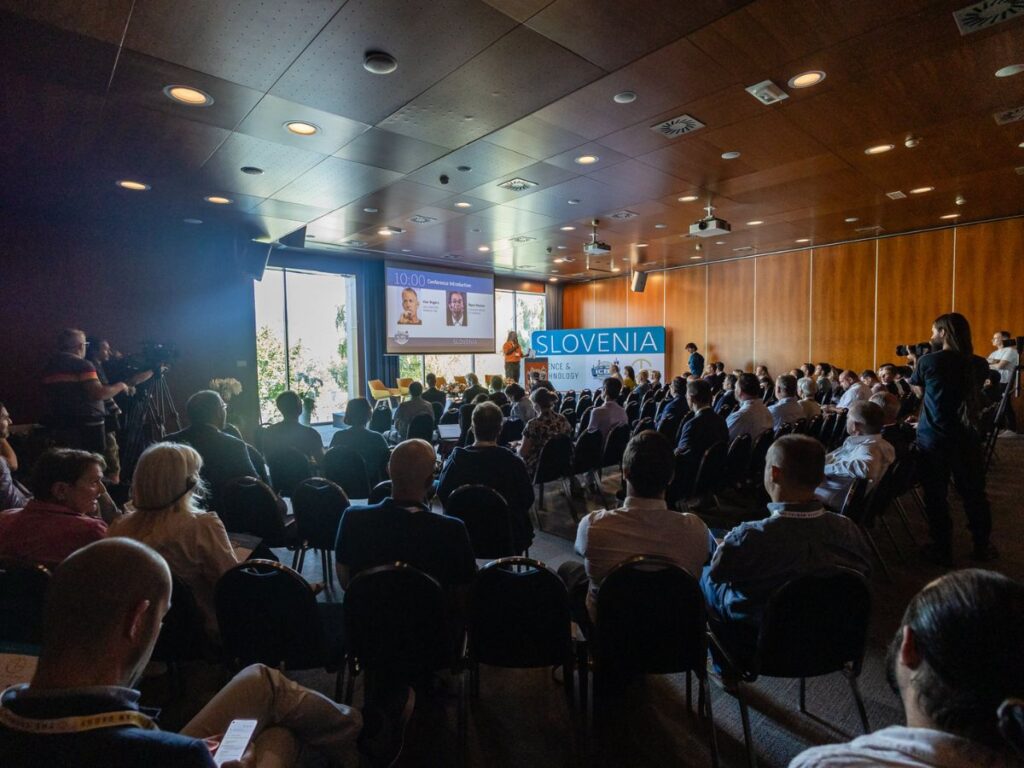
The International Cannabis Business Conference was held in Bled, Slovenia last week on September 7th and 8th, with a VIP reception held the night before the event. The two-day event was dedicated to emerging international cannabis science and technology.

Among the speakers at the conference, which is part of a series of cannabis events held around the world, was Dr. Metka Paragi, the current Secretary for Health of the Slovenian Prime Minister’s cabinet. Dr. Paragi, a leading international microbiologist, welcomed attendees of the first-ever International Cannabis Business Conference held in Slovenia.

She provided a brief overview of current usage rates in Slovenia, as well as discussed the level of support for policy modernization efforts in the region. Dr. Paragi also provided an update on the current state of cannabis policy and research in Slovenia. It marked the first-ever presentation at an international cannabis conference by a current officeholder at that level of government.

Dr. Metka Paragi International Cannabis Business Conference Bled Slovenia

In addition to Dr. Paragi, presentations at the two-day science and technology conference were made by:

  • Lumír Hanuš – Chief Scientist, Lumir Lab, Asana Bio Group LTD
  • Prof Dr. Tamara Lah Turmšek – Biochemist, Researcher, National Institute of Biology, Ljubljana
  • Peter Homberg – Partner, Dentons, Head of European Cannabis Group
  • Ngaio Bealum – Conference Master of Ceremonies
  • Alex Rogers – CEO & Executive Producer, International Cannabis Business Conference
  • Božidar Radišič – Project Manager and Founder, Research Nature Institute

International Cannabis Business Conference Bled Slovenia

At the conclusion of the event, the International Cannabis Business Conference hosted one of its infamous after-parties, which was headlined by none other than Slovenia’s most famous and loved artist, Magnifico.

Magnifico International Cannabis Business Conference Slovenia 2023

Below are links to media coverage of the event:

Delo

SI21

Dnevnik

RTV Slovenia

24UR

STAznanost

Jutro na Planetu

Make sure to check out the upcoming event at the University of Ljubljana titled ‘Hemp and its Active Ingredients in Healthcare III’ on October 11th and 18th, 2023. The event is co-organized by the Research Nature Institute and is the third education seminary of a series involving doctors and nurses from the faculty at the University of Ljubljana.

To find out more, please visit: https://www.zf.uni-lj.si/si/arhiv-obvestil-cvu/1295-konoplja-in-njene-ucinkovine-v-zdravstvu-iii

Power Outages In Spain Supports Cannabis Regulation, Not Prohibition

Earlier this month power outages were reported in parts of Spain, including in the Spanish city of Granada. While the outages are not necessarily a new thing in Spain, they are reportedly increasing in frequency and severity in multiple parts of the European nation.

Endesa, which is Spain’s largest electric company, attributes the reported increase in outages to unregulated cannabis cultivation operations, and that one-third of the electricity consumed in Granada’s northern district last year was reportedly connected to such operations.

The true cause of the power outages is open for debate. Many authorities are echoing what Endesa is claiming, and yet many residents are pointing to what they claim is a failing electrical grid. Unregulated cannabis operations may be contributing to the problem, however, they may also only play a small role in what seems to be an increasing issue for Spain.

Regardless, a point that seems to be lost in the larger discussion is that Spain’s approach to cannabis is completely outdated and in desperate need of sensible modernization. Cannabis is largely tolerated in Spain, however, legalization is not the law of the land.

Cannabis clubs are very common in parts of Spain, particularly in Barcelona, and all of the cannabis that supplies those clubs comes from unregulated sources. It’s a complete free-for-all, and as such, no one truly knows how much cannabis is being cultivated and sold in Spain every year.

What we do know is that the current approach to cannabis policy in Spain is insufficient, to put it lightly. Licensing and regulating cannabis cultivation would not guarantee that Spain’s power outages would be resolved, however, it would give lawmakers, regulators, and electricity providers something to work with.

The only way to properly address Spain’s unregulated cannabis cultivation energy consumption concerns is to transition the unregulated market to a regulated one in which cannabis is cultivated in more sustainable ways, and in a manner that balances the cannabis industry’s energy needs with the rest of society’s.

In regulated jurisdictions, many cannabis cultivators now rely entirely on the sun to grow their crops, or they only use artificial lighting to supplement sunlight. The cannabis is cultivated in state-of-the-art greenhouses that easily regulate temperature and airflow. As such, they consume very little energy.

Compare that to illegal cultivation operations that are almost always reliant solely on artificial lighting and use a significant amount of energy because they are located out of sight in an enclosed facility to avoid detection. ‘The win’ would be if consumers in Spain made their purchases from the former, not the latter.

That only happens if/when lawmakers in Spain reform the nation’s laws to permit legal cannabis cultivation for adult-use purposes and permit those cultivators’ crops to be sold at regulated outlets. Regulations have to be sensible to ensure that prices for legal products are competitive with unregulated products, otherwise, the unregulated market will continue to thrive in Spain.