
Overcoming International Cannabis Logistical Challenges

The emerging international cannabis industry is currently governed by a complex web of laws, rules, and regulations that are constantly shifting and evolving. With more countries reforming their cannabis policies and regulations, the regulatory layers will continue to increase in volume for the foreseeable future.

Yoram Eshel, CEO of Cannabilog, recently presented tips and insight regarding how to navigate the ‘regulatory maze’ in an effective way as part of his presentation at the recent International Cannabis Business Conference in Berlin. Eshel analyzes current international supply chain trends, provides an update on regulatory requirements in various markets, and discusses what to anticipate soon. He also discusses the ‘do’s and don’ts’ when shipping cannabis products worldwide.

We look forward to seeing you in Berlin in 2024, as well as at our upcoming science and technology event in Slovenia this September!

Users Of Unregulated Opioids Frequently Turn To Cannabis For Cravings Reduction

The opioid epidemic affects nearly every corner of the world. The War on Drugs is an absolute failure, make no mistake about that. However, opioid addiction is still a very serious issue and governments all over the planet are struggling to deal with the negative public health consequences of it.

This may sound obvious, but the best way to get people off of opioids, particularly unregulated opioids, is to get them to stop using them. Unfortunately, the approach by many governments has historically been incarceration, and that is not an effective way to deal with the problem as proven by no decline in usage rates throughout prohibition.

The cannabis plant has shown promise as a substitute for opioids, and a recent study in Canada found that self-reported unregulated opioid product users ‘frequently’ turn to cannabis to reduce their cravings. Below is more information about it via a news release from NORML:

Vancouver, Canada: Those who consume unregulated opioids frequently report using cannabis to mitigate their drug cravings, according to data published in the International Journal of Drug Policy.

Canadian investigators assessed cannabis use trends among a cohort of 205 consumers of non-prescription opioids. Many of the cohort were IV drug users and at-risk youth.

Nearly half of the study’s participants (45 percent) acknowledged using cannabis to manage opioid cravings. Of those, 62 percent “reported self-assessed decreases in opioid use during periods of cannabis use.” Subjects suffering from chronic pain were most likely to engage in opioid substitution.

Authors concluded: “In the present study, we observed that cannabis use to manage opioid cravings was significantly associated with self-assessed decreases in opioid use during periods of cannabis use among a structurally marginalized population of PWUD [people who use unregulated opioids]. The sub-analysis indicated that this association was mainly driven by those living with moderate to severe pain. … This suggests that future studies of cannabis substitution for opioid use should measure and analyze the impact of pain, as not doing so may lead to equivocal findings when the effects of cannabis substitution may vary based on the prevalence of chronic pain.”

Although numerous studies indicate that patients typically decrease their use of prescription opioids after initiating cannabis therapy, data regarding the relationship between cannabis use and non-prescription opioids is less consistent. According to a 2020 review paper: “Growing pre-clinical and clinical evidence appears to support the use of cannabis … to combat OUD [opioid use disorder]. The evidence summarized in this article demonstrates the potential cannabis has to ease opioid withdrawal symptoms, reduce opioid consumption, ameliorate opioid cravings, prevent opioid relapse, improve OUD treatment retention, and reduce overdose deaths. … The compelling nature of these data and the relative safety profile of cannabis warrant further exploration of cannabis as an adjunct or alternative treatment for OUD.”

Full text of the study, “Cannabis use to manage opioid cravings among people who use unregulated opioids during a drug toxicity crisis,” appears in the International Journal of Drug Policy. Additional information is available from the NORML Fact Sheet, ‘Relationship Between Marijuana and Opioids.’

Advancing The Cannabinoid Scientific Landscape

The field of cannabinoid research is advancing, with new discoveries being made about the potential therapeutic benefits of these compounds. However, for these discoveries to be translated into effective treatments for patients, it is essential that proper due diligence is done, and well-designed clinical trials programs are initiated.

In this presentation from the recent International Cannabis Business Conference in Berlin, Terry O’Regan, President of Brains Bioceutical, discusses the course, challenges, considerations, and rewards for advancing the cannabinoid scientific research landscape.

We look forward to seeing you in Berlin in 2024, as well as at our upcoming science and technology event in Slovenia this September!

Cannabis Doesn’t Negatively Impact Liver Transplant Patient Survival Outcomes

In many parts of the world, if someone consumes cannabis, they are not eligible for a liver transplant. It’s a tough situation, in that patients in need of a liver transplant are obviously suffering, and many use medical cannabis products for relief. However, they are forced to refrain from using their medicine, even if it’s effective, in order to get the transplant.

While it is unknown how many patients around the world are in the previously described situation, even one patient being in that situation is one too many. Members of the medical community often cite ‘potential negative consequences’ as the reason for the transplant prohibition. A recent study in Canada will hopefully help change that. Below is more information via a news release from NORML:

Ottawa, Canada: A history of cannabis use is not negatively associated with survival rates among patients receiving liver transplants, according to data published in the Canadian Liver Journal.

Canadian researchers reviewed the relevant literature on cannabis use and transplantation survival rates. Eight studies involving over 5,500 subjects were included in the review.

Authors determined, “[C]annabis use has not been associated with poor patient outcomes in terms of 1-, 3-, and 5-year patient survivals. Therefore, liver transplant candidates who use cannabis should not be denied access to transplantation.”

Their findings are consistent with those of several other studies concluding that marijuana use is not contraindicated in patients receiving organ transplants. Nonetheless, in several states – including some states that permit medical cannabis access – those with a history of marijuana use are ineligible to receive organ transplants.

Full text of the study, “Review of liver transplantation candidacy and outcomes among patients who use cannabis,” appears in the Canadian Liver Journal.

The Future Of Cannabis Science And Technology

From the perspective of cannabis science and technology, we currently live in the best era in human history. It doesn’t take a historian to realize that the fields of cannabis science and technology have advanced by leaps and bounds in recent years, as there is evidence of it to be found all over the planet now.

A person could make a list of all of the cannabis science and technology innovations combined from several decades in the past, and it would likely be a shorter list than what has occurred in just the last few years alone.

The advancements in cannabis science and technology in recent years are the direct result of cannabis policy modernization efforts in various parts of the world. More countries than ever before are now permitting medical and/or adult-use cannabis commerce, research, and development.

Scientists and innovators of all backgrounds and areas of focus are taking advantage of newly afforded freedoms to conduct research and development in ways that were completely prohibited in years past, and the results of their work are benefitting humans in their own jurisdictions and beyond.

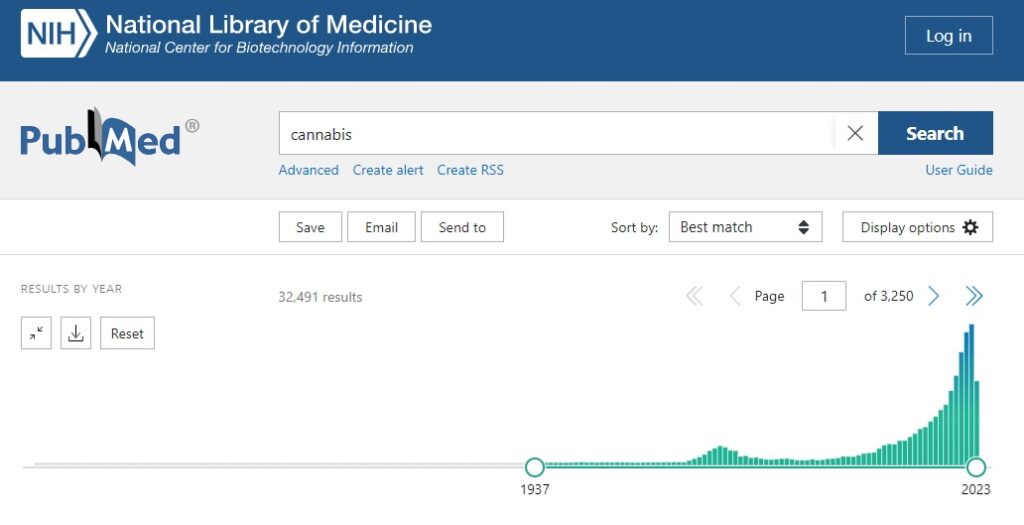
For contextual purposes, consider the graph below showing the number of peer-reviewed cannabis studies listed on PubMed.gov as of the posting of this article, organized by year:
PubMed cannabis study search

Keep in mind, while there are currently 32,491 peer-reviewed cannabis studies listed, which is a substantial amount, that is during a time period when studies were either outright prevented or the results were suppressed. Thankfully, cannabis research censorship is a thing of the past in a growing number of countries, as reflected in the graph above.

The truly inspiring thing about all of it is that we are just starting to scrape the surface. As more countries modernize their cannabis policies, cannabis science and technology innovations are going to hit warp speed and start piling up at an exponential rate. Part of that growth rate of innovation will be driven by profit given the fact that the emerging legal cannabis industry is worth so many tens of billions of dollars (and growing).

Cannabis is being cultivated in many markets now via sophisticated methods on a scale that is truly mind-boggling. It wasn’t that many years ago that a small personal hydroponic garden was considered cutting-edge technology in the cultivation world, and yet, today such a cultivation setup seems prehistoric by many measures.

These days nutrients, tailored feeding schedules, grow mediums, sungrown greenhouses, and supplemental lighting technology are arguably more advanced in the cannabis space than in any other agricultural area of focus, and unlike those other areas of focus, an army of people are working tirelessly around the clock around the globe to come up with the next great cannabis cultivation breakthrough.

Consumption research and technology is a particularly exciting sector of the emerging cannabis industry. While some countries are better at setting up sensible commerce regulations than others, one common thread that can be found in every legal country is that personal consumption is legal.

As global consumers gain confidence in partaking in their newfound freedoms post-legalization, they will continually seek out the newest and funnest ways to consume cannabis. That demand for new devices and gadgets will be met by inventors, and the financial rewards involved will be considerable. If you think that lazer bongs and handheld vaporizers are cool, wait until you see what gadgets people come up with in the near future, as well as what dispensary products hit the market.

Something that is likely not on a lot of cannabis enthusiasts’ radars right now, but certainly should be, are advancements in the area of non-consumption cannabis science and technology. By that, I mean innovating the way cannabis is used in products that are not consumed by humans, such as using hemp to make hempcrete and other building materials. One area that is particularly promising is incorporating cannabis into bioremediation efforts to clean up polluted ecosystems.

The future of cannabis science and technology is brighter than ever before, with no limit to the sector’s potential currently in sight. It can be difficult to keep up with everything, but that is why everyone should attend the upcoming International Cannabis Business Conference in Bled, Slovenia.

The event is dedicated entirely to discussing and demonstrating the world’s latest and greatest cannabis science and technology, and it’s the best place on planet Earth for scientists, innovators, entrepreneurs, investors, regulators, policymakers, and industry service providers to learn and network.

Slovenia is already home to a thriving research and development community, serving as a global hub for several other industries. With local advocates ramping up efforts to modernize Slovenia’s cannabis policies, the Balkan nation is setting up to serve as an international cannabis research and development hub as well. The International Cannabis Business Conference in Bled is the ideal backdrop for the world’s best cannabis minds to meet and discuss their latest endeavors.

The event is being held at the iconic Rikli Balance Hotel on September 7th and 8th. A limited number of tickets are still available. Get yours before prices go up on August 23rd!

New Zealand Ministry Of Health Approves Medical Cannabis Changes

New Zealand’s medical cannabis industry and research efforts are set to receive a boost in the near future after the nation’s Ministry of Health approved several changes. The changes to the Misuse of Drugs (Medicinal Cannabis) Regulations 2019 aim to “better support economic and research opportunities for the medicinal cannabis industry sector.”

New Zealand’s medical cannabis law is still young compared to many other nations. While the nation’s industry is growing every year, many suffering patients are still going without proper safe access. The following changes should help:

  • broadening the types of cannabis plant forms that can be considered ‘starting material’ and ‘cannabis-based ingredient’
  • enabling the export of cannabis seed under the Medicinal Cannabis Scheme
  • enabling export of starting material, cannabis-based ingredients and medicinal cannabis products (without needing to meet the minimum quality standard) for the purposes of testing, analysis or research
  • enabling import of cannabis-based ingredients and medicinal cannabis products (without needing to meet the minimum quality standard) for the purposes of testing, analysis or research
  • removing the requirement for consignments of starting material to meet the minimum quality standard before export
  • removing the requirement for cannabis-based ingredients and medicinal cannabis products to meet the minimum quality standard before export if they are manufactured to Good Manufacturing Practice (GMP) and meet the quality requirements of the importing country
  • allowing a licence to possess controlled drugs (issued under the Misuse of Drugs Regulations 1977) to authorise non-therapeutic research activities using medicinal cannabis or industrial hemp.

Additionally, “a number of minor technical changes to update and clarify the minimum quality standard” were also made. Examples provided by the Ministry of Health include updated pesticide requirements, broadening the “permitted pharmacopeial tests, excipients and container material requirements,” broadening lab accreditation for certain tests, and reducing duplicative testing.

The new changes are expected to come into effect by the end of the year. While the changes are significant, only time will tell how much they impact New Zealand’s medical cannabis industry and patient base.

Cannabis Spray Effective For Refractory Back And Neck Pain Patients

People experiencing pain in the neck and/or back is very common around the world. Over 7.5% of the world’s global population suffers from lower back pain alone, and hundreds of millions more people suffer from varying levels of neck pain.

In addition to the pain experienced by suffering patients, which can be extreme in some cases, the costs of treating the ailments for both the patient and society are considerable. A study in 2017 found that just in the United States alone, neck and back conditions cost $88 billion a year.

An increasing number of suffering neck and back patients are turning to cannabis products for relief and a recent study in Australia found that cannabis spray in particular is an effective treatment method. Below is more about it via a news release from NORML:

Sydney, Australia: The oral administration of a cannabinoid spray containing standardized ratios of THC and CBD produces clinically significant reductions in pain among patients with chronic back and neck pain, according to open-label trial data published in the journal Medical Cannabis and Cannabinoids.

Australian researchers assessed the safety and efficacy of an oromucosal spray containing 10 mg of THC and 25 mg of CBD in a cohort of 28 patients with moderate to severe back or neck pain. Participants in the study were unresponsive to over-the-counter non-opioid analgesics. Patients administered escalating doses of the spray daily for four weeks.

Investigators documented decreases in patients’ pain at even the lowest doses. Patients experienced further reductions in pain and improvements in mood in a dose-dependent manner over the course of the trial. Overall, side-effects from the spray were mild and well-tolerated.

“There were significant reductions in pain [at] all doses,” authors concluded. “There was also a reduction in pain interference in all domains including general activity, mood, walking ability, normal work, relationships, sleep, and enjoyment of life by dose.”

Australian law permits physicians to authorize cannabis products to patients unresponsive to conventional prescription treatments.

Full text of the study, “Tolerability and efficacy of a 10:25 preparation of delta-9-tetrahydrocannabinol and cannabidiol for treatment of chronic back or neck pain: A multiple-dose escalation study,” appears in Medical Cannabis and CannabinoidsAdditional information on cannabis and chronic pain is available from NORML’s publication, Clinical Applications for Cannabis & Cannabinoids.

Opening Your Mind to the Future of Cannabis

To truly understand the future of cannabis, it’s important to approach it from different angles and challenge existing perceptions and stigmas. This presentation from the recent International Cannabis Business Conference’s Global Investment Forum in Berlin by international cannabis expert Lisa Haag (founder of MJ_Universe) offers a fresh perspective on the cannabis industry, exploring its potential from a variety of viewpoints and shedding light on untapped opportunities. By breaking down barriers and opening our minds to new ideas, we can pave the way for a more innovative, inclusive, and successful cannabis industry.

We look forward to seeing you in Berlin in 2024, as well as at our upcoming science and technology event in Slovenia this September!

Over 25% Of French ALS Patients Report Using Cannabinoid Products

Cannabis is medicine whether a handful of prohibitionist politicians want to accept that fact or not, and that is true for every country on Earth. Humans have effectively used cannabis for medical purposes for centuries whereas cannabis prohibition is a new manmade policy by many measures comparatively.

History has clearly demonstrated that humans are going to use cannabis for medical purposes whether it’s legal to do so or not. After all, they are suffering from one or more conditions, and if cannabis helps treat those conditions, many humans will take the risk.

France is home to a limited medical cannabis policy, however, suffering patients are still consuming cannabis regardless. A recent study examined usage rates among ALS patients specifically. Below is more information about it via a news release from NORML:

Marseille, France: An estimated 22 percent of French patients with ALS (amyotrophic lateral sclerosis a/k/a Lou Gehrig’s disease) report using either plant cannabis or CBD oil to mitigate symptoms of the disease, according to national survey data published in the journal Revue Neurologique.

Survey participants reported that cannabinoids improved their motor skills, reduced pain, elevated mood, and enhanced their overall quality of life. Reported side effects were non-serious (e.g., drowsiness, dry mouth).

“To the best of our knowledge, this is the first study which presents a large questionnaire-based survey about the ‘real-life’ situation regarding cannabis use in the medical context in ALS patients in France,” the study’s authors reported. “Our data demonstrate that … a non-negligible proportion of ALS patients use cannabis to relieve symptoms of the disease. … This study highlights the need for further research on the potential benefits of cannabis use for the management of ALS motor and non-motor symptoms.”

Preclinical models suggest that cannabinoids may delay ALS progression in addition to mitigating certain ALS symptoms. A randomized placebo-controlled clinical trial is currently ongoing in Australia to identify whether cannabis extracts can slow ALS disease progression.

Full text of the study, “Cannabis for the treatment of amyotrophic lateral sclerosis: What is the patients’ view?” appears inRevue NeurologiqueAdditional information on cannabis and ALS is available from NORML’s publication, Clinical Applications for Cannabis & Cannabinoids.