New Canadian Study Demonstrates Why Cannabis Regulation Works

One of the main goals of legalizing cannabis commerce in any given jurisdiction is to battle the unregulated market in a meaningful way. When that topic comes up, it is always worth mentioning that the unregulated cannabis market will never be 100% eliminated, and that the goal is to mitigate it as much as possible by permitting regulated sales.

Canada remains the only country on earth where anyone of legal age can purchase cannabis products with no THC caps, regardless of their residency status. Uruguay also permits nationwide sales, however, sales are limited to residents only.

Researchers in Canada recently conducted a study to try to measure the effectiveness of permitting retail outlets, particularly as it pertained to surrounding areas. The results of the analysis add to a growing body of evidence demonstrating legalization’s success and the need for retail outlets in a legalization model. Below is more information about it via a news release from NORML:

Ottawa, Canada: Canadians are more likely to obtain cannabis products from the legal market if they live in close proximity to licensed retailers, according to data published in the Journal of Studies on Alcohol and Drugs.

Investigators with the Canadian Centre of Substance Use and Addictions in Ontario assessed cannabis use trends in a cohort of over 15,000 consumers. Respondents reported that they were least likely to obtain their cannabis from unregulated sources if they lived near a legal retailer. (Canada legalized cannabis sales to those ages 18 and older in 2018.)

The study’s authors concluded: “Legal cannabis stores are increasingly accessible to people living in Canada. … Household proximity to a legal cannabis store was associated with sourcing cannabis from legal retail stores. … Findings suggest that proximity to legal cannabis stores may aid uptake of the legal market.”

Since 2019, the percentage of Canadian consumers transitioning to the legal cannabis market has grown year over year. According to 2022 data, a majority of consumers (58 percent) say they obtain cannabis flowers from licensed retailers.

Full text of the study, “Proximity to legal cannabis stores in Canada and use of cannabis sources in the first three years of legalization, 2019-2021,” appears in theJournal of Studies on Alcohol and Drugs.


Jim Belushi Talks Cannabis Ahead Of Fireside Chat In Berlin

This year’s International Cannabis Business Conference event in Berlin will feature a one-on-one fireside chat with acclaimed entertainer Jim Belushi. Jim Belushi is a man of many talents – actor, singer, comedian, dancer, and now a legal cannabis farmer. We asked Belushi a series of cannabis questions ahead of his appearance in Berlin and below is what he had to say:

International Cannabis Business Conference: How does farming cannabis compare to your other pursuits?

Belushi: They both are on a mission to make people feel good, whether you’re making them laugh in a comedy or performing the Blues Brothers and filling their souls with music, or giving them cannabis to heal their anxieties, hopelessness, pain…. or just making them feel good and euphoric. The entertainment industry and the cannabis industry don’t hurt anybody. You can’t overdose if you laugh too much and you can’t overdose if you smoke too much pot. You may pass out if you eat too much of an edible, and I may have peed my pants from laughing too hard (especially at John Candy movies). But all in all, I’ve been at my business for 40 years and cannabis for 7 and they both have the same purpose — making people feel a little bit better. So I feel like I’m on track. They’re the same medicine.

International Cannabis Business Conference: Belushi’s Farm is located in Southern Oregon. What made you decide to choose that region?

Belushi: Southern Oregon chose me. My friend has a beautiful ranch down the Rogue River that I used to visit with my family twice a year. I went into the river naked one time and came out baptized, with a new spiritual release. I said to my friend, “Do you know of any other properties around here?” And that was it. I didn’t know Southern Oregon was the premiere spot to grow cannabis at the time… I was brought to Southern Oregon.

International Cannabis Business Conference: What types of products does your company make?

Belushi: Belushi’s Farm is home to a range of offerings including The Blues Brothers, Captain Jack’s Gulzar Afghanica (a rare strain from the Hindu Kush region that became known in the ’70s as “The Smell of SNL”), Good Ugly Weed, Belushi’s Farm premium brand. We’ve got a variety of products including flower, ice cream, hash and vape pens.

International Cannabis Business Conference: What markets are they available in? Do you have plans to expand to other continents?

Belushi: We’re currently available in Arizona, California, Colorado, Illinois, Maine, Massachusetts, Michigan, Mississippi, Nevada, New Mexico, New York, Oregon, Pennsylvania, and South Dakota. As for other continents, watch Season 3 of GROWING BELUSHI to see where we may take the adventure next!

International Cannabis Business Conference: What is your personal cannabis consumption regimen?

Belushi: I’m a microdoser. It’s medicine to me. I take 2.5-5mg of the Blues Brothers Bhang Chocolate to help me sleep. I’ll smoke a little Cherry Pie at the end of the day to help me with the transition into the evening. It’s medicine to me…“This medicine is so good, people take it FOR the side effects.”

International Cannabis Business Conference: What was your experience like making your hit show ‘Growing Belushi’ on the Discovery Channel? How did that cannabis-focused project compare to other projects you have worked on?

Belushi: This is a big question and deserves its own essay. But in short, all the other projects I’ve been involved with in show business have been scripted. Growing Belushi was all improvised, every scene, every moment. That takes a lot of concentration, a lot of wit, a lot of trust in your own ability, and a lot of overshooting to pull together an hour show each week. But that being said, it’s rewarding and joyous and fun when you’re able to create everything in the show. I love it.

International Cannabis Business Conference: What have you learned from visiting dispensaries in Oregon and beyond? 

Belushi: I visit a lot of dispensaries. In Oregon, I actually deliver to dispensaries and I do personal appearances and meet & greets. I have learned 85% of what I know about cannabis from these visits and experiences, which has changed this from a business to a journey to the pathway to healing. There are people, so many people, in need of medicine. From the veterans with PTSD, quadriplegics with spasms, people with shattered bones from car accidents, people with MS, dementia, sleeplessness, cancer on chemotherapy…the list goes on and on. In the dispensaries, I realized this was no longer just a business, it was necessary for the health of our community, for the people who suffer, the people who struggle, the people who are screaming inside the cavity of their bodies. I personally don’t use Ambien or Xanax for anxiety or even Advil. And I don’t really drink. Cannabis has replaced all these needs. I see a community growing larger in the pursuit of using cannabis as a substitute for medications and alcohol and opiates. I have been moved to tears many times.

International Cannabis Business Conference: What advice do you have for aspiring cannabis entrepreneurs?

Belushi: My advice to aspiring cannabis entrepreneurs is to stay out. The margins aren’t there yet. Between the fluctuation of the pricing of the pounds, the taxing, the banking, and the amount of initial capital, I would say don’t do it. Unless your passion overrides your pocketbook.

International Cannabis Business Conference: What is the biggest challenge facing the emerging cannabis industry today, in your opinion?

Belushi: The tens of thousands of nonviolent cannabis prisoners that are still in jail for the plant. That’s why I support Last Prisoner Project.

What do you have coming up that people should have on their radars?

Belushi: I have a lot of exciting stuff on the horizon. Follow me, my cannabis show ‘Growing Belushi,’ and my farm on social media and check out my website to keep up on all things Belushi. And, of course, join me in Berlin at the end of this month at the International Cannabis Business Conference where I will be doing a fireside chat, followed by a performance at the conference after-party. See you there!

International Cannabis Business Conference: What is the best way for folks to keep up on all of your cannabis industry pursuits?

Belushi: Through Instagram, Twitter, TikTok, and the website.

Hemp Should Be Used More As A Building Material

The hemp plant is one of the most versatile plants on earth. For many years it was used to make textiles, however, in recent years growing demand for a particular cannabinoid from the hemp plant has shifted how a lot of people in society view hemp, and that, in turn, has shifted the focus of entrepreneurs and investors in regards to the hemp sector.

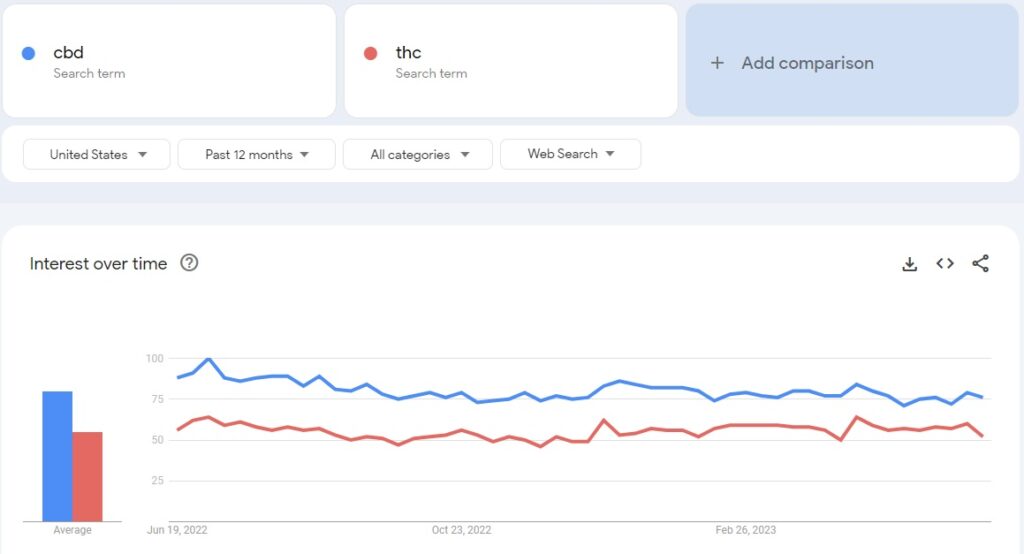
Cannabidiol (CBD), which the hemp plant is very rich in, has increased in popularity to such an extent in recent years that it is now searched for online more often than its cannabinoid counterpart tetrahydrocannabinol (THC) according to Google Trends. Below is a graph demonstrating that fact among search trends in the United States:

united states CBD online searches


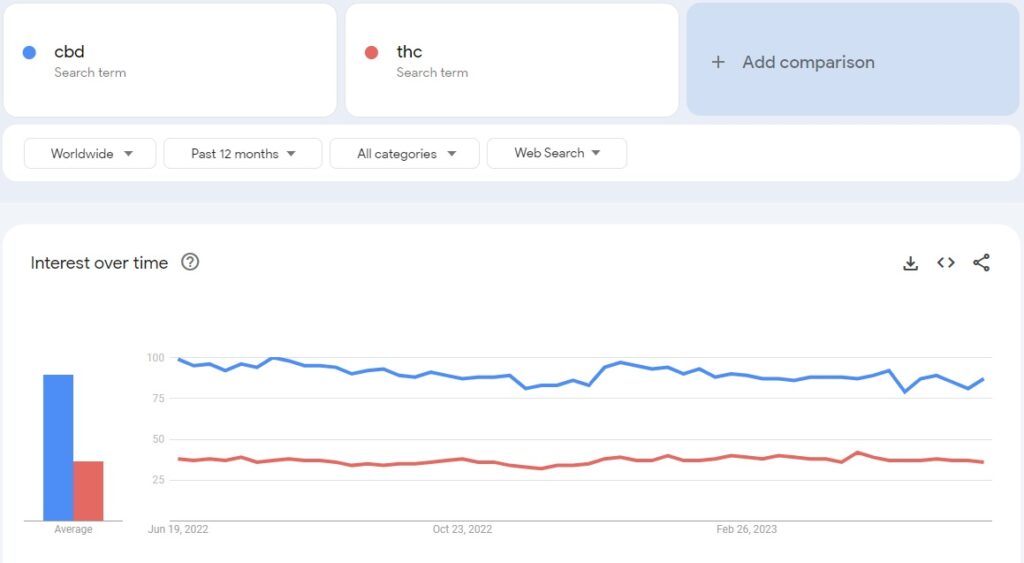
The gap between searches for CBD and searches for THC is even greater at the global level according to Google Trends, per the graph below:

Worldwide CBD online searches

Often seemingly lost in the global CBD conversation is that one of the best things that hemp can be used for involves using it as a building material. The material is called ‘hempcrete,’ and it’s a bio-composite made of the inner woody core of the hemp plant mixed with a lime-based binder.

The inner woody core or ‘shiv’ is high in silica content and that allows it to naturally bind really well with lime. It is a property that is seemingly unique to hemp among all of the known natural fibers.

Hempcrete is primarily used as an insulating material, weighs about a seventh or an eighth of the weight of concrete, floats in water when fully cured, and is nearly fire-proof (at least compared to other popular building materials). A recent article by BBC provided a great example of hempcrete in use in the UK, and had the following to say about the material in general:

According to the European Commission, one hectare (2.5 acres) of hemp sequesters between nine and 15 tonnes of CO2, and only takes five months to grow – meaning it is better than typical commercial forestry at sequestering carbon. What’s more, hemp production is reported to help regenerate soil and remove heavy metals from the ground.

But a whole host of challenges must be overcome before hemp can make its mark on the construction industry. These include changes to government regulation, technical certification, and the funding and infrastructure needed to scale up hemp’s industrial production, streamline supply chains, and make it more affordable to use.

Due to the limitations mentioned by BBC in its article, and the popularity of CBD, hempcrete has never been fully embraced by society. However, that is likely to change in the coming years as researchers work to find out the best ways to extract CBD from hemp plants while simultaneously using other parts of the plant to make hempcrete and other building materials.

Opponents of hempcrete will try as hard as they can to focus on the fact that it is not used as a structural element and try to make it sound as if the potential of hemp as a building is limited, when in fact there’s likely so much more to learn about hemp’s potential as a building material.

As laws continue to be reformed, and innovators look to the hemp plant at an increasing rate as a source for sustainable building solutions, it’s nearly guaranteed that discoveries and breakthroughs are on the horizon, and if so, it will benefit society in numerous ways.

Medical Cannabis Safe Access To Expand In Israel

When it comes to medical cannabis research, Israel has long served as an international leader. After all, it is where International Cannabis Business Conference speaker alumni Raphael Mechoulam became the first person in history to isolate tetrahydrocannabinol (THC), in addition to numerous other cannabis research breakthroughs.

Unfortunately, general medical cannabis policy and safe access for domestic patients have never seemed to receive the same level of embrace and consideration in Israel for some reason, with many patients reporting gaps in being able to acquire their medicine.

Israel currently serves as the top importer of medical cannabis products, which doesn’t make a lot of sense since the country obviously knows how to harness the cannabis plant and maximize its potential. The only logical explanation is that the nation’s laws are holding the domestic medical cannabis sector back.

Thankfully, there appear to be meaningful changes on the way, with it being reported that Israeli medical cannabis patients will soon no longer be required to obtain a special license for medical cannabis, per a recently approved reform measure. Per YNetNews:

The Knesset’s Health Committee decided on Tuesday that access to medical cannabis will be significantly expanded, with many more patients qualifying – without the need to obtain a special license to use the drug.

The decision is part of a reform led by the Health Ministry in recent months. Within the reform’s framework, patients with a wide range of diseases and medical conditions will no longer be required to obtain a license in order to receive medical cannabis.

The reduced hurdles for obtaining medical cannabis are surely welcomed. With that being said, medical cannabis patients in Israel still are at the mercy of whatever supply they can access. As more patients presumably enter the medical cannabis sector as a result of the change, it will need to be met with boosts in domestic supply.

As is the case with any country, the only real way to ensure that every patient has safe access to medical cannabis is to legalize it for adult use, in addition to medical cannabis policies, and to afford every patient the right to cultivate their own medicine and/or join a noncommercial cannabis club.

French Town Wants To Launch Cannabis Pilot Program

By many measures, the concept of a cannabis commerce pilot program is a relatively new thing. While they are already in existence in Europe, it is only in recent years that they seem to have entered the mainstream policy reform conversation on the continent.

Switzerland has embraced the cannabis commerce pilot program more than any other nation so far. A cannabis commerce pilot program involves a jurisdiction being permitted to allow limited cannabis sales as part of ongoing government social science research.

In theory, by allowing limited cannabis sales, data can be collected, and the analysis of that local data can then help lawmakers and regulators be better suited to craft national cannabis policies. Cannabis commerce pilot programs have their limitations to be sure, however, for participants, it effectively results in legalized cannabis and the freedoms that go with it. Additionally, the concept is EU-approved and does not run afoul of EU agreements (unlike national legalization).

France has historically moved much slower on cannabis reform compared to some of its European counterparts, but if one small town has its way, it will launch its own cannabis commerce pilot program sooner rather than later. Per Newsweed:

The mayor of Bègles, a small town of 30,000 inhabitants close to Bordeaux, wants to make his city a territory for experimenting with the supervised legalization of cannabis.

Mayor Clément Rossignol Puech’s proposal to experiment with the production, sale and consumption of cannabis in Bègles has its origins in two recent reports: one from the Information Mission on the Uses of Cannabis, held to the National Assembly in 2021, and the other to the Economic, Social and Environmental Council (CESE) in 2023. These two reports came out in favor of a supervised legalization of cannabis.

While it is never easy to guarantee anything in the cannabis world, it does seem in increasing fashion that the cannabis commerce pilot program model is here to stay in Europe. Pilot programs are the focus of ‘phase 2’ of legalization in Germany according to the current plan, and pilot discussions in other countries appear to be heating up as well.

Pilot programs are clearly not as good as national legalization, such as what is found in Canada. However, when coupled with noncommercial clubs and home cultivation, such as what is being proposed in Germany, it can provide a significant amount of freedom to cannabis consumers. Hopefully other lawmakers join Mayor Clément Rossignol Puech’s push for pilot programs in France.

SOMAÍ Pharmaceuticals Signs Supply Contract With Cosma Poland

LISBON, Portugal (GLOBE NEWSWIRE) — SOMAÍ Pharmaceuticals Unipessoal LDA (“SOMAÍ”) has entered into a two-year supply agreement with a well-respected Polish distributor Cosma Cannabis. Cosma produces medical-grade cannabis products for importation and distribution across Poland. The contract represents 1,000,000 euros in sales for SOMAÍ’s 2024 goals to develop the fast-emerging medical cannabis markets of Poland.

“We are very proud that Cosma has chosen SOMAÍ Pharmaceuticals as their preferred manufacturer to penetrate the Polish market with our extract formulations,” said SOMAÍ Pharmaceuticals CEO and Chairman Michael Sassano. “Being one of the first manufacturers in a large market with positive regulatory reforms must have good partners like Cosma that can effectively educate and represent our current and future product offerings.”

By the terms of the agreement, SOMAÍ has agreed to supply medical cannabis products to Cosma for distribution in Poland under the trademark of Cosma. Additionally, Cosma will be granted Marketing Authorization to supply, market, and distribute the products within the designated territory. It has been stipulated in the agreement that Cosma will carry out the distribution of the products in compliance with the agreed-upon terms and conditions.

The medical cannabis products distributed under the Agreement consist of oil drops in various ratios of THC/CBD, including 25:1, 10:10, 2.5:25, and 20:1.

The Polish market for medical cannabis products has grown rapidly in recent years, with a number of patients seeking alternative treatments for conditions such as chronic pain, multiple sclerosis, and epilepsy. The demand for high-quality medical cannabis products in Poland is exceptionally high. SOMAÍ Pharmaceuticals’ products are especially needed in the Polish market due to their high quality and effectiveness in treating various medical conditions, such as chronic pain, multiple sclerosis, chemotherapy-induced nausea and vomiting, and epilepsy.

“Initiation cooperation with SOMAÍ has allowed us to offer innovative medicinal substances in the Polish market. We plan to develop products dedicated to Eastern Europe patients jointly. Due to the unique composition and the use of particular ingredients in these products, their absorption by the human body will be much greater than that of competitor’s products.” – said Lukasz Kreski, CHAIRMAN and Co-Founder of COSMA. “We also plan to begin joint clinical research and studies in pain management, inflammatory conditions, neurodegenerative diseases, and oncology.”

About SOMAÍ Pharmaceuticals Ltd.

SOMAÍ Pharmaceuticals is an international company focused on the extraction of the cannabis plant and manufacturing pharmaceutic formulations for the EU market. The company invests in the extraction, research, development, and distribution of EU GMP-pharmaceutical market-authorized cannabinoid products. For more information, please visit SOMAÍ’s website. You can read SOMAÍ’s and CEO Michael Sassano’s articles here.

Press Contacts:
Nataliia Garnina
Marketing Manager
+351 963 551 216
ng@somaipharma.eu

Commercial Contact:
Geroge Bellow
Chief Operational Officer
George@somaipharma.eu

ABOUT COSMA

Cosma Cannabis is a Polish cannabis company. Cosma offers natural and safe dietary supplements that are based solely on high-quality, natural herbal extracts and free of synthetic additives. By incorporating traditional herbal extracts such as chamomile, mint, and hops, Cosma’s products cater to the specific needs of patients. The key advantages of Cosma products include proven and consistent composition, easy dosing, and the absence of psychoactive tetrahydrocannabinol. For more information, please visit https://cosmacannabis.com/.

Commercial Contact:
Lukasz Kreski
Chairman/Co-Founder
lukasz.kreski@cosma.pl

Source: GlobeNewswire

What Is Next For The Cannabis Industry?

The emerging legal cannabis industry is continuing to undergo a dramatic evolution, particularly in Europe. The momentum for global reform is greater now than at any other time since the dawn of prohibition, and the biggest domino to date is teetering and getting closer to toppling with every passing day. That domino is, of course, Germany.

Cannabis advocates have fought for reform in Germany for many years, however, the legalization effort picked up considerable steam in mid-2021 when the results of the federal election that year yielded a governing coalition that quickly expressed its desire to modernize Europe’s cannabis policies.

Germany was already home to the largest legal medical cannabis industry in Europe at the time, and initially, it seemed that Germany would launch legal national adult-use cannabis sales in a quick fashion. Then, for over a year, German Health Minister Karl Lauterbach worked behind the scenes, with details of his legalization plan leaking every once in a while.

Eventually, Minister Lauterbach held a press conference in October 2022 to announce some of the provisions he would be seeking but made it abundantly clear that his next stop was the European Union to try to get its permission to proceed.

Unfortunately, the effort hit some turbulence once Germany’s Health Minister started negotiating with the European Union, with Minister Lauterbach providing an update in April 2023 in which he indicated that the European Union would allow parts of the previously outlined legalization plan to proceed and prohibit other parts.

The main component that the European Union stated it would not permit was nationwide adult-use cannabis sales to anyone of legal age. The blocking of that robust provision seemed to send many newer industry members into a bit of a spiral. The fact of the matter is that cannabis reform rarely, if ever, follows a linear path. It is full of twists and turns, and Germany is the latest example of that.

With those twists and turns comes opportunity, as not everyone is able to navigate the shifting landscape. People who are able to navigate the shifting landscape, that can identify trends, and maximize windows of opportunity, will reap significant rewards.

What legalization will ultimately look like in Germany once it is finally implemented is something that we will have to wait and see, however, the basic provisions are already known – personal cultivation, possession, and consumption will be legal and noncommercial clubs will be permitted.

Eventually, regional adult-use commerce pilot programs will launch as well. All of that creates opportunities for entrepreneurs, investors, and industry service providers if they know what to anticipate and where to focus on developing innovative ideas.

The best way to learn what is next for the emerging cannabis industry, both in Germany and beyond, is to hear from true international cannabis experts that spend every day on the frontlines of cannabis reform and industry. Fortunately, the upcoming International Cannabis Business Conference in Berlin, Germany later this month provides that exact opportunity.

Following yet another successful cannabis super-event in Barcelona, the International Cannabis Business Conference is once again bringing its flagship B2B event and tradeshow back to Berlin, Germany on June 29th-30th, 2023. In addition to the B2B event, which is the largest of its type in Europe, the International Cannabis Business Conference will also hold a Global Investment Forum in Berlin on June 27th.

Both events will feature leading cannabis industry experts, and the B2B event has a panel specifically dedicated to discussing what is next for the international cannabis industry now that the curtain dropped in Germany. The panel will feature:

Over 5,000 cannabis leaders from over 80 countries will be represented at the International Cannabis Business Conference in Berlin and that includes representatives from every sector of the industry as well as leading international cannabis policymakers and industry service providers.

Attend the International Cannabis Business Conference in Berlin to network with investors, entrepreneurs, industry regulators, and international policymakers and take your industry pursuits to the next level. Secure your tickets now before the event sells out!

Czech Health Minister: ‘We Are Waiting For Germany To Legalize Cannabis’

One of the most active places on the planet right now for cannabis reform discussions is the Czech Republic. If you have followed our previous coverage, then you know that there is a strong push underway in the Czech Republic to legalize cannabis for adult use.

In October 2022 the national anti-drug coordinator for the Czech Republic, Jindřich Vobořil, announced his plan to pursue adult-use legalization.

“At the moment, there is a political consensus for me to create this proposal for the regulation of cannabis, a substance which is illegal at the moment. We want to regulate it with the help of the market and we believe that this regulation will be more effective than the current ban.” Jindřich Vobořil stated at the time.

Mere days after Germany’s Health Minister Karl Lauterbach held a historic press conference in Germany to provide an update about his nation’s legalization plans, news broke in the Czech Republic about some of the facets that may eventually make it into Czech law.

The model that made headlines back then (April 2023) involves the Czech Republic legalizing adult-use cannabis production and sales under a tightly regulated system. Consumers would be able to purchase up to five grams of cannabis per day according to domestic reporting, and consumers would be required to sign up through a government tracking database.

Meanwhile, running parallel to the reform push was the prosecution in the Czech Republic of a cannabis educator and journalist named Robert Veverka. Robert Veverka is the director of the Czech-based cannabis magazine LegalizaceBack in October 2021, we published an article about Robert being targeted by the Czech government over his journalism, with the government accusing him of “inciting and promoting toxicomania.”

Unfortunately, the Czech Republic proceeded with the indictment and in November 2021 Veverka and his media outlet were found guilty of the allegations, and Veverka was given a one-year prison sentence contingent on a probationary period of two and a half years as well as a fine of 50,000 CZK by the district court in Bruntál following two court hearings.

“The judge mentioned that he is not competent to assess the benefits of the current legislation, the benefits of cannabis products in healthcare, or the negative effects of cannabis use, but that he must base his verdict on the existing legislation which is binding for all. He stated that according to his judgement, Legalizace magazine evidently and factually constituted the criminal offence of inciting and promoting toxicomania.” Veverka stated at the time of the November 2021 verdict in a press release.

“He did not take into account the legislative provisions allowing for cannabis to be handled legally in certain cases or the comprehensive and educational nature of the information published in the magazine. On the contrary, the judge expressed his doubts as to whether the individuals who granted interviews to the magazine were made aware of its content and overall message. Personally, I consider the verdict to be very biased and severely restrictive of the freedom of expression, the right to express political opinion, and the right to information,” Veverka also stated.

Veverka must reportedly pay an administrative offense of €4.000 (as a defendant and a natural person) and €6.000 on behalf of his media outlet as part of an additional recent verdict. For anyone that is able to support Robert Veverka and contribute to his defense, bank details are below. If you are not able to contribute financially, please help spread the word on your social channels about his plight:

IBAN: CZ4320100000002900469065
BIC/SWIFT: FIOBCZPPXXX
Fio banka, as, V Celnici 1028/10, 117 21 Praha 1

This month the cannabis reform discussion in the Czech Republic took yet another turn, with the nation’s health minister offering up a series of comments about the nation’s push to legalize cannabis for adult use.

Minister Vlastimil Válek’s comments seemed to fail to accurately describe where things are currently at in Germany regarding cannabis reform, particularly as it pertained to Germany’s discussions with the European Union. Per ZdraveZpravy.cz:

Nevertheless, Minister Válek expressed his opinion regarding the actual approval of the standard, which would open up the market for cannabis containing a high amount of the psychoactive substance THC from January next year. He said that he is waiting for his colleagues from Germany, who are also trying to take a similar step. However, they are worried about how the European Commission [EC] and other EU member states, which oppose cannabis, would accept the legalization of cannabis in Germany. At stake are impacts on the EU-wide legal and illegal cannabis trade and market. It is exactly this, along with other questions, that the Germans are dealing with with EC representatives.

“I’m waiting for colleagues from Germany who are trying something similar. And they are not at the stage yet, and they promised us that they will show us the draft of the law, which of course the EC must give a positive opinion on, because it will be a certain breakthrough in what is in Europe,” Minister Válek explained to ZdraveZpravy.cz.

For starters, Minister Válek’s comments seem to passively disregard the fact that Malta has already passed an adult-use legalization measure and that regional adult-use cannabis commerce pilot programs also are already in existence in Europe (albeit in a limited-scope fashion).

To be fair, legalization in Germany would presumably be performed on a much larger scale than what is going on in Malta and with pilot programs in places such as Basel, Switzerland. However, the basic principle of the European Union and member states dealing with modernized cannabis policies in some form in some nations is not a new thing. The ‘what will Europe do if laws are reformed?’ talking point died a while ago, and it’s obviously time for cannabis opponents to move on.

German Health Minister Lauterbach made it clear in his April 2023 press conference that while the European Union would not permit nationwide sales to anyone of legal age, many of the components of Minister Lauterbach’s legalization did appear to receive approval, or at least that the European Union would not stand in the way of them.

While there is nearly no way to know if Minister Lauterbach has personally sent a copy of the current version of Germany’s legalization plan to his counterpart in the Czech Republic, there is still a considerable amount of information out in the public regarding where things currently stand and what is involved, and that the legalization plan is currently working its way around political circles in Germany.

For Minister Válek to act so clueless about where things are at in Germany seems disingenuous to me, however, that is not uncommon in politics. Ultimately, as things move along in Germany the pressure will build in the Czech Republic and many other parts of Europe, and many of the talking points that are being thrown around right now will fizzle.

CBD Is Associated With Symptomatic Improvements In Dementia Patients

Cannabis tinctures, particularly ones containing CBD, are growing in popularity around the globe within the medical cannabis community for a multitude of reasons. For many years, cannabis flower was the most prominent form of medical cannabis, however, more and more patients are increasingly going the concentrated product route, including incorporating tinctures into their wellness strategies.

Tinctures are preferred by many cannabis patients because they do not typically contain many ingredients, and it is a smokeless form of cannabis consumption. For some patients, inhaled forms of medical cannabis are not an option.

The rise in the use of cannabis tinctures is paralleled by new questions regarding whether cannabis tinctures containing CBD are effective for patients suffering from dementia, both in the short and long term.

A team of researchers in Greece recently examined the use of CBD tinctures among dementia patients, and the results of the study were insightful. Below is more information about it via a news release from NORML:

Macedonia, Greece: The administration of a CBD tincture is associated with symptomatic improvements in patients with dementia, according to data published in the journal Clinical Gerontologist.

Investigators assessed the safety and efficacy of a three percent CBD tincture in a cohort of 20 dementia patients with severe behavioral and psychological symptoms. Ten of the patients received CBD treatment for six months, while the other ten received traditional therapies.

They reported: “The follow-up assessment … showed significant improvement of BPSD [behavioral and psychological symptoms of dementia] in all our patients who received CBD, and no or limited improvement in the second group, regardless of the underlying neuropathology of dementia.”

Researchers concluded: “We suggest that CBD may be a more effective and safe choice for managing BPSD than the typical intervention. … Healthcare professionals should consider incorporating [it] into their practices to reduce BPSD in PwD [people with dementia]. … Future large randomized clinical trials are needed to re-assure these findings.”

The findings are consistent with those of several prior studies concluding that the administration of CBD-dominant cannabis plant extracts reduces agitation and provides other behavioral improvements in dementia patients.

Full text of the study, “The effect of cannabidiol 3% on neuropsychiatric symptoms in dementia – Six-month follow up,” appears in Clinical Gerontologist.