A Big Win For Hemp In The United States

Consumable hemp products containing tetrahydrocannabinol (THC) have increased exponentially in availability and popularity in the United States after the adoption of the 2018 Farm Bill, which legalized hemp production nationwide in the U.S.

Unfortunately, a byproduct of the rise of intoxicating hemp products in the U.S. is political and regulatory turmoil as states have scrambled to regulate the products, and in some cases, shut down the sector entirely. Arguably, ground zero for the ongoing hemp THC product battle in the U.S. is Texas.

Lawmakers in Texas introduced and approved Senate Bill 3, which would have banned hemp-derived THC products and related activity in Texas. The measure was one signature away from becoming law. However, at the last minute, the legislation was vetoed by Texas Governor Greg Abbott.

“Texas Gov. Greg Abbott vetoed a bill Sunday to ban all THC consumables, allowing the booming market flush with THC-infused vapes, gummies and other products to continue to be sold across the state.” reported the Associated Press. “Abbott, a Republican, waited until the final moment to veto the bill in what would have been one of the most restrictive THC bans in the country and a significant blow to the state’s billion-dollar industry.”

“The law would have made it a misdemeanor to own, manufacture or sell consumable THC, or tetrahydrocannabinol, products and was the latest push by states to regulate THC after a 2018 federal law allowed states to regulate hemp, a similar plant to marijuana that can be synthetically processed to produce THC, the compound giving marijuana its psychoactive properties.” the Associated Press also reported.

“SB 3 would have banned widely used, federally legal hemp-derived products, pushing consumers toward unsafe alternatives and threatening public health and choice. Governor Abbott’s veto protects the hundreds of thousands of farmers, veterans, small businesses and adult consumers across Texas who rely on hemp for wellness and their livelihoods.” stated the Texas Hemp Business Council in a press release.

“Texas already has strong hemp regulations under HB 1325, such as strict rules on THC limits, full panel testing, licensing, labeling and accessible certificates of analysis. We continue to advocate for sensible additions, such as limiting sales to those 21 and older, requiring child-resistant packaging, and establishing setbacks from schools, all of which were rejected by proponents of SB 3 in both the 88th and 89th Legislatures.” the Council also wrote.

“Polling consistently shows that Texans do not support a ban on hemp-derived products. We commend Governor Abbott for his leadership and for listening to the more than 150,000 petition signers and thousands more who shared their stories through handwritten letters. We remain committed to working with lawmakers and stakeholders to support a safe, well-regulated hemp industry, not just for Texas, but as a model for the nation.” the Council concluded.

Between $19.1 and $22.4 billion in economic activity is generated by the Texas hemp-derived cannabinoid retail, manufacturing, and wholesale sectors, according to the Texas Hemp Business Council.

The Global Exchange At MJBizCon – Where Cannabis Business Leaders Connect

The emerging legal cannabis industry is spreading across the globe, with new markets seemingly being launched year after year, and existing markets continuing to expand. There has never been a more exciting time for legal cannabis businesses than right now, and the future of the legal international cannabis industry continues to get brighter as market projections demonstrate.

At the recent International Cannabis Business Conference in Berlin, leading international cannabis industry economist Beau Whitney, founder of Whitney Economicsestimated that the potential global medical and adult-use cannabis market is roughly $237.8 billion. Mr. Whitney estimated that the value of the global industrial hemp industry could be $456.2 billion.

Industry members in the United States and Canada are increasingly looking toward markets on other continents for expansion, and rightfully so. Amazing opportunities, particularly in Europe, are being created as governments modernize their cannabis policies.

It can be daunting for North American industry members to learn about and navigate the shifting legal global cannabis industry landscape, and even harder to effectively network at an international level. With that in mind, interested people and entities should check out The Global Exchange at the upcoming MJBizCon event in Las Vegas, Nevada, in December.

MJBizCon and the International Cannabis Business Conference have partnered to present The Global Exchange — a premier destination for international collaboration. MJBizCon has served as the top cannabis industry event in the Western Hemisphere for several years now, and likewise for the International Cannabis Business Conference in the Eastern Hemisphere. The collaboration between the two events is a must-attend for people serious about succeeding in the international cannabis industry.

New to 2025, The Global Exchange pavilion bridges the North American market with fast-growing global regions, including emerging opportunities in Europe. Get timely insights and unmatched networking directly on the show floor. It is where dealmakers, exporters, and investors can find their next high-value business partnership.

“The partnership between MJBizCon and the International Cannabis Business Conference provides a bridge for U.S. and Canadian operators to explore the idea of expanding operations to other parts of the world and helping international industry members forge relationships with entities in the North America markets.” stated Alex Rogers, CEO and Executive Producer of the International Cannabis Business Conference.

Over 20,000 people are expected to attend MJBizCon in Las Vegas in December, including leading entrepreneurs, investors, policymakers, regulators, and industry service providers. The event will feature over 1,000 exhibitors, over 200 industry speakers, and over 60 conference sessions. People can find out more, including which attendee packages are available, at MJBizConference.com.

Modernized Cannabis Policies In France Could Benefit Millions Of Patients

France is currently home to a very limited medical cannabis program that only serves a small fraction of the nation’s suffering patients, according to a report that was released today by Augur Associates and leading French cannabis media outlet Newsweed.

The report, titled “State of the Medical Cannabis Industry in France – 2025“, determined that France’s permitted medical use of certain pharmaceutical cannabis products, combined with the nation’s medical cannabis pilot program, has resulted in safe access for only a microfraction of what a modernized medical cannabis program would provide.

“In France, and if allowed to be prescribed in first indication, the introduction of a legal framework for therapeutic cannabis could potentially ultimately benefit an estimated 2,311,626 patients with the conditions and symptoms currently included in the trial (refractory epilepsy, refractory neuropathic pain, MS, oncology and palliative care).” the report stated.

“If other conditions listed by the International Association for Medical Cannabis are included, the estimate could rise to 21,157,547 people likely to be affected by an illness or symptom that can be treated with therapeutic cannabis, i.e. ten times the number currently considered.” the report also stated.

France’s current medical policies and regulations got their start in 2013, when French legislation first authorized the use of cannabinoids in medicine. Another milestone occurred in January 2014 when Sativex received its French marketing authorization as a ‘last resort’ treatment for spasticity arising from multiple sclerosis. Although, as noted in the recent report by Augur Associates and Newsweed, “due to a pricing dispute between Almirall and the French Economic Committee for Health Products, the product has never been prescribed in France.”

Epidiolex has been available in France since 2018 after receiving temporary authorizations for use. Epidiolex also obtained a European marketing authorization in September 2019.

In addition to limited cannabis pharmaceutical access, France is also home to the previously mentioned medical cannabis pilot project. The French medical cannabis experiment received initial approval from the federal Senate back in 2019. However, the launch of the trial was delayed until the spring of 2021 due to various reasons.

Initially slated for two years, France’s medical cannabis experiment was eventually granted a one-year extension and was set to end in 2024 before receiving yet another extension, pushing the estimated end of the trial to July 31st, 2025.

According to the Augur Associates and Newsweed report, a total of 3,209 total patients have participated in the trial, although only 1,849 patients are currently active, with the report noting that “1,297 patients have left: 379 for lack of efficacy, 298 for adverse side effects.” Additionally, 2,291 healthcare professionals were trained as part of the pilot program.

As of 2022, the European Union Drugs Agency estimated that France had the greatest cannabis consumption rate of any of its member nations, with a reported 10.6% of France’s population having consumed cannabis at least once within the last year.

According to a recent newsletter sent out by leading international cannabis economist Beau Whitney of Whitney Economics, France is home to the largest total addressable cannabis market in the European Union, with a value of $11.3 billion (midpoint).

previous study by an economic advisory board within the nation’s prime minister’s office determined that the French government spends roughly €570m annually on cannabis prohibition enforcement. The study recommended that France adopt adult-use cannabis legalization and launch a regulated recreational industry.

Emmanuelle Auriol, a professor at the Toulouse School of Economics who authored the study’s report and findings, estimated that such a policy change could create as many as 80,000 new jobs and generate €2.8bn in taxes annually.

Epilepsy Patients Report Seizure Freedom After Medical Cannabis Treatment

Medical cannabis has helped countless patients treat their health conditions, which, combined with an increasing amount of peer-reviewed cannabis research, demonstrates that cannabis is a truly effective medicine for many people.

One area of medical cannabis therapeutic application and research that is particularly clear on this point is epilepsy. Epilepsy is a serious neurological condition that results in patients experiencing recurrent seizures.

The frequency and severity of the seizures sufferers experience can vary from patient to patient. Medical cannabis has proven to be very effective at helping epilepsy patients reduce the frequency and severity of seizures.

A team of researchers based in Canada and affiliated with various health and academic institutions recently conducted a case series review involving epilepsy patients and medical cannabis therapies. The review’s findings were published in the academic journal Frontiers in Neuroscience.

“Seizure freedom (SF) is the primary goal of epilepsy treatment. More treatments that produce SF in drug-resistant epilepsy (DRE) are needed. Cannabis-based products for medicinal use (CBPMs) containing cannabidiol (CBD) and Δ9-tetrahydrocannabinol (THC), administered as oils, have been shown to induce SF in DRE. However, there remains a paucity of published real-world evidence in both pediatrics and adults on SF resulting from CBPM therapy.” the health investigators stated about the purpose of their research.

International public health experts estimate that as many as 50 million people worldwide suffer from epilepsy and its symptoms, and that “nearly 80% of people with epilepsy live in low- and middle-income countries.”

“This is a retrospective case series at an outpatient neurology clinic in Toronto, Canada, on patients with DRE who experienced significant SF during CBPM treatment. All patients were treated via the clinic’s stepwise treatment protocol with CBPM oils only. The study describes clinical features of patients and their CBPM-related SF.” the researchers stated about their methodology.

“We report 19 DRE cases that experienced SF; 15 pediatric, 4 adults. The median cumulative SF duration was 245 days, split between continuous SF periods lasting at least 90 days.” they wrote about their findings. “Five patients had continuous SF periods lasting ≥ 1 year. Most patients used CBD+THC regimens. Three patients weaned all concomitant ASMs. Adverse events (AEs) were reported by half of the patients.”

“The results of the study support prioritizing CBPMs in cases of DRE. It also supports research into identifying clinical and biological biomarkers for DRE cases that may achieve SF under CBPM treatment. Lastly, the study supports improving the accessibility of CBPMs, using SF as a primary outcome in future CBPM epilepsy trials, and assessing the role of THC in reducing seizures.” the researchers concluded.

Cannabis Shop Inspections Ramp Up In Thailand

A series of cannabis store inspections reportedly occurred in Bangkok, Thailand, today as part of the government’s increased industry enforcement efforts. The inspections come amidst calls by cannabis opponents to repeal Thailand’s modernized cannabis policies and regulations.

“The Ministry of Public Health, in cooperation with the Narcotics Suppression Bureau, the Office of the Narcotics Control Board (ONCB), and related agencies, deployed over 100 officers in a coordinated sweep of 20 cannabis shops across Bangkok on Sunday (June 22).” reported The Nation in its original coverage.

“Public Health Minister Somsak Thepsuthin said the operation follows a direct order from the Prime Minister, mandating a nationwide crackdown on unauthorised psychoactive drugs such as Rohypnol and Alprazolam, which are classified as controlled substances under medical regulations, along with precursor substances like kratom and cannabis.” the outlet also reported.

Reported violations from the inspections included ‘failure to properly record transactions and provide product details,’ as well as stores allegedly allowing on-site consumption. The reported violations resulted in some stores being ordered to close for between 10 and 14 days.

The Assistant to Thailand’s Public Health Minister, the Director-General of the Department of Thai Traditional and Alternative Medicine, and the nation’s Deputy Secretary-General of the Food and Drug Administration all participated in the inspections.

Separately, officials in Phuket recently met with members of the local business community to discuss their complaints about cannabis shops in the area. Phuket is home to an estimated 1,500 specialty cannabis stores.

“The Phuket Tourist Association said tour agents in many countries have told its members that Thailand is now associated with high use of cannabis, which is not desired by family travellers.” reported Bangkok Post in its local coverage. “The private sector proposed that authorities improve control of the plant by limiting the number of spots for using cannabis.”

“In May, Public Health Minister Somsak Thepsutin said cannabis users in Thailand would be required to have medical certificates, ensuring its use for medical purposes only, if the ruling Pheu Thai Party’s version of the law is passed.” the outlet reported.

Cannabis Research Within International Frameworks

Cannabis research is a key component to future success for the emerging international cannabis industry. All meaningful cannabis research provides further insight into the cannabis plant and how humans can harness its properties to benefit the world.

Compared to other areas of agriculture and medical research, cannabis research often involves additional hurdles and limitations due to domestic and global cannabis prohibition policies. Unfortunately, such policies make cannabis research more complicated than it needs to be.

Thankfully, cannabis research has increased in recent decades, with more and more jurisdictions modernizing their cannabis policies. There is still a lot of room for improvement, to be sure, but at least things are trending in the right direction.

International cannabis research efforts were at the center of a recent panel discussion at the International Cannabis Business Conference in Berlin. The panel was titled ‘Bridging Disciplines’ and was moderated by Lukáš Hurt, CEO of Green Publishing. Mr. Hurt was joined by:

  • Andy Mannsfeld, MD, Managing Director of EUCannaJobs
  • Prof. Dr. Simone Graeff-Hönninger, Chair of Agronomy at the Institute of Crop Science at the University of Hohenheim
  • Prof. Dr. Tamara Lah Turnšek, Biochemist and Researcher at the National Institute of Biology in Ljubljana, Slovenia
  • TJ Martin, Vice President of Research and Development at Abstrax
  • Božidar Radišic, Project Manager and Founder of the Research Nature Institute

Drawing from hands-on experience in crop science, cannabinoid research, product development, medical practice, and international policy, the panelists discussed how to advance cannabis research within the boundaries of international conventions.

Topics covered during the panel presentation included sustainable cultivation practices, the biochemical complexity of the cannabis plant, translational research for consumer and medical use, and the role of education and public engagement. You can view the panel discussion at this link here.

Survey Finds Endometriosis Patients Prefer Cannabis Over Prescription Medications

According to the World Health Organization, endometriosis “is a disease in which tissue similar to the lining of the uterus grows outside the uterus.” International researchers estimate that as many as 190 million women suffer from the serious health condition worldwide.

“The cause of endometriosis is unknown. There is no known way to prevent endometriosis. There is no cure, but its symptoms can be treated with medicines or, in some cases, surgery.” The World Health Organization states about endometriosis.

A team of researchers affiliated with various health and academic institutions in New Zealand and Australia recently conducted a survey asking about endometriosis, medical cannabis use, and how cannabis therapeutics compared to traditional pharmaceutical medications. The survey’s findings were published in the academic journal Reproduction and Fertility.

“People with endometriosis report consuming cannabis to manage their symptoms. Given the range of differing legalities and access pathways across the world, this study aimed to investigate the drivers and barriers to cannabis use worldwide.” the researchers stated about their work.

“An online, anonymous, cross-sectional survey was distributed internationally by endometriosis organisations and was open to anyone consuming cannabis for endometriosis symptoms. Survey questions included motivations for both starting and ongoing cannabis consumption, concerns over cannabis use, reasons for stopping cannabis, and communication of cannabis consumption with healthcare providers. Eight hundred and eighty-nine responses were collected across >10 countries.” the researchers stated about their survey methodology.

“Illicit cannabis (56.7%) was the most common access pathway. 99% of respondents stated they would continue to use cannabis to manage their endometriosis-based symptoms, with 90% reporting they would recommend its use to a friend or relative with the disease. The most common motivation(s) for cannabis consumption were inadequate pain control (68.6%) and bothersome side effects of medications (56.3%). Similar motivations were reported for ongoing cannabis consumption, with concerns over dependence/addiction on pharmaceutical medications (43.9%) being another common motivation. Those using illicit cannabis were significantly less likely (P < 0.0001) to disclose their cannabis consumption to medical professionals.” the researchers found.

“Cannabis was viewed as superior to pharmaceuticals both in terms of effectiveness and side-effect profile.” the researchers concluded.

The results of a separate survey previously published in the journal Archives of Gynecology and Obstetrics found that nearly 20% of patients diagnosed with endometriosis report consuming medical cannabis to help manage their symptoms.

State-Owned Company Seeks Volunteer Cannabis Product Testers In Argentina

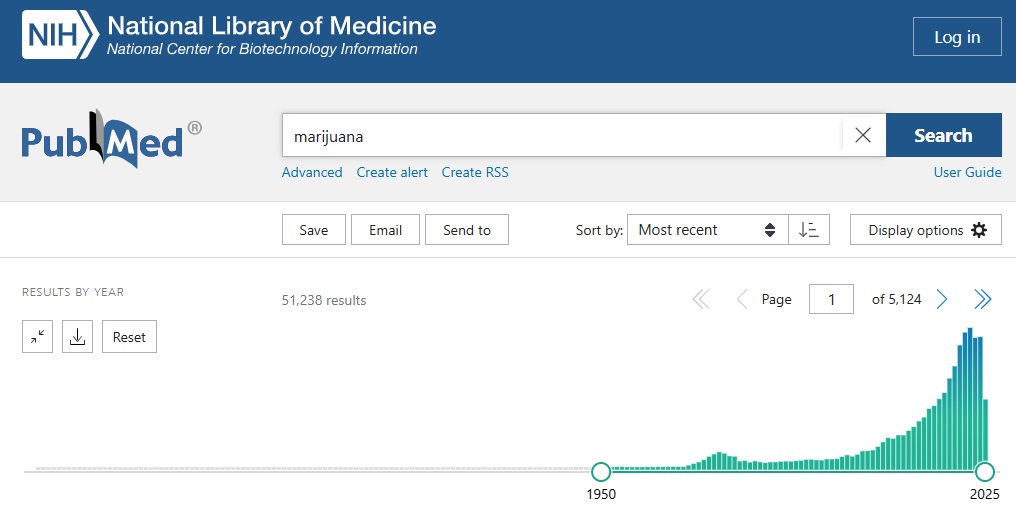
Cannabis research, while still hindered in many ways, has increased in size and scope in recent years thanks to public policy modernization efforts around the world, as well as growing demand for research driven by the emerging legal cannabis industry.

To quantify the increased research in recent decades, one only has to look at search results on PubMed.gov for the term ‘marijuana’, which now yields over 51k results for research conducted between 1950 and today:

pubmed marijuana research results

With that being said, there is still a lot to be learned about the cannabis plant, its uses, and its potential effects. Argentina’s state-owned cannabis company is conducting research focusing on tetrahydrocannabinol (THC) and is reportedly looking for local volunteers.

Cannava SE, the Jujuy state-owned company created to develop cannabis for scientific and therapeutic purposes, began the first Argentine clinical trial studying the effectiveness of THC in the treatment of chronic non-cancer neuropathic pain.” reported El Planteo in its original coverage (translated from Spanish to English).

“The trial is exclusively aimed at residents of the province of Jujuy who suffer from chronic pain , especially neuropathic pain. Participation is part of a formal clinical protocol, with professional monitoring and controlled application of treatment through sublingual drops with a THC-rich formulation.” the outlet also reported.

Argentina’s modern medical cannabis industry got its start in 2017, although it was initially hindered by political issues. Starting in 2019, Argentina has made a big push to boost its domestic cannabis industry, particularly as it pertains to science and research. Back then, Argentina’s Ministry of Science and Technology signed an agreement with a local government, the National University, and other entities.

That was followed by a Presidential decree issued in 2020, which provided a way for medical cannabis patients to, in theory, sign up for a government program to be able to cultivate their own medicine.

In May 2022, lawmakers in Argentina passed a measure that created the framework for a more robust medical cannabis industry in the South American nation, including provisions for boosting exports around the world. Later in 2022, the government established a public company to provide seeds, testing, and training to the nation’s emerging medical cannabis industry.

Harmonizing Global Cannabis Regulations Could Unlock Billion-Dollar Markets

The emerging legal cannabis industry is governed by a layered patchwork of local, regional, and international laws and regulations. At best, the situation is chaotic and confusing, and at worst, it sets entrepreneurs and investors up for failure with many public policies at one level of government directly conflicting with public policies at other levels.

As many advances as the legal cannabis industry has made in recent decades, and how large the industry has become, it still has a long way to go to reach its full potential. In fact, no legal market has reached its full potential anywhere on the planet, and it will stay that way until global cannabis industry regulations are harmonized.

To a large degree, the cannabis industry is still comprised of siloed local markets. There are exceptions, of course, with more countries allowing medical cannabis product exports and imports. However, many markets still prohibit all cannabis commerce, and many others only permit domestic commerce.

Even in markets that are legal and permit cannabis imports and exports in addition to domestic commerce, such as in Canada, the market is still hindered by international agreements. Technically, non-medical cannabis legalization “contravenes the 1961 Single Convention on Narcotic Drugs” according to the United Nations, and that alone creates significant hurdles for operators in all legalized markets.

Harmonizing global cannabis regulations was at the center of an insightful panel presentation at the recent International Cannabis Business Conference in Berlin. The panel, moderated by Benjamin Patock, International Relations at Boveda, discussed how modernized international regulations could unlock billion-dollar markets. Mr. Patock was joined on the panel by:

  • Götz Schneider-Rothhaar, Partner at SKW Schwarz
  • Jonathan Havens, Co-chair of Saul Ewing’s Cannabis Law and Food and Beverage Practices and the firm’s Baltimore Office Managing Partner
  • Atiyyah Ferouz, Founder and CEO of AGCann
  • Sebastien Beguerie, founder of Alpha-Cat, Kanavape, and Golden Buds
  • Frederik Bockslaff, Founder and Partner at NIMROD Rechtsanwälte

You can watch the panel discussion at this link here.