The Talman House Elevates European Cannabis Investment Opportunities At Iconic Munich Event

The Talman House hosted an exclusive event on November 8, 2024, at the prestigious Sofitel Munich Bayerpost. Attended by select members, this gathering offered unparalleled access to the latest data and insights on the European cannabis market, bringing together investors, industry leaders, and a diverse range of experts in a distinguished setting. Held in Munich’s historic former Bavarian Royal Post Office, the event facilitated invaluable networking and foresight for Talman House members.Peter Homberg The Talman Group Munich Germany 2024

Led by Alex Rogers, CEO of The Talman Group, and Jamie L. Pearson, international consultant for the New Holland Group, the event featured a lineup of pioneering speakers and subject-matter experts who shared insider perspectives on German and European cannabis regulations, trends, and investment opportunities. These sessions focused on strategic insights for the European market, and equipped members with a deeper understanding of this rapidly growing market.

The Talman Group Munich Germany 2024

The event opened with Max Narr, a prominent figure in Germany’s cannabis industry, who explored Germany’s transformative regulatory journey. From regulatory shifts to new pilot projects, Narr provided attendees with a unique perspective on the strategic opportunities within Germany’s evolving cannabis landscape.

In addition to Narr, a series of presentations were delivered by leading figures in the cannabis space, including:

Speakers:

  • Peter Homberg – Partner, Dentons & Head of European Cannabis Group
  • Kai-Friedrich Niermann – Founder, Kfn+ Law Office
  • Will Muecke – Co-Founding Managing Member, Artemis Growth Partners
  • Daniel Kruse – CEO, Synbiotic SE
  • Emily Fisher – Founder and CEO, Leafwell
  • David Hyde – Founder, Hyde Advisory & Investments
  • Dr. Draško Veselinovič – President of The Board, Slovenian Business & Research Association, Brussels, EU
  • Cornelius Maurer – Economist; Co-Founder and Member of the Board, Demecan
  • Giadha A. DeCarcer – Principal, Blue Onyx Horizons; Founder, New Frontier Data

Sharks:

  • George Bellow – Co-Founder, SOMAÍ Pharmaceuticals
  • Sergio Bejar Martinez – Cannabis Industry Pioneer and Entrepreneur
  • Giadha A. DeCarcer – Principal, Blue Onyx Horizons; Founder, New Frontier Data

Through a rich array of expert presentations, The Talman House underscored its commitment to delivering exclusive, high-impact opportunities that keep members at the forefront of European
cannabis investment. Attendees departed better suited and inspired to take advantage of Europe’s evolving cannabis market.
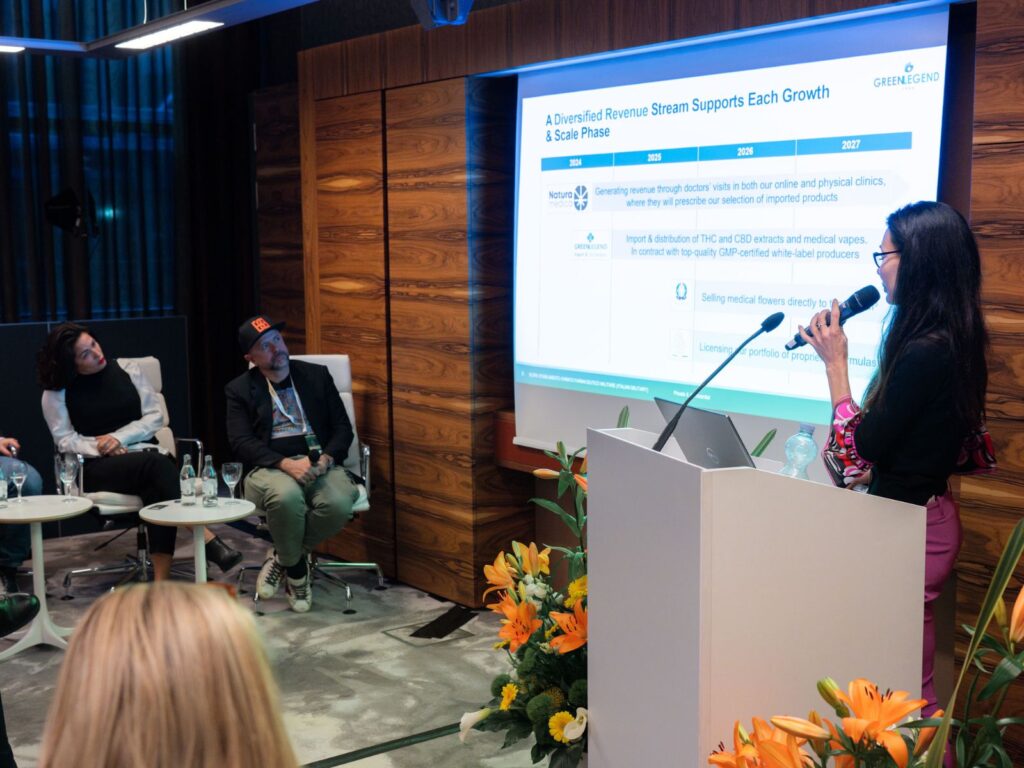
Sharks The Talman Group Munich Germany 2024

The next gathering will take place on February 21st, 2025, at the Dolder Grand in Zurich, Switzerland, presenting yet another unique opportunity for members to gain valuable insights, network with industry leaders, and stay ahead in the cannabis investment landscape.

For more information on membership and upcoming events, please visit The Talman Group’s website. Below is a recap video of The Talman House’s Munich event:

Health Canada: Only 3% Of Cannabis Consumers Obtain Products From Illegal Sources

Every year since 2017, Health Canada has conducted its ‘Canadian Cannabis Survey,’ in which the government agency poses various cannabis-related questions to members of Canadian society. Canada adopted recreational cannabis legalization in 2018, and the survey helps lawmakers and regulators gain insight into how legalization has affected Canada.

Health Canada recently released the results of the 2024 survey, with data being collected from April 4th to July 2nd, 2024. The 2024 survey involved 11,666 respondents aged 16 years and older across all provinces and territories.

One of the main findings of this year’s survey is that only 3% of consumers “reported accessing cannabis through illegal sources,” which is a decrease from a reported 16% back in 2019. Many consumers reported cultivating their own cannabis and/or being gifted cannabis from friends and family. The Health Canada survey also found the following.

  • The number of respondents who reported getting cannabis from a legal source in 2024 was 72% – an increase from 37% in 2019 to 72% in 2024, with legal storefronts being the most common source since 2019.
  • There was no change in rates of cannabis use among youth (age 16-19) over the past year. Past 12-month cannabis use among youth aged 16-19 was 41%, similar to several previous years (44%, 44%, and 43% in 2019, 2020 and 2023 respectively).
  • Overall, the proportion of respondents who said they used cannabis and reported daily, or almost daily use has been stable since 2018 (approx. 25%), including among youth (approx. 20%).

“Since 2017, Health Canada has conducted the annual Canadian Cannabis Survey to better understand attitudes and knowledge regarding cannabis, as well as patterns of cannabis use in Canada. Through the information gathered, Health Canada can better understand where support is needed the most and develop program initiatives that will help educate and raise awareness around the use of cannabis.” Health Canada stated about its annual survey.

Below is a breakdown of the rates of product types reportedly consumed in 2024 in Canada according to the survey results:

  1. Dried flower/leaf (63%; down from 2018 and up from 2023)
  2. Edible cannabis (55%; up from 2018)
  3. Vape pens/cartridges (37%; up from 2018 and 2023)
  4. Oil for oral use (24%; unchanged from 2019)
  5. Beverages (21%; up from 2018)
  6. Hashish/kief (16%; down from 2018)
  7. Topical products (13%; up from 2019)
  8. Concentrates/extracts (e.g., wax, shatter or budder) (13%, down from 2018)

Canada was the second country to adopt a national adult-use cannabis legalization measure behind Uruguay (2013). Malta (2021), Luxembourg (2023), Germany (2024), and South Africa (2024) have also adopted national recreational cannabis legalization measures.

Brazil’s Medical Cannabis Market Increased By 22% In 2024

According to a new market report by Kaya Mind, Brazil’s emerging medical cannabis market is projected to increase by a projected 22% by the end of 2024. The market report estimates that Brazil’s medical cannabis market is worth roughly BRL 832 million ($142 million).

Kaya Mind estimates that Brazil is now home to about 672,000 medical cannabis patients, which is a 50% increase compared to 2023. The market researchers estimate that only one-third of those patients currently make their purchases legally through the nation’s pharmacies and another 22% access medical cannabis products through collectives.

According to leading international cannabis economist Beau Whitney, the overall region’s growing cannabis market is worth a considerable amount of money.

“Central and South America together are an $8 billion total market; however, its low-cost manufacturing and drive towards EU GMP and GAP certifications is making the region an attractive source of supply for the EU.” Whitney stated in a recent newsletter.

Whitney’s analysis was originally provided as part of his presentation at the inaugural Andean Hemp and Cannabis Trade Summit in October where he presented on the Central and South American hemp and cannabis markets.

In addition to the overall market value analysis, Whitney Economics also provided the following market information:

  • Five countries in Central and South America make up 89% of the regional demand
  • Brazil is home to the largest domestic market ($2.5 billion)
  • Total Central and South American market demand requires 6.3 million pounds of cultivated output
  • Peru is an estimated $0.8 – $2.2 billion domestic market
  • Peru’s hemp industry has strong opportunities in fibers, grains, and isolated cannabinoids

Brazil’s Superior Court of Justice recently ruled that cultivating, processing, and selling industrial hemp for medical and pharmaceutical uses is legal in Brazil. The decision will eventually increase options for the nation’s suffering patients.

“While the ruling is a significant victory for the medical cannabis community, Justice Regina Helena Costa emphasized that the court’s decision was limited to health-related applications.” reported Benzinga in its initial coverage of the landmark decision.

Additionally, Brazil’s National Health Surveillance Agency recently decided to amend Ordinance SVS/MS 344/1998 to allow the regulation of medical cannabis products for animals by the Ministry of Agriculture and Livestock.

Veterinarians who are approved by the nation’s Federal Council of Veterinary Medicine may prescribe registered cannabis-based medications to animals. A study from December 2022 conducted by researchers in Brazil found that, at the macro level, cannabis appears to be safe for pets, especially cannabidiol, as long as it’s administered in the right dosage level.

“The review was systematically performed in Medline (via Pubmed®) and Latin American and Caribbean Health Sciences Literature (LILACS) databases, with period restriction (between 1990 and 2021). The qualified articles (n=19), which met the previously established inclusion criteria, were critically evaluated.” stated the researchers about their study.

“Based on the literature review, it is possible to infer safety in the administration of cannabis-based products for the treatment of dogs, especially products rich in cannabidiol (CBD), free or with low concentrations of tetrahydrocannabinol, under the conditions evaluated. In addition, CBD products potentially promote improved quality of life and reduce pain perception in animals affected by canine osteoarthritis.” the researchers also stated.

“Finally, owing to the lack of large-scale and robust clinical research studies, the performance of clinical trials, considering the individual characteristics of each cannabis-based product (composition, concentration, nature of adjuvants, dosage form, route of administration), is strongly encouraged.” the researchers concluded.

MJBizCon Comes Back To Las Vegas On December 3-6

MJBizCon, the top cannabis industry event in the United States, is coming back to Las Vegas next week on December 3rd-6th, 2024. The event, which is often described as ‘the Super Bowl of Cannabis’ is a must-attend for anyone serious about succeeding in the emerging legal U.S. industry.

Many members of the United States cannabis industry measure their calendar years from MJBizCon to MJBizCon, and rightfully so. In many ways, the event serves as a U.S. cannabis industry family reunion, with people from all over the country converging at MJBizCon to see their friends and colleagues and forge new relationships and partnerships.

Next week’s event is the thirteenth installment of the conference and will be bigger and better than ever. I was personally in attendance at the first-ever MJBizCon back in 2012, with the inaugural MJBizCon being held in Denver, Colorado the day after the state’s voters approved the nation’s first adult-use legalization measure.

I had attended other cannabis events over the years up to that point, but it was readily apparent that something special was beginning at the first MJBizCon event. Since that time, the legal industry in the United States has exploded, experiencing exponential growth across the country and the rise of the legal industry in the U.S. was paralleled by the rise of the now iconic MJBizCon.

79% of people living in the United States now live in a county with at least one regulated cannabis dispensary according to an analysis by the Pew Research Center. The Pew Research Center also found the following:

  • 74% of people in the U.S. live in a state where recreational or medical cannabis is legal
  • There are nearly 15,000 cannabis dispensaries in the U.S.
  • California has the most overall dispensaries (3,659)
  • Oklahoma has the most dispensaries per capita (36 dispensaries for every 100,000 residents)

MJBizCon has experienced such tremendous growth over the years, going from hundreds of attendees back in 2012 to tens of thousands in recent years, that the event has long since moved to its current home in Las Vegas, Nevada to accommodate the growing number of attendees and exhibitors. This year’s MJBizCon will feature (including but limited to):

  • Pre-show forums focused on finance and marketing, science and psychedelics, and women’s leadership
  • Expo Hall featuring cultivation products and services, processing, packaging and lab services, retail, and other B2B services
  • 3 full days of informative conference education sessions
  • Over 60 popular networking event opportunities

MJBizCon 2024 is expected to host over 30,000 cannabis entrepreneurs, over 1,400 exhibitors, and over 200 industry speakers.

Members of the International Cannabis Business Conference’s team will be in attendance, and we are encouraging all of our followers in the United States to consider attending MJBizCon 2024 in Las Vegas next week from December 3rd to 6th. You can purchase your tickets at this link here, and make sure to use the special promo code ‘MIPMXAB87’ to receive a special 10% discount!

The emerging legal cannabis industry in the United States is projected to add roughly $112 billion to the nation’s economy in 2024 according to an analysis by MJBiz Daily. The projection is part of the company’s 2024 MJBiz Factbook.

Australian Medical Cannabis Sales Quadrupled In The Last Two Years

Medical cannabis sales in Australia have quadrupled during the last two years, with Australians expected to spend an estimated $1 billion on medical cannabis this year. Medical cannabis was first legalized in Australia in 2016.

“The Pennington Institute’s Cannabis in Australia report has revealed spending has skyrocketed from $230 million two years ago to a predicted $1 billion by the end of this year.” 9News stated in its local coverage.

“The spending correlates with usage, which jumped from just 3.9 per cent of survey respondents in 2019 to almost 30 per cent admitting they use prescription marijuana.” the outlet also reported.

Australia’s Senate voted on an adult-use cannabis legalization measure this week. According to the Australian Greens Party, which introduced the measure, the measure was “blocked by the Labor and Coalition parties in a 13 to 24 vote against progress.”

“We took a big step today from treating cannabis as part of the failing ‘war on drugs’ and instead putting forward a model that is safer, reduces harms and delivers for the millions of Australians who just want us to legalize it!” Greens Senator and Justice Spokesperson David Shoebridge said in a media release.

“The support for this bill across the community is enormous and it’s why we know cannabis legalisation in this country is inevitable.” Shoebridge also stated. “The Labor and Coalition parties joined together to try and hold Australia back in the 1950’s by blocking this desperately needed reform.”

Currently, cannabis is legal for adult use at a national level in Uruguay, Canada, Malta, Luxembourg, Germany, and South Africa. Cannabis is also legal for recreational use in two dozen states in the U.S., and regional adult-use cannabis commerce pilot trials are operating in the Netherlands and Switzerland.

“Government data shows 8.8 million of adult Australians have consumed cannabis. The Labor and Liberal parties are happy to call all of these people criminals. That’s a bloody disgrace.” Senator Shoebbridge said. “My office keeps hearing from people using cannabis to deal with anxiety or pain, or just to relax. We think that adults should have the right to do just that.”

“If choosing cannabis instead of products from pharmaceutical corporations is working for you, as it does for many Australians, then you should have that choice.” Shoebridge also said. “If you’d rather have a brownie than a beer, or a gummy than a cigarette, of course you should be allowed to do that.”

Uruguay’s Legal Cannabis Exports Continue To Increase

Uruguay will forever hold the title of being the first country to adopt a national adult-use cannabis legalization measure. Lawmakers in Uruguay adopted recreational cannabis legalization in 2013, with legal domestic sales beginning in the nation’s pharmacies in 2017.

The South American nation is rapidly becoming a top source of legal medical cannabis products for other countries. Uruguay’s legal cannabis companies exported over $3 million worth of medical cannabis products in the last year to such nations as Germany, Portugal, Australia, New Zealand, and the United States. Uruguay’s export data is part of a new report published by the Uruguay XXI Institute.

“In 2023, Uruguayan companies exported about 25 tons of cannabis, of which 83% corresponded to medicinal flowers, with sales of USD 1.5 million.” El Planteo reported about the previous year’s statistics for contextual purposes.

The report by the Uruguay XXI Institute also determined the following:

  • Uruguay’s domestic adult-use consumer base is an estimated 250,000 people
  • The Ministry of Livestock, Agriculture, and Fisheries has issued cultivation licenses to 36 companies
  • Annual consumption of recreational cannabis in Uruguay is between 44 and 50 tons

Legal sales at pharmacies began in Uruguay in the summer of 2017, and consumers could initially choose from two different strains. The two strains are named ‘Alpha’ and ‘Beta’, each with tetrahydrocannabinol (THC) levels equal to or less than 9%, and cannabidiol (CBD) levels equal to or less than 3%.

Then, in 2022, Uruguay permitted a third option, ‘Gamma,’ which has a THC level equal to or less than 15%, and CBD levels equal to or less than 1%. Regulators in Uruguay recently approved a fourth option that contains a higher level of THC than the other three options.

“The new variant has a tetrahydrocannabinol (THC) content of equal to or less than 20% and a cannabidiol (CBD) content of equal to or less than 1%.” stated Latin America Reports in its local coverage.

“Currently, 71,843 Uruguayan citizens are legally registered to purchase cannabis in pharmacies, 11,708 have received permission to grow it at home, and 13,687 are members of cannabis clubs.” the outlet also reported.

Legal Medical Cannabis Imports Surged In Q3 In Germany

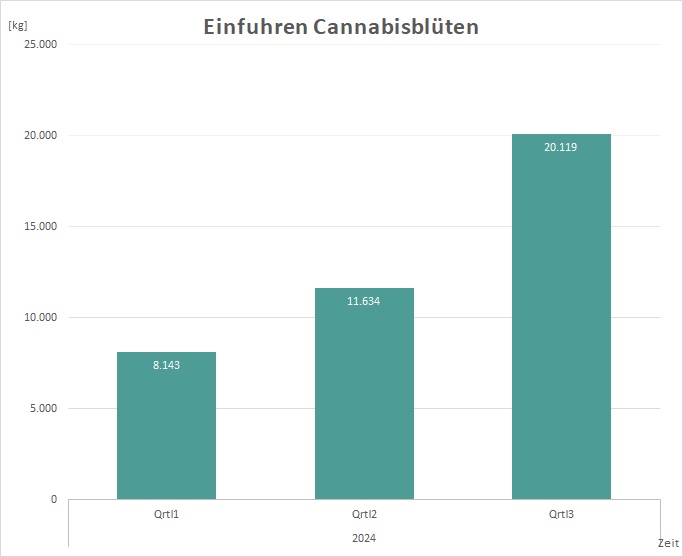
During the first three full months following Germany’s enactment of the CanG adult-use legalization law (Q3), legal medical cannabis imports increased by over 70% compared to the previous period. The first provisions of Germany’s CanG law, which removed cannabis from the nation’s Narcotics List, took effect on April 1st, 2024.

Germany’s Federal Institute for Drugs and Medical Devices (BfArM) recently published medical cannabis import data for Q3 2024, with the BfArM graph below showing “the total amount of cannabis imported quarterly from abroad to Germany for medical and medical-scientific purposes in the form of dried flowers (in kg )”:

BfArM dried flower cannabis imports germany Q3

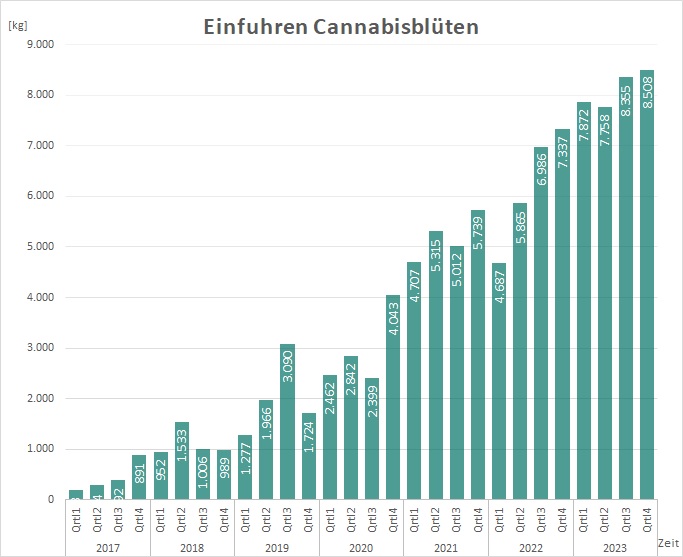
“The following figure shows the total amount of cannabis imported into Germany from abroad for medical and scientific purposes in the form of dried flowers and extracts on a quarterly basis. The dried cannabis flowers are included as a weight quantity (in kg ), the extracts as a weight quantity of dried cannabis flowers (in kg ) that were required to produce the respective extracts.” states BfArM (translated from German to English):

BfArM dried flower and extracts cannabis imports germany Q3

Germany adopted a national adult-use cannabis legalization measure earlier this year. The first provisions of the law permitting personal cultivation, possession, and use went into effect on April 1st, 2024. Additionally, as another part of ‘Pillar 1’ of German legalization, cultivation associations became legal on July 1st, 2024.

‘Pillar 2’ of the nation’s legalization model involves launching regional adult-use cannabis commerce pilot trials. Such trials already operate in the Netherlands and Switzerland and are allowed under European Union law.

The German Cannabis Business Association (BvCW) recently called for no further delays in launching pilot trials in Germany to combat Germany’s unregulated market and for the nation’s new government to not regress on cannabis policies and regulations.

“Legal access options such as home cultivation, cultivation associations, but also commercial models with licensed specialist shops are the best solution to push back the black market. Therefore, a new federal government should ensure that these legal accesses to cannabis are created and maintained,” says Michael Greif, Managing Director of the BvCW. “There is no protection for young people on the black market, dealers do not ask for ID. But there are dangerous additives there. The best way to ensure youth and consumer protection is through a legal and regulated market.”

The German cannabis market is home to 4-8 million consumers with a total potential market value of between €7.8 billion and €15.6 billion according to data provided by leading economist firm Whitney Economics.

To completely supply German demand, and thus eliminate the unregulated market, Germany’s cannabis industry would need to produce over 948,000 kg of flower annually according to Whitney Economics.

U.K. Cannabidiol Market Projected To Reach Over $5 Billion In Value By 2032

According to a market analysis by Vantage Market Research, the value of the United Kingdom’s emerging cannabidiol (CBD) industry is projected to reach over $5 billion by 2032. The analysis valued the U.K.’s CBD industry at $1.355 billion in 2023.

A separate analysis published in September 2024 by CLEAR found that legalizing all forms of cannabis for adult use in the United Kingdom and taxing and regulating sales could generate as much as £9.5 billion per year. However, non-CBD cannabis products are only legal in the U.K. in limited medical circumstances.

“One of the top trends in the U.K. cannabidiol market is the increasing popularity of CBD-infused wellness products, such as skincare and beauty items, driven by consumer demand for holistic health solutions.” researchers at Vantage Market Research previously stated.

Below are other findings from Vantage:

• The U.K. CBD market is rapidly expanding, driven by consumer demand for natural health solutions
• CBD-infused wellness products and beverages are gaining significant popularity
• Transparency and quality assurance are becoming crucial for consumer trust
• There is an increasing integration of CBD into traditional pharmaceuticals
• The therapeutic potential of CBD continues to drive market interest and research investments

Cannabis remains the most commonly used controlled substance in the United Kingdom, with 7.4% of adults between 16 and 59 years old in the UK reporting having used cannabis within the past year according to a 2022 report by the Office for National Statistics.

The National Centre for Social Research recently conducted a poll of United Kingdom citizens in which members of UK society were asked about their opinions regarding cannabis policy modernization efforts in the UK. The poll found a strong majority of support for legalizing cannabis sales in nearly every age group.

According to a separate analysis by The Dales Report, Germany and the United Kingdom are projected to control an estimated 77% of Europe’s emerging legal medical cannabis market by 2028.

“This growth is driven by both expanding legal frameworks and an increasing acknowledgment of the therapeutic benefits of cannabis. As both nations continue to refine their policies and commercial strategies, the focus remains on balancing patient needs with scientific and public health priorities.” The Dales Report stated about both national markets.

Advocates Call For Cannabis Industry Expansion In Germany

The German Cannabis Business Association (BvCW) is calling for the German government to embrace the nation’s emerging legal industry rather than treating people like criminals for consuming cannabis responsibly. The urging by BvCW comes amidst calls by some conservative lawmakers to roll back Germany’s recent cannabis policy changes.

“If the Union factions want to dry up the black market and fight organized crime, the cannabis industry is on their side. However, if this is to be done by criminalizing patients and consumers, this is the wrong way. It is not the users who are criminal, but the actors of the black market,” said Dirk Heitepriem, President of the BvCW, in a recent newsletter.

Germany adopted a national adult-use cannabis legalization measure earlier this year, with the first provisions of the law permitting personal cultivation, possession, and use going into effect on April 1st, 2024. Additionally, as another part of ‘Pillar 1’ of German legalization, cultivation associations became legal on July 1st, 2024.

‘Pillar 2’ of the nation’s legalization model involves launching regional adult-use cannabis commerce pilot trials. Such trials already operate in the Netherlands and Switzerland and are allowed under European Union law. BvCW is calling for no further delays in launching pilot trials in Germany to combat Germany’s unregulated market.

“Legal access options such as home cultivation, cultivation associations, but also commercial models with licensed specialist shops are the best solution to push back the black market. Therefore, a new federal government should ensure that these legal accesses to cannabis are created and maintained,” says Michael Greif, Managing Director of the BvCW. “There is no protection for young people on the black market, dealers do not ask for ID. But there are dangerous additives there. The best way to ensure youth and consumer protection is through a legal and regulated market.”

Lawmakers in Germany adopted the CanG law to boost public health outcomes by permitting adult consumers to obtain, or cultivate their own, cannabis products legally.  EU law does not permit national recreational cannabis commerce, however, it does permit regional pilot trials since they are research-based.

The German cannabis market is home to 4-8 million consumers with a total potential market value of between €7.8 billion and €15.6 billion according to data provided by leading economist firm Whitney Economics.

To completely supply German demand, and thus eliminate the unregulated market, Germany’s cannabis industry would need to produce over 948,000 kg of flower according to Whitney Economics. That would be impossible if Germany’s cannabis laws regressed.

“Reversing the CanG would also set Germany back considerably in international competition and in research opportunities related to cannabis,” explains Dr. Stefan Meyer, Vice President of the BvCW. “The cannabis industry in Germany has created hundreds of jobs in recent years, provided thousands of patients with access to urgently needed therapies and proven that high-quality and safe products can also be produced in Germany.”

“Regulate instead of prohibit – this should also be the motto for a new federal government. The cannabis industry is ready to work together to dry up the black market. This requires commercial opportunities to grow and sell cannabis in Germany, legal access to home-grown cannabis for consumption, safety and reliability for patients, and liberalization of industrial hemp,” said Dirk Heitepriem.

BvCW suggests that as a first step, “the Federal Ministry of Food and Agriculture could now issue the Consumer Cannabis Science Responsibility Ordinance (KCanWV).”

In the middle of the ongoing debate in Germany, the nation is hosting a multi-national conference where various leaders will share their experiences with modernizing cannabis policies and regulations, as first reported by Marijuana Moment.

“Representatives from Luxembourg, Malta, the Netherlands, the Czech Republic and Switzerland were invited by German Commissioner for Addiction and Drug Issues Burkhard Blienert to the meeting in Berlin on Monday and Tuesday to “exchange experiences in regulating cannabis for non-medical purposes.” the outlet reported.