Premier Doug Ford Is Not A Fan Of Cannabis Clubs

Cannabis clubs are becoming more common around the world, particularly in Canada. Unfortunately, some lawmakers and regulators continue to seemingly act as if prohibiting social cannabis use venues will prevent them from operating. A recent example of that can be found via comments made by Ontario Premier Doug Ford after he heard a pitch for cannabis clubs provided by the Ontario Chamber of Commerce.

“I don’t like the idea of having a lounge outside and they’re smoking or doobies or weed or whatever the heck they call it now,” said Premier Ford according to the Toronto Star. “If you want to do your stuff, do it somewhere else. That’s my opinion.”

The recent comments were unfortunate, although, they do not reflect the reality of what is happening throughout much of Canada. When consumers go “somewhere else” it’s often a cannabis speakeasy. Furthermore, people are going to consume cannabis at events such as concerts, just as they have for many, many years. Lawmakers like Premier Ford can choose to stick their heads in the sand and pretend like social cannabis use doesn’t already exist, however, that denial of reality comes at a cost to public health, safety, and revenue.

Common Ground

Whether Premier Doug Ford realizes it or not, contained in his recent comments is an argument for regulating social cannabis use and allowing venues to be licensed. Per Premier Ford’s own words, he doesn’t “like the idea of having a lounge outside and they’re smoking.” What is being proposed is private venues, where people can consume cannabis out of public view.

As responsible cannabis consumers will be quick to point out, they typically don’t prefer to consume cannabis on a sidewalk or in an alley. Speaking for myself, I’d much rather consume cannabis in a private social setting. When I am away from home and I don’t have a private setting to consume in, I’d gladly go to a regulated venue to smoke cannabis instead of doing so in a park or on the side of a building. If Premier Ford’s main argument is that he doesn’t want cannabis consumption to be a nuisance, then he should be advocating for cannabis clubs and not against them.

Accepting Reality

Cannabis consumers and patients want cannabis clubs, other private social venues, and consumption-friendly events. Just as some adults want to consume alcohol around their current friends and family, and/or want to make new friends, the same is true for cannabis. For patients specifically, they need to be able to consume their medicine wherever they are, and social cannabis businesses help facilitate that.

The unregulated cannabis market is going to fill any voids left by deficient public policy. If lawmakers like Premier Ford do not want to pursue sensible public policy and do not want to allow social use entities to legally operate, such entities will still surely exist, they will just be less safe and zero percent of any profits will go to public coffers. Lawmakers in Ontario, Canada, and everywhere else would be wise to embrace cannabis clubs rather than oppose them. Calls for social use reform are not going away, and will only get louder as the emerging legal cannabis industry continues to expand.

Agreement Reached In Spain For Future Regulation Of ‘Cannabis Light’

Spain is home to one of the most unique approaches to cannabis policy out of any nation on the planet. The nation has one of the most robust and vibrant cannabis communities on earth, yet the cannabis public policies in Spain are very outdated.

Anyone with internet access and the ability to use a popular online search engine can see that private cannabis clubs are located throughout Spain, with huge clumps of them being located in Barcelona in particular. Unfortunately, Spain’s laws and regulations are such that all of those clubs operate in a legal grey area versus being licensed and outright accepted.

Cannabis advocates inside and outside of Spain were hopeful that the start of 2023 would see a cannabis regulatory measure finally reach the finish line and get the nation’s laws to match reality, however, that has yet to materialize.

What has materialized is an agreement in Spain’s Congress to, eventually, regulate low-THC cannabis. Low-THC cannabis is often referred to as ‘cannabis light’ and is very popular in many European nations. Perhaps someday Spain will join those nations in regulating such products. Per Europa Press (translated to English):

The PSOE has agreed on an initiative in Congress with Unidas Podemos, Esquerra (ERC) and Bildu that opens the door to a future regulation of non-psychoactive cannabis, that whose percentage of tetrahydrocannabinol (THC), the euphoric drug, is less than 1% .

Unidas Podemos and the two pro-independence allies of the Government presented an initiative this Wednesday in the Congressional Agriculture Commission demanding the regulation of the production and commercialization of this crop in order to offer legal certainty to producers and marketers.

It will be interesting to see if 1) this type of reform actually gets adopted in the near future, and 2) if it will have any meaningful impact on Spain’s cannabis industry. To be clear – providing this type of reform to the nation’s emerging cannabis industry is helpful, although, exactly how helpful it would be is open for debate.

What Spain really needs is a comprehensive cannabis policy and regulatory overhaul. Cannabis products containing all types of THC percentages, including concentrates that contain large amounts of THC, are being consumed every day in Spain. It’s a reality that lawmakers and regulators ignore at a cost to public health.

Consumers and patients in Spain deserve safe access to tested cannabis. Entrepreneurs in Spain deserve to operate in a business landscape that affords them every reasonable opportunity to supply the nation’s demand in a way that boosts public health and generates revenue for public coffers.

Cannabis Sales In Canada Are Not Associated With An Increase In Crash Hospitalizations

Earlier this week we covered a report that was recently issued by the Traffic Injury Research Foundation titled, “Recreational Cannabis Consumption Spaces in Canada.” The report was published with support from the Canada Safety Council and DRIVE SOBER®.

In many ways, the report failed to provide proper context and seemed to try to portray cannabis in the most negative light possible, with a heavy focus on public roadway fearmongering. The results of a recent traffic-injury study are proving to be quite timely, as the findings of this new study seem to contradict many points that were recently offered up by cannabis opponents.

A new study based out of Canada examined traffic-injury hospitalization data in an attempt to see if the launch of legal adult-use sales in Canada was associated with an increase in traffic-injury hospitalization rates. Below is more information about it via a news release from NORML:

Toronto, Canada: The implementation of adult-use marijuana sales in Canada is not associated with any increase in traffic injury-related hospitalizations, according to data published in the journal Addiction.

Investigators assessed nationwide rates of emergency department visits and hospitalizations in the years before and immediately following legalization.

Authors concluded, “Overall, there is no clear evidence that RCL [recreational cannabis laws] had any effect on rates of ED visits and hospitalizations for either motor vehicle or pedestrian/cyclist injury across Canada.”

The findings are consistent with those of a 2021 Canadian study that similarly “found no evidence that the implementation of the Cannabis Act was associated with significant changes in post-legalization patterns of all drivers’ traffic-injury ED visits or, more specifically, youth-driver traffic-injury ED presentations.”

Several studies from the United States also found no significant changes in traffic safety in the years immediately following the enactment of adult-use legalization. However, other assessments evaluating longer-term trends in traffic safety following legalization have yielded inconsistent results.

Full text of the study, “The effect of recreational cannabis legalization on rates of traffic injury in Canada,” appears in Addiction. Additional information is available from the NORML Fact Sheet, ‘Marijuana and Psychomotor Performance.

Prime Minister Trudeau: Time To “Catch Up” With The Cannabis Industry

Canada remains the only country on earth where anyone of legal age can make a legal adult-use cannabis purchase regardless of residency status. The only country to legalize cannabis for adult use prior to Canada doing so in 2018 was Uruguay back in 2013.

Unlike in Canada, Uruguay limits adult-use sales to residents only. Malta is the only other country on the planet right now that has also passed an adult-use legalization measure, however, the only way to legally purchase cannabis in Malta will be via licensed non-profit cannabis clubs, and no licenses seem to have been issued thus far. Malta started accepting applications for clubs late last month.

Until legal sales to non-residents become a reality elsewhere, Canada will continue to be in a league of its own. Canada’s legalization model and related policies are obviously not perfect, although, they are still exponentially better than prohibition.

The industry has succeeded by many measures despite it operating on a playing field that is far from level compared to other legal industries of its size in Canada. Prime Minister Justin Trudeau made comments recently that suggest a leveling of the playing field may be on the horizon. Per excerpts from initial reporting by StratCann:

Prime Minister Justin Trudeau acknowledged the need for the government to “catch up” with the cannabis industry’s concerns around issues like high taxation in a recent public event.

In his response, Trudeau first brought up the government’s historical public-health focussed messaging around legaization, but noted that now that the legal system is established, the government has a need to take a look at ensuring those businesses who “stepped up” in this new industry can survive.

“Now that we’ve got the public health and safety stuff out of the way, or on the way, I think you’re absolutely right that we should absolutely take a much closer look at ‘okay, what do we do then to make sure that this is a beneficial industry?’

As we previously reported, the legal cannabis industry in Canada had created roughly 151,000 jobs as of February 2022. Additionally, the emerging legal cannabis industry is responsible for generating over $15 billion since legal adult-use sales launched in late 2018.

Deloitte estimates that the legal cannabis industry in Canada has contributed over $43.5 billion to the nation’s GDP since the start of legalization. Cannabis companies have directly invested roughly $4.4 billion into Canada’s economy, with the remaining boost to GDP coming from “indirect” economic contributions, and “induced” contributions according to Deloitte.

As impressive as those statistics are, they come from an era in which Canada’s cannabis industry faced needless hurdles, many of which are still in place today. Hopefully Prime Minster Trudeau puts actions behind his recent words and does everything in his power to help his nation’s emerging cannabis industry reach its full potential.

Society Deserves A Sensible Approach To Cannabis Clubs And Driving

An area of concern for many members of society when it comes to cannabis reform, and understandably so, relates to cannabis and driving. After all, no reasonable person wants to have impaired people operating motor vehicles on public roadways. However, reasonable people also want to let science lead the way when it comes to determining impairment and crafting public policies that help mitigate impaired drivers on public roadways, and unfortunately, hard science is often not part of the public policy process.

Often replacing hard science and a rational approach for mitigating cannabis impairment on public roadways is outright political scare tactics, which is truly unfortunate. ‘There will be terror and bloodshed on the roadways’ is a common theme of cannabis opponents when any type of cannabis reform is being considered. The latest focus of such anti-cannabis PR efforts is cannabis clubs.

New Report Targets Cannabis Clubs

Days ago the Traffic Injury Research Foundation released a report titled, “Recreational Cannabis Consumption Spaces in Canada.” The report was published with support from the Canada Safety Council and DRIVE SOBER®. While some of the points made in the report’s press release are valid, many of them involved typical reefer madness talking points and communication strategies.

The report relied heavily on convoluting the nuanced differences between confirmed cannabis impairment at the time of an incident versus someone merely having cannabis in their system but no proven impairment, or someone having several substances in their system, or someone having so little cannabis in their system that impairment was likely nonexistent. For example, the report states, “more than 7% of drivers had ≥ 2 ng/mL, and 3.5% had ≥ 5 ng/mL.” To put those ng/mL limits into perspective, the Olympics’ cannabis testing threshold is 150 ng/mL.

“The report underscores that any proposal to move forward with the implementation of cannabis consumption spaces in the absence of effective and well-developed prevention strategies to protect the public from recognized harm is premature.” the report stated, which if you ask me, is merely a delay tactic to try to stop the spread of cannabis clubs. If so, there’s a really big flaw with that tactic – it ignores the fact that cannabis clubs are far from a new thing.

Cannabis Clubs In Canada

Regulated cannabis clubs may be a relatively new thing from a public policy standpoint, however, in the real world they have existed for decades, including in Canada. Underground cannabis clubs have existed for years, particularly in British Columbia, and the last time that I checked, the sky was still intact over B.C. Despite unregulated cannabis clubs being somewhat common in parts of B.C., it’s worth noting that the province does not lead Canada in drug-related DUIs.

According to government data from Canada, “Newfoundland and Labrador had the highest rate of drug-impaired driving (52 incidents per 100,000 population), followed by Prince Edward Island,” with New Brunswick (36) coming in next. By contrast, British Columbia had 32 incidents per 100,000 population. If increasing the number of cannabis clubs in a jurisdiction automatically made the roadways unsafe, then it would be reflected in the data. Yet, that is obviously not the case.

A Rational Approach

One thing that the report noted that was absolutely correct is that there is a need for ongoing public education regarding cannabis use and operating a motor vehicle while impaired. No responsible cannabis consumer advocates for impaired driving, and the same is true of responsible members of Canada’s emerging cannabis industry. Clearly, there is a common goal between responsible cannabis advocates and opponents alike in that we all want public roadways to be safe.

The friction between the two groups begins when prevention strategies and detection are discussed. Cannabis advocates want to rely on facts to educate the public, and not fear-mongering. Cannabis advocates want science to determine impairment and not arbitrary nanogram thresholds that do not take into account a person’s tolerance level, individual biology, and other situational factors.

Unfortunately, the topic of cannabis and driving is such a hot-button issue with cannabis opponents that it makes it very difficult to have a rational conversation about what an effective prevention strategy looks like. People have consumed cannabis in social settings for many years, albeit in a non-regulated fashion, and a vast majority of people take precautionary measures such as walking, taking public transportation, or arranging private transportation.

Cannabis clubs are merely the latest boogeyman punching bag for cannabis opponents. Concerns about impaired driving are valid, however, they should not be used to derail further implementation of cannabis clubs in Canada, or anywhere else for that matter.

Taking European CBD Products From Concept To Reality

The rise in the availability of cannabis products in many parts of the world is amazing from a consumer standpoint, and for suffering patients specifically, the boost in safe access is a tremendous blessing. More cannabis products are now legally available than ever before since the dawn of prohibition, and that is particularly true for CBD products.

Demand for CBD products is increasing around the globe. In fact, just the CBD skincare market alone is estimated to be worth hundreds of millions of dollars currently according to Verified Market Research. By 2028, that figure is expected to jump to over $3.7 billion.

Skincare products are not the only type of CBD product that consumers demand. Far from it, in fact. The beverages sector of the CBD industry is currently worth an estimated $4.52 billion and is expected to grow 25.6% CAGR according to Straits Research.

The CBD industry possesses tremendous profit potential, however, product development is much more difficult than many people think. Just because someone has a great idea for a type of CBD product does not mean that they possess the knowledge and resources to fully develop it.

Even if someone has such resources at their disposal, it may not make sense for them to manufacture products themselves, and instead, they should focus their time and energy on getting products to market and building brand recognition among consumers and patients. That is where white-label companies come in.

White-label companies help take CBD products from concept to reality, with Essentia Pura serving as one of the top white-label CBD companies on earth. I recently reached out to Nejc Rusjan, CEO & Co-Founder of Essentia Pura, to discuss white labeling, as well as his views on the larger cannabis conversation (my questions are in bold):

JG: What concerns should people have regarding CBD products (such as contamination)?

NR: CBD products are not yet regulated, neither by the FDA in the states nor by EFSA in the EU, so it is on us manufacturers to self-regulate to high standards and participate in novel foods applications.

Unfortunately, not all manufacturers do this so there is no guarantee that the consumer is getting a product that contains the amount of CBD listed on the label or that the THC level is not within the legal limits. Additionally, some CBD products may contain contaminants such as heavy metals, and pesticides, which can occur during hemp cultivation or solvents that were used during the extraction process other than CO2 extraction.

Consumers should purchase CBD products from reputable sources and look for third-party lab testing results to ensure the product is safe, compliant, and contains the claimed amount of CBD.

JG: Why is it more advantageous for a cannabis company to use your white-label or custom formulation services instead of doing everything themselves?

NR: Using our white-label and custom formulation services firstly gives a company access to market-proven, proprietary formulated CBD products, with a market-leading cannabinoid ratio and secondly, it allows them to focus on their core competencies while still offering to their customers what we believe are the highest-quality CBD products.

By partnering with a white-label provider like Essentia Pura, the cannabis company can avoid the costs of establishing an extraction facility and avoid the risks associated with developing and manufacturing new products in-house. We handle everything from product development and manufacturing to packaging and labelling, allowing our customers to focus on marketing and distribution. We like to call ourselves a one-stop solution provider for white-label CBD business needs.

JG: What do you envision Europe’s cannabis industry looking like in five years?

NR: In the next five years, the European cannabis industry is expected to grow as more countries legalise cannabis for medical and recreational use. The industry will likely become more sophisticated, with more professional growers and manufacturers entering the market. The legally compliant full-spectrum hemp extracts will not be considered novel food.

Additionally, we may see more cross-border collaborations and partnerships as companies look to expand their reach across Europe. However, regulatory issues and cultural attitudes towards cannabis may continue to be a challenge in some countries, and it remains to be seen how these issues will be resolved in the coming years.

Cannabis Production Identified As A Top Investment Opportunity In Rwanda

Rwanda’s economy ranks 171st on earth according to World Data, making it one of the poorest countries on the planet. Rwanda’s economy is still largely agrarian, with many citizens living in rural, undeveloped areas.

Years of conflict, particularly in the 1990s, ravaged the African nation and negatively impacted the already-dim economic prospects within its borders. Needless to say, any and all reasonable boosts to Rwanda’s economy are surely welcomed.

The emerging international cannabis industry is creating jobs, generating revenue for governments, and providing boosts to local economies at an ever-increasing rate around the globe as more and more countries reform their cannabis policies. If certain leaders in Rwanda have their way, their country will join the list of international cannabis industry leaders. Per The New Times:

Rwanda is looking to attract at least Rwf19 billion (about $17.5 million) investment in the production of cannabis, also known as a high-value therapeutic crop, The New Times has learnt.

The development was recently ranked among the country’s top 100 investment opportunities, during the Invest Rwanda Forum held last week.

According to the Rwanda Development Board (RDB), global cannabis production is projected to grow from the current $28.3 billion raked in 2021, to $197.7 billion in 2028 at a compound annual growth rate of 32 per cent.

Whether or not the projection offered up by the RDB proves to be accurate is anyone’s guess. And exactly to what extent the cannabis industry may help Rwanda’s economy specifically is unclear at this time, particularly since it involves many factors.

However, if Rwanda’s government and business community can develop its domestic cannabis industry, and especially if that industry can make meaningful inroads in the export market, amazing things could happen.

The Global Cannabis Industry’s Increasing Momentum Was On Full Display In Barcelona

The emerging legal international cannabis industry is stronger now than at any other time since the dawn of prohibition so many decades ago, and that was on full display last week in Barcelona where leading cannabis investors, entrepreneurs, activists, policymakers, and industry service providers from all over the planet gathered at the International Cannabis Business Conference on March 9th.

March in Barcelona has largely developed into the start of ‘cannabis event season’ for the international cannabis community in recent years, with the International Cannabis Business Conference partnering once again with Spannabis (held March 10th-12th) to put on the world’s largest cannabis super-event in 2023.

The two events combine for what is likely the closest thing in this world to an international cannabis community reunion, and it’s always heartwarming and inspiring to see old friends connecting (in addition to new friendships being created).

International Cannabis Business Conference Barcelona 2023

The International Cannabis Business Conference is Spain’s largest cannabis B2B event and this year’s installment came at a very crucial time for cannabis policy in Spain, as well as for cannabis policy at the continental level. Lawmakers and regulators in Spain are working harder than ever to pass meaningful legislation that will help Spain’s emerging cannabis industry reach its full potential. The same can also be said about many other parts of Europe right now.

With that in mind, it was tremendously beneficial to bring not only leaders from throughout Spain to one venue to network and discuss cannabis policy, but also leaders from other nations that are either working towards the same end goal as Spain or are farther along in the process and were able to impart their wisdom. Those leaders were able to network with each other and additionally were able to network with industry members, which is important for a multitude of reasons.

Cannabis policy reform is still a relatively new phenomenon at the international level and the global cannabis ecosystem is still largely a patchwork of laws, rules, and regulations, and that patchwork extends to efforts to reform and improve current public policies. The saying, ‘teamwork makes the dream work’ is as applicable to global cannabis efforts as anything you will ever find, so seeing leaders from all sectors of society (law, government, industry, activism) networking with each other was very encouraging and uplifting.

The International Cannabis Business Conference’s next event will be in Berlin in June. Buy your tickets today before prices go up!

International Cannabis Business Conference Barcelona 2023

As is always the case, the curriculum at the International Cannabis Business Conference in Barcelona was packed with world-class speakers who are all global leaders in their particular fields. We will be publishing videos of the panel discussions on the event’s YouTube channel, so make sure to check them out in the near future.

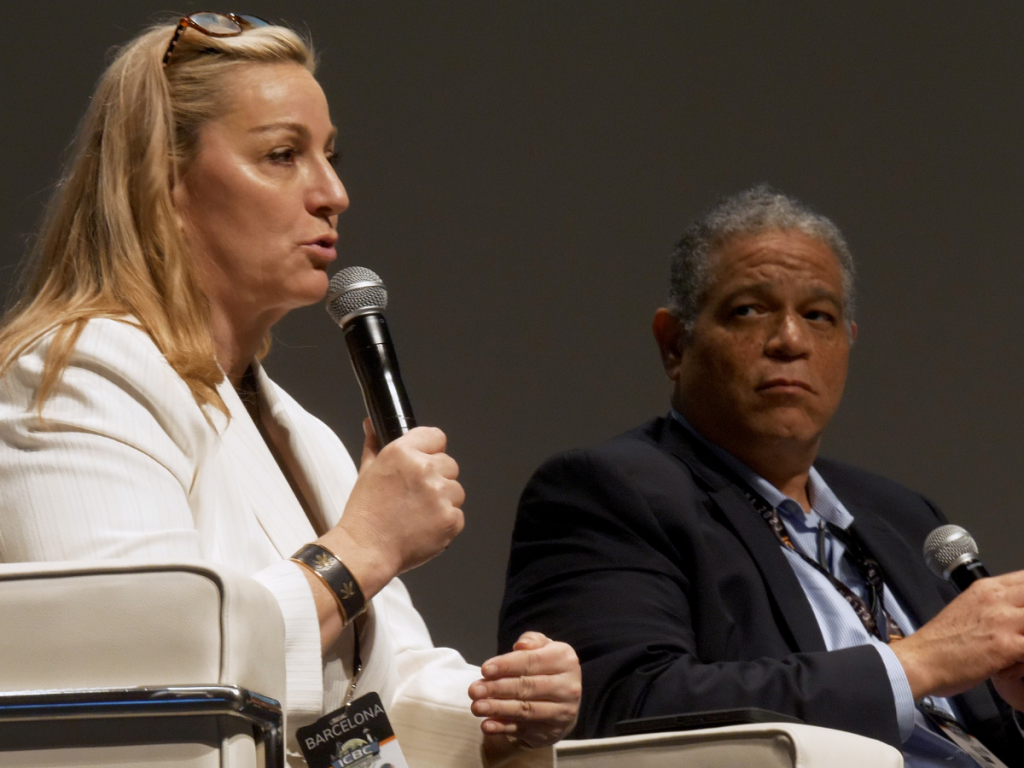
Below is a small sampling of photos from some of the many insightful panel discussions that took place at the 2023 International Cannabis Business Conference Barcelona B2B event:

International Cannabis Business Conference Barcelona 2023

No International Cannabis Business Conference event would be complete without an epic after-party, and this year’s event in Barcelona was no exception.

Below is a sampling of pictures demonstrating the ‘work hard, play hard’ mentality that makes the International Cannabis Business Conference’s events so special:

Spain To Quadruple Legal Medical Cannabis Production This Year

Late last month lawmakers in Spain considered a cannabis reform measure, and while the measure did not pass, Spain’s emerging legal cannabis industry will undergo a fairly substantial expansion this year regardless. The Spanish Medicines Agency recently notified the International Narcotics Control Board that it plans to (roughly) quadruple the amount of legal medical cannabis grown within its borders.

As verified by Público, Spain’s Ministry of Health “has forecast a production of 23.43 tons of medical cannabis in Spain this year.” As required by international agreements, Spain has to notify the International Narcotics Board of the United Nations every year regarding how much domestic medical cannabis it projects it will produce. This year’s notification from Spain is obviously a considerable increase compared to last year.

Why It’s Not Enough

For some historical context, consider that in 2019 and 2020 Spain reported to the International Narcotics Board that it would cultivate 500 kilos each year. That figure increased in 2021 to a reported 600 kilos. The following year in 2020 the figure grew exponentially to a reported 6,000 kilos. This year’s reported forecast of 23.43 tons compared to just two years ago highlights how fast Spain’s medical cannabis industry is expanding. And yet, it’s not enough. Not even close.

The boost in cannabis production in Spain will benefit exports and research, however, it’s not going to help Spain’s regulated domestic medical cannabis industry being that Spain doesn’t really have one, at least not compared to many other nations. As pointed out by Público, only two medical cannabis pharmaceutical products are authorized in Spain right now (Sativex and Epidiolex).

As such, most patients rely on the unregulated market to source their medical cannabis products, including from unregulated clubs that operate in a ‘grey area’ of the law. Spain doesn’t just need a boost in domestic medical cannabis production – it also needs to reform its laws to embrace and develop the domestic medical cannabis industry in a way that helps as many patients as possible.

A Boost For Reform Efforts

Increasing domestic medical cannabis production in Spain is generally a good thing. If it helps suffering patients abroad via direct access to medical cannabis, that is still beneficial, and if it contributes to groundbreaking research that helps suffering patients around the world, that is also beneficial. With that being said, clearly, there is still a lot more that can and should be done.

Fortunately, Spain is about to receive a boost for reform efforts via the world’s largest cannabis super-event that starts later this week. On March 9th policymakers, industry leaders, and cannabis advocates from all over the globe will descend on Barcelona, first for the International Cannabis Business Conference (March 9th), and then for Spannabis (March 10th-12th). A limited number of tickets are still available for both events.

The two events have once again teamed up to create an opportunity for thought leaders from around the world to discuss cannabis policy inside and outside of Spain. Whenever the world’s smartest cannabis brains get together amazing things happen, and this month in Barcelona will be no exception.