
UK Food Standards Agency Issues Ultimatum To CBD Industry

Brexit or not, it appears that the CBD industry has been one of the earliest to learn that all things regulatory are not in free-fall as the divorce papers are served from the continent. Indeed, the UK Food Standards Agency has laid down the law and set a deadline for CBD purveyors in the British Isles. 

On February 14, the FSA, the regulatory agency for all things foodstuffs, set a compliance deadline for CBD products currently in the market. Namely that they must file Novel Food applications by March 31, 2021. Failure to do so will result in penalties, including the removal of foodstuffs from shelves.

But what does this declaration really mean? And should the cannabis industry lean in?

Is CBD Really A “Novel Food?”

Part of the nefarious regulating on this issue is that CBD as a cannabinoid is certainly not “novel.” When produced from strains of hemp found in Europe, there is nothing new about the source of the plant. And when produced under food safety regulations, including extraction, the other part of the regulation falls away.

However much like in Germany and the rest of Europe, no matter how “original” the Brexited UK wants to be seen, the debate over legalization has stalled on issues and wording that is not only obscure, but also highly misleading.

Cannabis, no matter the amount of THC in the genus in question, is a plant. As such, it is also regulated under various regulatory schemes when bound for human consumption. “CBD” is not a plant, but rather a chemical compound, extracted from the plant via various different means that are also regulated both in the EU and in the UK.

Novel Food, in other words, is a regulatory schemata that is expensive and often unnecessary if other regulatory procedures are followed – ones that look awfully familiar to those with a background not only in pharma, but also now food and cosmetics.

What Is Coming For Europe?

So far, the debate on the continent is much the same – with Novel Food regulatory muster now being required in most cannabis legalizing countries. At the same time, however, many in the cannabis industry are also learning how to live with such regulations if not navigate them into the immediate future.

It is confusing, however, there are those who are absolutely braving the waves, if not beginning to chart successful paths through the industry by learning the ropes.

Be sure to attend the International Cannabis Business Conference’s regulatory panels as well as the keynote speech on April 2 by Peter Homberg, Partner Dentons Law Firm and head of their European Cannabis Practice.

Ontario Government Considers Cannabis Cafes: What Is The Impact Globally?

Toronto has led the discussion on a couple of cannabis topics of late. See financing of public pot companies for starters. But that is not all that is cooking in the woke Canadian kitchen of cannapreneurialism. 

So are, finally, ideas about public consumption, in both licensed establishments like cafes and lounges and public venues like festivals and concerts The news comes, literally, as a breath of fresh or ganja-scented fresh air in a debate that is getting decidedly stuck in a rut just about everywhere.

And if the winds of change can blow from Toronto, globally, like the pace of cannabis exports, so much the better. In Europe, home of the idea to begin with, there is already a receptive hum afoot, and not just in Amsterdam.

Cannabis 2.0 for 2020

Luxumbourg broke the ice with its determined pushing of the pace of a regulated recreational market in Europe, but Italy popped the cherry on home grow last fall, and that too is now in the room. 

No matter the conservative forces holding back full recreational, now, however, it is also clear to everyone in the room that this is an idea whose time is coming. Fast. Even if that takes another 24 months to pop.

Lifestyle firms with venture capital backing are setting up in Berlin, and of course, far beyond, in Bavaria too. In Frankfurt, home to international bankers and the European Central Bank, pot shops selling upscale CBD products are brazenly advertising on the sides of trams.

Europe has the cannabis bug, and things are ramping up.

It is Not Going To Happen Tomorrow, But It Has Been Afoot For Years

The International Cannabis Business Conference has been ahead of the wave in Europe since its inception in 2017 in Berlin. Today, with a network of conferences spread across the continent, from Barcelona to Bern, it is the annual, critical meeting point of those who are making headway in Europe.

The most important thing in 2020 is networking and establishing professional connections and ecosystems. The conversation is alive, and there is no turning back the clock.

But if the Canadian influence that is also part of the mix, and has been for many years, it may be that the winds blowing west from the Canadian Rockies will meet the home-brewing revolution afoot across the EU and create some increasingly intense thunderstorms in the name of full and final legalization, if not public consumption, in a regulated, safe market.

Stay tuned for future weather reports.

To get the inside track on an exploding scene, be sure to attend the International Cannabis Business Conference in Barcelona, Berlin and Bern this year.

How Many People Work In The Legal U.S. Cannabis Industry?

The legal cannabis industry in the United States is still young by many standards, however, that hasn’t stopped the industry from putting up huge numbers in recent years. The medical cannabis industry in the United States started in California in 1996, albeit in a largely ‘gray area’ fashion. The legal adult-use cannabis industry started with the first legal purchase in Colorado at the start of 2014.

Now, in 2020, the legal cannabis industry is operating in every corner of the United States, from Florida to Alaska and Maine to Hawaii. Obviously, not every state allows the legal cannabis industry to operate, but reform is hopefully on the way soon to those remaining jurisdictions which will create a legal cannabis industry framework and regulations.

At our recent conference in San Francisco on February 6-7, Leafly‘s Bruce Barcott unveiled the fourth annual Cannabis Industry Jobs report, which is a stellar way to gauge the size of the emerging legal cannabis industry in the U.S. Below is more information about the report, per Leafly:

Leafly’s annual Cannabis Jobs Report found 243,700 full-time-equivalent (FTE) jobs supported by legal cannabis as of January 2020.

That’s a 15% year-over-year increase. Over the past 12 months the expanding industry has created 33,700 new jobs nationwide, making legal marijuana the fastest-growing industry in America.

This year’s jobs count found Massachusetts, Oklahoma, and Illinois leading the employment expansion. As its adult-use market passed its one-year anniversary, Massachusetts added 10,226 jobs. Meanwhile, Oklahoma’s robust medical marijuana industry added more than 7,300 jobs in the past year.

Those numbers are inspiring. It will be very interesting to see where the numbers are at in 2025, 2030, and beyond. The cannabis industry is the most exciting industry in the country for prospective job candidates, and it’s also the fastest-growing industry in the nation. That is also true at the global level.

The future is bright for cannabis industry employment. Eventually, the entire U.S. will have legal cannabis industries operating within their borders, as well as legal interstate commerce and international imports/exports. People that get in on the ground floor now will be well-positioned to reap the benefits of cannabis industry job opportunities in the decades to come.

When Will Vaped Cannabis Products Enter Europe?

As Alberta joins several other Canadian provinces in allowing the sale of cannavapes (several provinces have banned them), the question now hanging in the air is when will such innovation come to Europe?

That is an intriguing question.

Vaping tobacco-based products is already popular in Europe, although far more regulated. With new producers coming online and a market-ready for new products, there is clearly a market opening. However, entrants have to understand the politics and the regulatory environment, as well as the existing competition.

Europe and vapes, even of the CBD variety, is not for the faint of heart.

The Big Three Issues In Europe

The mostly widely used vape in Europe is of the medical variety. Certainly in Germany, the name Storz and Bickel is eponymous with the idea. However, S&B has also taken the long path to certification of its devices as “medical” – itself a time-consuming endeavor. While there are clearly competitors now lining up from Israel to Canada and even the United States, the medical market is just one avenue.

CBD vaping is also in the room now and that is spawning competitors in every direction. Regardless, even though medical regulations do not have to be followed, consumer protection rules are also here in spaces.

Beyond the devices themselves, however, is another big discussion – namely, Novel Food. All cannabis tinctures and extracts on which vaping liquids are based will have to follow strict manufacturing requirements beyond the source of the plant and its THC content, no matter when that discussion is had on the recreational front.

That said, the horizon is clearly opening. If cannabis is going to be legal in Europe, as is increasingly proving to be the case, and within the next five years, there are going to be alternatives to smoking it.

How Do Entrepreneurs Tackle The Market?

There is no one path to success. However, it is also clearly the case that niche products are starting to make their successful entre into the continent, even if it is one custom-built sales channel at a time.

The best way to ensure market entry is to understand the market, and for that, there is no better cannabis business conference than the International Cannabis Business Conference to make those valuable connections. If not understand the shifting winds of regulatory requirements and trade opportunities as they open if not are created on the ground.

Be sure to book your tickets to the International Cannabis Business Conference conferences in Barcelona, Berlin, and Bern this year!

Celebrity Cannabis Brands Continue To Struggle In The Cannabis Space

In many non-cannabis industries attaching a celebrity’s name to a brand helps boost the brand’s image, and with it, sales. It’s not exactly rocket science – the celebrity is well known, and their notoriety automatically increases awareness of the product, and in the eyes of some consumers, it boosts the credibility of the product. A celebrity brand, and to a lesser extent a celebrity endorsement, helps ensure success.

However, in the cannabis industry, a high-profile celebrity attaching their name to a brand does not necessarily ensure success for a multitude of reasons. The most recent example of that is Whoopi & Maya. The celebrity cannabis company, which was co-founded by actress Whoopi Goldberg, has reportedly ceased operations. Per CelebStoner:

Founded in 2016, the celebrity marijuana company Whoopi & Maya has closed its doors. The company has stoppped selling, manufacturing and marketing its products that were geared to women due to a split between the principles, co-founder and board member Rick Cusick tells CelebStoner.

“The company is ceasing operations immediately,” he says. “It’s with deep regret that we can no longer provide services to patients.”

The company made significant headlines in 2016 with its launch and was one of a batch of celebrity brands that were launched around that time, many of which are either no longer in business or are struggling to survive in the cannabis industry due to various factors, not the least of which is a skeptical consumer base.

Cannabis is now mainstream, and many cannabis consumers view celebrity cannabis brands as not being genuine. Instead, many consumers view celebrity cannabis brands as being nothing more than greedy cash-grab attempts.

Other issues that make it hard for celebrity cannabis brands are the razor-thin profit margins on products and the patchwork of legal and illegal states in the U.S. In other industries, celebrities can have one or two facilities making products, then ship them all over the country, or they team up with a national distributor with an already-established network of retailers nationwide.

However, in the cannabis industry, national celebrities have to team up with local companies in legal markets to help them produce and distribute products to a limited number of outlets. With already razor-thin profit margins, the situation often turns into a lot of (unsuccessful) cat-herding and with very little profit per unit to show for it.

The cannabis industry will need to significantly mature before successful celebrity cannabis brands become as common as celebrity brands in other industries. In the meantime, expect to see many celebrity cannabis brands come and go in the near future. Obviously, some brands will succeed, but they will likely be the exception versus the rule.

Cannabis Industry RIP? Is All The Drama And Hand-Wringing Justified?

Inevitably, the new year’s headlines are full of ‘what is wrong with the cannabis industry?’ Navel-gazing articles on the inherent ‘death’ of ‘all of this cannabis madness’ have hit the blogosphere if not major media fast and furious as the calendar flipped over to a new year and decade.

How legit are these critiques and predictions?

  1. Yes, there is a lot of hype in this industry. What on earth does one expect as patients, advocates and entrepreneurs battle not only to overturn 100 years of draconian punishment but set up a regulated business in its place? Yes, there are also scams, and criminals in this industry, with or without criminal convictions. But there are also a lot of people who have been unfairly convicted in the past, and have, literally if not figuratively, turned over a new leaf. There are many fascinating people in the industry who also pay lawyers and consultants to make sure they are operating on the correct side of legit. 
  2. Yes, there have been very large embarrassing public scandals – including about accountability to not only rules and regulators but stockholders. Damning the entire industry, however, does no good either, and there is also clearly a shifting as well as changing of the guard. 
  3. Yes, there are many issues and problems on the ground everywhere. In Europe over the last several years, licensed store owners have fought battles from Spain and Italy to now Germany over basic rights to sell non-THC flowers from various sources. None of these issues is strange news to those on the North American side of the conversation if just a few more years delayed.
  4. No, the industry is not “dead.” The biggest guys are taking a bit of a beating as governments now request to see more detailed and formal documentation. That is a conversation that has been in the room here for the past four years and has not changed. So far, despite setbacks, the industry is still moving forward. One big example? The first cannabis ETF was allowed to trade on the Deutsche Börse in Frankfurt this year. For industry veterans, this is a major victory to a hard-fought battle, if not, indeed the end of the war.
  5. No, the industry is not “over.” In fact, it is just getting started. There have been some big bumps along the way, some high flying flameouts, and a lot of dead ends. But all is par for the course in the birth of a new industry if not its normalization. And final, full, legalization.

Be sure to attend one of the International Cannabis Business Conference’s cannabis business conferences in Europe in 2020. Book your tickets now for Barcelona, Berlin, and Bern!

Why Is An Alcohol Company On Top Of The Cannabis Industry?

How Organic Alcohol Upgrades Product Quality in the Cannabis Industry

Cannabis concentrates are becoming more and more popular among consumers and patients with every passing year. According to the results of an industry study that was released last summer, the cannabis concentrates sector of the global cannabis industry was worth an estimated $3.73 billion. The same study projects that the sector will grow to an astounding $13.78 billion by 2026, and time could very well prove that projection to be too conservative.

The legal cannabis industry is still in its infancy by many measures, and even where the cannabis industry is legal in general, there are still many jurisdictions that continue to prohibit cannabis concentrates due to stigma and unfounded hysteria. Over the next 5 to 10 years, inevitably, a more sensible and systematic approach to governing and regulating the legal sale of cannabis will be necessary. That’s why it’s important to align with experts who provide leading-edge products and expertise in developing and using best practices for manufacturing concentrates.

One alcohol company stands above the rest when it comes to quality. The Organic Alcohol Company (OAC), located in Ashland, Oregon, is the first organic distillery in Oregon and among the first organic distilleries in the US. Formerly known as Alchemical Solutions, LLC, the company was founded in 2001. OAC specializes in producing and supplying the highest quality and most premium organic alcohol products available. Their certified organic, pharmaceutical-grade 190-proof and 200-proof neutral corn, grape, wheat, and cane alcohols are ideal for making the best and cleanest concentrates and tinctures. Their line of specialty alcohols from unique organic-based products include coconut, lychee, orange and more.

The Organic Alcohol Company is a long-standing, trusted partner to the cannabis industry with a focus on companies committed to ‘Medicine First’ practices. Founder and CEO of Organic Alcohol Company, Aaren Glover, offers decades of industry experience to address the most pressing concerns in the rapidly emerging cannabis industry. Glover is well versed in all things cannabis from cultivation to processing and manufacturing. As an organic farmer, he apprenticed at a 40-acre bio-dynamic farm in the coastal hills of Sonoma County. Glover has spent decades studying “wholistic” and alternative healing modalities.
Glover says,” We began this business to serve classical Herbalists almost 20 years ago. OAC first started working directly with cannabis extractors in the Medicinal Cannabis market since state legislation was put in place for Medical distribution and use. We are committed to ensuring that manufacturers and producers have access to the highest quality, organic alcohol for their premium quality products and that they can obtain alcohol in a safe and legal manner.”

OAC assists its customers in navigating the complicated rules and regulations for this essential manufacturing input, which has the dual distinction of being a hazardous material as well as the subject of the many regulatory requirements that exist on a federal, state and local level. Managing a business within this complicated landscape is one of the demonstrated specialties that positions Organic Alcohol Company as the go-to expert in this field. The support provided to their customers to maintain compliance and operate with the highest standards of excellence is of paramount importance to OAC.

OAC is committed to supporting the leaders of this industry who are committed to processing this incredible healing plant in a manner aligned with sustainable values and committed to the safety and health of humans and our planet.

Glover shares “The goal is to do our small part within the cannabis industry to assist in upholding and advocating for standards and practices that guide the industry in steering away from petroleum based compounds and chemicals that require costly disposal measures disposal measures and pose unknown risks to people and the environment. This is a key initiative for the Organic Alcohol Company moving forward.”

It’s easy to see why cannabis concentrates are becoming more popular with consumers and patients. They are more potent compared to flower, often result in less odor when combusted or vaporized, and take up less space compared to flower. For many patients and consumers, the effects are more desirable. Concentrates can come in many forms and they are not all created equal. A lot of attention is focused on the flower that is used to make cannabis concentrates, and understandably so. However, what is used to extract the cannabinoids from the flower is just as important. Concentrates can be made using several solvents, such as butane or CO2. Properly made concentrates remove almost all solvents, leaving only trace amounts behind, but the solvents still interact with the flower and that’s not desirable to many people, especially medical users.

Making cannabis concentrates using alcohol is, considered by many, a much better way to ensure that the end product is clean and safe for human consumption while minimizing the environmental impact. Just as all cannabis concentrates are not created equal, the same can be said for common alcohol brands that are used to make cannabis concentrates and tinctures. Making concentrates or tinctures using low-grade alcohol results in a low-grade finished product. There is also concern in the industry about using denatured alcohol also referred to as methylated spirit or denatured rectified spirit. Because this ethanol has undesirable characteristics and can be classified as poisonous even though general practice claims to completely evaporate these toxins. It’s important for manufacturers and producers to cautious about the alcohol they use to craft their products.

In addition to their superior products, OAC’s sustainable business practices set them apart from their competitors. Whereas competitors are often large corporate distilleries and chemical companies that may offer organic products but only care about increasing profits at all costs, OAC is a small business focused on the long-term values of sustainability, which is something that responsible members of the cannabis industry fully embrace.

OAC has a 10-year plan to derive most, if not all, of their power from alternative energy, including generating energy from the alcohol that they produce. The company also donates a portion of its profits to efforts that support regenerative farming, preserving seed diversity, protection pollinators and the remediation and preservation of our waterways.

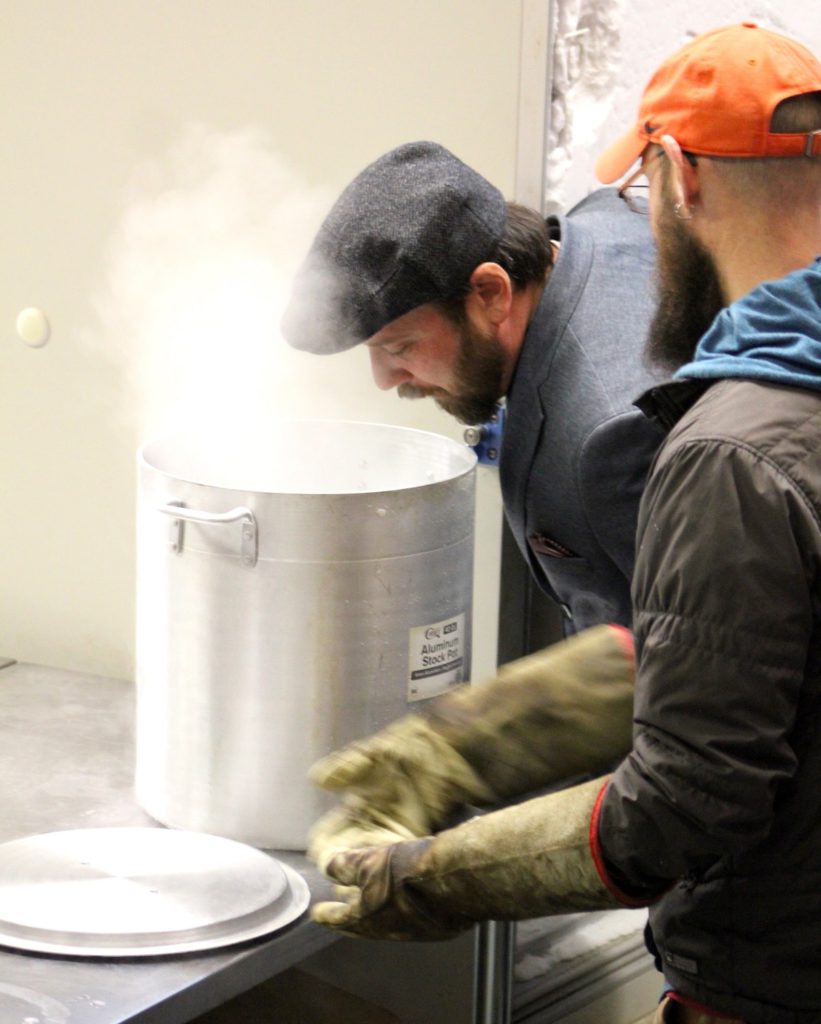
It’s not a coincidence that OAC is relied upon by an increasing number of top cannabis companies – their products help cannabis companies make the best products, and their company model and values are stellar. That’s why we are so proud to have them as sponsors of our upcoming International Cannabis Business Conference in San Francisco on February 6-7. When you are serious about creating the best cannabis concentrates and tinctures, you can order a sample pack online or speak with a knowledgeable sales rep. The team at Organic Alcohol is hands down the best at what they do in the entire cannabis space. Each quarter they feature a Hero Spotlight to showcase customers who are committed to organic best practices. The OAC team recently visited SunGold Botanicals to get a firsthand look at how processing and manufacturing certified organic hemp products are enhanced with organic alcohol.

Co-owner of Sungold, Isaac Daniel says ‘Our alignment with OAC speaks to integrity. We know it’s a word that’s tossed around a lot, but we’re committed to the integrity of organic products and that’s why we’re so aligned. We care about organics, the land and the integrity of the products delivered to the people. Being USDA Certified Organic and using ethanol sourced by Organic Alcohol Company allows us to do what we do in a really straightforward manner. ”

Join the OAC crew in San Francisco next month! In the meantime, you can find out more about the Organic Alcohol Company via their website, on Facebook, Instagram, and Pinterest.
Trends And Predictions For The Cannabis Industry In 2020

Hard as it is to believe, this multi-billion dollar baby was mostly illegal everywhere just six short years ago. How much the world has changed – and in almost every way.

This year, as the world begins its third decade of the 21st century, cannabis is morphing yet again, but along lines and via trends that have been much in the offing over the last decade if not century. What are those trends?

  1. Regulation and of the international, regional and domestic kind is in the room and in every way. From certifying products and supply chains along the way to making regulatory arguments about how the plant should be accessed and treated, these are the conversations that make deals happen. 
  2. CBD Hype is absolutely in Europe – but it is a different animal here than anywhere else. As countries now face determining what is “safe,” if not “normal,” this kicks up other discussions about the regional and international treatment of not only this plant, and its processing, but other kinds of commodities. Not only is a whole set of regulations in flux across Europe that affects all edibles, but Novel Food is a bugabear that the industry, so far, has not widely cracked.
  3. Prices Are Finally Falling. The German government has set a reference price and it is comfortably within the range set by Italy and Luxembourg. External competitors both within and adjacent to Europe (see Poland and Macedonia) have so far been dealt a blow by the shifting winds of interpretation of not only GMP but other global standards and rules that can only be changed at an international level (read the World Health Organization and the UN) are still the ruling determinates of who gets to trade with whom. This is going to be a long road.
  4. Cannabis is a commodity – like any other. That said, the paths into this industry, starting with financing, are still anything but “normal.” That said, there is a normalization afoot, even in some of the more untraditional practices that previously raised eyebrows. The role of investment banks in this industry, given the popularity of reverse IPOs and pooled capital funds, is now in question. How private equity globally responds is much in the room this year.
  5. 2022 is on the calendar and expect recreational discussions to take off only after this date. In the meantime, there are new opportunities opening, new sales channels forming and new coalitions in the offing. It is a fertile time to be in the industry, no matter how challenging it still often is.

Do not miss the International Cannabis Business Conference’s conferences this year in North America and Europe!

4 Reasons Why 2020 Will Be An Enormous Year For The Global Cannabis Industry

The last 25 years have seen the cannabis movement and support for reform go from being labeled as ‘political suicide’ by political pundits to becoming a mainstream political issue with overwhelming support from aspiring candidates and incumbents. The legal cannabis industry is larger than ever before, and by most measures is still just getting started.

Every year of the 2010s built on the previous year a cannabis movement momentum standpoint, and momentum for reform accelerated with each passing New Year’s Day. 2019, which by many accounts was not supposed to be a big year since it’s an off-election-year in many jurisdictions, proved to be a tremendously significant year for cannabis.

2020 is already shaping up to be the biggest year for the cannabis reform movement and emerging cannabis industry to-date, and we are just barely wrapping up the third week of the year. Below are 4 reasons why 2020 will be the biggest year for cannabis in modern history.

Adult-Use Legalization is Spreading

As it stands right now, Canada and Uruguay are the only two countries on earth that have implemented an adult-use cannabis law and related regulations. However, two other countries, Mexico and Italy, now have case law on the books that have struck down adult-use cannabis prohibition. This year those countries are expected to pass legislation to back up the court decisions, and that will be significant. With the list of legal countries doubling in 2020, it could influence other countries to take a harder look at joining the list and getting on the right side of history.

Cannabis Policy in the United States is at a Crucial Crossroad

If the United States has not already passed the tipping point for cannabis reform, 2020 will definitely be the year when it happens. Cannabis reform is reaching to the most conservative parts of the country, with medical cannabis having already made the ballot in Mississippi and is expected to appear on the ballot in Idaho on Election Day as well. Virtually every presidential candidate has expressed support for adult-use legalization, and several state legislatures are expected to pass reform measures this session. 2020 is doubtful from a federal legalization standpoint in the U.S., however, it’s less doubtful than it has been in modern history, and tailored reform measures, such as cannabis industry banking, have a great chance of being approved by federal lawmakers this year.

The Industry is Booming

The legal international cannabis industry is growing in size every single day, and at a tremendous rate at that. Reform measures in new markets are being explored with greater focus than ever before, established markets are maturing, and international imports and exports are ramping up in many countries with more on the way. The cannabis industry is more attractive now to investors than in years past, and opportunities are popping up for entrepreneurs on every continent in one form or another. The emerging CBD industry gets a lot of media attention these days, and rightfully so, however, the THC sector is becoming more and more accepted as stigma continues to fade. 2020 will no doubt be a monster year for the cannabis industry, and that will help further build momentum for global reform efforts.

Innovation is Coming

Now that the cannabis industry has gone mainstream and proven itself to be here to stay, investors are not only supporting cannabis cultivation and retail operations but also efforts to revolutionize the cannabis industry from a technology standpoint. Israel recently launched the first state-backed cannabis technology incubator, and it’s likely that other countries will eventually follow suit. Inventors and innovators are focusing hard on cannabis-related projects right now, and its likely impact on the cannabis industry will be on display across the globe throughout 2020. Don’t be surprised to see a lot of cannabis technology breakthroughs this year.