Patients Are Powering the European Cannabis Industry

It is a truism in the room that the cannabis industry, globally, and in each region of the world it springs forth in, is driven first by the medical side of the business. No matter how much excitement about CBD first strategies, it is the places where fully leaded, THC included, and regulated whole plant medication are authorized that are able to drive real change, if not nascent markets forward.

This has been true of the United States and Canada and it’s the truth in Europe as well.

In Germany, despite the fact that patients gained access just as they lost the right to cultivate small amounts themselves (at least until recreational reform hits), so far, patients have only gained wider spread access by submitting themselves to the complicated approval process required by insurers. There are now about 50,000 patients in Germany and these patients are helping move cannabis more and more mainstream in their homeland and across europe, as the EU powerhouse’s influence ripples beyond its borders.

in the UK, the entire discussion is taking another twist. Namely, desperate parents of sick children began importing medicine from Holland and Canada and dared the authorities to shut them down.

That strategy worked, but only to a limited degree, unfortunately. Despite the fact that it was announced last fall that cannabis would be covered as a Schedule II prescription, covered under the NHS, so far there are, by best estimates fewer than 100 patients in the UK, but patients have not given up. In some cases, they have even partnered with large industry players from Canada and other countries to put pressure on the government to open the market.

The situation is so obviously dire in the U.K. right now, that it will have an effect, and probably far beyond the UK – globally. There is not a patient in the room of any nationality who has not had to deal with intransigent anti cannabis rules, unbending medical infrastructure and paperwork of all kinds.

In the UK, much like the conversation in every other legalizing market, the corner, at least, has been turned. The issue, not to mention those who are suffering, are visible.

Public opinion is shifting. Parliament is apologizing. And the market, no matter its shape post October 31, is clearly opening. And that progress is mostly due to the unrelenting pursuit of greater access by patients and their advocates. A sincere thanks to all sick and disabled patients, and their supporters, for moving our cause of freedom and compassion forward.

The International Cannabis Business Conference is THE industry event to learn the latest and to network with top investors, entrepreneurs, and advocates. Next up: Vancouver, Canada, this September 15-16. Discounted early bird tickets are on sale until August 21st.  

Venture Capitalists Invest a Record Breaking Amount in the Cannabis Industry!

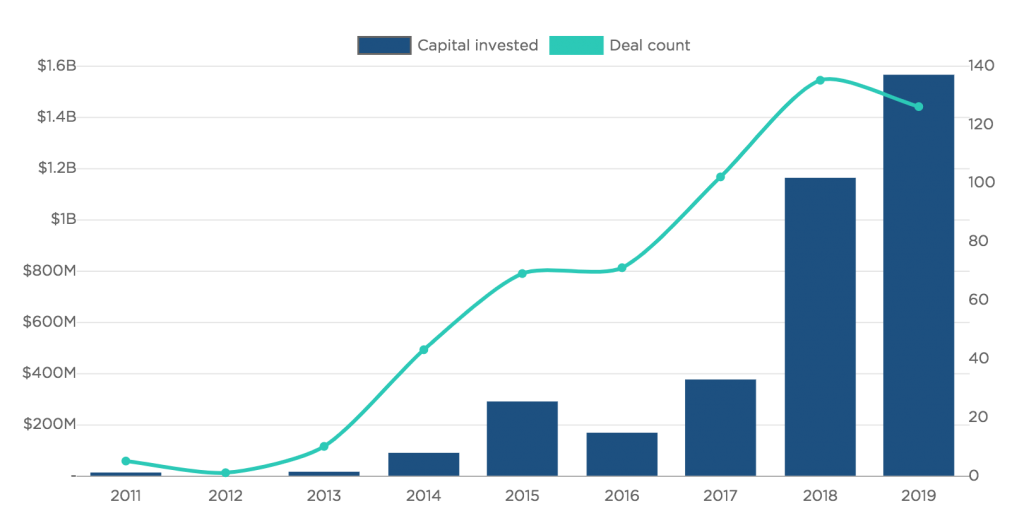
It makes sense that investors, including venture capitalists, are investing more and more in the cannabis industry each and every year. More states and nations are moving towards legalizing medical and adult-use cannabis and it is easy to see that a lot of progress is being made in the United States and around the world. The U.S. Congress has already held a historic committee hearing on the benefits of legalization, the FDA is contemplating rules for CBD, and more cannabis-related hearings are coming soon. However, I don’t think that anyone could have predicted that more money would be invested from venture capitalists already in 2019 than what was invested all of last year. As Pitch Book reports, $1.6 billion has already poured in from VCs compared to $1.2 billion total in 2018:

Even though the use and possession of cannabis is illegal under federal law, 33 states and the District of Columbia have passed laws legalizing marijuana in some form. In June, Illinois became the 11th state in the US to legalize marijuana for recreational use. With every voting cycle, the stigma around marijuana seems to shed a bit more and VC interest in cannabis spikes at a phenomenal rate. And this year, which still has over five months to go, has already collected significantly more VC funding in the space than any year ever, according to PitchBook data:

***

So far this year, Florida-based Phyto Partners boasts the largest portfolio with a total of nine deals. The early-stage VC was founded in 2015 and focuses on investments in the cannabis industry. Notable deals in 2019 include Green Flower, which operates a cannabis education platform and Wurk, the developer of a payroll and HR platform for marijuana businesses. The firm also holds a stake in Eaze, the provider of an on-demand marijuana delivery service; it was valued at $315 million in December. Gotham Green Partners, which is tied with  Arcadian Fund as the second most active investor in cannabis startups, participated in a $125 million round for Flow Kana in February. Founded in 2014, the business partners with small family farms to cultivate sun-grown cannabis flowers.

The cannabis market in the US is expected to grow at 24.1% over the next six years, again per Grand View Research. And while several cannabis companies such as Hexo (NYSE: HEXO) and CannTrust (NYSE: CTST) have been tumbling on the stock market in recent months, the possibility of innovative products and increased market size seem to make a compelling argument for VCs to cut hefty checks toward pot businesses. To put it bluntly: 2019 has been lit so far.

While there will certainly be ups and downs for the cannabis industry over the coming years, the future looks bright on a variety of political and business fronts. With Donald Trump pledging support for the STATES Act and all major Democratic presidential challengers supporting a form of legalization, the U.S. could legalize within the next few years, creating a domino effect across the world. There’s a solid saying to “follow the money” and if you follow the money of venture capitalists, smart money is on cannabis.

The International Cannabis Business Conference is the preeminent industry event to learn the latest about the cannabis industry and to network with top investors and entrepreneurs. Next up: Vancouver, British Columbia, Canada, this September 15-16. Purchase discounted early bird tickets by August 21st to save.

Thailand Takes Early Lead in the Asian Cannabis Market

Positive cannabis law reforms have been taking hold all across the world, while Asia with many of its nations still maintaining draconian cannabis laws, has lagged behind North America, Europe, Africa, and South America. But the times may be a-changin’ and Thailand is leading the way. If Thailand is going to continue its lead and maximize its current competitive agenda, the nation will need to adapt, starting with moving beyond just medical cannabis and embrace legalization for all adults. There’s good reason to be optimistic for Thailand to lead a projected $8.5 billion regional market (by 2024) with key political figures are lobbying for expanding the country’s medical program and ending prohibition for all adults, as Bloomberg reports:

The country last year legalized medical marijuana with the approval of Prime Minister Prayuth Chan-Ocha, who then led Thailand’s junta and now heads the civilian government following a disputed general election in March. A key member of his coalition is pushing for full legalization of Thailand’s marijuana market, projected to grow to $661 million within five years, according to cannabis industry researcher Prohibition Partners.

Anutin Charnvirakul, the millionaire leader of political party Bhum Jai Thai, helped Prayuth form a ruling coalition and is expected to use that platform to try to deliver on his campaign promise of legalizing marijuana. The prospects of such a move increased on July 10 when Anutin was named deputy prime minister and public health minister in the newly formed cabinet. He’s seeking to remove restrictions that have made it difficult for even those approved for medical marijuana to easily access cannabis, he said in a June 21 party statement. Anutin’s two key positions make it easier for him to submit regulatory changes to legalize the crop. Thailand’s tough anti-trafficking laws aren’t expected to change even if recreational weed becomes legal.

It’s not the only nation rethinking cannabis. Malaysia and Laos are considering legalizing medical use of the crop, and the Philippines’ lower legislature has passed a medical cannabis measure. “For Thailand to become the Asian leader in the cannabis space, it would most likely require that neither China nor Japan legalize cannabis,” says Alexandra Curley, Prohibition Partners’ head of insights.

Thailand has already branded itself rather well in the old-school, underground cannabis community as Thai Stick has a legend of its own. In addition to becoming a major exporter, Thailand should embrace cannabis tourism to bring more freedom, jobs, and revenue to the nation. I’m a extremely proud of Thailand’s progression on cannabis (my mother is from there) and I hope that this trend continues and the country will embrace liberty for the betterment of their hardworking people that have been subject to a lot of political and cultural turmoil.

If you want to stay up-to-date on the latest industry news and to network with top investors and entrepreneurs, the International Cannabis Business Conference is the event for you. Next up: Vancouver, British Columbia, Canada, this September 15-16. Discounted, early bird ticket sales end August 21st. 

Canada Needs to Adapt as US, Especially California, Cannabis Industry Grows

Canadian cannabis companies have been given a leg up on its global competition, but that advantage is being eroded and could be eliminated rather quickly once the United States ends federal prohibition, industry insiders warn, and it isn’t difficult to imagine. Federal laws allowing banking services, public investment, normal tax rules, and exports has made Canada the international cannabis industry leader, with companies expanding into legal US states and into other nations around the world, even sometimes making moves before major reforms pass, utilizing insight to follow the momentum.

However, with the United States making progress, especially with California companies striking huge deals with business moguls, Canada could lose its place at the top, especially if rules regarding advertising are not addressed. With US companies able to better leverage relationships with worldwide stars like Jay-Z, marketing rules, including on social media, need to be adapted, as Vice covered:

According to federal regulations in Canada, celebrities can’t give a testimonial about a licensed producer’s product, talk about its price, or say anything about it to minors. They can harness what’s known as “the halo effect” and hope that star power rubs off on the brand.

These are just a few of the rules that, according to cannabis industry and observers alike, leave Canadian cannabis companies at a disadvantage. This presents a huge challenge because they’re up against U.S. companies that are gearing up for a global fight, with big budgets and a deep bench of executives who have already established successful retail brands—such as Victoria’s SecretHome Depot, and Pepsico’s Frito-Lay.

***

Cannabis marketing expert Kayla Rochkin said it’s just a matter of time before America loosens the rules federally. As vice president of marketing for TREC Brands, she works with a portfolio of cannabis companies and has seen firsthand how challenging it is to push a product, without being able to talk in-depth about the product itself to the public. But as the clock ticks down, she said Canadian companies are losing whatever first-mover advantage they may have had because of strict rules limiting brands from touting their advantages over rivals.

Confusingly, Canada’s Cannabis Act prohibits producers from marketing techniques that promote the business or product “in a manner that associates it or the brand element with, or evokes a positive or negative emotion about or image of, a way of life such as one that includes glamour, recreation, excitement, vitality, risk, or daring.” If any business, especially a small to medium enterprise that wants to find a niche as a craft cannabis company, branding with a positive emotion or way of life is key. Once the United States legalizes for all adults and starts exporting, US companies will enjoy a huge marketing advantage. Canada has been the king of the hill, but there’s a sleeping giant that’s about to wake up.

Stay up-to-date on the latest rules and develops while networking with top investors and entrepreneurs at the upcoming International Cannabis Business Conference in Vancouver, Canada, this September 15-16. Early bird tickets are available until August 21st. After the British Columbia excursion, we’ll be heading to San Francisco, California, on February 6-7. 


Canada Brings in $186 Million in Tax Revenue as Sales Continue to Increase

It’s no secret that cannabis sales in Canada have gotten off to a relatively slow start as the government has taken a rather conservative, cautious approach to licensing, as government officials’ public safety concerns have been given top priority. Regulatory hurdles have hindered efforts to open up brick and mortar stores, caused supply chain issues, and completely prohibited the sales of any extracts, concentrates, or infused products. Thankfully, more stores are opening up, the supply chain is improving, and Canadian consumers will finally be able to by hash, oils, edibles, beverages and other cannabis products by the end of the year, so overall sale numbers should continue to climb. And sales are already improving as the federal government collected $186 million in tax revenue when legalization started last October, through March of 2019.

Revenue collection is set to only get better as adult-use cannabis sales jumped up to $19.6 million in Ottawa alone in April, after averaging just under $9 million the previous 5 months as Marijuana Business Daily reported:

Adult-use cannabis sales in Canada’s largest consumer market more than doubled in April on the back of new store openings, representing “powerful evidence” of pent-up demand for regulated marijuana after months of stagnation, according to experts.

Receipts of recreational-use cannabis products in Ontario totaled 19.6 million Canadian dollars ($15.1 million) in the month, recent data from Statistics Canada shows, up from CA$7.6 in March and CA$7.5 million in February.

April’s receipts consider the first monthly sales at fewer than two-dozen physical stores in the province.

Global News covered the overall tax revenue numbers:

The provinces took the lion’s share of that money, with $132 million in combined sales tax and excise tax revenue; the federal treasury took in $55 million.

Governments face a dilemma taxing cannabis, says Brock University business professor Michael Armstrong.

“It’s a tradeoff — the more you increase taxes the more revenue you get, but that increases prices and makes you less competitive with the black market.”

While it is admirable for the Canadian government to place officials’ health and safety concerns over the desire to raise revenue, it is clear to those with a lot of experience with cannabis, that a too burdensome approach isn’t needed. The sky hasn’t fallen in Canada and it won’t fall, as the fear mongering nonsense spouted by Reefer Madness prohibitionists gets proven wrong time and time again. Slowly but surely, regulators, politicians, and policymakers are learning the truth about cannabis and they are easing regulations. You can give more freedom to adult consumers in cannabis, the freedom to choose a safer alternative to alcohol and tobacco, while creating more jobs and revenue. As has been seen in Ottawa, and other provinces, build the cannabis retail stores, and consumers will come. And the sky will still remain high above the Great White North.

The International Cannabis Business Conference in Vancouver this September 15-16 is the industry event to learn the latest and to network with top investors and entrepreneurs. Secure your spot and save by purchasing discounted, early bird tickets by August 21st. 

Full-Time U.S. Cannabis Jobs to Top 175,000, Increasing 34%, in 2019

Earlier this week, an economic report projected global cannabis sales to increase to 36% in 2019, with dramatic growth expected over the next five years, thanks to an expansion of existing markets and future ones not open just yet. That new business growth is good for companies, investors, consumers, tax collectors, and employees. Not surprisingly, bigger market share means more jobs, and U.S. jobs are expected to increase by 34%, with the total number of people employed full-time in the cannabis industry to range between 175,000 to 215,000, up from 130,000 to 160,000, according to a new report. Existing data shows that these cannabis jobs, on average, pay more than other business sectors. If the growth pans out, then there will be more people working full-time cannabis jobs than there are web developers. With markets expanding across the nation, this growth is projected to continue, with more than 385,000 jobs by 2023.

More from MJBizDaily’s Annual Marijuana Business Factbook:

  • Total economic impact of the cannabis industry will be range from $39.2 billion to $48 billion in 2019 – about a 35% increase over 2018.

  • U.S. cannabis sales in 2018 were between $8.6 billion and $10.8 billion – more than U.S. spending on e-cigarettes, the video game Fortnite and Goldfish crackers.

  • U.S. sales of cannabis in 2019 will be about 35% higher than 2018 and could reach $30 billion by 2023.

Cannabis sales in California are certainly due to increase and more states will soon join Illinois in legalizing cannabis, with New York, New Jersey, and Delaware looking to end prohibition for all adults very soon, so it isn’t shocking to know that dramatic job growth is expected. However, the sheer number of full-time cannabis workers is truly astounding, considering the fact that only 11 states and Washington, D.C., have legalized and Vermont and D.C., as of now, don’t yet allow cannabis commerce. It is great to see that the cannabis community is creating more jobs, revenue, and freedom, across the United States, and are work isn’t nearly done yet.

The International Cannabis Business Conference is the best place to learn the latest about the industry and to network with top investors, entrepreneurs, and employers. Next up: Vancouver, British Columbia, Canada, this September 15-16. Be sure to purchase your early-bird tickets by August 21st to save. 


Global Cannabis Sales Could Reach $15 Billion in 2019, $40 Billion by 2024

Based on current sales, as well as reasonable projections regarding new markets, an industry report projects that global cannabis sales could hit about $15 billion this year, with a continued growth rate that might push the market to a whopping $40 billion in just five years. Cautious regulatory approaches in Canada and California provided hurdles for the industry, but both of these major markets are expected to take big leaps the coming years, with the Golden State’s cannabis community continuing to transition to the regulated market and the Great White North starting to sell extracts, concentrates, and cannabis infused-edibles and products this December. Another prospective boom for the overall cannabis industry is the continued growth of the CBD industry and the approval of cannabis-based medicines.

CNN reported:

For the first time, the annual “The State of Legal Cannabis Markets” report evaluated the cannabis industry as the “Total Cannabinoid Market,” meaning it encompassed sales of medical and recreational cannabis at dispensaries; hemp-derived products rich in non-psychoactive cannabidiol, or CBD; and US Food & Drug Administration approved CBD-based pharmaceuticals.
The surge of CBD products coupled with Canada starting legal recreational cannabis sales in 2018 helped to buoy the industry’s growth, according to the report published by the market research arm of cannabis investment firm Arcview Group and data firm BDS Analytics. This was the first full year to evaluate the effects of three significant developments in the cannabis industry: the FDA approval of CBD-based drug Epidiolex, legal adult use sales starting in Canada, and the 2018 Farm Bill giving hemp products more legal standing.
***
The seventh edition of the report — like publications Arcview published previously — includes a calculated gaze into the crystal ball, projecting industry sales. Arcview and BDS’ latest expectations are that cannabis sales in dispensaries, retail stores and pharmacies will hit $44.8 billion globally by 2024.

Some key trends analyzed in the State of the Legal Cannabis Markets:

  • Total legal cannabis spending in regulated dispensaries in the U.S. topped $9.8 billion in 2018, and is forecast to grow to $30 billion in 2024, a compound annual growth rate (CAGR) of 20 percent.
  • Investment capital raised by cannabis companies more than quadrupled to $14 billion in 2018, according to Viridian Capital Advisors.
  • Despite a 55 percent decline in 2018 in New Cannabis Ventures’ Global Cannabis Stock Index, the five largest Canadian licensed producers closed out the first quarter of 2019 at a combined market capitalization of $48 billion.
  • In Canada, which launched adult-use nationwide October 17, 2018, spending on adult-use cannabis is forecast to grow from $113 million in the partial year of 2018 to almost $4.8 billion by 2024.
  • A total of 13 state markets will have passed the $1 billion mark in total annual legal cannabis spending by the end of 2024—by the end of 2018, only three had done so (California, Colorado and Washington).
  • Internationally, more consumers are forecast to gain legal access to non-medical cannabis. In addition to Uruguay’s groundbreaking legal adult-use and Switzerland’s market for products with <1% THC, Luxembourg, Mexico and New Zealand have all given indications that adult-use sales could begin within the forecast period. Adult-use spending in international markets is expected to grow at a 33 percent compound annual growth rate from 2018 to 2024.

Only time will tell, but it is certainly possible that Arcview’s report is a little too bullish on 2019, as a 36% growth for the cannabis industry over 2018 would be a dramatic increase, but it certainly isn’t out of the question. The long term market increase is easy to see as the momentum for cannabis legalization, thanks to the hard work of advocates, only increases by the day. With more states and nations ending prohibition, and existing markets like Canada adding more products, sales will certainly increase over the coming years. When it comes to the current state of the cannabis industry, the question isn’t whether it will grow, but how much will it grow.

The International Cannabis Business Conference in Vancouver, Canada, this September 15-16 is the industry event to learn the latest crucial info and to network with top investors and entrepreneurs. Discounted, early bird tickets are available until August 21st. 

Molson Coors to Brew Cannabis Drinks in Canada, CBD Versions in the U.S.

It was big news when Molson Coors Brewing Company announced that it was forging a partnership to brew non-alcoholic cannabis drinks in Canada, but it shouldn’t have been surprising. Alcohol giant Constellation Brands had already invested heavily in the cannabis industry and it shouldn’t shock anyone that big companies, particularly those involved with alcohol and tobacco, will be looking to join a multi-billion dollar market, especially when the new market cuts into their sales.

Molson Coors’ CEO expects that cannabis beverages will be a $3 billion sector in Canada, and the company has warned shareholders that legal cannabis is a threat to beer companies’ profit margins. The North American beer giant plans to sell a variety of cannabis drinks in accordance with Canada’s new regulations, starting on December 16th, the earliest date possible, before moving into the United States, with a line of CBD beverages. Bloomberg reported:

The maker of Coors Light has partnered with Gatineau, Quebec-based Hexo Corp. to make a variety of non-alcoholic, cannabis-infused drinks for the Canadian market. The joint venture, called Truss, will have “lots of different beverages” for sale on Dec. 16, when the beverages become legal in Canada, said Jay McMillan, Hexo’s vice president of strategic development.

***

Truss plans to offer everything from water to a “beer-like product” and maybe even hot beverages. It has flexible production lines so it can pivot if one type of beverage isn’t selling, he said.

It’s also looking at selling CBD-infused beverages in the U.S., which legalized the non-intoxicating substance late last year, with the goal of having products in eight states by 2020.

While the entry of big alcohol companies into the industry is likely good for consumers who want  a multitude of options to best suit their needs and lifestyle, it also provides an opportunity for smaller companies to find their niche. In many ways Molson Coors will serve as a research department for competitors as they put different types of beverages up for sale. After they find products that work, other companies can follow suit and find an avenue that works for them, such as producing and marketing a craft cannabis version, giving consumers the opportunity to support mom-and-pops. It will be very interesting in mid-December when cannabis beverages and other products hit the shelves and to see how the market shakes out over time.

The International Cannabis Business Conference in Vancouver this September 15-16 is the best place to learn the latest about Canada’s regulations and market, and to network with top investors and entrepreneurs. Don’t miss your opportunity, be sure to purchase early bird tickets by August 21st. 

Keeping Up with Canada? California Moves Towards State Cannabis Banking.

As most folks know by now, a lack of banking services have forced cannabis businesses, including those legal under state law, to deal predominantly in cash due to continued U.S. banking laws that make it nearly impossible to do business with federally chartered financial institutions. There are a few reasons why Canada, the first G7 nation to end cannabis prohibition, gives a leg up to its cannabis entrepreneurs, and normal access to banking services is one of them. Thankfully, the California Senate has moved forward with some sensible legislation that can help its state-regulated businesses and should add pressure on Congress to recognize the will of the people and legalize banking for state-licensed cannabis businesses. CNBC reports:

Under the state legislation, which was approved by a vote of 35 to 1, private banks or credit unions can apply for a limited-purpose state charter so they can provide depository services to licensed cannabis businesses. The measure, Senate Bill 51, still requires approval of the Assembly and California Gov. Gavin Newsom to become law.

***

“It’s hard to imagine an industry that at this point is as large as, like, craft beer that does not have banking as we have come to know it,” said Steve Hawkins, executive director of the Marijuana Policy Project, a national marijuana reform organization. He said the legal marijuana industry lacks access to commercial banking services available to other industries, including payroll, loans and deposit needs.

“As policymakers, we have a duty to further the will of the voters while protecting the public safety of our constituents,” California Senate Majority Leader Robert Hertzberg said last month when introducing SB 51. “This measure is by no means the ultimate solution, but it’s just one small step in the right direction to get some of this money off the streets and into bank accounts.”

Hopefully, this sensible banking legislation will have smooth sailing through the California General Assembly. Governor Newsom, who spoke at an International Cannabis Business Conference reception a few years ago, is certainly expected to sign the bill that should be supported by everyone, including those that oppose legalization as forcing cannabis businesses to use only cash encourages tax evasion and endangers our neighborhoods.

To stay up-to-date on the latest cannabis industry news, and to network with top investors and entrepreneurs, the International Cannabis Business Conference is THE event for you. Next up: Vancouver, Canada, in September and then back to San Francisco, California, next February. Get your early-bird tickets and save!