Former US Senate Majority Leader Joins International Cannabis Board

As the cannabis legalization movement moves more mainstream, and the industry become more profitable, we shouldn’t be surprised to see former policymakers and elected officials join the business sector. Former Republican Speaker of the House John Boehner has been the most prominent American politician to enter the industry while Vicente Fox, the former president of Mexico, remains the most high-profile global politico. Boehner now has company as former United States Senate Majority Leader Tom Daschle, a South Dakota Democrat, has joined the board of an international cannabis investment firm, along with former representative Joseph Crowley, fresh off of his primary loss to rising Democratic star Alexandria Ocasio-Cortez, as The Hill reports:

Former Rep. Joseph Crowley (D-N.Y.) and former Senate Majority Leader Tom Daschle (D-S.D.) have been named to the advisory board of Northern Swan Holdings, an investment firm.

Northern Swan is focused on investments in the cannabis industry internationally and on positive change to the industry overall. It is based in Colombia.

***

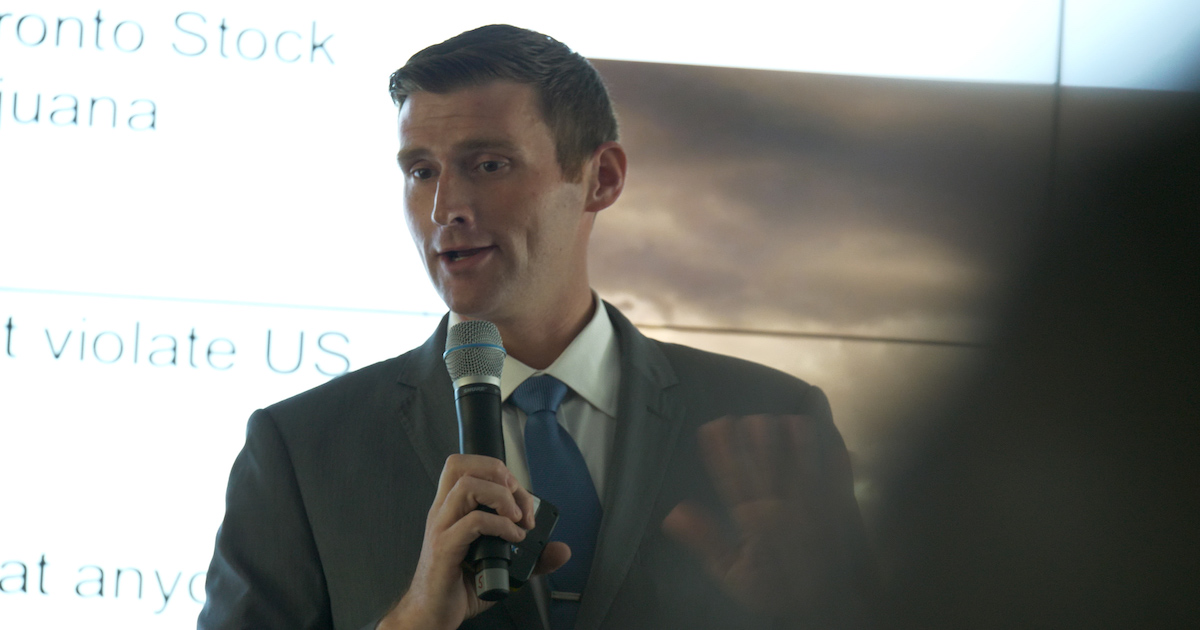
“Senator Daschle is a pre-eminent expert in health and wellness whose experience in healthcare policy reform will be invaluable to our company’s expansion in the global medical cannabis market,” Kyle Detwiler, CEO of Northern Swan, told Yahoo.

On one hand, is is very promising for the cause that former politicians are joining the industry as this will only help end cannabis prohibition sooner. However, since these former officials are representing specific businesses, is it understandable to assume that they represent the interests of those that pay him and not the industry at large, thus we have to work hard to ensure that the new laws passed don’t set up monopolies and oligopolies that cut out competition, hurting consumers, patients, and small businesses.

As Marijuana Moment’s Tom Angell notes, these politicians may not have the best record of helping the cannabis community when they were in positions of power to do so, unlike folks like Dana Rohrabacher and Earl Blumenauer who have been leaders on the issue (and have spoken at International Cannabis Business Conference events):

While we probably don’t want to discourage former officials from lobbying their friends in power to end cannabis prohibition, we will certainly need to remain vigilant that fair policies (or as fair as possible) are being enacted in the future. In the meantime, it is great to see that legalization is moving forward step by step.

To learn the latest and network with top investors and entrepreneurs from around the world, the International Cannabis Business Conference is THE industry B2B event to attend. Next up: Vancouver, Canada, this September 15-16. Get your early-bird tickets by August 21st to save. 

Former Congressman Dana Rohrabacher on Reagan, Trump, and Cannabis

The best chance of the United States has of legalizing cannabis in the near future is passing the STATES Act that would end federal interference with state’s legalization laws as Donald Trump has signaled his support for the measure. Former Representative Dana Rohrabacher has stated his belief that Trump agrees with a states’ rights legalization approach, but that he could learn a few tips about uniting voters from Ronald Reagan.

Rohrabacher, who famously led the charge to protect states’ medical cannabis laws from being trampled by Uncle Sam, has taken his message international, keynoting the International Cannabis Business Conference in Zurich. Following our conference in Zurich, the Orange County, California, Republican sat down with Blick, one of Switzerland’s biggest daily newspapers, discussing his past work with Ronald Reagan, Donald Trump, and cannabis:

While Federal President Ueli Maurer (68) was in the USA, there was a high visit from the USA yesterday in Zurich. California Republican Dana Rohrabacher, 71, was a special assistant to US President Ronald Reagan (1911-2004) and a 30-year congressman. Until he was ousted by a Democrat last year.

The conservative Rohrabacher, who has German and English roots, is touring around the world to campaign for the legalization of cannabis – especially in the medical field. So he was yesterday guest speaker at the International Cannabis Business Conference at the Hotel Atlantis. He explains to BLICK: “Every adult should be able to decide for himself what is good for him. In addition, we can use it to eliminate the business of criminals. “He himself had consumed marijuana as a 23-year-old. ”But only a short time, since then I do not take it anymore.”

***

Trump could learn a lot from his old boss, says Rohrabacher. ”Reagan was able to achieve important goals and keep the people together. Trump also gets to his destination, but at the expense of the people’s unity. “Or, as Rohrabacher puts it,” Trump flies, Reagan shook hands. “

Not that long ago, Dana Rohrabacher was virtually all alone among his Republican colleagues regarding cannabis policy. Now that legalization has majority support among voters, across the political spectrum, positive changes are on the horizon. We can expect U.S. cannabis prohibition to end within the next few years, a policy shift that will certainly reverberate around the world, and Rohrabacher was a pioneer that deserves his share of credit.

The International Cannabis Business Conference returns to Vancouver, British Columbia, Canada, this September 15-16. Get your early-bird tickets to secure your spot and save your hard-earned dollars. 

International Cannabis Business Conference Zurich 2019 In Pictures!

The International Cannabis Business Conference made its first venture into Switzerland last week, with a conference in Zurich, and the event was a raging success. A sincere thanks to all of our speakers, attendees, sponsors and CannaTrade, Europe’s oldest hemp fair, for partnering with us. We are already looking forward to returning to Switzerland next year! After an amazing European trek that included Barcelona (in a team-up with the legendary Spannabis conference) and a bigger-than-ever Berlin conference, the International Cannabis Business Conference is looking forward to returning to North America as we next head to Vancouver, British Columbia, Canada, in September to check up on the first G7 nation to legalize cannabis.

It was very exciting to see how Switzerland has advanced, becoming a leader in low-THC, high-CBD products of all types. The future of the cannabis industry in Switzerland is certainly bright as the innovative nation is clearly on the path to continue being a leader of the booming CBD market, with full legalization coming in the near future. From the point that the VIP reception started, the beautiful Atlantis hotel was buzzing with excitement.

Former United States Congressman Dana Rohrabacher set the tone of the conference, explaining his past, present, and future with the cannabis scene, from his days as a vagabond surfer to pioneering politician, to now taking his message of freedom global. Following Rohrbacher were panels and presentations that touched on important topics for Swiss industry participants and international actors alike, including the Trajectory of the Swiss Market, CBD in Switzerland, Cannabis Extracts, International Investing, and much more. The networking continued with another great Bhang-sponsored after party and into CannaTrade following the International Cannabis Business Conference.

As usual, one blog can’t do an International Cannabis Business Conference event justice, but here are some key highlights captured from our VIP reception, conference, and after party. Hope you enjoy these photos, and that we see you in Vancouver (September 15-16).

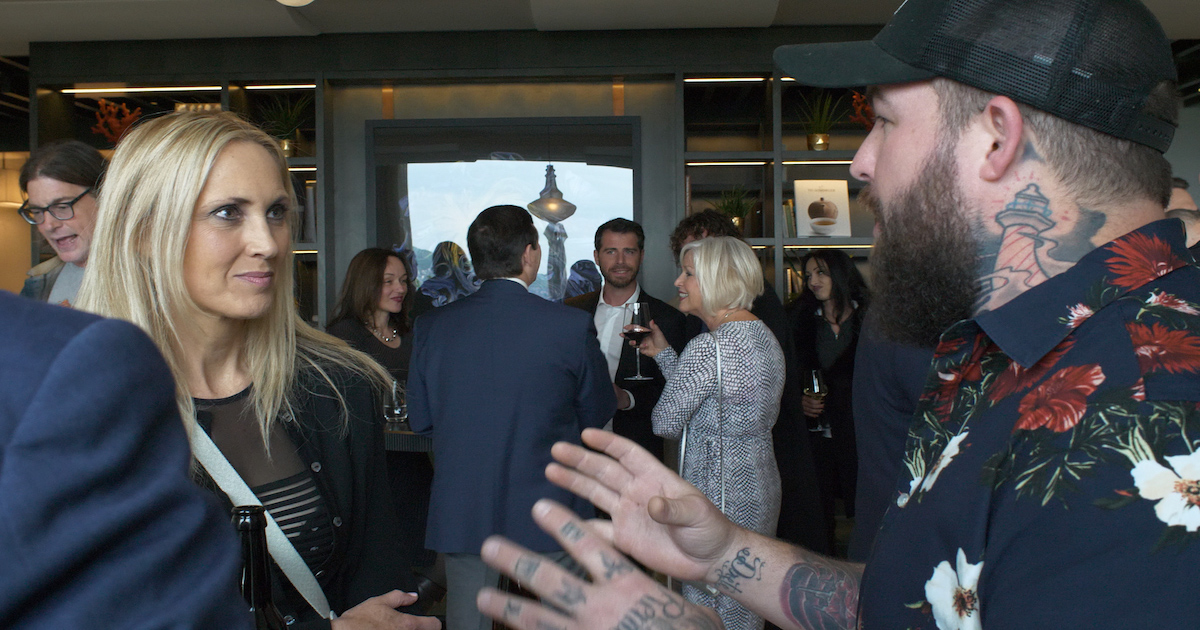
An eclectic group from all facets of the cannabis industry make connections at the VIP reception.
The Atlantis Hotel provided a great venue with interesting views.

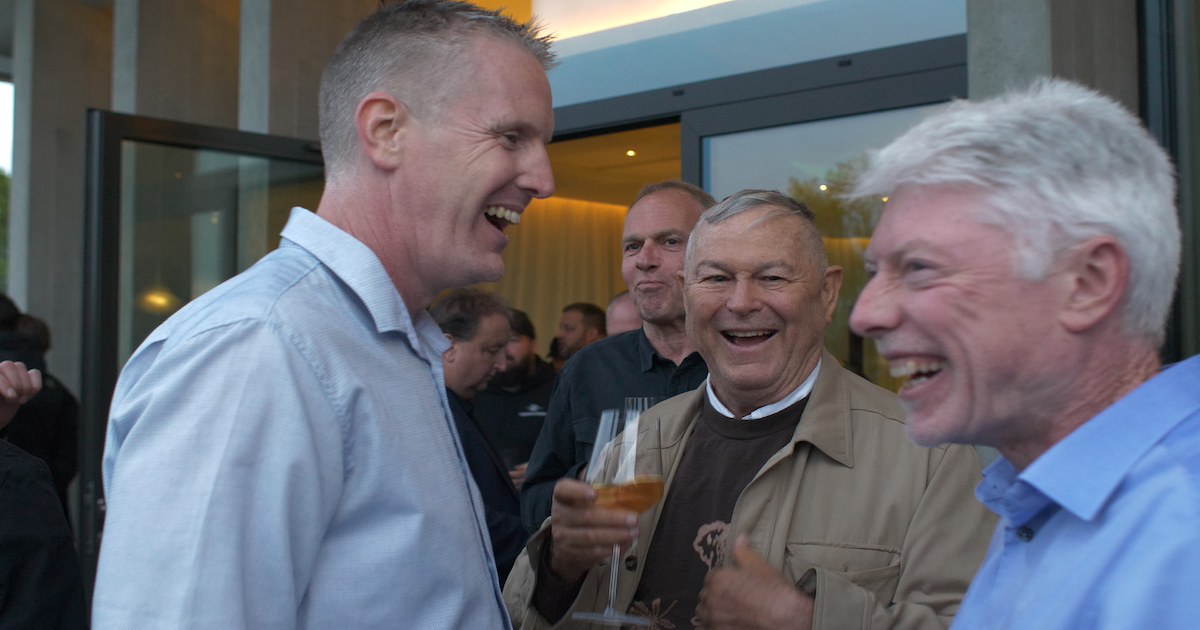
Founder & CEO Alex Rogers speaking with former US Congressman Dana Rohrabacher, and Cloud 9’s Francis Scanlon .
Alex Rogers welcomed the attendees, describing his inspiration for bringing the International Cannabis Business Conference to Switzerland.


An attentive audience packed the conference room to hear from Dana Rohrabacher.
Switzerland is a leader in CBD and the conference featured a panel with top experts in the industry.
Of course, the International Regulatory Overview panel with esteemed industry lawyers was extremely popular and informative.
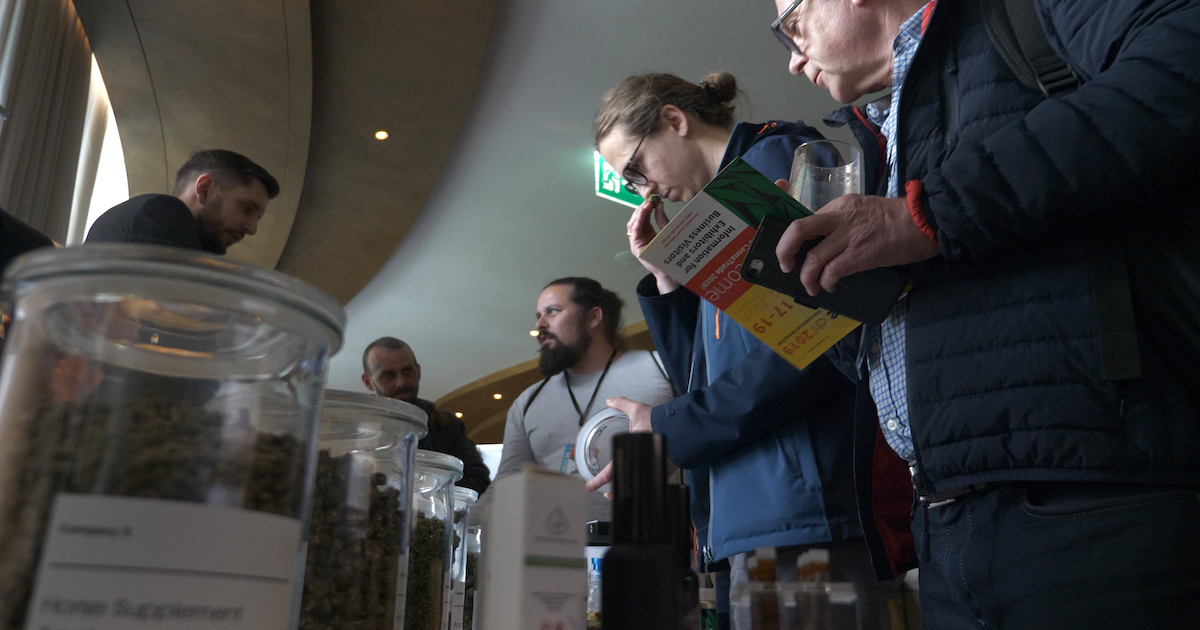
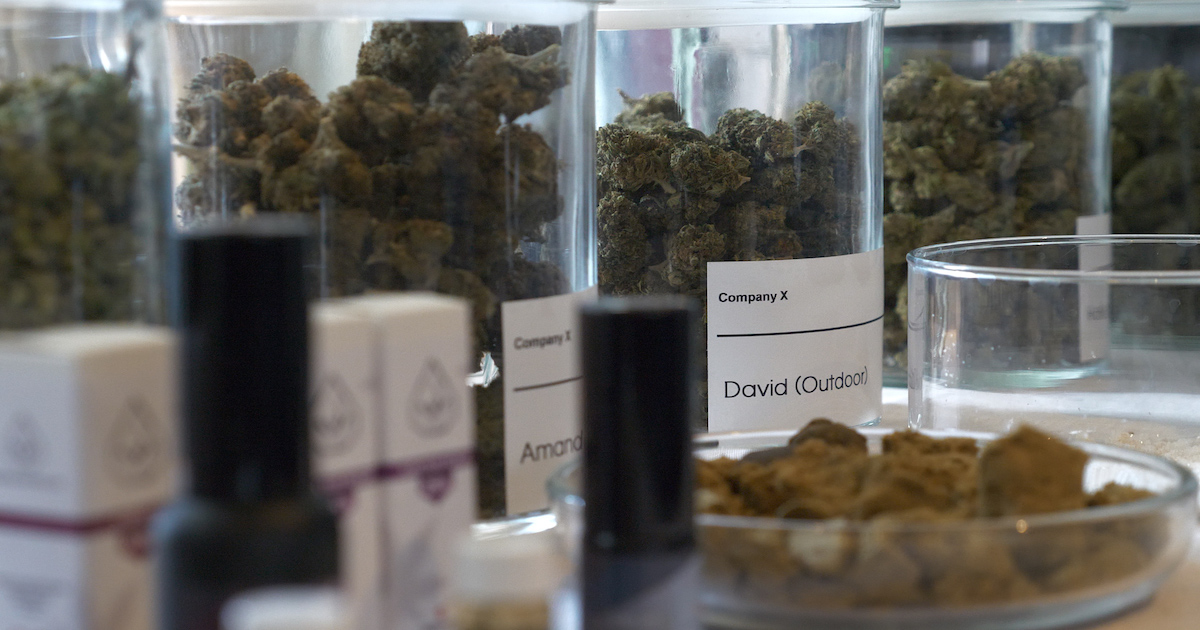
The expo area was bustling and proved to be fertile grounds to interact with potential customers and partners.

International Investing, presented by C3 CEO Nic Easley is always and interesting and engaging topic.
Cannabis Extracts, a growing market, was a very popular topic.
The after party, featuring DJ Leeroy, sponsored by Bhang was, well, banging.

Alex Rogers with DJ Leeroy, best known for his time with The Prodigy.

Europe’s Largest Cannabis Producer Strikes Swiss-UK Deal

The international cannabis community continues to become more integrated as nation after nation establishes federal regulations. Canada, the first G7 country to end prohibition, has given their companies a head start, but others are starting to catch up with positive reforms catching fire across Europe and Israel and Latin America are starting to export as well. The latest major partnership is bringing together CBD giants from Switzerland and the United Kingdom.

We’ll only see more strategic partnerships formed across the cannabis space. In spite of different federal regulations, such as different THC limits allowed in different nations, it only makes sense to consolidate and expand markets as the industry is set to continue rapid growth over coming years. Elite Business covered the Swiss-UK cannabis partnership:

Additionally, many European companies are trading with startups in the UK cannabis market. Now, Switzerland-based Pure, the self-declared largest cannabis and hemp producer in Europe, has struck a deal with Scottish CBD supplier Always Pure Organics (APO) to distribute its CBD products in the UK. This deal is estimated to be worth £5m in value just in the first year alone.

Pure has been responsible for distributing CBD to manufacturers in the health and wellness, pharmaceutical, vaping, cosmetics and sports sectors in 20 out of 28 EU states. And with its new venture into the UK, it plans to expand its trade and disseminate its product throughout Blighty.

Commenting on the new alliance, Gavin Ogilvie, managing director of APO, said: “Pure are a global force in the world of cannabis and hemp. It is very exciting to forge strong partnerships like this in such a young industry – together we aim to become household names in the European cannabis industry.”

With more deals like this inevitable, there has never been a better time to attend the International Cannabis Business Conference. Our conference in Zurich, kicking off with a VIP reception tomorrow, will cover the latest on major industry news and provide the best industry networking opportunities in the world. There is still time to join us in Zurich. All Zurich conference attendees also get admittance into CannaTrade. Get your tickets today.

Europe’s $318 Billion CBD Market Poised for 400% Boom Through 2023

Cannabis legalization typically takes a series of baby steps and then giant leaps depending on the location. Progressive states in the U.S. have typically started with decriminalization of personal amounts, then legal medical use, until finally ending prohibition for adults. More conservative states that haven’t yet legalized have added another step: embracing CBD, while still prohibiting cannabis products with more than trace amounts of THC. Some European nations have followed a similar path with CBD, Switzerland being a prime example.

This intermediate step of allowing CBD provides excellent economic opportunities without many of the same headaches that can hinder the burgeoning cannabis industry, such as the ability to export . According to a recent report by the Brightfield Group, a market intelligence firm for the cannabis industry, estimates that the current $318 billion European CBD market will boom over 400% over the next four years. From Brightfield report:

 ”CBD is just starting to take hold in Europe, with both product availability and consumer awareness still quite limited. This is a great opportunity for developed brands to enter and expand through Europe with far less competition than we’re seeing in the U.S. With the Novel Foods Act, it is a challenging legal environment to operate in, but impending regulatory changes are likely to smooth the way for significant mid-term growth,” Brightfield Managing Director, Bethany Gomez, highlights. CBD has been well received on a greater scale, especially in countries that already have medical or recreational cannabis programs and there are growing efforts in countries with no cannabis or CBD programs to have one or both in the coming years.

The largest CBD markets in Europe today are those of the United Kingdom (UK) and Austria, each of which made up an early $80 million market in 2018. The UK is expected to remain a market leader over the medium-term, though Germany’s growth is expected to outpace that of other EU countries,

·       One key growth driver is countries, such as Switzerland and Spain, that are building out and improving regulations surrounding product quality – both in the cannabis and CBD markets – boosting consumer confidence

·       Some of the top distribution channels are in smoke shops – CBD is often regulated like tobacco – and grocery stores.

CBD companies are in a unique position to thrive in a completely legal (mostly, anyway) market while also positioning themselves to be leaders when their state or nation fully legalizes cannabis. Even after cannabis prohibition ends, there will still be a huge market for high CBD products as many people will utilize the medicinal benefits of CBD, while avoiding the euphoric effect of THC (you know, folks gotta work, and stuff).

To learn the latest about CBD and cannabis industries, there is no better place to be than the International Cannabis Business Conference in Zurich this May 15-16. Get your tickets today! Every Zurich conference attendee also gains access to CannaTrade the following three days.

Photo credit: vaping360.com/cbd-oil-cannabidiol-hemp-oil/

Will Switzerland Soon Start Exporting Cannabis Into Germany and the EU?

With the news that both the first German bid has concluded and that Macedonia seems poised to import cannabis into the European Union, there has been increased interest in who can import cannabis into Germany, if not the EU and beyond.

Could Switzerland become a major source of cannabinoid medications in Europe? The International Cannabis Business Conference in Zurich will have the latest on these rapid developments across the European continent as experts converge to discuss the latest and network to help move the industry forward.

To fully know the answer about Swiss imports, we must unravel the myriad of rules, regulations and trade agreements that entangle governmental entities across global borders. According to the European Medicines Agency, Mutual Recognition of Good Manufacturing Process (GMP) agreements now exist with Australia, Canada, Israel, Japan, New Zealand, Switzerland and of course the United States.

MRAs allow EU authorities and their counterparts to rely on each other’s GMP inspection system, share information on inspections and quality defects and waive batch testing of products that are imported.

In essence, MRAs are trade agreements that try to set equivalency standards between countries designed to facilitate the trade in pharmaceuticals across borders.

The European Commission is responsible for the negotiation of MRAS with countries on behalf of the EU. The European Medications Agency (EMA) is responsible for operational activities once the MRAs are in place.

And obviously, as cannabis enters the legal pharmaceutical space, this is fair game.

It is also clear that the discussions on the cannabis front, including the long delay in the German bid and the first tender lawsuit were caught up in larger international discussions about not only CETA (the trade agreement between the EU and Canada that was being negotiated during this process), but other geopolitical issues as well.

For instance, the ban of Israeli cannabis exports extended until Christmas of 2018 thanks to political posturing between the United States and Israel. The first market (of course) that the Israelis plan to target is Germany, followed closely, by the United States.

It is also no accident that just as the German bid news is concluding, Canadian cannabis giant Canopy Growth has just announced major inroads into American cannabis production.

The German government has admitted that it cannot grow enough cannabis fast enough and is opening its borders to imports; will Switzerland become an exporter of cannabis, particularly medicinal cannabis, into Germany and the rest of the EU?

The answer is a pretty easy yes.

Switzerland is not technically part of the EU, even though it sits in the middle of the European continent. The country also has multiple trade agreements with the EU. It is also part of a smaller, regional trade agreement between so-called DACH countries (Germany, Switzerland and Austria).

Expect Swiss innovators to look to the German market as a logical export destination, with the benefit of not only being right next-door, but also speaking the same language. Switzerland’s cannabis history has flown under the radar for a while, but the future is looking bright for the Swiss industry, if the government steps up to seize the opportunities before it.

For an in-depth understanding of the strategic nature of the Swiss pharmaceutical market in relation to the larger European medical cannabis discussion, be sure to attend the International Cannabis Business Conference’s first event in Zurich on May 15-16. Discounted, early bird tickets are on sale through April 24th, so hurry to secure your spot and save!

Understanding the European CBD “Novel Foods” Regulations

Foreigners entering the European cannabis market are finding that the regulations here are much higher than they expected, if not well downright confusing. This is especially true as cannabis crosses over into both food and medicine as well as beauty and skin products.

One piece of regulation that is proving particularly thorny for CBD producers – in particular for those with edible products is something called “novel food” regulation.

But what is “novel food” legislation and how does it affect your CBD business in Europe?

For an insider’s look at the CBD-novel foods discussion and the cannabis industry in general, be sure to catch Dr. Francis Scanlon, founder of Cloud9, and a whole host of experts at the first International Cannabis Business Conference in Zurich Switzerland, May 15-16.

Definition of “Novel Food”

According to the European Commission, a novel food is one that has not “been consumed to a significant degree by humans in the EU before 15 May 1997, when the first Regulation on novel food came into force.”

A novel food can be a new kind of food, including a plant-based food or additive, a food produced using new technologies (so all e-liquid drinks will be subjected to this process beyond the CBD they contain), agricultural products from third countries or food derived from new processes” (such as UV treated food like bread, milk, mushrooms and yeast.)

Furthermore, such foods must be properly labelled and further not nutritionally “disadvantage” the consumer if used in place of another more commonly used substance.

It does not take much imagination to see how this would apply to all things cannabis, but how such regulation has been applied, and is likely to be applied in the future, is anything but easy. It has been tortured so far.

Battle Number 1 – CBD vs “Hemp”

On one hand, it should be a no-brainer to include all things CBD in foods that have been consumed in the EU since 1997. See all health food stores selling hemp. But not so fast! CBD itself can be derived from both hemp and cannabis plants bred for that purpose. Of the two, only the former is relatively safe to source right now in Europe for that very reason.

Battle Number 2 – Distillates and Extractions

However the discussion is not over there. Beyond the source plant, the process the CBD is extracted also counts. For that reason, hemp extracts, if made via a new process, can also be verboten.

That means that anything that contains the same destined for oral consumption could also be “illegal.” See the raids of Spanish police last summer on health food stores selling CBD cookies.

Battle Number 3 – Jurisdictional Differences and Labelling

The final and most difficult problem for CBD businesses to conquer is the problem that both cannabis itself and its components are considered legit or not depending on a jurisdictional by jurisdictional basis across Europe, until there is regional agreement on regulation about the entire plant.

In the meantime, custom, country-by-country labelling is an issue that producers will have to consider until such regulations are set at the EU level – and even then there will still be the polyglot of European languages to contend with after that.

Those who market cosmetics and other topically applied products might find they are in loophole territory in most countries, but even here it is better to be safe than sorry. For those in doubt, see Austria.

Don’t miss the opportunity to learn the latest and network with top investors and entrepreneurs at the upcoming International Cannabis Business Conference in Zurich. Get your tickets and save by purchasing discounted, early bird tickets by April 24th.

263 Million Cannabis Consumers and Taxation – A Delicate Balance

With 263 million estimated global cannabis consumers and a total addressable market of $344 billion (illicit and legal combined), cannabis is poised to make a material impact on the global economy. As the cannabis markets in Europe, Latin America, Asia and even Africa are beginning to take shape, one commonly overlooked regulatory detail is the effect of taxation on the potential success of these new markets. Specifically, how higher than needed taxes can not only inhibit new market entrants ability to operate effectively, but can also fuel growth within the illicit market.

To that point, while still federally illegal, existing U.S. state cannabis markets provide crucial lessons for emerging legal markets. California, for example, imposed an effective tax rate of nearly 40-50% on retail products causing many consumers to stay loyal to the illicit market. It resulted in a massive dip in projected state tax revenue in their first year of legalization- nearly 90 million dollars short of their goal.

“Tragically, this is not the first time we have seen poorly thought-out imposed taxes have the exact opposite effect than intended;” said Giadha Aguirre de Carcer, Founder and CEO of New Frontier Data, “during our early years observing new U.S. states legalize, consumers in both the states of Oregon and Washington turned to local illicit producers offering more affordable pricing, leading the states to experience growth in their respective cannabis black markets instead of generating additional tax-revenue for the state.”

Anticipating the elasticity -the sensitivity of consumers to prices and price changes -along with other crucial factors such as identification of consumer preferences, is critical when establishing new cannabis markets. Without understanding such delicate market drivers, countries and states alike will fail to meet projected socio-economic goals. Leveraging lessons learned from existing cannabis markets, policy makers can today better plan ahead and avoid such pitfalls to instead maximize growth opportunities of a healthy and balanced legal cannabis domestic market.

“Data and reporting” Beau Whitney, Senior Economist at New Frontier Data says, “are crucial for understanding how to generate maximum revenue, to identify and to eliminate bad actors, and to ultimately better serve consumers and patients so that they do not turn to the black market.” Oregon’s standardization process is one program Whitney believes is currently effectively utilizing data management. For example, Oregon’s model on certifying testing labs and standardizing laboratory testing help elevate minimum quality standards expected by consumers and making it difficult for bad actors to compete.

In short, regions and nations with heavy pockets of cannabis consumers, looking to transition into a legal and regulated market, must better understand consumer preferences, including price sensitivity, so that state imposed taxes work in favor of domestic and regional socio-economic goals, rather than fuel crime and continued illicit trade.

For more insights into the global cannabis industry, follow along with New Frontier Data’s research at www.newfrontierdata.com.

Next up for the International Cannabis Business Conference: Zurich on May 15-16. Discounted, early bird tickets are on sale until April 24th.

Exclusive Interview with Ben Arn of CannaTrade, the International Cannabis Business Conference’s Partner in Zurich

Switzerland’s cannabis scene has flown somewhat under the radar internationally, but that is about to change. The innovative nation actually has rich cannabis culture. From the late 1990s until 2004, a “grey market” flourished as the cannabis community utilized a loophole in the federal narcotics law to engage in cannabis commerce. After the Swiss government closed the loophole, a new market emerged in 2016 when the country legalized the cultivation and sale of cannabis that contained no more than 1% THC as a tobacco substitute.

Swiss cannabis flowers and other products are now cultivated, processed, and sold by more than 600 companies, who export all over the world. Switzerland also has a limited medical program and is making some political strides toward full legalization. Someone that is at the forefront of all things Swiss cannabis related is Ben Arn, CEO of CannaTrade, Europe’s oldest hemp trade fair. The International Cannabis Business Conference is teaming up with CannaTrade as the International Cannabis Business Conference in Zurich will be held from May 15-16, with CannaTrade’s organizing its festivities from the 17th through the 19th. Ben found some time to answer a few questions for us:

Anthony Johnson, for International Cannabis Business Conference: How did CannaTrade first come about?

Ben Arn: CannaTrade was born out of the CannaSwissCup and the Swiss Hemp Days in 1999 and 2000. The first official edition with the name CannaTrade was in 2001 in Bern. It’s the oldest still existing cannabis trade show in Europe. And since beginning, it’s a b2b and b2c fair.
What are your feelings about the current status of Swiss cannabis/hemp laws?
Better than the last 10 years! Now we’re looking forward to get a simplified access for patients in the next 2 years and as well a new regulation for THC for everybody in the next 2-5 years. At the same time there is as well a lot to do concerning CBD and foodstuff, regarding the Novel Food laws like everywhere else in Europe. 
Do you have any ideas for how future cannabis laws should move forward in Switzerland? For instance, the highly regulatory model like Canada and Germany, or the more permissive situations occurring in Amsterdam, Barcelona, and what once existed in the “grey areas” in Switzerland? Do you view any nation as a model or should Switzerland form their own unique path?
I wish that Switzerland will form its own path adapted to the regulations of alcohol in Switzerland. But probably, Switzerland will go into the direction as Canada did. Hopefully there will be some place for homegrowers too – it’s what many people in Switzerland are asking for.  
Do you have any concerns about Switzerland falling behind other nations’ cannabis industry or are you confident that the Swiss will be able to catch up?
We are on a good position right now – but the politic has to move fast! I see many countries going on with cannabis as medicine way faster than we are doing actually. But fortunately the media is finally bringing the chance of a new cannabis law to the public discussions. It may be possible that we will be able to grow and export THC weed even faster as Swiss patients will get the simplified access to their medicine. 
What are your goals for this year’s CannaTrade?
We will break the 1000 business visitors number, we will have the nicest business lounge we ever did, we’re having a nice and interesting program for business- and private people, a great afterparty and we’re looking forward to welcome the International Cannabis Business Conference at our side on Thursday at the Atlantis and from Friday-Sunday at CannaTrade. So we’re looking forward to 4 great cannabis days in Zurich! 
What are some highlights for those in the industry?
As already mentioned the BusinessLounge powered by CarbonActive, as well the big Chillout-Area powered by hanfhof, and new – for the first time – the big b2b afterwork-apero on Friday, where all exhibitors and all business visitors are invited – so more than 2000 business people will celebrate 2 hours of b2b-apero and party-time together! 
Thanks so much, Ben!
See you in Zurich!
To learn more about CannaTrade, visit: www.CannaTrade.ch.
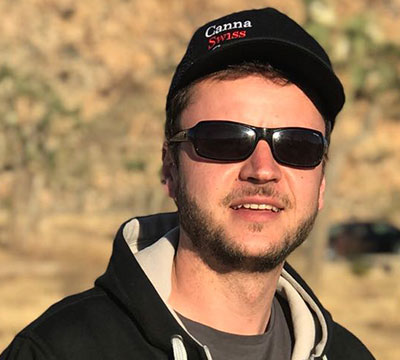
Ben Arn
Ben Arn, CEO of CannaTrade, partner for International Cannabis Business Conference Zurich.