Czech Doctors Prescribed 318.7 Kilograms Of Medicinal Cannabis In 2024

According to data from Czechia’s State Institute for Drug Control and as reported locally by BRNO Daily, doctors in the Czech Republic prescribed 318.7 kilograms of medicinal cannabis in 2024 to an average of roughly 3,300 patients per month. Those figures are set to expand in April 2025 when Czech GPs will be permitted to prescribe cannabis for chronic pain.

“GPs will now be able to prescribe medicinal cannabis for chronic pain, and patients can also be prescribed up to a three-month dose per prescription, according to changes to the relevant legislation which will come into force in April this year.” BRNO Daily stated in its reporting.

For context, in 2023 Czech doctors prescribed 258.8 kilograms of medical cannabis, 157.4 kilograms in 2022, and 109.4 kilograms in 2021. Additionally, the Czech Republic’s legal medical cannabis industry served an average of 2,570 patients in 2023, in 2022 it was 1,886, and in 2021 it was 1,389.

The Czech Republic’s medical cannabis expansion occurring later this year comes amidst a push for wider cannabis policy reform in the European nation. In November 2024, the Czech Republic’s cabinet approved a plan that would permit adults to cultivate multiple plants in their private residences and possess a personal amount of cannabis.

The plan, which would legalize the cultivation of up to three cannabis plants and set a maximum possession limit of 50 grams of cannabis, was originally introduced by the Czech Republic’s Ministry of Justice back in September 2024. The plan does not go far enough according to members of the Czech Pirate Party.

“Instead of legalization and money in the budget, today the government presents pasquil. You can grow cannabis, but you can’t harvest it. To be able to grow three cannabis plants and at the same time have a limit of 50 grams that you can have at home is absurd. It’s like you could raise three hens, but they could lay a maximum of one egg, otherwise you’ll be fined or go to jail,” said former Deputy Prime Minister and former head of the Pirates Ivan Bartoš according to previous reporting by Echo24.

Cannabis advocates in Czechia are urging lawmakers to modernize the nation’s cannabis policies in a more comprehensive fashion. More information about their proposal can be found at: www.racionalniregulace.cz.

Starting in July of this year, the Czech Republic will regulate sales of cannabis containing up to one percent THC. The public policy change will also involve permitting regulated sales of kratom.

“The regulation focuses on substances deemed to pose low public health and social risks based on current scientific evidence. These include Kratom and kratom extracts, known for their stimulant and pain-relieving effects; cannabis with up to 1 percent THC, a low-potency form of cannabis with minimal psychoactive effects.” reported Expats CZ in its local coverage.

“Cannabis extracts and tinctures with up to 1 percent THC are also included.” Expats CZ also reportedLow-THC cannabis products will be permitted to be sold in licensed stores starting this summer in Czechia, although certain forms of commerce such as automated vending machines will remain prohibited.

Spain Is Expected To Approve A Medical Cannabis Measure Soon

Lawmakers in Spain are reportedly on track to approve a medical cannabis industry regulation measure before this summer. Spain has long been home to a thriving medical cannabis community and market, however, regulations for the nation’s domestic medical cannabis industry have proved to be elusive for years.

The effort to bring Spain’s medical cannabis policies into the modern age passed a major milestone back in October 2024 when the nation’s Ministry of Health published a draft royal decree focused on medical cannabis. That draft royal decree appears to be moving further along in the process.

“After years of waiting, Spain seems to be finally on its way to regulating medical cannabis. If all goes according to plan, the Royal Decree regulating the use of cannabis for medical purposes could be approved before the summer of 2025.” InSpanje stated in its reporting.

“The Spanish Ministry of Health has sent a draft of the Royal Decree to the European Commission, as required by European regulations. Brussels has three months to respond to the proposal. Once a positive response is received, the Council of State will give its opinion and the government can approve the decree. In total, this process could take up to five months.” the outlet also reported.

“The draft establishes broad restrictions on the medical use of cannabis and specifies very specifically the pathologies for which it can be used: multiple sclerosis (stiffness and muscle spasms associated with the condition); severe forms of refractory epilepsy (certain types of epilepsy that do not respond to conventional treatments); nausea and vomiting caused by chemotherapy; and refractory chronic pain (persistent pain that is not relieved by the usual treatments). In all these cases, experts believe that there is “scientific evidence” of the benefits of medical cannabis.” reported Sur late last year in its domestic coverage.

“The Ministry addresses this regulation based on the conclusions of the Subcommittee of the Congress of Deputies for the analysis of experiences with the regulation of cannabis for medicinal use, which called on the Spanish Agency for Medicines and Health Products to prepare a roadmap to approve the regulation.” Spain’s government stated in a press release about the measure (translated from Spanish to English) late last year.

“The proposed regulation guarantees the quality of the products and the safety of patients, enabling the legal avenues available to have therapeutic compounds based on standardized cannabis preparations that have shown evidence in relieving pain and the suffering of patients, considering the oral administration of these compounds as it is the most appropriate in terms of therapeutic effectiveness and safety for patients.” the government’s press release stated.

“This regulation is designed to evolve dynamically, allowing new elements to be incorporated as more information and the experience of the therapeutic cannabis program becomes available. In addition, it will contribute to generating more and better evidence on the use of cannabinoids for therapeutic purposes.” Spain’s government also stated.

Despite the lack of proper regulations in Spain, the nation’s cannabis industry is thriving, albeit not within a regulated system. Suffering patients deserve to have safe access to safe medical cannabis therapies, and entrepreneurs and investors deserve to operate in a business environment that is built on a strong foundation of certainty.

37% Of Medical Cannabis Patients In New Zealand Have A Prescription

Modern medical cannabis was first legalized in New Zealand in 2018, with the Medicinal Cannabis Scheme launching in 2020. Since that time, a growing number of medical cannabis patients have received prescriptions to safely access medical cannabis products.

“In 2022/23, fewer than one in 10 medical users obtained a prescription for their cannabis. That had climbed to 37% in 2024, according to the annual New Zealand Drug Trends Survey (NZDTS) conducted by the Shore and Whariki Research Centre at Massey University’s College of Health.” states Cannabiz in its original reporting.

“Of 1,742 respondents who claimed all or most of their cannabis use was for medical purposes, 60% said they had not approached a health professional, down from 85% in 2022/23 and 93% in 2020, when the Medicinal Cannabis Scheme launched in New Zealand.” the outlet also reported.

Initially, all legal medical cannabis products sold in New Zealand were imported. However, in September 2022, New Zealand’s government granted permission for domestic medical cannabis cultivation.

Voters in New Zealand decided on a recreational cannabis legalization measure in 2020, with the measure being narrowly defeated on Election Day. At the time, only two countries had adopted adult-use legalization measures – Uruguay and Canada.

Since the failed legalization vote in New Zealand, Malta, Luxembourg, Germany, and South Africa have approved national legalization measures. Additionally, nearly five dozen countries have now adopted medical cannabis legalization measures.

A recent survey of more than 23,000 New Zealanders found that 60% of respondents reported that they consumed less alcohol after beginning cannabis use. The survey also found that of people who report using cannabis and other substances, 60% of respondents reported consuming less synthetic cannabinoids, 44% reported using less morphine, and 40% reported using less methamphetamine.

83 Cannabis Cultivation Associations Have Been Approved In Germany So Far

Germany implemented the first provisions of its new adult-use cannabis legalization model on April 1st, 2024. The initial provisions involved permitting adults to cultivate, possess, and consume personal amounts of cannabis, among other things.

Then, starting on July 1st, 2024, people could start applying to launch a cultivation association in Germany. Cultivation associations, sometimes referred to as cannabis clubs, involve members joining an association from which to legally source their recreational cannabis. Personal provisions and cultivation associations serve as ‘Pillar 1’ of Germany’s legalization model.

According to a recent response from the federal government to an inquiry made by the Left Party in Germany, and as initially reported locally by Frankfurter Rundchau, 83 cannabis club applications were approved nationwide in Germany as of December 2024. An additional 349 applications are being processed, and 12 applications have been rejected so far.

“There are currently no cannabis clubs in either Saarland or Bavaria. Applications have been submitted, in Bavaria, for example, there are 29, but those interested will have to be patient.” Frankfurter Rundchau stated in its reporting. “The CSU-led Bavarian state government has already announced that it will take its time with the approval.”

Currently, cannabis is legal for adult use in Uruguay, Canada, Malta, Luxembourg, Germany, and South Africa. Of those, Uruguay and Malta expressly allow cultivation associations (or ‘clubs’) as part of their legalization models. For contextual purposes, Uruguay currently has 460 registered associations/clubs, and Malta had only three registered cannabis clubs as of last year.

When comparing the populations of Uruguay (roughly 3.4 million) and Malta (roughly 550,000) to that of Germany (over 84 million), it is obvious that Germany needs more cultivation associations to support its adult cannabis consumer base.

However, it is also worth pointing out that Uruguay legalized cannabis in 2013, and Malta in 2021, so both countries have had a significant headstart over Germany when it comes to cultivation association/club implementation.

Cannabis Can Be An Economic Growth Driver In Germany

If properly regulated and allowed to reach its full potential, Germany’s emerging cannabis industry can serve as an economic growth driver, and lawmakers elected in Germany’s upcoming election need to recognize that. That is the premise of a new position paper recently published by the German Cannabis Business Association (BvCW).

The position paper, titled (translated from German to English) ‘Cannabis as a growth driver: Industrial opportunities and policy directions,’ defines three core positions for Germany’s upcoming federal election to be held next month:

  1. Combating organized crime, increasing public safety – enabling commercial supply chains for consumer cannabis.
  2. Complete the liberalization of industrial hemp in order to leverage economic and ecological potential.
  3. Working together to create modern regulations for telemedicine.

“The cannabis industry in Germany has developed into a dynamic and promising industrial sector since the legalization of medical cannabis in 2017. For the medical cannabis sector alone, sales of around 450 million euros are forecast for last year – and the trend is continuing to rise.” BvCW stated in its newsletter this week.

“With the introduction of the Cannabis Act, the market for home cultivation equipment for recreational cannabis has also grown significantly. Industrial hemp also offers diverse and sustainable potential for agriculture, the construction industry, textiles and composites.” the newsletter also stated.

“The cannabis industry is a magnet for foreign investment capital, which creates jobs and generates taxes. The Cannabis Act was an important building block on which politics should continue to build,” explains Dirk Heitepriem, President of BvCW.

“The cannabis industry is growing and has much more potential. In order to exploit this, it is important that the next federal government finally abolishes the intoxication clause for industrial hemp and supports the approval of model projects with professional supply chains,” adds Michael Greif, Managing Director of BvCW.

Germany implemented the first provisions of its new adult-use cannabis legalization model back on April 1, 2024. Regulators then launched the application process for cultivation associations on July 1, 2024. The launch of regional adult-use cannabis commerce pilot trials was initially expected by the end of last year, however, the launch of trials has experienced various delays due to politics.

“While the public debate often remains limited to the area of ​​consumer cannabis, it is primarily the medical cannabis and industrial hemp segments that have developed into an important industrial sector.” BvCW stated in its position paper regarding Germany’s emerging cannabis industry.

“Especially against the background of international legalization projects for medical and, in some cases, consumer cannabis and a weakening German economy, it is crucial to understand this development not only as part of health policy but also as a natural part of future-oriented economic policy.” BvCW also stated in the position paper.

Currently, cannabis is legal for adult use in Uruguay, Canada, Malta, Luxembourg, Germany, and South Africa. Recreational pilot trials are also operating in the Netherlands and Switzerland, and two dozen states in the U.S. have adopted adult-use legalization measures.

With the looming election in Germany on the horizon, and a seemingly shifting political landscape, some cannabis industry members and reform advocates are expressing concern that Germany’s eventual new government may hinder the momentum that Germany’s cannabis movement has experienced in recent years.

“Despite the complete ban on cannabis in recent decades and intensive law enforcement on both the supply and demand sides, cannabis consumption has continued to rise,” BvCW points out in its position paper. “In order to push back the black market with all its negative implications, legal and regulated access routes to quality-assured cannabis products are necessary.”

“This would not only result in a reduction in the burden on law enforcement authorities, more security for consumers and better protection of minors, but also offer the opportunity to benefit from the economic potential in the form of corporate and sales taxes.” states BvCW.

“The Cannabis Industry Association would like to work together with a new federal government to further develop cannabis regulation. Starting with strengthening the resilience of domestic pharmaceutical supply chains, from competitive conditions for agriculture to closely monitored supply chains for consumer cannabis: this is the only way to enable state control and effectively strengthen internal security.” the position paper stated.

BvCW advocates for regulating, and not prohibiting, several sectors of Germany’s emerging cannabis industry in its position paper, from cannabis seeds and genetics to telemedicine and the launch of pilot trials. You can read the full position paper at this link here.

Public UK Cannabis Legalization Support Outpaces MP Support

According to a recent poll conducted by YouGov UK, the level of support for cannabis legalization among adults in the United Kingdom is greater than the level of support for adult-use legalization among lawmakers.

“The results show that 50% of MPs are opposed to cannabis legalisation when asked in a support/oppose format, compared to 39% who would be in support.” YouGov UK stated about their poll’s results. “The large majority of MPs do, however, believe that doctors should be allowed to prescribe cannabis for medical use (83%). Only 7% are opposed.”

“On the binary question of legalising cannabis, the British public are split, with 45% in favour and 42% opposed, making the public slightly more pro-legalisation than MPs.” YouGov UK also stated about the poll results.

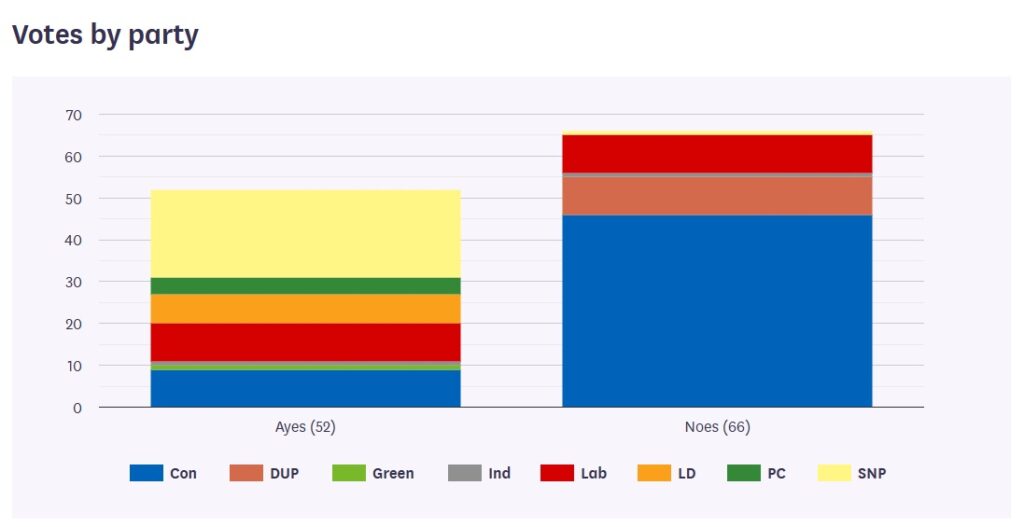
MPs in the United Kingdom voted on a cannabis legalization measure back in December 2018, with the lawmakers defeating the legalization proposal by a vote of 66 ‘no’ votes to 52 ‘yes’ votes. Below is a graphical breakdown of that vote by party via the UK Parliament’s website:

cannabis legalization vote uk 2018

Currently, cannabis is legal for adult use at a national level in Uruguay, Canada, Malta, Luxembourg, Germany, and South Africa. Additionally, recreational commerce pilot trails are operating in the Netherlands and Switzerland, and two dozen states in the U.S. have adopted adult-use cannabis legalization measures.

Belize Offers Automatic Expungements For First-Time Cannabis Offenders

Cannabis prohibition is one of the most harmful public policies in human history. Starting in the early 1900s, cannabis prohibition has ruined countless lives across the globe and wasted a tremendous amount of precious public resources.

Fortunately, more and more governments around the globe are getting on the right side of history when it comes to cannabis policy, albeit slowly. One of those countries is Belize where the government is now offering automatic expungements for first-time cannabis offenders.

“Тhе Соmmunіtу Rеhаbіlіtаtіоn Dераrtmеnt оf thе Міnіѕtrу оf Нumаn Dеvеlорmеnt, Fаmіlіеѕ & Іndіgеnоuѕ Реорlе’ѕ Аffаіrѕ hаѕ аnnоunсеd thе аvаіlаbіlіtу оf аutоmаtіс ехрungеmеnt fоr сеrtаіn fіrѕt-tіmе оffеnѕеѕ undеr nеw рrоvіѕіоnѕ оf thе Сrіmіnаl Rесоrdѕ (Rеhаbіlіtаtіоn оf Оffеndеrѕ) Асt, 2024.” stated Breaking Belize News in its local reporting.

The change in public policy applies to “a fіrѕt оffеnсе fоr роѕѕеѕѕіоn оf саnnаbіѕ оr саnnаbіѕ rеѕіn undеr ѕесtіоn 7 оf thе Міѕuѕе оf Drugѕ Асt, whеrе thе іmроѕеd fіnе dоеѕ nоt ехсееd $1,000” according to the media outlet.

In order for people to obtain an expungement for a first-time cannabis offense that fits within the parameters of the new program they must submit an application to the government for consideration and approval. The program is designed to help offenders move on with their lives and not be further affected by a personal cannabis possession offense.

Recreational cannabis remains illegal in Belize, and only first-time offenders are eligible for the expungement program. People convicted of cultivating and/or distributing cannabis are not eligible for the expungement program.

Rate Of Legal Cannabis Buyers Continues To Increase In Uruguay

Uruguay became the first nation on earth to adopt a national adult-use cannabis legalization law back in 2013. The first legal recreational sales were launched in registered pharmacies in Uruguay in 2017. Since that time, the number of adults making legal purchases in Uruguay has increased considerably.

“The number of legal marijuana buyers rose to some 102,156 people over the course of last year, boosted by the market debut of the Epsilon variant, which has a higher THC content (20%), and was in high demand.” reported Ambito.

“The new, more potent variant debuted in October, and in the following two months alone, a total of 359 kilos were sold in pharmacies, more than what had been sold up to that point of Alpha or Beta, according to data provided by the Institute for the Regulation and Control of Cannabis (IRCCA).” the media outlet also reported in its local coverage.

When legal sales at pharmacies began in Uruguay in the summer of 2017, consumers could initially choose from two different strains. The two strains are named ‘Alpha’ and ‘Beta’, each with tetrahydrocannabinol (THC) levels equal to or less than 9%, and cannabidiol (CBD) levels equal to or less than 3%.

Then, in 2022, Uruguay permitted a third option, ‘Gamma,’ which has a THC level of equal to or less than 15%, and CBD levels of equal to or less than 1%. Regulators in Uruguay then approved a fourth option that contains a higher level of THC than the other three options.

“The new variant has a tetrahydrocannabinol (THC) content of equal to or less than 20% and a cannabidiol (CBD) content of equal to or less than 1%.” stated Latin America Reports in its local coverage at the time of the strain’s launch.

Currently, 74,583 adult consumers are reportedly registered to make legal recreational cannabis purchases from Uruguay’s 40 authorized pharmacies making sales. Additionally, a reported 15,796 adults are members of 460 cannabis clubs registered in Uruguay, and another 11,597 adults reportedly cultivate legal plants in their homes.

Uruguay’s legal cannabis companies exported over $3 million worth of medical cannabis products in the last year to such nations as Germany, Portugal, Australia, New Zealand, and the United States. Uruguay’s export data is part of a report recently published by the Uruguay XXI Institute.

Legal Cannabis Cultivators Call For Adult-Use Legalization In Morocco

Legal cannabis cultivators and advocates in Morocco are urging the nation’s lawmakers to adopt recreational cannabis legalization. Morocco first adopted its current medical cannabis policy in 2021, with ten entities receiving permits to legally cultivate cannabis in late 2022. The number of legal cultivators has increased exponentially since 2022.

“Growers and activists say legalizing recreational and traditional cannabis use could ease market pressures while bringing economic benefits.” reported Newsweed in its original coverage. “Such measures could not only boost domestic sales, but also attract tourists, especially as Morocco prepares to host the 2030 FIFA World Cup.”

According to the National Agency for the Regulation of Cannabis-related Activities (ANRAC), Morocco issued 2,837 authorizations to 2,659 farmers in 2024, up from 430 authorizations in 2023.

Additionally, regulators in Morocco issued 60 authorizations for processing, 49 for marketing, 39 for exports, and 24 for seed imports. The increase in authorizations in 2024 demonstrated the growth of Morocco’s emerging legal cannabis industry.

ANRAC Director General Mohamed El Guerrouj recently announced at an annual board meeting that the nation’s emerging legal cannabis industry produced thousands of tons of cannabis last year.

“In 2024, approximately 4,000 tons of cannabis were produced over an area of 2,169 hectares,” ANRAC Director General Mohamed El Guerrouj stated about Morocco’s legal cannabis industry according to local reporting by APA News. “No infractions related to non-compliance were recorded.”

The climate in parts of Morocco is well-suited for large-scale cannabis production, which is why the North African nation has long served as a leading source of unregulated cannabis, particularly as a source for the European market.

Currently, cannabis is legal for adult use in Uruguay, Canada, Malta, Luxembourg, Germany, and South Africa. Additionally, nearly five dozen countries have adopted medical cannabis legalization policies to some degree.