62% Of Canadians Still Approve Of Cannabis Legalization

Canada became the second country on the planet and the first G-7 nation to adopt a national adult-use legalization measure in 2018. The only country to do so before Canada was Uruguay, where lawmakers approved a national adult-use legalization measure in 2013.

However, unlike Uruguay where legal recreational cannabis sales are limited to residents only, Canada permits recreational cannabis sales across the country to anyone of legal age. The legal age for cannabis purchases in Canada at the federal level is 18 years old, although provinces and territories can set a higher age limit.

The recreational cannabis commerce system in Canada is the most robust on earth. In addition to Uruguay and Canada, cannabis is also legal for recreational purposes at a national level in Malta, Luxembourg, Germany, and South Africa. Canada is the only nation on that list that permits nationwide sales to adult non-residents.

Investigators affiliated with Research Co. recently surveyed Canadians to determine the level of support for legalization six years after implementation. The survey results are based on an online survey conducted from October 13 to October 15, 2024, among 1,001 adults in Canada.

“In the online survey of a representative national sample, 62% of Canadians (-2 since a similar Research Co. poll conducted in October 2023) agree with marijuana being legal in Canada, while 33% disagree and 4% are undecided.” Research Co. stated about the results.

“Agreement with legal cannabis in Canada is highest in Quebec (66%), followed by Alberta (64%), Ontario (also 64%), British Columbia (60%), Atlantic Canada (56%) and Saskatchewan and Manitoba (53%).” the researchers also stated.

Research Co. also determined the following:

  • 33% of Canadians report having tried cannabis before it was legal
  • 14% only did so after legalization
  • 51% of consumers report making all of their purchases through licensed retailers
  • 74% support expunging charges for people convicted of possession of cannabis for personal use

Recreational cannabis is currently legal in two dozen states in the U.S. and in Washington D.C. Regional adult-use cannabis commerce pilot trials are operating in the Netherlands and Switzerland, and courts in a handful of other nations have rendered decisions providing some level of protection to adult cannabis consumers.

German Cities Moving Forward With Legal Cannabis Sales Pilot Projects

Germany is currently home to the most progressive cannabis policies in Europe. The German legalization model involves permitting adults to cultivate, possess, and consume cannabis for recreational purposes, as well as to become members of a growing list of cultivation associations.

Another component of Germany’s legalization model involves launching regional adult-use cannabis commerce pilot trials. Pilot trials that are already operating in the Netherlands and Switzerland are research-based and allow lawmakers and regulators to gather local data to be better suited when crafting national policies and regulations.

Both Frankfurt am Main and Hanover, two of Germany’s more populated cities, recently announced plans to launch pilot trials ‘at the beginning of 2025.’

“The pilot project in Hanover, Lower Saxony, will be accompanied by a scientific study carried out by the Hanover Medical School, with around 4,000 people expected to take part.” stated The Local in its coverage.

“The city of Frankfurt in Hesse is also taking part in the pilot project to sell cannabis. Participants will be able to legally purchase cannabis flowers and other products containing tetrahydrocannabinol (THC) for five years in specialised shops set up specifically for this purpose.” the outlet also reported.

Sales outlets involved in Germany’s pilot projects will differ from dispensaries found in North America in that not all adults will be able to make purchases. Anyone of legal age in Canada and legal states in the U.S. can make purchases from licensed dispensaries. In Uruguay, legal sales are limited to residents only.

Adult-use cannabis is also legal in Malta, Luxembourg, and South Africa, although adult-use cannabis sales remain prohibited in those jurisdictions.

Pilot trials in Germany will require adults to register with a local pilot project, at which point they will be able to make legal purchases and participants will be required to provide feedback to regulators for ongoing research purposes. Pilot participants in Germany will still be able to join a cultivation association and cultivate their own cannabis if they choose to.

Lawmakers in Germany initially pushed for a more comprehensive commerce system, akin to what is in place in Canada. However, European Union agreements prohibit such commerce models. German lawmakers opted to implement a multi-pronged approach of permitting home cultivation, cultivation associations, and pilot trials.

The multi-pronged approach in Germany was adopted to boost public health outcomes. A team of researchers associated with Sanity Group recently examined over 300 unregulated cannabis samples from 30 different German cities. According to the results of the study, roughly 80% of the samples of unregulated cannabis were contaminated with various harmful substances, from hairspray to banned pesticides.

“The investigation showed that 74 percent of the samples contained bacteria and viruses, 71 percent contained dangerous pesticides and 65 percent were contaminated with feces. In addition, traces of cocaine were found in 47 percent of cases and hairspray residues in 32 percent. The samples from the major cities of Berlin, Hamburg and Munich were particularly heavily contaminated.” the German Cannabis Business Association (BvCW) stated in a recent newsletter about the study’s findings.

“These worrying results underline the urgency of establishing a comprehensive range of safe, controlled cannabis products in Germany as part of the partial legalization process (“Pillar 2”). This is the only way to ensure the health protection of consumers. The study clearly illustrates the risks of the black market and the need for a regulated supply of cannabis in order to protect the health of consumers.” the association also stated.

Investing In Europe’s Emerging Legal Cannabis Industry

The European continent is the most exciting region for the cannabis industry and policy right now, with several nations working to modernize their cannabis laws and regulations. The most noteworthy example is Germany, where lawmakers enacted the first provisions of a national adult-use legalization measure on April 1, 2024.

Adults in Germany can now cultivate up to three plants in their private residences in addition to being able to possess and consume cannabis for recreational purposes legally. Furthermore, adult consumers in Germany can join a growing list of adult-use cultivation associations.

Before Germany’s legalization, Malta and Luxembourg also adopted national recreational cannabis legalization measures. Regional adult-use cannabis commerce pilot trials are also operating in both the Netherlands and Switzerland. Policy modernization efforts are also gaining traction in other European nations such as in Slovenia and the Czech Republic.

A rise in opportunities for entrepreneurs and investors is paralleling the rise of policy modernization efforts in Europe. Things are moving quickly and it can be difficult to navigate the evolving landscape. Fortunately, there is an opportunity coming up next week in Munich that streamlines the process of identifying and networking with startups and investors.

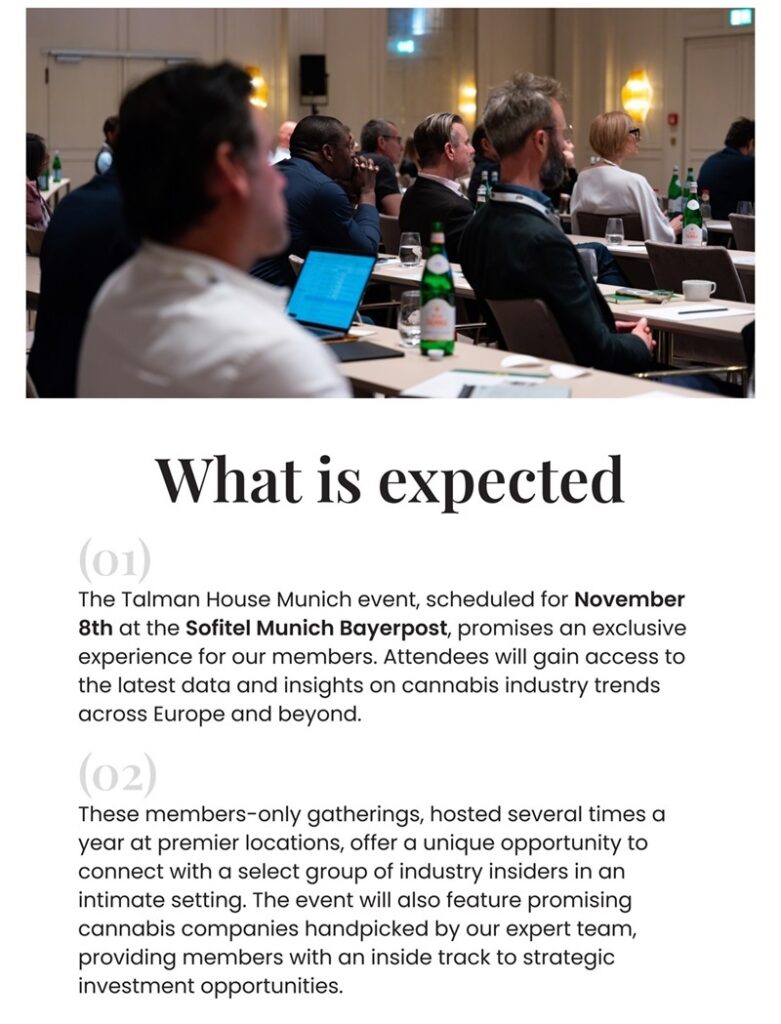
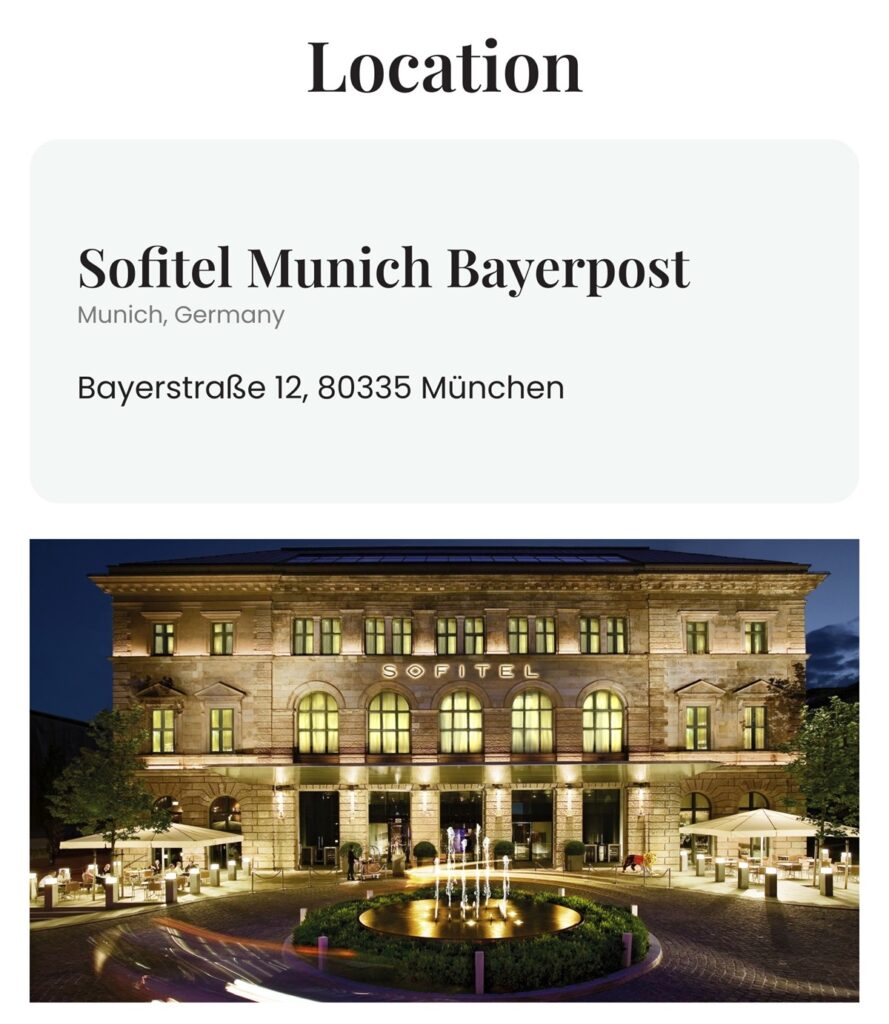
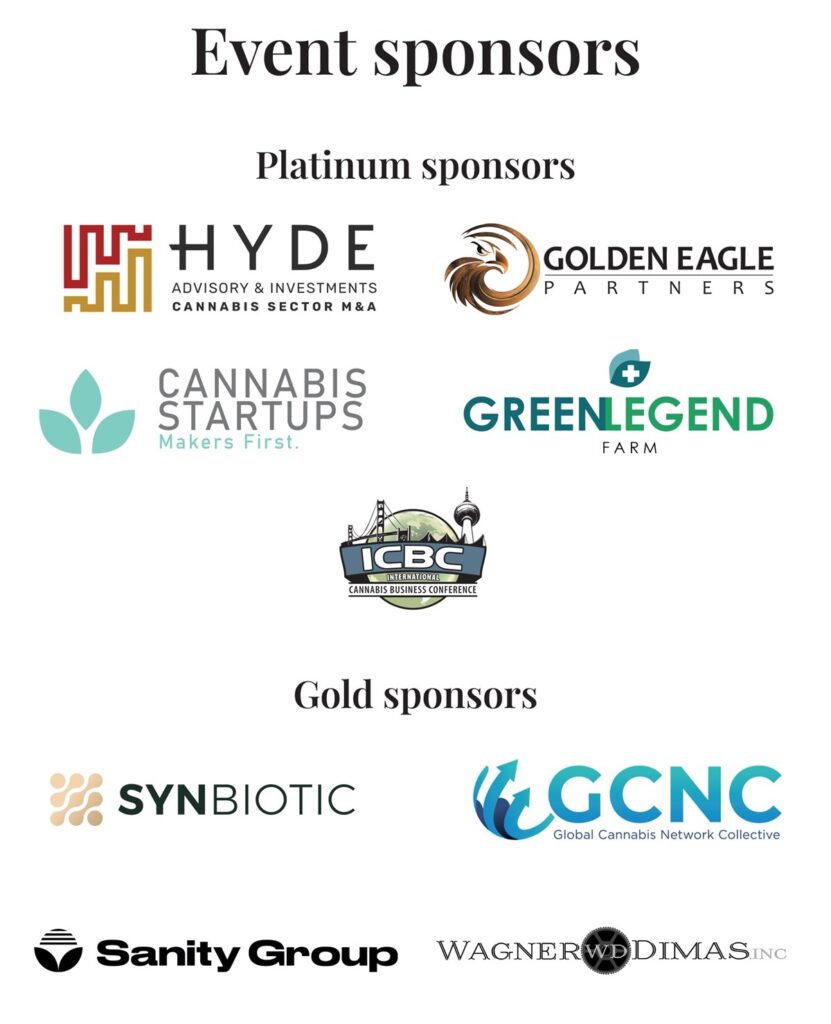
The Talman Group is hosting an investor event in Munich, Germany on November 8, 2024, for Talman House members. Below is a graphic that explains what attendees can expect at the event. To learn more about how you can become a member of the Talman House, click this link here.

Talman House Munich November 2024 1

Talman House Munich November 2024 2

Talman House Munich November 2024 3

Pharmacies In Uruguay To Sell Recreational Cannabis With Higher THC Levels

Uruguay became the first country on earth to adopt a national adult-use cannabis legalization measure back in 2013, with legal recreational cannabis sales launching in 2017, including sales through the nation’s pharmacies.

Legal sales at pharmacies began in Uruguay in the summer of 2017, and consumers could initially choose from two different strains. The two strains are named ‘Alpha’ and ‘Beta’, each with tetrahydrocannabinol (THC) levels equal to or less than 9%, and cannabidiol (CBD) levels equal to or less than 3%.

Then, in 2022, Uruguay permitted a third option, ‘Gamma,’ which has a THC level of equal to or less than 15%, and CBD levels of equal to or less than 1%. Regulators in Uruguay recently approved a fourth option that contains a higher level of THC than the other three options.

“The new variant has a tetrahydrocannabinol (THC) content of equal to or less than 20% and a cannabidiol (CBD) content of equal to or less than 1%.” stated Latin America Reports in its local coverage.

“Currently, 71,843 Uruguayan citizens are legally registered to purchase cannabis in pharmacies, 11,708 have received permission to grow it at home, and 13,687 are members of cannabis clubs.” the outlet also reported.

Right now, cannabis is legal for adult use at a national level in Uruguay, Canada, Malta, Luxembourg, Germany, and South Africa, although nationwide sales are currently only permitted in Uruguay and Canada. Regional adult-use cannabis commerce pilot trials are also currently permitted in the Netherlands and Switzerland.

Recreational cannabis is also legal in two dozen states in the U.S., as well as in Washington D.C. Almost all of those jurisdictions permit legal adult-use cannabis sales, but cannabis remains prohibited at the federal level in the United States.

European Commission Launches Investigation Into Italy’s Ban On ‘Cannabis Light’

In recent years, cannabis and hemp-derived products that are high in cannabidiol (CBD) and low in tetrahydrocannabinol (THC), often referred to as ‘cannabis light,’ have increased in availability and popularity across Europe, including in Italy.

Lawmakers in Italy recently approved measures that seek to prohibit such products from being bought and sold within Italy’s borders. The European Commission has launched an investigation to determine if the measures, and others that are being considered, violate European Union (EU) law.

“The Italian government, led by Prime Minister Giorgia Meloni, is proposing a two-part strategy to eliminate legal hemp flowers in the EU, which contain cannabinoids such as CBD.” stated Newsweed in its local coverage.

“The current controversy stems from an amendment to the 2023 Security Law that would impose a complete ban on the sale of hemp flowers. This amendment was passed by the Italian Chamber of Deputies in September 2024 and must now be considered by the Italian Senate.” the outlet also stated.

Cannabis advocates and members of Italy’s emerging cannabis industry argue that what is being pursued in Italy violates EU law. The Court of Justice of the European Union previously ruled in 2021 that hemp extracts and flowers should not be classified as narcotics.

Canapa Sativa Italia, an Italian hemp industry trade organization, filed a formal complaint with the European Commission claiming that Italy’s actions violate the EU’s Common Agricultural Policy and impede fair competition within the European Union market.

As we previously reported, a decree was issued in 2020 to classify CBD as a narcotic in Italy, but shortly after it was issued, the decree was temporarily suspended. That temporary suspension was then lifted via yet another decree in 2023, just to also be temporarily suspended.

Prior to the decrees and other measures recently pursued by Italy’s government, much of Italy’s public cannabis policies were shaped by legal decisions. In late 2019, Italy’s Supreme Court ruled that laws against ‘small-scale domestic cultivation of cannabis’ were unconstitutional, providing some level of legal protection for consumers and patients.

In 2021, cannabis activists in Italy successfully collected hundreds of thousands of signatures to place a cannabis referendum measure on the ballot for voters to decide. However, in 2022 the nation’s Supreme Court deemed the measure’s language to be unconstitutional.

How Many Countries In Africa Have Legalized Commercial Cannabis Cultivation?

As cannabis policy modernization has spread across the globe, one continent that has experienced a significant amount of reform in recent years is Africa. Currently, the only nation in Africa that has adopted a national adult-use legalization measure is South Africa. However, several other African nations have adopted laws that permit commercial medical cannabis and hemp cultivation.

According to a recent study conducted by researchers from Ukraine and France, and published by the U.S. National Institute of Health, 57 countries have adopted medical cannabis legalization measures.

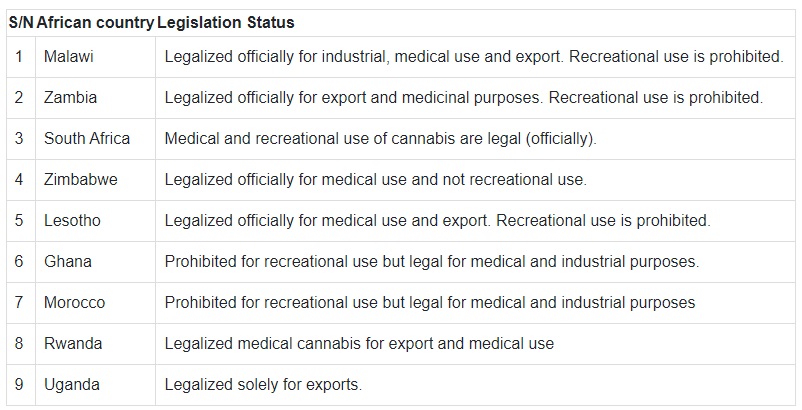
According to a recent report titled “Medical Use of Cannabis in Africa: The Pharmacists’ Perspective” which was published by the National Library of Medicine, nine African countries have adopted laws to regulate commercial cannabis and hemp cultivation, as well as the processing, storage, sales, and/or exports of harvests. Per recent reporting by Business Insider:

africa commercial cannabis cultivation regulation

In addition to the dozens of countries around the world that have adopted medical cannabis legalization measures, Uruguay, Canada, Malta, Luxembourg, and Germany have implemented adult-use legalization measures, as well as South Africa, as previously mentioned in this article.

The legal global cannabis industry is set for significant expansion in the coming years, with a recent report by Skyquest Technology Consulting projecting that the regulated worldwide cannabis market will surpass $148.4 billion in value by 2031.

“Cannabis market was valued at USD 36.4 Billion in 2022 and is poised to grow from USD 42.6 Billion in 2023 to USD 148.4 Billion by 2031, growing at a CAGR of 16.9% during the forecast period (2024-2031).” the market analysts stated.

“Legalization and regulation are among the primary factors contributing to the development of the cannabis market. The market is expanding beyond the capacity of understanding and awareness as an increasing number of countries have legalized cannabis for medical and recreational purposes.” the analysts also stated.

Study Demonstrates Why Banks Are One Of The Biggest Winners Of Legalization

The banking industry and the cannabis industry have a complicated relationship due to prohibition laws. Cannabis businesses have more options for financial services than they have in the past, however, many members of the global cannabis industry still rely on cash-only models and/or struggle to find loans to scale their businesses.

Cannabis businesses are not the only ones harmed by the lack of banking access for the emerging legal cannabis industry. A recent analysis by Whitney Economics (WE), CTrust, and Green Check demonstrates how much profit potential banks are missing out on by not working properly with cannabis businesses.

“A first-of-its-kind report released today projects that the U.S. cannabis industry will need between $65.6B and $130.7B in sustainable growth capital to support new cannabis businesses and help refinance existing ones over the next decade, generating approximately $1.0 billion to $2.4 billion in potential interest revenue for financial institutions willing to lend to cannabis businesses.” stated the authors of the report.

While the financial analysis report is focused on the United States, many of the same findings can be adapted and applied to every other jurisdiction on earth that still hinders or outright prohibits accredited banks from working with the cannabis industry.

“The report also shows that U.S. cannabis retail sales are forecasted to grow from $28.8 billion in 2023 to $87.0 billion by 2035. To support that growth, the U.S. cannabis industry could add 25,000 to 30,000 licenses to roughly 40,000 current licensees—a near doubling of potential lending and interest revenue opportunities for banks.” the authors also stated about their report.

“The funding needed to realize this growth cannot be supported solely by friends and families,” said Beau Whitney, WE founder and chief economist. “By demonstrating regional opportunities and broader market potential, the report aims to empower financial institution lending departments to help educate their boards on risks, rewards and opportunities—all in the hopes of accelerating the industry’s growth by encouraging more financial institutions to participate”

“Banks have long been cautious about entering the cannabis industry due to regulatory and financial risks, though when they do, they have to rely on non-cannabis specific underwriting and due diligence,” said Dotan Y. Melech, CEO and co-founder of CTrust. “This report should pave the way for conversations with financial institutions to develop more informed lending partnerships with the cannabis industry.”

Legal cannabis companies should be afforded the same access to the world’s financial systems that other large legal industries are afforded. As more countries get on the right side of history and modernize their cannabis policies, momentum will continue to build and hopefully comprehensive global reform will be achieved soon.

The Global Cannabis Community Loses A Legend

The International Cannabis Business Conference team posts this article with a heavy heart. The global cannabis community lost a giant this month with the passing of Jürgen Neumeyer. Mr. Neumeyer has been a part of the International Cannabis Business Conference family for many years, and he will be dearly missed by everyone who was blessed to know him.

Below is a message sent out by the German Cannabis Business Association (BvCW) commemorating the life and accomplishments of Jürgen Neumeyer. He was truly a legend:

Our co-founder and managing director Jürgen Neumeyer died unexpectedly on Wednesday, October 9, 2024, during a family visit to his hometown. At the age of 56, he left behind a comprehensive life’s work. He was able to realize his greatest political goal in life, the decriminalization of cannabis, during his lifetime.

For decades, Jürgen had dedicated a large part of his life to the vision that cannabis users in Germany would no longer be criminalized. In various roles in politics and business, he did not lose sight of this goal and was able to celebrate an important milestone on April 1, 2024. The cannabis law would look different today without Jürgen’s tireless work. But not all of his goals have been achieved yet – be it improvements in the area of ​​industrial hemp or the creation of a legal market for recreational cannabis.

His drug policy career began in the 1990s with the Federal Association of Jusos, followed by a career as an employee for various members of the German Bundestag, publicist and networker. As the founding managing director of the “ Netzwerk Berlin” he was committed to the legalization of cannabis, among other things, and published several books on the subject. In addition to his editorial work for the magazine “ Berliner Republik”, he was also active in its management. He was also a co-founder of the think tank “ Das Progressive Zentrum eV”, as well as the non-partisan association “ Walkkreis eV”, which was firmly anchored in the Berlin government district with a political pub of the same name. His passion for cannabis policy led him to head political communications for the German Hemp Association (DHV) for several years. Jürgen recognized early on that an independent interest group was needed. He was the driving force behind the founding of an association for the German cannabis industry and was managing director of the industry association Cannabiswirtschaft e.V. from 2019 until his death. V. (BvCW) and CS Cannabis Service GmbH.

Our association, which represents all sectors of the industry (industrial hemp, medicinal cannabis & stimulants as well as technology, trade & services), grew to over 100 members within 5 years under his management, published over 40 specialist publications, many statements and press releases, and organized parliamentary meetings and specialist events. As a trade association representing all specialist areas of the cannabis industry, we became the largest of its kind in Europe. With all our commitment, we made significant contributions to the creation of the Cannabis Act, the abolition of the Narcotics Act status and the urgently awaited abolition of the intoxication clause with the Industrial Hemp Liberalization Act.

Jürgen Neumeyer had set himself and the association many other tasks, such as setting up the cannabis industry directory and the cannabis specialist publishing house, which are still in their infancy, a cannabis roadshow and the long-term goal of a “House of the Cannabis Industry” in Berlin. The focus was always on the current political goals, such as the model projects for cannabis (“Pillar 2”), but also many other construction projects such as hemp as a building material and the promotion of renewable raw materials.

With his death, we have not only lost a talented manager, friend and networker, but also an empathetic and authentic fellow human being who knew how to lighten up any professional and private conversation with his cheerful nature. He was also notorious for his extensive knowledge of winemaking and beer brewing, as well as his passion as a DJ. He was greatly respected and valued by everyone for his unique style.

EU Court Of Justice Approves Indoor Hemp Cultivation

Humans have cultivated hemp under the sun for centuries, making use of their hemp harvests in several ways from making rope to paper to textiles. In recent years, the hemp plant has become the focus of significant research aimed at developing medications and other therapies.

Additionally, consumable hemp products have risen in popularity and availability across the globe thanks to regulatory changes and product innovations. ‘Floral hemp’ or ‘cannabis light’ products are particularly popular on the European continent.

How hemp is cultivated has evolved in recent decades. While hemp is still cultivated in large fields under the sun, many cultivators are growing hemp indoors under artificial lighting and incorporating cutting-edge techniques. According to a recent decision by the European Union Court of Justice, indoor hemp cultivation using hydroponics is permitted. Per excerpts from reporting by EU News:

According to the EU Court of Justice, member states cannot ban hemp cultivation in indoor hydroponic systems. The only limitation is respect for public health, that is, compliance with the legal limit of THC not exceeding 0.2 per cent.

According to the Court’s findings, hydroponic cultivation increases agricultural productivity, develops technical progress, and ensures better use of inputs. In addition, it ensures the security of supply, as it is not subjected to direct weathering, and reasonable prices to the consumer. Not allowing hemp farmers to benefit from the CAP with this innovative technique would cause significant economic damage (taking into account that the criteria for receiving funding are strict and well-defined at the European level to avoid illicit cultivation).

Hemp policy in the European Union remains hazy, with many regulations either involving a lot of grey areas, or nation-level regulations conflicting with EU-level policies and regulations. The current situation creates a lot of uncertainty for entrepreneurs, investors, and consumers.

The European Union is not the only jurisdiction to struggle with modernizing its hemp policies and regulations. Every other continent is also struggling to create sensible hemp policies and regulations as the global hemp market continues to evolve.