How Do Chile’s Cannabis Policies Affect Onset Of Cannabis Use?

Cannabis opponents tout prohibition policies as being geared towards working to reduce cannabis use, particularly among young people. However, as usage data in every country that prohibits cannabis on Earth demonstrates, cannabis prohibition does not work.

Conversely, cannabis opponents will often offer up doomsday scenarios when cannabis policy reform is being proposed in a given jurisdiction. A growing body of research from jurisdictions that have changed cannabis policies demonstrates that doomsday scenarios do not materialize.

An example can be found in Chile where a team of international researchers affiliated with the following institutions examined Chile’s cannabis policies and reported onset use of cannabis:

  • Université de Sherbrooke, Canada
  • Universidad San Sebastián, Chile
  • Centre d’étude des mouvements sociaux, École des hautes études en sciences sociales, France

“In our paper, we focus on Chile where two policies (Laws 19366 and 20000) were introduced in 1995 and 2005 respectively to regulate and sanction cannabis use, possession, and trafficking. The question we address is how these policies are associated with onset of cannabis use.” the team of investigators stated about their research effort.

“In our analysis, we exploit information on the age of onset to model transitions to first cannabis use. We concentrate on individuals aged 12-21, as over 83% of those who initiate cannabis use in Chile fall within this age range (SENDA, 2019). We use data from 13 national representative and biannual cross-sectional surveys from 1994 to 2018 and administrative information on the number of effectively incarcerated individuals sanctioned by these two laws.” the researchers stated about their study’s methodology.

Cannabis reform has spread across the South American continent, most notably in Uruguay where lawmakers passed the world’s first-ever national adult-use cannabis legalization measure back in 2013. Chile has been slower than many of its continental counterparts to reform cannabis policies, with 2005 being the most recent significant policy change.

“Overall, changes in these laws did not affect the transition to first cannabis use. However, increases in the rate of individuals incarcerated were associated with decreases on the age of onset of cannabis use in females and individuals living in affluent neighborhoods or in specific regions.” the team of international researchers stated about their findings from the Chile study.

“We find no evidence of cannabis policy changes affecting the age of onset of cannabis use across all individuals aged 12-21. Policy effects associated with decreases in cannabis onset age in females and individuals from affluent neighborhoods or specific regions can be explained by using theoretical frames that recognize specific dynamics of cannabis supply and demand.” they concluded.

International Cannabis Leaders Meet In Berlin For First Time After Historic Vote

Roughly two weeks ago the first provisions of Germany’s new adult-use cannabis legalization law took effect, with policy components related to personal cannabis cultivation, possession, and consumption by adults being implemented. Adults in Germany can now cultivate up to three plants in their private residences and possess up to 25 grams when away from their homes.

On the heels of the historic policy change, international cannabis leaders have converged this week in Berlin for the annual International Cannabis Business Conference B2B event, which is Europe’s largest and longest-running cannabis industry conference. The two-day conference is scheduled to take place in Berlin at the iconic Estrel Berlin Hotel from April 16th-17th.

The International Cannabis Business Conference, which also co-organized the Global Investment Forum with the Talman Group that took place today on the eve of the B2B event, is hosting the first major event anywhere in Europe after Germany’s legalization law took effect. Representatives from over 80 countries are expected to be in attendance.

Once again, European cannabis policy modernization efforts will be a large focus of the two-day conference. The topic has always been prominent in past International Cannabis Business Conference events in Berlin going back to 2017 when the first flagship conference was held in Berlin.

However, the cannabis policy landscape has obviously shifted across Europe now that Germany has legalized recreational cannabis for adults. In addition to cultivation, possession, and consumption, noncommercial cannabis clubs are expected to play a prominent role in Germany’s legalization model. Noncommercial cannabis clubs are expected to launch in July of this year.

Germany’s legalization law also removed cannabis from the nation’s Narcotics List, the significance of which cannot be overstated. Cannabis research is now easier to conduct in Germany as a result, and the supply chain for medical cannabis products will be streamlined as well. Germany’s legalization model is now the gold standard for Europe.

“This year’s International Cannabis Business Conference in Berlin is going to be extra special for our team given the historical context. We are excited to offer world-class cannabis industry and policy education, networking, and entertainment to attendees at such a historic time for Germany and Europe’s emerging cannabis industry.” says Alex Rogers, founder of the International Cannabis Business Conference.

Given Germany’s prominence in European industry and politics, many other nations in Europe are reportedly considering cannabis policy modernization efforts of their own. Germany is now leading a growing coalition of emerging legal European cannabis markets, and nations would be wise to join the coalition and follow Germany’s lead.

Cannabis science and technology will also be prominently featured at the International Cannabis Business Conference in Berlin this week. Leading experts from many scientific fields will be presenting at the two-day event.

You can find a full list of speakers for the International Cannabis Business Conference in Berlin at this link here, and the full two-day schedule at this link here. For those who are unable to attend in person, you can follow along on social media via the conference’s Instagram, YouTube, and LinkedIn social media channels.

Morocco Unveils Logo For Legal Cannabis Products

Last month Morocco’s Agence Nationale de Réglementation des Activités relatives au Cannabis (ANRAC) reported the nation’s first legal cannabis crop, which totaled a reported 294 metric tons. It was a major milestone for a nation that has long been associated with the cannabis trade, albeit the unregulated cannabis trade.

Historically, Morocco is one of the world’s largest sources of unregulated cannabis, with Moroccan cannabis being particularly popular in Europe. The first legal harvest reported last month is part of a new government program in Morocco that was launched to give cannabis farmers in the North African nation a path to join the regulated industry.

Morocco first adopted its current medical cannabis policy in 2021. The measure authorized the legal production of cannabis for medical, cosmetic, and industrial uses, as well as tasked a national agency to oversee the launch and operation of the industry.

In March 2022, Morocco’s government selected three provinces where medical cannabis would eventually be legally cultivated for domestic and export purposes. Roughly three months later, the nation’s national cannabis regulatory agency, ANRAC, met for the first time. In October 2022, Morocco issued its first cannabis production permits.

Now, the North African nation has announced that it has adopted an official logo for legal cannabis products created within its borders:

Morocco legal cannabis products logo

Many legal jurisdictions adopt an official symbol for cannabis products for various reasons, not the least of which is to alert people that the product contains cannabinoids. For Morocco, given its long history with the cannabis plant, the logo could eventually become more than just a symbol for legal cannabis products, but rather, a symbol for the nation’s entire emerging legal industry.

According to excerpts from initial reporting by Morocco World News, “The official gazette notice emphasized that the logo should be used as a label on all legalized cannabis products…It further emphasized that if the color used in the logo is not possible, the logo can be used in black and white.

Medical Cannabis To Be ‘Significant’ Part Of Jersey’s Economy According To Deputy

Jersey, the largest of the Channel Islands between England and France, is an island nation and self-governing British Crown Dependency. Jersey’s economy currently revolves around finance center activities, with such activity accounting for nearly 40% of economic activity in Jersey and 70% of the island nation’s tax revenue.

Home to roughly 100,000 people, 66% of the total resident population of Jersey were of working age as of 2021 (women and men aged 16 to 64 years). About a sixth (18%) were above working age and another sixth (16%) were below working age in 2021.

Jersey, like every other country on the planet, can benefit from the economic boost that the emerging legal medical cannabis industry can provide. According to Jersey’s Economic Development Minister medical cannabis will play a key role in the nation’s economy going forward. Per Jersey Evening Post:

JERSEY’s medicinal cannabis industry is still on course to become a “significant” part of the economy – having already generated around £60 million of investment in the Island – the Economic Development Minister has claimed.

Deputy Kirsten Morel said that local growers had contended with high start-up costs and strict regulatory standards, but that his department expected demand for medicinal cannabis to grow as more countries allowed for it to be prescribed.

In 2021, former Economic Development Minister – now Chief Minister – Lyndon Farnham predicted that the industry would start generating “meaningful returns” within five years and that it could become a “mainstay” of Jersey’s economy.

Unfortunately, not everyone is excited about Jersey’s medical cannabis industry. Police Chief Robin Smith is calling for tighter control of the country’s emerging industry, claiming that “entrepreneurial criminals” see the industry as “an opportunity to commit crime.”

“We have one case currently – and we have had others – where we believe that some people are dealing in medicinal cannabis via their prescriptions, or other people’s prescriptions. It is not a huge number but it is inevitable because that’s what happens when criminals get entrepreneurial,” Chief Smith stated according to Jersey Evening Post.

The police chief’s anecdotal evidence is limited at best, and just as many countries around the world are benefitting from a booming medical cannabis industry without any widespread issues, the same will presumably be true in Jersey in the coming years.

Industrial Hemp Bill Is Defeated In Bulgaria

Prior to cannabis prohibition being enacted across the globe, the hemp plant was widely used by many different societies around the world. The hemp plant is arguably the most versatile plant on earth and can be used as an input for everything from textiles to wellness products.

One of the many examples of how the hemp plant can be used is hemp fiber. Humans have used the hemp plant to make fibers for a multitude of purposes for centuries. In fact, archaeologists and historians have confirmed that ancient civilizations in China used hemp fiber to make pottery going as far back as 4,000 BCE.

Many countries around the world have already modernized their policies to permit industrial hemp production and processing, with many more being in the process of making such policy changes. Unfortunately, Bulgaria is not one of them. An industrial hemp processing measure was recently defeated in Bulgaria. Per the Bulgarian News Agency:

In a first-reading procedure on Wednesday, the National Assembly defeated a bill to amend and supplement the Control of Narcotic Substances and Precursors Act moved by MP Rosen Kosturkov of Continue the Change – Democratic Bulgaria (CC-DB). The bill was supported by 49 members of CC-DB. Another 81 MPs voted against, and 31 abstained from voting.

The changes were aimed to provide a possibility to process industrial hemp in Bulgaria in addition to growing the plant. It would make it legal for plants of the hemp family (cannabis), intended for making products without a psychoactive effect, to be processed by permission of the minister of agriculture.

Bulgaria’s Customs Agency helped doom the measure via its opposition, citing a lack of resources to test harvests to see if it has a low enough THC content. A lack of laboratory capacity was specifically cited as part of the agency’s opposition.

From a purely scientific standpoint, hemp is cannabis, which is why many civilizations have often referred to all cannabis as ‘hemp.’ However, in recent years many governments around the globe have created policies and rules that distinguish hemp from non-hemp cannabis, with THC content being the separating criteria.

For instance, currently in the United Kingdom cannabis harvests that contain .2% or lower THC content are considered to be hemp. Above the .2% THC threshold is non-hemp. In the United States, the threshold is .3% THC and many countries around the world permit a 1% THC threshold.

Changes To Industrial Hemp Licensing Coming To The UK

The United Kingdom’s hemp industry is set to undergo some changes, with the UK government recently announcing changes to the industrial hemp licensing process. The changes are being touted as supporting “regulated farmers to grow hemp” and encouraging investment in the UK’s emerging hemp industry.

From a scientific standpoint, hemp is cannabis. However, many governments around the world have created laws that distinguish hemp from non-hemp cannabis, with THC content being the distinguishing feature. In the UK for instance, cannabis harvests that contain .2% or lower THC content is considered to be hemp. Above the .2% THC threshold is non-hemp.

“Under the planned changes, licence holders will be able to grow hemp anywhere on a licensed farm and the maximum period for a licence will be extended from three to six years, subject to compliance with the terms of the licence.” the United Kingdom’s government stated on its website announcing the changes.

The changes will go into effect in 2025, in time for the hemp planting season. The UK government has also asked the Advisory Council on the Misuse of Drugs to advise on whether the threshold for permissible THC levels in industrial hemp could be raised to 0.3%. The United States uses a .3% threshold, whereas many European nations have thresholds as high as 1% THC content.

“This government will always seek to reduce unnecessary regulatory burdens placed on businesses so that they can flourish and grow.” stated Chris Philp, Minister for Crime and Policing about the changes. “The changes outlined today will help farmers and manufacturers in the UK to fully realise the economic potential offered through the safe and legal cultivation of hemp.”

“Industrial hemp has huge potential across the UK to unlock new revenue streams, expand our bioeconomy without permanently removing land from food production, and bring wider environmental benefits.” stated UK Farming Minister Mark Spencer.

“The licensing changes announced today recognise industrial hemp as a field-grown agricultural crop and will enable more farmers to add hemp to their crop rotations, sequester carbon, and sell their harvest to the textile and construction industries.” he also stated.

Non-hemp cannabis is still prohibited in the United Kingdom for recreational use and is currently classified as a Class B controlled drug under Part 2 of Schedule 2 in the Misuse of Drugs Act 1971. Cannabis possession can result in a maximum sentence of up to 5 years imprisonment, a fine, or both in the UK. Illegally distributing cannabis carries a maximum sentence of up to 14 years imprisonment, a fine, or both.

The number of hemp licenses in the United Kingdom has increased from six in 2013 to 136 in 2023. A first-time hemp license in the UK costs £580, and the license is valid for three growing seasons. Growers who apply for subsequent licenses currently pay £326, or less than £109 per year.

The global hemp fiber market revenue alone was estimated to be worth $7.55 billion in 2022 and is anticipated to grow to $73.55 billion by 2030.

Bavaria’s Planned “Cannabis-Free” Zone For Oktoberfest Is The Wrong Approach

The largest Oktoberfest celebration occurs every year in Munich, Germany, with an estimated 6 million people expected to attend this year’s event in the fall. Oktoberfest is a festival that celebrates Bavarian culture and takes place in many parts of the world, not just Munich.

With cannabis legalization now the law in Germany, having taken effect on April 1st, lawmakers in Bavaria have announced plans to make the Oktoberfest celebration in Munich a “cannabis-free” zone and to implement a no-tolerance enforcement policy during the festival.

Public cannabis use remains prohibited throughout Germany despite adult-use legalization taking effect. While the law legalized cultivation, possession, and consumption by adults, it did not legalize cannabis use in public, which makes Bavaria’s expressed plans a bit redundant.

Many children will be at Oktoberfest, and there is a 1,000 euro fine for consumption in the presence of children or young people, as well as a 500 euro fine for consuming cannabis in pedestrian zones between 7 a.m. and 8 p.m. or within the sight of schools or playgrounds.

To be clear, no responsible cannabis consumer is advocating to be able to have free reign when consuming cannabis in Munich during Oktoberfest. However, rather than Bavarian leaders demonizing cannabis and the adults who consume it, they should be using this as an opportunity to educate people about harm-reduction strategies regarding cannabis and alcohol.

Both alcohol and cannabis can and should be consumed responsibly by adults who choose to do so, and part of consuming responsibly is knowing the effects of combining cannabis and alcohol use.

According to a study from 2021, “Using multiple products (≥ 2) of alcohol was consistently linked to higher odds of experiencing a negative consequence” and “combining beer with only one cannabis product (leaf or concentrate) was consistently associated with lower odds of a consequence.”

“Combining cannabis with multiple alcohol products was associated with heavier alcohol consumption. Using dual cannabis products also was associated with heavier cannabis consumption, but this pattern was not significantly different than using concentrate only on a given day.” the study also stated.

The reality of the situation is that there will be people who consume cannabis and go to Oktoberfest. If you gather 6 million people together anywhere on earth, especially when most of them are adults, chances are many of them will consume cannabis before attending. Munich’s Oktoberfest celebration will be no exception.

Bavaria’s leaders would be wiser to educate the masses about what happens when alcohol and cannabis use are combined and encourage consumers to take necessary precautions to ensure that they are not harming themselves or other people, which, in turn, helps ensure that the attendee enjoys their time at Oktoberfest.

Leaders should also provide resources that help people find public transportation options, which would alleviate a considerable amount of potential public safety issues. That is true for Oktoberfest regardless of potential cannabis consumption.

Europe’s Biggest Cannabis B2B Event Starts Next Week

On April 1st, 2024, Germany became the largest nation to ever implement a national adult-use cannabis legalization measure. The historic policy change has ushered in a new era for Europe’s emerging cannabis industry, with Germany leading the way. Several other European nations are reportedly making plans to modernize their own cannabis policies now that Germany’s policy change has become effective.

The timing could not be more perfect for the return of the International Cannabis Business Conference in Berlin on April 16-17th at the iconic Estrel Berlin Hotel.  International Cannabis Business Conference Berlin is the conference series’ flagship B2B event and tradeshow, serving as Europe’s largest and longest-running cannabis B2B conference. International Cannabis Business Conference Berlin is also the first major cannabis event to occur after Germany’s legalization law took effect. In addition to the B2B event, the International Cannabis Business Conference will also co-host the Talman Global Investment Forum in Berlin on April 15th.

The emerging legal cannabis industry is becoming a global phenomenon, with more nations than ever before having modernized their cannabis policies to permit legal cannabis research and commerce. That spread of policy reform has, in turn, created tremendous potential at the international level for cannabis entrepreneurs, investors, and industry service providers.

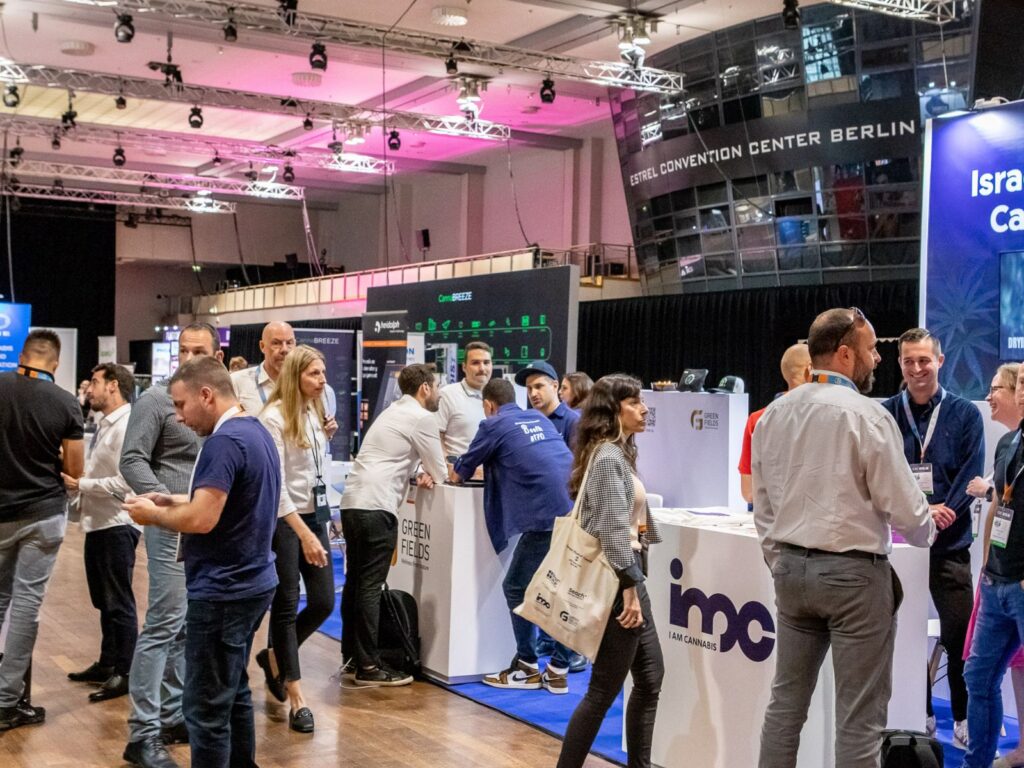
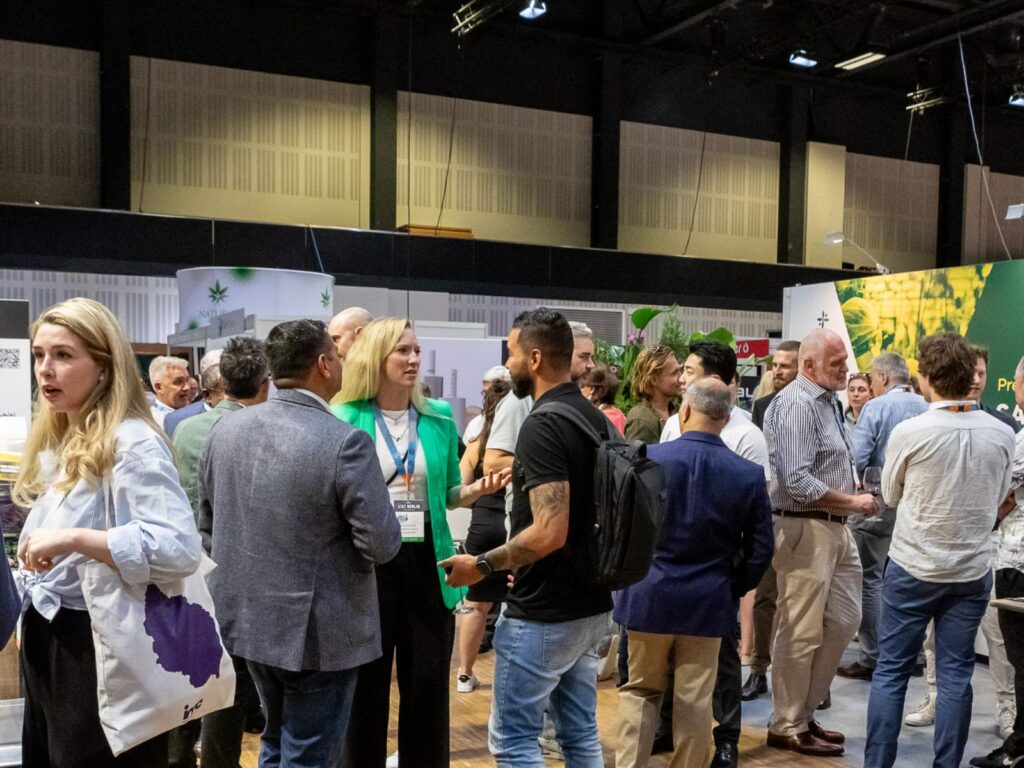
International Cannabis Business Conference Berlin 2023 Expo Floor

Euromonitor International estimates that the emerging global cannabis industry is currently worth 51.4 billion euros, with that figure estimated to top 60 billion in 2025. Germany’s cannabis industry is currently estimated to be worth nearly 1.2 billion euros. With the first pillar of Germany’s legalization model launching and further expansion of the law on the horizon, that number is likely to increase considerably in the coming years.

The legal industry no longer operates in regional silos, and a major challenge currently facing the emerging international cannabis industry is the difficulty of effectively networking with people from all over the world. The International Cannabis Business Conference and Talman Global Investment Forum in Berlin are the perfect networking opportunities, taking place right in the middle of European cannabis history being made.

The International Cannabis Business Conference is the leading cannabis B2B event series on the planet, with previous conferences occurring in several countries on multiple continents. The event series is owned and operated by cannabis advocates who believe in celebrating cannabis culture, in addition to providing world-class cannabis industry education and networking opportunities.

“This year’s International Cannabis Business Conference in Berlin is going to be extra special for our team given the historical context. We are excited to offer world-class cannabis industry and policy education, networking, and entertainment to attendees at such a historic time for Germany and Europe’s emerging cannabis industry.” says Alex Rogers, founder of the International Cannabis Business Conference.

It is becoming increasingly difficult to gain an edge on the competition in the emerging international cannabis industry, and it’s vital for people to get their ideas, products, or services in front of the right people at the right time. With executives, entrepreneurs, investors, policymakers, and industry service providers converging from across the planet, the International Cannabis Business Conference B2B trade show event in Berlin is the perfect place to put cannabis ideas on the global cannabis stage. You can find a full list of speakers at this link here, and the full two-day schedule at this link here.

The Talman Global Investment Forum in Berlin, which will be held at the iconic Hotel Adlon Kempinski Berlin, is investor-focused. Taking place on the eve of the International Cannabis Business Conference’s flagship B2B event in Berlin, Europe’s largest event of its kind, the Talman Global Investment Forum will bring together true leaders from top sectors and companies in the emerging cannabis space.

The goal of the event is to help facilitate meaningful networking, to provide timely education, and to stimulate deal flow potential among attendees. Rising industry sectors will be a major focus of the event, with speakers discussing how those sectors fit into the larger industry ecosystem.

“We know how hard it is for quality investors to link up with vetted cannabis industry companies offering valuable investment opportunities,” Rogers stated. “That is why we are bringing the Talman Global Investment Forum back to Berlin. It will be a prime networking opportunity for cannabis industry investors, entrepreneurs, and industry service providers alike.”

Over 5,000 cannabis leaders from over 80 countries will be represented at the International Cannabis Business Conference in Berlin and that includes representatives from every sector of the industry as well as leading international cannabis policymakers and industry service providers. Attend the International Cannabis Business Conference in Berlin to network with investors, entrepreneurs, industry regulators, and international policymakers and take your industry pursuits to the next level. Secure your tickets now before the B2B and Talman Global Investment Forum sell out.

International Cannabis Business Conference Berlin 2023 Expo Floor

Adult-Use Cannabis Commerce Pilot Project Begins In Bern, Switzerland

Back in November 2023, government officials in Bern, Switzerland announced that long-awaited registration was open for adult cannabis consumers who wanted to participate in a regional adult-use cannabis commerce pilot project.

Municipalities in Switzerland are permitted to apply to launch pilot projects under certain conditions in which adult consumers, cultivators, and retail outlets can legally conduct cannabis commerce activities for the purpose of research.

Such projects are already operating in Basel and Zurich with no reported issues. Now adult participants in Bern will also be allowed to participate in the ongoing public policy experiment. Per Swiss Info:

The study is being conducted by the Institute of Primary Health Care at the University of Bern. The cities of Biel/Bienne and Lucerne are also involved. A total of over 1,000 people from the three cities are expected to take part.

Over 900 cannabis users from the Bern region registered and 700 have been included in the study, according to the city of Bern. Of these, 80% are men.

Participants will reportedly be able to make purchases of ten different products as part of the program in Bern. In total, seven trials are underway in Switzerland to some degree, from accepting registrations to being fully operational.

Regional adult-use cannabis commerce pilot projects are also in existence in the Netherlands. Similar to Switzerland, where an estimated 15,000 adults are participating in the trials out of a national population of nearly 9 million people, the cannabis commerce pilots in the Netherlands are fairly small in size and scope.

Germany is also expected to launch regional adult-use cannabis commerce pilot projects, however, the size and scope of Germany’s projects are expected to be much larger comparatively.