The Evolution Of The German Cannabis Market

Germany is home to the largest economy on the European continent, and with the nation working to modernize its cannabis policies and regulations, it is trending toward becoming the largest legal cannabis market on the planet. The discussion in the video below, which was held at the 2023 International Cannabis Business Conference’s Global Investment Forum in Berlin, discusses the ongoing evolution of the legal German cannabis market. Panelists include:

We look forward to seeing you at Berlin 2024, as well as at our upcoming science and technology event in Slovenia this September!

Germany Releases More Cannabis Legalization Details

Germany’s long-awaited cannabis legalization measure is expected to be formally submitted to the cabinet next month, however, new details about the current version of the adult-use legalization measure were recently unveiled, providing further insight into what cannabis policy observers inside and outside of Germany can expect from the European nation’s cannabis policy modernization efforts.

For roughly the last two months an adult-use legalization measure has worked its way through the administrative review process in Germany, and many high-level details were released to the public via a press conference led by German Health Karl Lauterbach back in April.

The public learned in April that there would be a legal age set at 18 years old, that there would be a possession limit of 25 grams, and there would be a cultivation limit of 3 plants. Additionally, noncommercial cannabis clubs would be permitted as part of the proposal, and eventually, regional adult-use cannabis commerce pilot programs would be launched.

The new proposal seems to have evolved a bit, as recapped in a Twitter thread by VOC Nederland:

Noncommercial cannabis clubs cannot be located within 200 meters of a school, and the number of clubs will be capped at one club for every 6,000 residents according to the recently unveiled proposal.

Cannabis club permits will be valid for up to seven years, and members will be required to remain with the club they join for at least two months before they move their membership to a different club (members can only join one club at a time).

Provisions relating to regional adult-use cannabis commerce pilot programs, which will serve as the ‘second phase’ of German legalization, are expected to be released ‘in the second half of 2023.’

How Does Luxembourg’s Cannabis Law Compare To Germany’s Proposal?

Last week, Luxembourg’s Parliament approved a measure that legalizes cannabis possession and cultivation for adults. Unlike previous countries that have passed legalization measures (Uruguay, Canada, and Malta), Luxembourg’s legalization model does not include a commercial component, at least not initially.

Instead, what lawmakers passed by a 38-22 vote a handful of days ago removed criminal penalties for adults (18 and over) for the possession of up to 3 grams of cannabis and the cultivation of up to 4 plants in a private residence.

By global legalization standards, Luxembourg’s legalization model is clearly limited. Probably the best comparator out there is when the State of Vermont passed a legalization measure in the United States back in 2018.

Vermont, which was the first U.S. state to legalize cannabis via legislative action versus citizen initiative, initially only legalized the possession of up to one ounce of cannabis and the cultivation of up to two plants back in 2018. Commercial sales were still prohibited, although the law would eventually change to permit adult-use sales.

Compared to Uruguay and Canada, which both permit national adult-use sales and considerably greater possession limits, Luxembourg’s new law seems tame. The same is true when comparing Luxembourg’s model to Malta’s model. Malta previously held the time of the most-limited national legalization model with a possession limit of 7 grams and four plants, although Malta’s model at least provides for non-commercial cannabis clubs.

The big metaphorical elephant in the European continent cannabis policy room is, of course, Germany, where a legalization measure has worked its way through the process over the course of the last two years. A measure is expected to officially be submitted to the cabinet for consideration by mid-August.

Compared to what Luxembourg just passed, Germany’s legalization model as currently proposed would be considerably more robust being that it permits cannabis clubs. Below are some of the provisions being considered in Germany pertaining to cannabis clubs:

  • All club properties where cannabis is cultivated and/or stored have to be tightly secured
  • Every club has to have a ‘trained addiction and prevention officer’
  • Must comply with residue limits for pesticides and fertilizers
  • Must track cannabis from seed
  • Annual reporting of crop amounts, including cannabinoid percentage (THC and CBD)
  • Club members only
  • 50 grams per month limit for over 21 years old
  • 30 grams per month limit for 18-20 years old
  • THC percentage cap for 18-20 years old (ten percent THC)
  • Neutral packaging
  • Labeled with specific harvest information

Those provisions are in addition to personal possession (25 grams) and cultivation limits (3 plants), as well as the eventual launch of regional adult-use cannabis commerce pilot programs.

Luxembourg’s new law is definitely better for personal consumers compared to outright prohibition but with such a low possession limit and no legal way to obtain cannabis beyond gifting or personal cultivation, problems are all but guaranteed to arise.

Under the new law, buying and possessing more than three grams of cannabis in Luxembourg is punishable by a prison sentence of up to six months. Even a novice cannabis cultivator can yield harvests that are far more than 3 grams per plant. At a four-plant cultivation limit, a 3-gram possession limit seems completely illogical.

Hopefully, now that some of the stigma has subsided, Luxembourg will work to improve its law, especially considering that legalization is looming large across the border with Germany. Luxembourg needs to do much better than the current law, otherwise, the nation will see just how large of an economic opportunity cost there really is once Germany legalizes and at the possible expense of some of its own citizens’ freedom.

German Cannabis Legalization Bill Expected To Be In Cabinet By August

As Germany continues its high-profile quest to become the largest nation so far to pass a comprehensive, nationwide adult-use legalization bill, it is being reported that there is finally an estimated cabinet time-of-arrival for such a measure. A legalization measure is expected to be officially submitted to Germany’s cabinet by mid-August.

The announcement of an ETA for the measure comes after roughly two years of lawmakers in Germany haggling and negotiating over what the measure should include, with much of the discussion occurring behind closed doors.

The European Union’s mandatory inclusion in domestic German cannabis policy discussions increased the number of hurdles involved, and with it, increased the duration of the legalization process. However, the light at the end of the tunnel appears to be growing brighter.

At this point, it seems like a lifetime ago when the current governing coalition was elected in Germany back in the summer of 2021, mere weeks after a historic cannabis policy discussion was held at the International Cannabis Business Conference in Berlin.

At the 2021 conference in Berlin, German lawmakers discussed their intent to legalize cannabis in detail if/when the election results were favorable. As we now know, the election results did indeed prove to be favorable for legalization.

The next major milestone came in October 2022 when Germany’s Health Minister Karl Lauterbach presented his initial plan for German legalization, a plan that would later evolve after a series of meetings and discussions between the European Union and Minister Lauterbach.

The evolved plan would eventually be provided by Minister Lauterbach to German lawmakers earlier this year, and it has worked its way around closed political circles ever since. Although, the following provisions have surfaced:

  • All club properties where cannabis is cultivated and/or stored have to be tightly secured
  • Every club has to have a ‘trained addiction and prevention officer’
  • Must comply with residue limits for pesticides and fertilizers
  • Must track cannabis from seed
  • Annual reporting of crop amounts, including cannabinoid percentage (THC and CBD)
  • Club members only
  • 50 grams per month limit for over 21 years old
  • 30 grams per month limit for 18-20 years old
  • THC percentage cap for 18-20 years old (ten percent THC)
  • Neutral packaging
  • Labeled with specific harvest information

Much of what was leaked and reported on in Germany seems to surround noncommercial cannabis clubs, which will be strictly regulated and purely “cultivation associations.” According to domestic reporting, no cannabis can be consumed “within the clubs and within a radius of 250 meters.”

In addition to club provisions, items pertaining to individuals are also reportedly included in the current draft. Consumption is prohibited “within a radius of 250 meters from schools, daycare centers, playgrounds, youth facilities or sports facilities.” Also, consumption “should also not be permitted in pedestrian zones between 7 a.m. and 8 p.m.”

Consumers will be limited to one club membership at a time and permitted to cultivate up to 3 plants. Pharmacies are not allowed to cultivate or sell adult-use cannabis under the current plan, and medical cannabis “is to be removed from the scope of the Narcotics Act.”

In fact, medical cannabis reportedly has its own separate chapter in the latest draft law, which will hopefully provide a boost in safe access for patients, as well as help streamline cannabis research project approvals.

With all of that being said, until a final measure is officially adopted, nothing is ever a sure thing in Germany, and it is vital that advocates inside and outside of elected circles keep up the pressure to help ensure that laws and regulations are as sensible as possible and that whatever is adopted is seen as being a step in the right direction rather than a final destination.

International Cannabis Leaders Descend On Berlin

Global cannabis leaders are arriving in Berlin this week to attend the International Cannabis Business Conference. The events series’ flagship business-to-business (B2B) event is taking place on June 29th and 30th at the iconic Estrel Berlin Hotel.

In addition to the two-day B2B event, which is the largest of its type on the entire European continent, the International Cannabis Business Conference will also host a Global Investment Forum on June 27th at the Hotel Adlon Kempinski Berlin.

The International Cannabis Business Conference is the leading cannabis industry event series on the planet, with previous conferences occurring in several countries on multiple continents. The event series is owned and operated by cannabis advocates that believe in celebrating cannabis culture, in addition to providing world-class cannabis industry education and networking opportunities.

“We are extremely excited about this year’s conference in Berlin given how close Germany is to modernizing its cannabis policies. It is going to be extra special for our team to offer world-class cannabis industry and policy education, networking, and entertainment to attendees at such a historic time for Europe’s emerging cannabis industry,” says Alex Rogers, founder of the International Cannabis Business Conference.

It is becoming increasingly difficult to gain an edge on the competition in the emerging international cannabis industry, and it’s vital for people to get their idea, product, or service in front of the right people at the right time. With executives, entrepreneurs, investors, policymakers, and industry service providers converging from across the planet in Berlin this week, the B2B trade show event in Berlin is the perfect place for people to put their cannabis ideas on the global cannabis stage. Click here for a full list of B2B conference speakers.

Not all networking opportunities are created equal, and that is particularly true in the cannabis space. International Cannabis Business Conference events are attended by cannabis leaders from dozens of different countries, with the Berlin B2B event serving as the top international cannabis event of its type for 2023. Click here for the event’s full schedule and curriculum.

Cannabis industry opportunities that are popping up in Germany and on the European continent have tremendous profit potential, and the Global Investment Forum is the perfect place for entrepreneurs to try to secure capital to take their pursuits to the next level. It is also an unparalleled opportunity for investors to learn more about pre-vetted investment opportunities and for industry service providers to find reliable and high-end clients.

“We know how hard it is for quality investors to link up with vetted cannabis industry companies offering valuable investment opportunities,” Rogers stated. “That is why we are bringing the Global Investment Forum back to Berlin. It will be a prime networking opportunity for cannabis industry investors, entrepreneurs, and industry service providers alike.”

Sixty-one percent of polled Germans support the controlled sale of adult-use cannabis in licensed stores. It is estimated that legalizing cannabis sales for adult use in Germany would quickly create 27,000 new jobs. Additionally, Germany’s current legalization plan includes removing cannabis from the country’s narcotics law, which will have a significant impact on all sectors of the nation’s emerging cannabis industry.

Thousands of cannabis leaders from dozens of countries will be represented at the International Cannabis Business Conference in Berlin and that includes representatives from every sector of the industry as well as leading international cannabis policymakers and industry service providers. Attend the International Cannabis Business Conference in Berlin to take your industry pursuits to the next level.

A limited number of tickets are currently available. Secure your tickets now before the events sell out!

A Missed Opportunity To Modernize Colombia’s Cannabis Policies

In Colombia, all constitutional amendments must undergo a two-year process, and since adult-use legalization requires a constitutional amendment, all such measures must undergo the multi-year process. An adult-use legalization measure sponsored by Rep. Juan Carlos Losada was successfully working its way through that process, however, the measure came up short this month.

Both chambers of Colombia’s Congress previously approved Rep. Losada’s measure last year, but due to the multi-year process, the bill still required a series of successful votes this year.

The Chamber of Deputies approved the legalization measure again last month, but despite a Senate committee approving the measure this year, the bill failed to receive the necessary 54 votes when receiving full floor consideration. Although, it is worth noting that the bill did receive a majority of votes (47-43).

Rep. Juan Carlos Losada made it clear in a tweet after the bill stalled that he will be back to introduce the measure again next month:

The tweet’s text auto-translates to, “We are not going to give up! We remain firm because we are sure that reaching 8th. debate is historic. With @PizarroMariaJo we will once again file the project to regulate the #CannabisDeUsoAdulto market on July 20.”

It’s unfortunate that the measure has to go back to the starting line and undergo, once again, a two-year process. Hopefully, this next time is a success, as there is clearly a significant level of support for Colombia to modernize its cannabis policies.

New Canadian Study Demonstrates Why Cannabis Regulation Works

One of the main goals of legalizing cannabis commerce in any given jurisdiction is to battle the unregulated market in a meaningful way. When that topic comes up, it is always worth mentioning that the unregulated cannabis market will never be 100% eliminated, and that the goal is to mitigate it as much as possible by permitting regulated sales.

Canada remains the only country on earth where anyone of legal age can purchase cannabis products with no THC caps, regardless of their residency status. Uruguay also permits nationwide sales, however, sales are limited to residents only.

Researchers in Canada recently conducted a study to try to measure the effectiveness of permitting retail outlets, particularly as it pertained to surrounding areas. The results of the analysis add to a growing body of evidence demonstrating legalization’s success and the need for retail outlets in a legalization model. Below is more information about it via a news release from NORML:

Ottawa, Canada: Canadians are more likely to obtain cannabis products from the legal market if they live in close proximity to licensed retailers, according to data published in the Journal of Studies on Alcohol and Drugs.

Investigators with the Canadian Centre of Substance Use and Addictions in Ontario assessed cannabis use trends in a cohort of over 15,000 consumers. Respondents reported that they were least likely to obtain their cannabis from unregulated sources if they lived near a legal retailer. (Canada legalized cannabis sales to those ages 18 and older in 2018.)

The study’s authors concluded: “Legal cannabis stores are increasingly accessible to people living in Canada. … Household proximity to a legal cannabis store was associated with sourcing cannabis from legal retail stores. … Findings suggest that proximity to legal cannabis stores may aid uptake of the legal market.”

Since 2019, the percentage of Canadian consumers transitioning to the legal cannabis market has grown year over year. According to 2022 data, a majority of consumers (58 percent) say they obtain cannabis flowers from licensed retailers.

Full text of the study, “Proximity to legal cannabis stores in Canada and use of cannabis sources in the first three years of legalization, 2019-2021,” appears in theJournal of Studies on Alcohol and Drugs.


Jim Belushi Talks Cannabis Ahead Of Fireside Chat In Berlin

This year’s International Cannabis Business Conference event in Berlin will feature a one-on-one fireside chat with acclaimed entertainer Jim Belushi. Jim Belushi is a man of many talents – actor, singer, comedian, dancer, and now a legal cannabis farmer. We asked Belushi a series of cannabis questions ahead of his appearance in Berlin and below is what he had to say:

International Cannabis Business Conference: How does farming cannabis compare to your other pursuits?

Belushi: They both are on a mission to make people feel good, whether you’re making them laugh in a comedy or performing the Blues Brothers and filling their souls with music, or giving them cannabis to heal their anxieties, hopelessness, pain…. or just making them feel good and euphoric. The entertainment industry and the cannabis industry don’t hurt anybody. You can’t overdose if you laugh too much and you can’t overdose if you smoke too much pot. You may pass out if you eat too much of an edible, and I may have peed my pants from laughing too hard (especially at John Candy movies). But all in all, I’ve been at my business for 40 years and cannabis for 7 and they both have the same purpose — making people feel a little bit better. So I feel like I’m on track. They’re the same medicine.

International Cannabis Business Conference: Belushi’s Farm is located in Southern Oregon. What made you decide to choose that region?

Belushi: Southern Oregon chose me. My friend has a beautiful ranch down the Rogue River that I used to visit with my family twice a year. I went into the river naked one time and came out baptized, with a new spiritual release. I said to my friend, “Do you know of any other properties around here?” And that was it. I didn’t know Southern Oregon was the premiere spot to grow cannabis at the time… I was brought to Southern Oregon.

International Cannabis Business Conference: What types of products does your company make?

Belushi: Belushi’s Farm is home to a range of offerings including The Blues Brothers, Captain Jack’s Gulzar Afghanica (a rare strain from the Hindu Kush region that became known in the ’70s as “The Smell of SNL”), Good Ugly Weed, Belushi’s Farm premium brand. We’ve got a variety of products including flower, ice cream, hash and vape pens.

International Cannabis Business Conference: What markets are they available in? Do you have plans to expand to other continents?

Belushi: We’re currently available in Arizona, California, Colorado, Illinois, Maine, Massachusetts, Michigan, Mississippi, Nevada, New Mexico, New York, Oregon, Pennsylvania, and South Dakota. As for other continents, watch Season 3 of GROWING BELUSHI to see where we may take the adventure next!

International Cannabis Business Conference: What is your personal cannabis consumption regimen?

Belushi: I’m a microdoser. It’s medicine to me. I take 2.5-5mg of the Blues Brothers Bhang Chocolate to help me sleep. I’ll smoke a little Cherry Pie at the end of the day to help me with the transition into the evening. It’s medicine to me…“This medicine is so good, people take it FOR the side effects.”

International Cannabis Business Conference: What was your experience like making your hit show ‘Growing Belushi’ on the Discovery Channel? How did that cannabis-focused project compare to other projects you have worked on?

Belushi: This is a big question and deserves its own essay. But in short, all the other projects I’ve been involved with in show business have been scripted. Growing Belushi was all improvised, every scene, every moment. That takes a lot of concentration, a lot of wit, a lot of trust in your own ability, and a lot of overshooting to pull together an hour show each week. But that being said, it’s rewarding and joyous and fun when you’re able to create everything in the show. I love it.

International Cannabis Business Conference: What have you learned from visiting dispensaries in Oregon and beyond? 

Belushi: I visit a lot of dispensaries. In Oregon, I actually deliver to dispensaries and I do personal appearances and meet & greets. I have learned 85% of what I know about cannabis from these visits and experiences, which has changed this from a business to a journey to the pathway to healing. There are people, so many people, in need of medicine. From the veterans with PTSD, quadriplegics with spasms, people with shattered bones from car accidents, people with MS, dementia, sleeplessness, cancer on chemotherapy…the list goes on and on. In the dispensaries, I realized this was no longer just a business, it was necessary for the health of our community, for the people who suffer, the people who struggle, the people who are screaming inside the cavity of their bodies. I personally don’t use Ambien or Xanax for anxiety or even Advil. And I don’t really drink. Cannabis has replaced all these needs. I see a community growing larger in the pursuit of using cannabis as a substitute for medications and alcohol and opiates. I have been moved to tears many times.

International Cannabis Business Conference: What advice do you have for aspiring cannabis entrepreneurs?

Belushi: My advice to aspiring cannabis entrepreneurs is to stay out. The margins aren’t there yet. Between the fluctuation of the pricing of the pounds, the taxing, the banking, and the amount of initial capital, I would say don’t do it. Unless your passion overrides your pocketbook.

International Cannabis Business Conference: What is the biggest challenge facing the emerging cannabis industry today, in your opinion?

Belushi: The tens of thousands of nonviolent cannabis prisoners that are still in jail for the plant. That’s why I support Last Prisoner Project.

What do you have coming up that people should have on their radars?

Belushi: I have a lot of exciting stuff on the horizon. Follow me, my cannabis show ‘Growing Belushi,’ and my farm on social media and check out my website to keep up on all things Belushi. And, of course, join me in Berlin at the end of this month at the International Cannabis Business Conference where I will be doing a fireside chat, followed by a performance at the conference after-party. See you there!

International Cannabis Business Conference: What is the best way for folks to keep up on all of your cannabis industry pursuits?

Belushi: Through Instagram, Twitter, TikTok, and the website.

Hemp Should Be Used More As A Building Material

The hemp plant is one of the most versatile plants on earth. For many years it was used to make textiles, however, in recent years growing demand for a particular cannabinoid from the hemp plant has shifted how a lot of people in society view hemp, and that, in turn, has shifted the focus of entrepreneurs and investors in regards to the hemp sector.

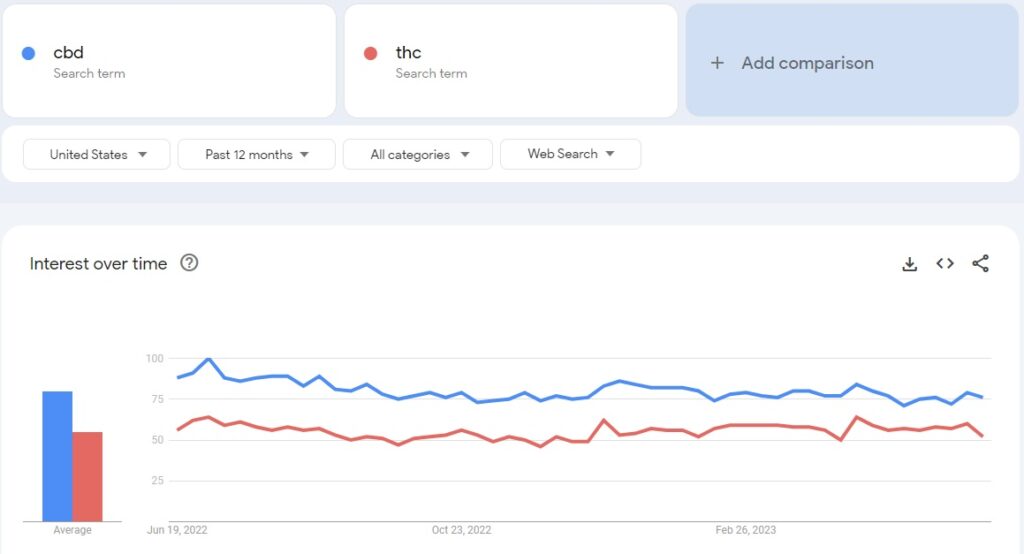
Cannabidiol (CBD), which the hemp plant is very rich in, has increased in popularity to such an extent in recent years that it is now searched for online more often than its cannabinoid counterpart tetrahydrocannabinol (THC) according to Google Trends. Below is a graph demonstrating that fact among search trends in the United States:

united states CBD online searches


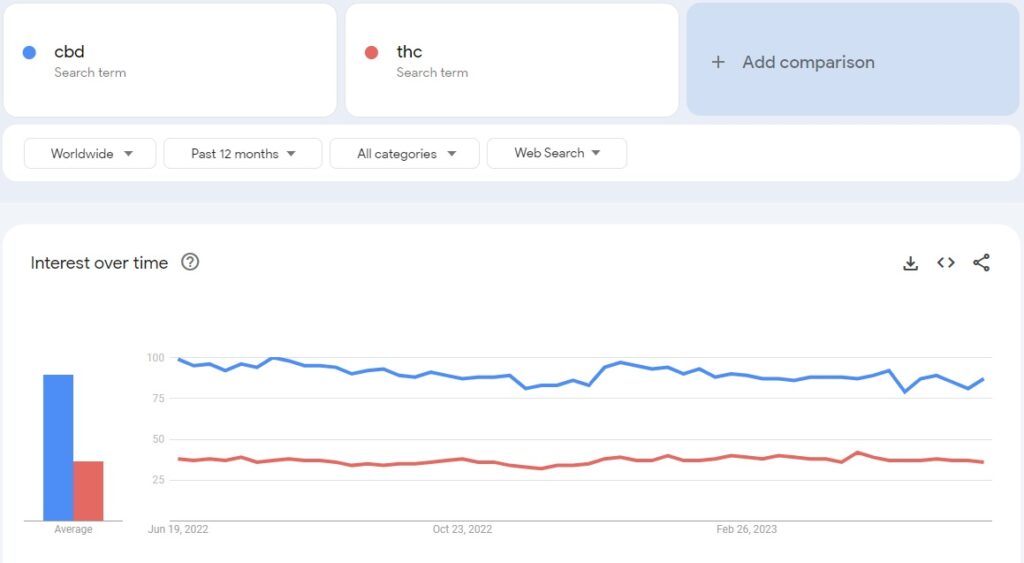
The gap between searches for CBD and searches for THC is even greater at the global level according to Google Trends, per the graph below:

Worldwide CBD online searches

Often seemingly lost in the global CBD conversation is that one of the best things that hemp can be used for involves using it as a building material. The material is called ‘hempcrete,’ and it’s a bio-composite made of the inner woody core of the hemp plant mixed with a lime-based binder.

The inner woody core or ‘shiv’ is high in silica content and that allows it to naturally bind really well with lime. It is a property that is seemingly unique to hemp among all of the known natural fibers.

Hempcrete is primarily used as an insulating material, weighs about a seventh or an eighth of the weight of concrete, floats in water when fully cured, and is nearly fire-proof (at least compared to other popular building materials). A recent article by BBC provided a great example of hempcrete in use in the UK, and had the following to say about the material in general:

According to the European Commission, one hectare (2.5 acres) of hemp sequesters between nine and 15 tonnes of CO2, and only takes five months to grow – meaning it is better than typical commercial forestry at sequestering carbon. What’s more, hemp production is reported to help regenerate soil and remove heavy metals from the ground.

But a whole host of challenges must be overcome before hemp can make its mark on the construction industry. These include changes to government regulation, technical certification, and the funding and infrastructure needed to scale up hemp’s industrial production, streamline supply chains, and make it more affordable to use.

Due to the limitations mentioned by BBC in its article, and the popularity of CBD, hempcrete has never been fully embraced by society. However, that is likely to change in the coming years as researchers work to find out the best ways to extract CBD from hemp plants while simultaneously using other parts of the plant to make hempcrete and other building materials.

Opponents of hempcrete will try as hard as they can to focus on the fact that it is not used as a structural element and try to make it sound as if the potential of hemp as a building is limited, when in fact there’s likely so much more to learn about hemp’s potential as a building material.

As laws continue to be reformed, and innovators look to the hemp plant at an increasing rate as a source for sustainable building solutions, it’s nearly guaranteed that discoveries and breakthroughs are on the horizon, and if so, it will benefit society in numerous ways.