
Cannabis Extracts Reduce Disease Burden In Israeli Pain Patients

Researchers estimate that roughly 20% of the world’s population suffers from chronic pain. It is possible that due to various factors, many cases go undiagnosed in some regions of the world, and that the actual number of chronic pain sufferers could be much greater.

A patient experiencing temporary pain is not the same as chronic pain. Chronic pain occurs when patients still suffer from it well after the expected recovery time for an injury or illness, sometimes lasting weeks or even years.

Investigators in Israel recently conducted a study in which they examined reported disease burden rates and cannabis extract use among chronic pain patients. Below is more information about the study and its results via a news release from NORML:

Haifa, Israel: Patients’ use of cannabis oil extracts is associated with long-term improvements in their pain intensity and related symptoms, according to data published in the journal Pain Reports.

Israeli researchers assessed the safety and efficacy of cannabis extracts in a cohort of 218 middle-aged chronic pain patients (mean age: 54) over six months. Patients consumed sublingual extracts containing standardized THC and CBD concentrations.

Cannabis treatment was associated with sustained reductions in pain intensity, opioid use, anxiety, depression, and sleep deprivation. Though some subjects did report “mild to moderate” side effects from cannabis, these events did not interrupt their “continuous use” of marijuana extracts throughout the study period.

“Cannabis seems to have an impact on the ‘disease burden’ of chronic pain,” the study’s authors concluded. “It also has a positive effect on functioning and health-related quality of life.”

The researchers’ findings are consistent with those of other larger observational studies involving thousands of pain patients enrolled in medical cannabis access programs.

Full text of the study, “Cannabis oil extracts for chronic pain: What else can be learned from another structured prospective cohort,” appears in Pain ReportsAdditional information on cannabis and chronic pain is available from NORML’s publication, Clinical Applications for Cannabis & Cannabinoids.

THC Use Associated With Increased Survival Time In German Cancer Patients

Germany first legalized cannabis for medical use in 2017. Since that time, Germany’s medical cannabis program has become the largest in Europe, with the nation’s program serving hundreds of thousands of suffering patients.

Thanks to the recently implemented CanG law in Germany, medical cannabis in Germany is set to undergo a significant transformation in the coming years, with cannabis no longer being on the nation’s Narcotics List, caps on domestic medical cannabis production being removed (Germany imported over 34 tons of medical cannabis in 2023), and the German medical cannabis supply chain being streamlined.

Researchers in Germany recently examined survival time rates among palliative cancer patients who consumed medical cannabis products containing THC. Below is more information about it via a news release from NORML:

Berlin, Germany: The daily use of 5mg of oral THC is associated with increased survival times in palliative cancer patients, according to data published in the journal Medical Cannabis and Cannabinoids.

German researchers evaluated the impact of THC dosing in a cohort of 9,419 advanced cancer patients enrolled in Specialized Palliative Outpatient Care (SAPC). SAPC offers team-based home care for patients with advanced and progressive diseases whose life expectancies are limited to days, weeks, or months.

Researchers reported that patients’ daily use of 4.7mg of THC was associated with significantly increased survival time, whereas lower doses were not.

The study’s authors concluded: “The data … show a significant impact of THC on survival in ambulatory palliative care patients [who] … use more than 4.7 mg/day. Median survival time was prolonged by 15 days – from survival time of 25 days without THC therapy to 40 days with a daily THC dose higher than 4.7 mg per day. This prolongation by more than two weeks can be considered substantial. In addition to mere survival, patients [treated] with THC become more mentally and physically active. … The increased activity and improved quality of life might enable the patients to renew social contact with relatives and friends and to settle essential affairs before dying.”

The study’s findings are consistent with data published in 2021 that similarly reported that THC was associated with increased survival times in German hospice patients, particularly among women ages 75 and older.

Full text of the study, “The use of tetrahydrocannabinol is associated with an increase in survival time in palliative cancer patients: A retrospective multicenter cohort study,” appears in Medical Cannabis and Cannabinoids.

Osteoarthritis Patients Report Sustained Benefits From Cannabis In UK Study

Osteoarthritis is the most common form of arthritis found in adults around the world. Osteoarthritis is a degenerative joint disease, in which the joint tissues degenerate as the patient ages. The health condition is characterized by chronic pain and loss of mobility.

Global researchers estimate that 595 million people worldwide suffered from osteoarthritis in 2020, which is roughly 7.6% of the world’s population. The 2020 rate is an increase of 132.2% in total cases compared to 1990.

Investigators recently conducted a study in the United Kingdom in which they examined the cannabis plant’s ability to treat osteoarthritis. Below is more information about the study and its results via a news release from NORML:

London, United Kingdom: Patients diagnosed with osteoarthritis report pain-specific improvements following their use of medical cannabis preparations, according to observational data published in the Journal of Pain & Palliative Care Pharmacotherapy.

British researchers assessed the use of cannabis-based medicinal products (CBMPs) consisting of either flower or oil extracts in a cohort of osteoarthritis patients enrolled in the UK Medical Cannabis Registry. (Since 2018, British specialists have been permitted to prescribe cannabis-based medicinal products to patients unresponsive to conventional medications.) Researchers assessed changes in patient-reported outcomes measures over a one-year period.

Patients reported symptom improvements at one-month, three-months, six-months, and at one-year.

“Commencement of CBMP treatment was associated with reductions in pain-specific PROMs [patient-reported outcome measures] at all time points in patients with osteoarthritis,” researchers reported. Patients also reported improved sleep. Contrary to the results of several other studies, patients prescribed opioids did not decrease their opioid intake following their initiation of medical cannabis.

Investigators documented few serious side-effects associated with cannabis. “AEs [adverse events] were mainly mild or moderate in severity,” they wrote. “Fatigue was the most common AE in this study.”

The study’s authors concluded: “These results suggest an improvement in pain-related outcomes for patients with osteoarthritis following the initiation of CBMP treatment. Furthermore, there was an improvement in general HRQoL [health-related quality of life] metrics across the follow-up period. CBMPs also appeared to be well-tolerated at 12-month follow-up. … Hence, this study supports the development of RCTs [randomized clinical trials] for CBMP use in osteoarthritis.”

Other studies assessing the use of cannabis products in patients enrolled in the UK Cannabis Registry have reported them to be effective for those suffering from chronic painanxietypost-traumatic stressdepressionmigraineinflammatory bowel disease, and other afflictions.

Full text of the study, “Assessment of clinical outcomes in patients with osteoarthritis: Analysis from the UK Medical Cannabis Registry,” appears in theJournal of Pain & Palliative Care PharmacotherapyAdditional information on cannabis and arthritis is available from NORML’s publication, Clinical Applications for Cannabis & Cannabinoids.

CBD Effectively Treats Acute Dental Pain In Randomized Clinical Trial

The cannabis plant contains dozens of cannabinoids, each with its own characteristics and potential to provide wellness benefits. For many decades tetrahydrocannabinol (THC) was the focus of much of the cannabis research conducted by scientists.

However, in recent years other cannabinoids have risen in popularity, and that has shifted some of the focus of cannabis researchers. Cannabidiol (CBD) is a very popular cannabinoid these days among consumers, patients, product developers, and researchers.

According to a recent randomized clinical trial conducted in Scotland, CBD can effectively treat acute dental pain. Below is more information about the study via a news release from NORML:

Kilmarnock, Scotland: The administration of a purified formulation of plant-derived CBD (aka Epidiolex) provides significant short-term relief to patients suffering from acute toothaches, according to placebo-controlled clinical trial data published in the journal Evidence-Based Dentistry.

A pair of Scottish scientists assessed the use of Epidiolex versus placebo in 61 patients with moderate-to-severe dental pain. Forty patients received CBD in doses of either 10 or 20 mgs. Twenty-one subjects received a placebo. Patients’ pain was monitored for three hours following dosing.

Patients who consumed CBD, on average, experienced a greater than 50 percent reduction in their pain, investigators reported. By contrast, those receiving placebo experienced a 37.5 percent decrease in pain.

“Based on this randomized clinical trial, pure CBD drug Epidiolex demonstrates effective analgesia against acute toothache,” the study’s authors concluded.

The US Food & Drug Administration approved the prescription use of Epidiolex as an anti-epileptic drug in 2018. The DEA removed Epidiolex from the Controlled Substances Act in 2020.

Full text of the study, “Cannabidiol – an effective analgesic for toothache,” appears in Evidence-Based Dentistry.

Recapping The Historic 2024 International Cannabis Business Conference In Berlin

Thousands of leading international cannabis investors, entrepreneurs, inventors, policymakers, regulators, and industry service providers descended upon Berlin, Germany for the annual International Cannabis Business Conference on April 16th-17th, 2024. This year’s two-day International Cannabis Business Conference in Berlin took place at the iconic Estrel Berlin Hotel and was the first major cannabis event to occur after Germany’s new adult-use legalization law took effect.

Germany’s recent adoption of its CanG law loomed large over the event, and rightfully so. Germany became the largest country to ever adopt a national adult-use cannabis legalization measure on April 1st, 2024, and the significance of the policy change cannot be overstated. Germany has ushered in a new era for cannabis policy on the European continent, and the International Cannabis Business Conference continues to be at the heart of it all.

Georg Wurth, leader of the German Hemp Association (DHV), kicked off the two-day conference by providing background information about Germany’s history with cannabis policy, how the cannabis movement arrived at where it is currently, and what people can expect in Germany going forward. Wurth also explained what components are involved in Germany’s legalization model, and what advocates can do to help ensure that Germany has the best cannabis policies possible.

Yoko Miyashita, CEO of Leafly, also provided a keynote address at the event. Miyashita shared observations from Leafly’s 13-year history of tracking and operating in jurisdictions that have modernized their cannabis policies to permit adult use. Yoko Miyashita also discussed what lessons other nations can learn from North America’s legalization journey.

Internationally renowned cannabis expert Peter Homberg, a partner at leading business law firm Dentons, provided an update regarding current cannabis policy modernization efforts underway in European Union member nations. Homberg examined major economic developments in Europe’s emerging legal cannabis industry and provided prognostic outlooks on significant legal trends arising from the continent’s cannabis movement.

Rounding out the rest of the Day 1 curriculum for the event was a series of panel discussions on important topics within the emerging global cannabis industry. Videos of each panel discussion from the Berlin event, as well as videos for past International Cannabis Business Conference events, can be viewed on the International Cannabis Business Conference’s YouTube channel.

In addition to the event’s curriculum, the International Cannabis Business Conference in Berlin featured an exhibition floor where cannabis companies displayed their products and services. The event’s expo floor facilitated a significant amount of industry networking. Against the historical backdrop of legalization in Germany, the excitement level on the expo floor was considerable throughout the two-day event.

No International Cannabis Business Conference event in Berlin would be complete without an after-party, and this year’s conference in Berlin was no exception. The after-party for the International Cannabis Business Conference in Berlin was headlined by Reggae pioneer Rocker-T. It made for the perfect evening for conference participants after a day full of learning and networking.

Day 2 of the conference kicked off with a keynote address by Barinder S. Bhullar, Senior Vice President of Brains Bioceutical Corp. Bhullar discussed advancing the cannabinoid scientific landscape and the challenges and rewards involved. Bhullar provided strategies and necessary considerations to help minimize risk for sound investment decision-making.

A series of expert panel discussions followed throughout Day 2, with topics ranging from regulations and pharmaceuticals to technological advancements, cultivation, and emerging markets. Videos of each panel discussion from day 2 of the Berlin event can be viewed on the International Cannabis Business Conference’s YouTube channel.

The next International Cannabis Business Conference event will be held in Bled, Slovenia on September 13th, 2024 and anyone interested in emerging cannabis science and technology is encouraged to attend. The next International Cannabis Business Conference event in Berlin will be held on April 29th-30th, 2025. Tickets go on sale starting May 22nd, 2024.

German Patients Report Improvements Following Use Of High-THC Flower

Doctors in Germany started legally prescribing cannabis to suffering patients in 2017, and since that time the nation’s medical cannabis program has grown in size by a considerable amount. Germany is now home to the largest legal medical cannabis program in Europe.

Unlike many other nations that only permit access to limited medical cannabis products, such as cannabis-derived pharmaceuticals, Germany allows patients to consume cannabis flower for therapeutic purposes.

An international team of researchers recently conducted a survey of German medical cannabis patients, focusing on the reported effects and benefits of high-THC cannabis flower consumption. Below is information about the survey’s findings via a news release from NORML:

Hannover, Germany: Patients prescribed high-THC prescription-grade cannabis chemovars report them to be safe and effective, according to data published in the journal Pharmacopsychiatry.

An international team of investigators surveyed more than 1,000 German patients authorized to use medical cannabis. (Plant cannabis and cannabinoid treatments, such as dronabinol, were legalized by prescription use in Germany in 2017.) Survey respondents obtained lab-tested cannabis flower from regional pharmacies. Potency of the most frequently used chemovar was 22 percent.

The overwhelming majority of patients surveyed reported medical cannabis to be effective at treating their symptoms. Patients reported no significant differences between chemovars, most of which were dominant in THC and low in CBD content. The most commonly reported side effects were dry mouth, increased appetite, and somnolence.

“Patients self-reported very good efficacy and tolerability [to] medical cannabis,” the study’s authors concluded.

Pharmaceutical-grade cannabis flower in EuropeIsrael, and elsewhere typically contain THC levels of 20 percent or greater.

The study’s findings push back against claims that cannabis strains higher in THC pose unique risks to health or that there is an absence of research supporting the efficacy of medical cannabis chemovars above 10 percent THC.

Full text of the study, “Medical use of different cannabis strains: results from a large prospective study in Germany,” appears in Pharmacopsychiatry.

Ancient Roman Artifact Suspected Of Containing Cannabis Seeds

Humans have a long history with the cannabis plant going back thousands of years. For example, a study from 2023 found that “ancestral archaeological relics date the use of this plant fiber as a fabric to approximately 8000 years before the common era (BCE) as a material in ancient Mesopotamia (present-day Iran and Iraq), and to 4000 years BCE and 3000 years BCE as a material for ropes in China and Kazakhstan, respectively.”

A more recent example can be found at an excavation site in northeastern England. An excavation was being performed near an energy-generating facility between Saltholme Nature Reserve and the village of Cowpen Bewley in the district of Stockton-on-Tees, and archeologists discovered an artifact dating back to the Roman empire.

Britain’s Roman period lasted from A.D. 43 to A.D. 410. During that time, modern-day Britain was then the Roman province of Britannia and Britannia was part of the larger Roman empire that stretched across Europe and every corner of the Mediterranean region.

A Roman pot suspected of containing cannabis seeds was previously found in northeastern England and recently identified as possibly containing cannabis seeds. Per Yahoo News UK:

Two human burials had already been found – with teams prepared for even more or the possibility of a cemetery. But then came the discovery of a small Roman pot containing mystery burnt seeds. The beaker was immediatel. y sent to a laboratory for testing – and teams are now waiting to find out if the seeds could be positively identified as hemp.

It is thought that if the seeds found in the small jar at Saltholme are confirmed to be cannabis, then they might have been heated and the smoke inhaled, possibly as part of a Roman funeral ritual.

Cannabis use was common among humans 2,000 years ago, with the cultures surrounding the ancient Greeks and Romans using psychoactive cannabis in their medicine, religions, and recreational activities. Cannabis in many forms was traded throughout Asia, the Middle East, and Africa.

The recent discovery in England serves as another reminder of the long history between humans and the cannabis plant. The cannabis plant is arguably the most versatile plant on earth, and it should have never been prohibited in the first place. Thankfully, many nations are modernizing their cannabis policies to permit humans to make legal use of the cannabis plant.

International Cannabis Leaders Meet In Berlin For First Time After Historic Vote

Roughly two weeks ago the first provisions of Germany’s new adult-use cannabis legalization law took effect, with policy components related to personal cannabis cultivation, possession, and consumption by adults being implemented. Adults in Germany can now cultivate up to three plants in their private residences and possess up to 25 grams when away from their homes.

On the heels of the historic policy change, international cannabis leaders have converged this week in Berlin for the annual International Cannabis Business Conference B2B event, which is Europe’s largest and longest-running cannabis industry conference. The two-day conference is scheduled to take place in Berlin at the iconic Estrel Berlin Hotel from April 16th-17th.

The International Cannabis Business Conference, which also co-organized the Global Investment Forum with the Talman Group that took place today on the eve of the B2B event, is hosting the first major event anywhere in Europe after Germany’s legalization law took effect. Representatives from over 80 countries are expected to be in attendance.

Once again, European cannabis policy modernization efforts will be a large focus of the two-day conference. The topic has always been prominent in past International Cannabis Business Conference events in Berlin going back to 2017 when the first flagship conference was held in Berlin.

However, the cannabis policy landscape has obviously shifted across Europe now that Germany has legalized recreational cannabis for adults. In addition to cultivation, possession, and consumption, noncommercial cannabis clubs are expected to play a prominent role in Germany’s legalization model. Noncommercial cannabis clubs are expected to launch in July of this year.

Germany’s legalization law also removed cannabis from the nation’s Narcotics List, the significance of which cannot be overstated. Cannabis research is now easier to conduct in Germany as a result, and the supply chain for medical cannabis products will be streamlined as well. Germany’s legalization model is now the gold standard for Europe.

“This year’s International Cannabis Business Conference in Berlin is going to be extra special for our team given the historical context. We are excited to offer world-class cannabis industry and policy education, networking, and entertainment to attendees at such a historic time for Germany and Europe’s emerging cannabis industry.” says Alex Rogers, founder of the International Cannabis Business Conference.

Given Germany’s prominence in European industry and politics, many other nations in Europe are reportedly considering cannabis policy modernization efforts of their own. Germany is now leading a growing coalition of emerging legal European cannabis markets, and nations would be wise to join the coalition and follow Germany’s lead.

Cannabis science and technology will also be prominently featured at the International Cannabis Business Conference in Berlin this week. Leading experts from many scientific fields will be presenting at the two-day event.

You can find a full list of speakers for the International Cannabis Business Conference in Berlin at this link here, and the full two-day schedule at this link here. For those who are unable to attend in person, you can follow along on social media via the conference’s Instagram, YouTube, and LinkedIn social media channels.

Europe’s Biggest Cannabis B2B Event Starts Next Week

On April 1st, 2024, Germany became the largest nation to ever implement a national adult-use cannabis legalization measure. The historic policy change has ushered in a new era for Europe’s emerging cannabis industry, with Germany leading the way. Several other European nations are reportedly making plans to modernize their own cannabis policies now that Germany’s policy change has become effective.

The timing could not be more perfect for the return of the International Cannabis Business Conference in Berlin on April 16-17th at the iconic Estrel Berlin Hotel.  International Cannabis Business Conference Berlin is the conference series’ flagship B2B event and tradeshow, serving as Europe’s largest and longest-running cannabis B2B conference. International Cannabis Business Conference Berlin is also the first major cannabis event to occur after Germany’s legalization law took effect. In addition to the B2B event, the International Cannabis Business Conference will also co-host the Talman Global Investment Forum in Berlin on April 15th.

The emerging legal cannabis industry is becoming a global phenomenon, with more nations than ever before having modernized their cannabis policies to permit legal cannabis research and commerce. That spread of policy reform has, in turn, created tremendous potential at the international level for cannabis entrepreneurs, investors, and industry service providers.
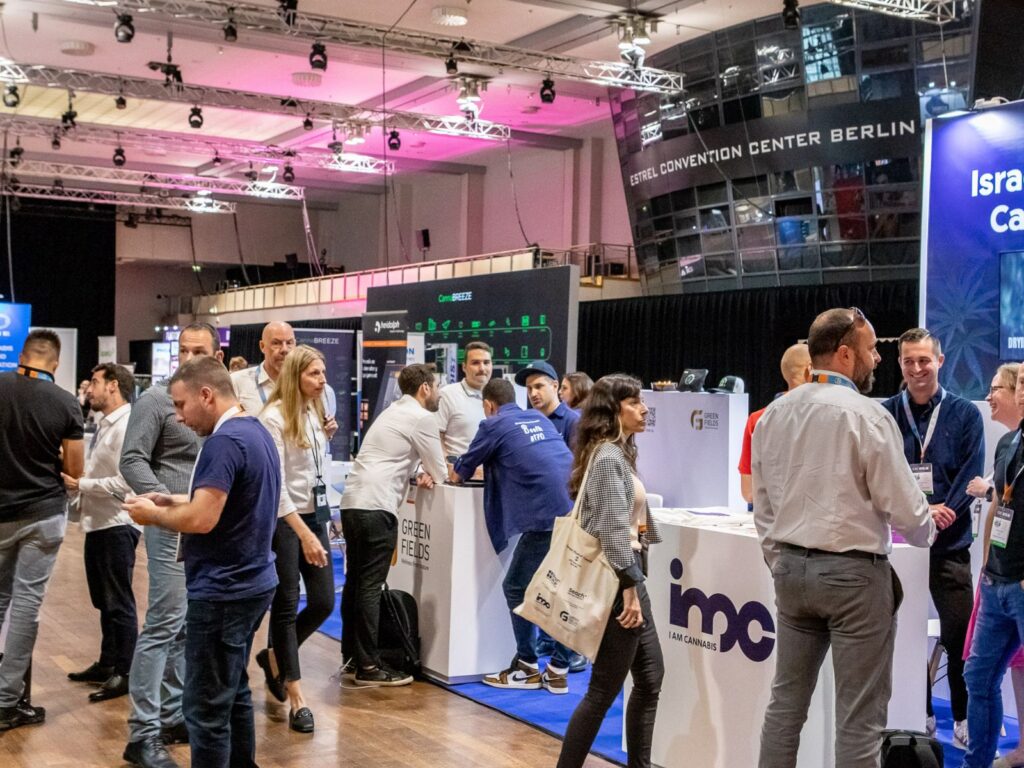
International Cannabis Business Conference Berlin 2023 Expo Floor

Euromonitor International estimates that the emerging global cannabis industry is currently worth 51.4 billion euros, with that figure estimated to top 60 billion in 2025. Germany’s cannabis industry is currently estimated to be worth nearly 1.2 billion euros. With the first pillar of Germany’s legalization model launching and further expansion of the law on the horizon, that number is likely to increase considerably in the coming years.

The legal industry no longer operates in regional silos, and a major challenge currently facing the emerging international cannabis industry is the difficulty of effectively networking with people from all over the world. The International Cannabis Business Conference and Talman Global Investment Forum in Berlin are the perfect networking opportunities, taking place right in the middle of European cannabis history being made.

The International Cannabis Business Conference is the leading cannabis B2B event series on the planet, with previous conferences occurring in several countries on multiple continents. The event series is owned and operated by cannabis advocates who believe in celebrating cannabis culture, in addition to providing world-class cannabis industry education and networking opportunities.

“This year’s International Cannabis Business Conference in Berlin is going to be extra special for our team given the historical context. We are excited to offer world-class cannabis industry and policy education, networking, and entertainment to attendees at such a historic time for Germany and Europe’s emerging cannabis industry.” says Alex Rogers, founder of the International Cannabis Business Conference.

It is becoming increasingly difficult to gain an edge on the competition in the emerging international cannabis industry, and it’s vital for people to get their ideas, products, or services in front of the right people at the right time. With executives, entrepreneurs, investors, policymakers, and industry service providers converging from across the planet, the International Cannabis Business Conference B2B trade show event in Berlin is the perfect place to put cannabis ideas on the global cannabis stage. You can find a full list of speakers at this link here, and the full two-day schedule at this link here.

The Talman Global Investment Forum in Berlin, which will be held at the iconic Hotel Adlon Kempinski Berlin, is investor-focused. Taking place on the eve of the International Cannabis Business Conference’s flagship B2B event in Berlin, Europe’s largest event of its kind, the Talman Global Investment Forum will bring together true leaders from top sectors and companies in the emerging cannabis space.

The goal of the event is to help facilitate meaningful networking, to provide timely education, and to stimulate deal flow potential among attendees. Rising industry sectors will be a major focus of the event, with speakers discussing how those sectors fit into the larger industry ecosystem.

“We know how hard it is for quality investors to link up with vetted cannabis industry companies offering valuable investment opportunities,” Rogers stated. “That is why we are bringing the Talman Global Investment Forum back to Berlin. It will be a prime networking opportunity for cannabis industry investors, entrepreneurs, and industry service providers alike.”

Over 5,000 cannabis leaders from over 80 countries will be represented at the International Cannabis Business Conference in Berlin and that includes representatives from every sector of the industry as well as leading international cannabis policymakers and industry service providers. Attend the International Cannabis Business Conference in Berlin to network with investors, entrepreneurs, industry regulators, and international policymakers and take your industry pursuits to the next level. Secure your tickets now before the B2B and Talman Global Investment Forum sell out.
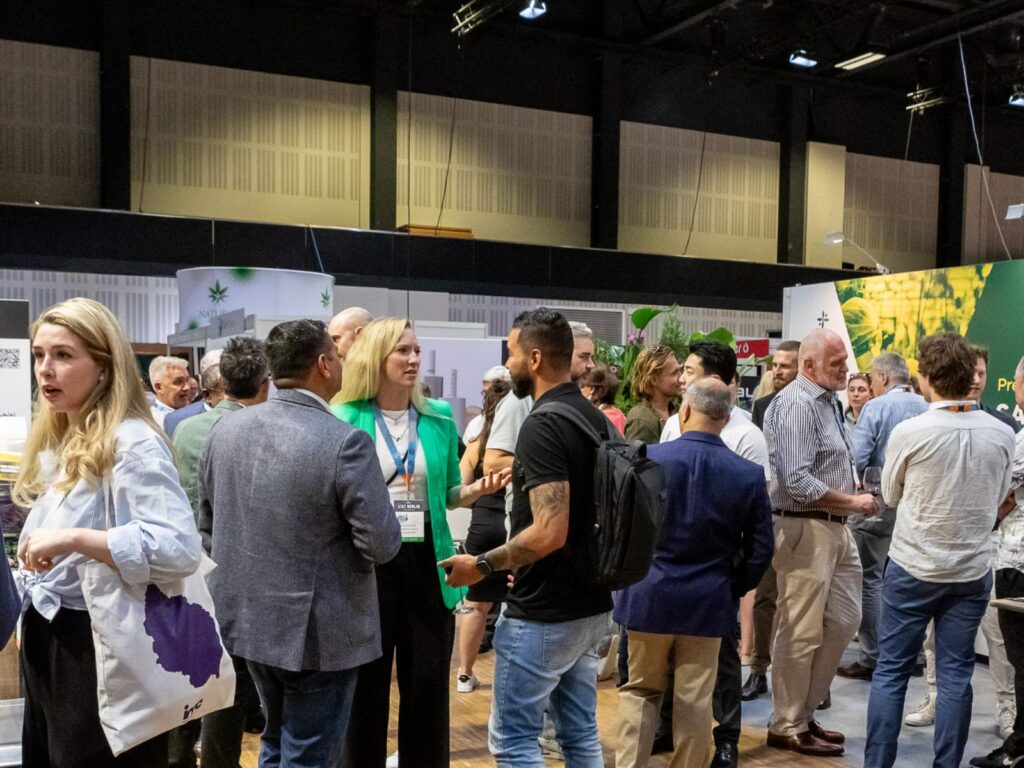
International Cannabis Business Conference Berlin 2023 Expo Floor