
Advancing The Cannabinoid Scientific Landscape

The field of cannabinoid research is advancing, with new discoveries being made about the potential therapeutic benefits of these compounds. However, for these discoveries to be translated into effective treatments for patients, it is essential that proper due diligence is done, and well-designed clinical trials programs are initiated.

In this presentation from the recent International Cannabis Business Conference in Berlin, Terry O’Regan, President of Brains Bioceutical, discusses the course, challenges, considerations, and rewards for advancing the cannabinoid scientific research landscape.

We look forward to seeing you in Berlin in 2024, as well as at our upcoming science and technology event in Slovenia this September!

Cannabis Doesn’t Negatively Impact Liver Transplant Patient Survival Outcomes

In many parts of the world, if someone consumes cannabis, they are not eligible for a liver transplant. It’s a tough situation, in that patients in need of a liver transplant are obviously suffering, and many use medical cannabis products for relief. However, they are forced to refrain from using their medicine, even if it’s effective, in order to get the transplant.

While it is unknown how many patients around the world are in the previously described situation, even one patient being in that situation is one too many. Members of the medical community often cite ‘potential negative consequences’ as the reason for the transplant prohibition. A recent study in Canada will hopefully help change that. Below is more information via a news release from NORML:

Ottawa, Canada: A history of cannabis use is not negatively associated with survival rates among patients receiving liver transplants, according to data published in the Canadian Liver Journal.

Canadian researchers reviewed the relevant literature on cannabis use and transplantation survival rates. Eight studies involving over 5,500 subjects were included in the review.

Authors determined, “[C]annabis use has not been associated with poor patient outcomes in terms of 1-, 3-, and 5-year patient survivals. Therefore, liver transplant candidates who use cannabis should not be denied access to transplantation.”

Their findings are consistent with those of several other studies concluding that marijuana use is not contraindicated in patients receiving organ transplants. Nonetheless, in several states – including some states that permit medical cannabis access – those with a history of marijuana use are ineligible to receive organ transplants.

Full text of the study, “Review of liver transplantation candidacy and outcomes among patients who use cannabis,” appears in the Canadian Liver Journal.

The Future Of Cannabis Science And Technology

From the perspective of cannabis science and technology, we currently live in the best era in human history. It doesn’t take a historian to realize that the fields of cannabis science and technology have advanced by leaps and bounds in recent years, as there is evidence of it to be found all over the planet now.

A person could make a list of all of the cannabis science and technology innovations combined from several decades in the past, and it would likely be a shorter list than what has occurred in just the last few years alone.

The advancements in cannabis science and technology in recent years are the direct result of cannabis policy modernization efforts in various parts of the world. More countries than ever before are now permitting medical and/or adult-use cannabis commerce, research, and development.

Scientists and innovators of all backgrounds and areas of focus are taking advantage of newly afforded freedoms to conduct research and development in ways that were completely prohibited in years past, and the results of their work are benefitting humans in their own jurisdictions and beyond.

For contextual purposes, consider the graph below showing the number of peer-reviewed cannabis studies listed on PubMed.gov as of the posting of this article, organized by year:
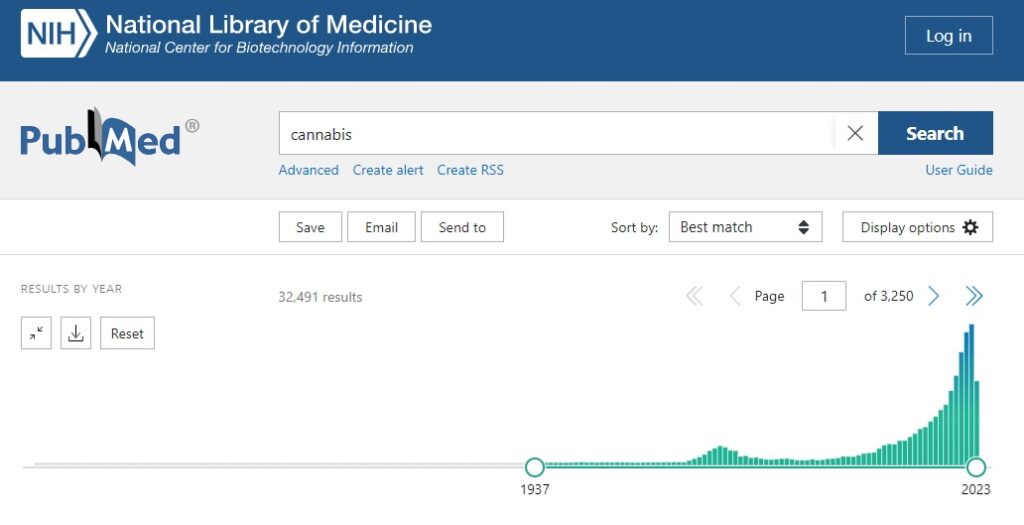
PubMed cannabis study search

Keep in mind, while there are currently 32,491 peer-reviewed cannabis studies listed, which is a substantial amount, that is during a time period when studies were either outright prevented or the results were suppressed. Thankfully, cannabis research censorship is a thing of the past in a growing number of countries, as reflected in the graph above.

The truly inspiring thing about all of it is that we are just starting to scrape the surface. As more countries modernize their cannabis policies, cannabis science and technology innovations are going to hit warp speed and start piling up at an exponential rate. Part of that growth rate of innovation will be driven by profit given the fact that the emerging legal cannabis industry is worth so many tens of billions of dollars (and growing).

Cannabis is being cultivated in many markets now via sophisticated methods on a scale that is truly mind-boggling. It wasn’t that many years ago that a small personal hydroponic garden was considered cutting-edge technology in the cultivation world, and yet, today such a cultivation setup seems prehistoric by many measures.

These days nutrients, tailored feeding schedules, grow mediums, sungrown greenhouses, and supplemental lighting technology are arguably more advanced in the cannabis space than in any other agricultural area of focus, and unlike those other areas of focus, an army of people are working tirelessly around the clock around the globe to come up with the next great cannabis cultivation breakthrough.

Consumption research and technology is a particularly exciting sector of the emerging cannabis industry. While some countries are better at setting up sensible commerce regulations than others, one common thread that can be found in every legal country is that personal consumption is legal.

As global consumers gain confidence in partaking in their newfound freedoms post-legalization, they will continually seek out the newest and funnest ways to consume cannabis. That demand for new devices and gadgets will be met by inventors, and the financial rewards involved will be considerable. If you think that lazer bongs and handheld vaporizers are cool, wait until you see what gadgets people come up with in the near future, as well as what dispensary products hit the market.

Something that is likely not on a lot of cannabis enthusiasts’ radars right now, but certainly should be, are advancements in the area of non-consumption cannabis science and technology. By that, I mean innovating the way cannabis is used in products that are not consumed by humans, such as using hemp to make hempcrete and other building materials. One area that is particularly promising is incorporating cannabis into bioremediation efforts to clean up polluted ecosystems.

The future of cannabis science and technology is brighter than ever before, with no limit to the sector’s potential currently in sight. It can be difficult to keep up with everything, but that is why everyone should attend the upcoming International Cannabis Business Conference in Bled, Slovenia.

The event is dedicated entirely to discussing and demonstrating the world’s latest and greatest cannabis science and technology, and it’s the best place on planet Earth for scientists, innovators, entrepreneurs, investors, regulators, policymakers, and industry service providers to learn and network.

Slovenia is already home to a thriving research and development community, serving as a global hub for several other industries. With local advocates ramping up efforts to modernize Slovenia’s cannabis policies, the Balkan nation is setting up to serve as an international cannabis research and development hub as well. The International Cannabis Business Conference in Bled is the ideal backdrop for the world’s best cannabis minds to meet and discuss their latest endeavors.

The event is being held at the iconic Rikli Balance Hotel on September 7th and 8th. A limited number of tickets are still available. Get yours before prices go up on August 23rd!

Cannabis Spray Effective For Refractory Back And Neck Pain Patients

People experiencing pain in the neck and/or back is very common around the world. Over 7.5% of the world’s global population suffers from lower back pain alone, and hundreds of millions more people suffer from varying levels of neck pain.

In addition to the pain experienced by suffering patients, which can be extreme in some cases, the costs of treating the ailments for both the patient and society are considerable. A study in 2017 found that just in the United States alone, neck and back conditions cost $88 billion a year.

An increasing number of suffering neck and back patients are turning to cannabis products for relief and a recent study in Australia found that cannabis spray in particular is an effective treatment method. Below is more about it via a news release from NORML:

Sydney, Australia: The oral administration of a cannabinoid spray containing standardized ratios of THC and CBD produces clinically significant reductions in pain among patients with chronic back and neck pain, according to open-label trial data published in the journal Medical Cannabis and Cannabinoids.

Australian researchers assessed the safety and efficacy of an oromucosal spray containing 10 mg of THC and 25 mg of CBD in a cohort of 28 patients with moderate to severe back or neck pain. Participants in the study were unresponsive to over-the-counter non-opioid analgesics. Patients administered escalating doses of the spray daily for four weeks.

Investigators documented decreases in patients’ pain at even the lowest doses. Patients experienced further reductions in pain and improvements in mood in a dose-dependent manner over the course of the trial. Overall, side-effects from the spray were mild and well-tolerated.

“There were significant reductions in pain [at] all doses,” authors concluded. “There was also a reduction in pain interference in all domains including general activity, mood, walking ability, normal work, relationships, sleep, and enjoyment of life by dose.”

Australian law permits physicians to authorize cannabis products to patients unresponsive to conventional prescription treatments.

Full text of the study, “Tolerability and efficacy of a 10:25 preparation of delta-9-tetrahydrocannabinol and cannabidiol for treatment of chronic back or neck pain: A multiple-dose escalation study,” appears in Medical Cannabis and CannabinoidsAdditional information on cannabis and chronic pain is available from NORML’s publication, Clinical Applications for Cannabis & Cannabinoids.

Over 25% Of French ALS Patients Report Using Cannabinoid Products

Cannabis is medicine whether a handful of prohibitionist politicians want to accept that fact or not, and that is true for every country on Earth. Humans have effectively used cannabis for medical purposes for centuries whereas cannabis prohibition is a new manmade policy by many measures comparatively.

History has clearly demonstrated that humans are going to use cannabis for medical purposes whether it’s legal to do so or not. After all, they are suffering from one or more conditions, and if cannabis helps treat those conditions, many humans will take the risk.

France is home to a limited medical cannabis policy, however, suffering patients are still consuming cannabis regardless. A recent study examined usage rates among ALS patients specifically. Below is more information about it via a news release from NORML:

Marseille, France: An estimated 22 percent of French patients with ALS (amyotrophic lateral sclerosis a/k/a Lou Gehrig’s disease) report using either plant cannabis or CBD oil to mitigate symptoms of the disease, according to national survey data published in the journal Revue Neurologique.

Survey participants reported that cannabinoids improved their motor skills, reduced pain, elevated mood, and enhanced their overall quality of life. Reported side effects were non-serious (e.g., drowsiness, dry mouth).

“To the best of our knowledge, this is the first study which presents a large questionnaire-based survey about the ‘real-life’ situation regarding cannabis use in the medical context in ALS patients in France,” the study’s authors reported. “Our data demonstrate that … a non-negligible proportion of ALS patients use cannabis to relieve symptoms of the disease. … This study highlights the need for further research on the potential benefits of cannabis use for the management of ALS motor and non-motor symptoms.”

Preclinical models suggest that cannabinoids may delay ALS progression in addition to mitigating certain ALS symptoms. A randomized placebo-controlled clinical trial is currently ongoing in Australia to identify whether cannabis extracts can slow ALS disease progression.

Full text of the study, “Cannabis for the treatment of amyotrophic lateral sclerosis: What is the patients’ view?” appears inRevue NeurologiqueAdditional information on cannabis and ALS is available from NORML’s publication, Clinical Applications for Cannabis & Cannabinoids.

CBD Percentages In Infused Liquid Products Reportedly Lower Than Advertised

Products infused with cannabidiol (CBD) are very popular these days, and widely available. Unfortunately, they are not always regulated properly. This is not to say that every CBD product on the market is harmful, however, there are still many unknowns when it comes to CBD products in different jurisdictions.

Some jurisdictions have taken steps to try to regulate CBD products, with varying degrees of success. Yet other markets, and certainly the marketplace for CBD products sold over the internet, have virtually no oversight.

As such, it should not surprise anyone to learn that a recent study determined that CBD percentages for many infused liquid products are often lower than advertised, which itself is an argument for (not against) regulating CBD products. Below is more information about it via a news release from NORML:

Leicestershire, United Kingdom: CBD-infused liquid products available in the United Kingdom typically contain lower percentages of CBD than are advertised on the products’ labeling, according to data published in the Journal of Cannabis Research.

Researchers affiliated with Loughborough University in England performed laboratory testing on 29 CBD-infused liquid products, including oils, drinks, and tinctures. Consistent with numerous other analyses of CBD-infused products from the United Kingdom, the United States, and elsewhere, investigators reported that few products contained CBD in concentrations that were consistent with the products’ labels.

“Few products had measured CBD concentrations within 10 percent of advertised concentrations, with most falling below advertised concentrations,” authors concluded. “These findings may be indicative of poor manufacturing standards, or that CBD undergoes degradation in consumer products. This reinforces concerns over the quality of CBD-containing consumer products and may highlight the need for improved regulation of such products.”

Analyses of commercially available CBD products available in the United States have consistently determined that these products are of variable quality and potency, and that they often contain contaminants, adulterants, or elevated levels of heavy metals. Nevertheless, these products remain unregulated by the FDA, which has thus far refused to take action to oversee either the manufacturing or the purity of CBD products.

Survey data compiled by the National Consumers League reports that more than eight in ten US voters desire greater federal regulatory oversight over the labeling and marketing of commercially available CBD products.

Full text of the study, “A comparison of advertised versus actual cannabidiol content of oils, aqueous tinctures, e-liquids and drinks purchased in the UK,” appears in the Journal of Cannabis Research. 

Cannabis Use Associated With Self-Reported Reductions In Anxiety Per Canadian Study

It is estimated that roughly 4% of the world’s population suffers from some level of anxiety, although, researchers do not know the actual number. The condition often goes undiagnosed for various reasons in certain parts of the globe, so it’s quite possible that the actual rate is much higher.

Anxiety involves intense, excessive, and persistent worry and fear about everyday situations. Physical symptoms can include a fast heart rate, rapid breathing, sweating, and fatigue.

Many of the pharmaceutical medications that are currently commonly prescribed to patients for anxiety involve a long list of possible side effects. Some cases of anxiety are so bad that pharmaceutical treatments don’t even work. Fortunately, CBD may be able to help in those cases. Below is more information about it via a news release from NORML:

Edmonton, Canada: Subjects report significant decreases in their anxiety levels following the inhalation of herbal cannabis, according to data published in the Journal of Cannabis Research.

Canadian researchers assessed the effects of cannabis inhalation on feelings of anxiety in 184 subjects over a four-year period. Study participants self-administered cannabis at home and reported symptom changes in real time on a mobile software application. Subjects consumed varieties of cannabis that were both THC and CBD-dominant.

Investigators reported: “Cannabis consumption resulted in a significant decrease in anxiety scores among both males and females (average efficacy of 50 percent) and efficacy was similar across the three cultivars.”

Authors reported greater efficacy among younger (under 40) subjects. Investigators also reported that female subjects typically required lesser doses to achieve similar anxiolytic effects. Study participants reported minimal side effects from cannabis.

The study’s investigators concluded: “Overall, cannabis was effective in relieving anxiety and well-tolerated at the doses consumed, independent of CBD and THC ratios. While one cultivar was not significantly more effective than the others, we did identify some gender and age differences in optimal dosing across the three cultivars. We suggest that the outlined THC:CBD ratios and optimal inhalations may be used as a starting point for patients and healthcare practitioners looking to use cannabis as an anxiolytic in order to mitigate the trial-and-error aspect of initiating medical cannabis treatments. Additionally, we recommend the above dataset be used as the foundation for future clinical trials to fully elucidate the efficacy of cannabis for the management of anxiety under more controlled conditions.”

The results of a 2021 US study using similar methods also reported that cannabis inhalation was nearly always associated with self-reported decreases in distress-related symptoms. Data published in June from the United Kingdom similarly reports that the use of cannabis products is associated with sustained improvements in patients diagnosed with generalized anxiety disorder.

Full text of the study, “Naturalistic examination of the anxiolytic effects of medical cannabis and associated gender and age differences in a Canadian cohort,” appears in the Journal of Cannabis Research.

Women Report Using Cannabis To Mitigate Symptoms Of Menopause Per Canadian Study

A natural part of biological aging for every woman involves experiencing menopause. Most women experience menopause when they are between the ages of 45 and 55 years old. The menopausal transition is typically gradual.

For many years women have turned to the cannabis plant for relief for all types of conditions, including dealing with menopause. A recent study in Canada examined the reported frequency of use by middle-aged women experiencing menopause. Below is more information about it via a news release from NORML:

Edmonton, Canada: Canadian women frequently report consuming cannabis products to ease symptoms related to menopause, according to survey data published in the journal BMJ Open.

Investigators affiliated with the University of Alberta surveyed cannabis use trends in a cohort of nearly 1,500 women aged 35 or older.

Among those respondents who reported being current cannabis users, many indicated that they consumed marijuana products to improve menopause-related symptoms, such as joint achiness and sleep disturbances. Most women said that they had not discussed their use with their health care providers.

“Our survey established that women are using cannabis for symptoms during the menopause transition,” authors concluded. “Information about cannabis was more frequently accessed through online searches and personal contacts, with limited involvement of healthcare providers. … In general, many women in our survey reported cannabis was helpful for their symptoms. … Further research is required to investigate the efficacy and safety of cannabis on menopause symptoms and foster the development of clinical resources for women to use in making informed decisions around cannabis for medical purposes.”

The findings are consistent with those of prior surveys from the United States estimating that nearly 30 percent of middle-aged women who use cannabis do so to mitigate menopause-related symptoms.

Full text of the study, “Cannabis use for menopause in women aged 35 and over: A cross-sectional survey on usage patterns and perceptions in Alberta, Canada,” appears in BMJ Open.

Cannabinoid Combination Reduces Tic Frequency For Tourette Syndrome Patients

It is estimated that as many as one percent of people globally suffer from Tourette Syndrome to some level, although many cases go undiagnosed around the world for various reasons. Tourette Syndrome is a nervous system disorder that involves the patient making repetitive movements and/or unwanted sounds.

Most cases of Tourette’s Syndrome start when the patient is a child, with some cases getting worse as the individual ages. Typical treatments for Tourette Syndrome include pharmaceutical medications and/or psychological therapies.

Cannabis is another form of treatment for Tourette Syndrome, albeit an emerging form of treatment that is not as common. A recent study in Australia found cannabis to be effective in some cases. Below is more information about it via a news release from NORML:

Queensland, Australia: The consumption of plant-derived cannabinoid extracts reduces tic frequency and severity in patients with Tourette Syndrome (TS), according to placebo-controlled clinical trial data published in an imprint of the New England Journal of Medicine.

Australian investigators compared the use of cannabinoid extracts versus placebo in a cohort of patients with severe TS. Extracts contained 5 mgs of THC and 5 mgs of CBD. Doses were escalated over time to 20 mgs of THC and CBD daily. Patients underwent a six-week course of treatment.

Researchers reported: “An oral 1:1 THC:CBD formulation titrated upward over 6 weeks up to a daily dose of 20 mg of THC and 20 mg of CBD led to a significant reduction in tics as measured by the total tic score on the YGTSS [Yale Global Tic Severity Scale], as well as a reduction in obsessive-compulsive symptoms and anxiety, without major adverse effects.”

Adverse events associated with cannabis treatment were reported to be “mild.”

The study’s authors concluded: “This study adds to a small body of literature suggesting that oral 1:1 THC:CBD is an effective treatment for tics and psychiatric comorbidity associated with severe Tourette syndrome. Although the adverse-effect profile was mild in this relatively short study, further work is necessary to identify the longer-term effects of cannabis use in Tourette syndrome, such as the possible development of tolerance to the anti-tic effect. … Larger and longer trials taking the adverse-effect profile of these agents into consideration are warranted.”

Israeli data published last month reported sustained benefits in the management of TS among patients who used cannabis for several years.

Full text of the study, “Tetrahydrocannabinol and cannabidiol in Tourette Syndrome,” appears in NEJM Evidence. Additional information on cannabinoids and TS is available from NORML’s publicationClinical Applications for Cannabis and Cannabinoids.