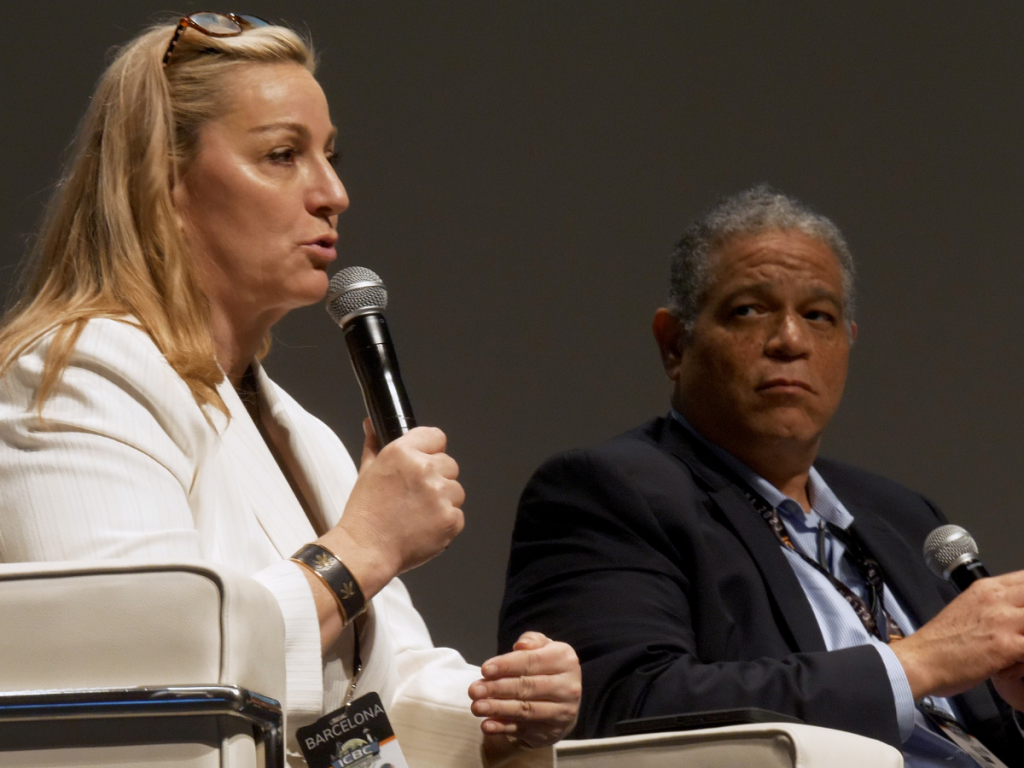
The Global Cannabis Industry’s Increasing Momentum Was On Full Display In Barcelona

The emerging legal international cannabis industry is stronger now than at any other time since the dawn of prohibition so many decades ago, and that was on full display last week in Barcelona where leading cannabis investors, entrepreneurs, activists, policymakers, and industry service providers from all over the planet gathered at the International Cannabis Business Conference on March 9th.

March in Barcelona has largely developed into the start of ‘cannabis event season’ for the international cannabis community in recent years, with the International Cannabis Business Conference partnering once again with Spannabis (held March 10th-12th) to put on the world’s largest cannabis super-event in 2023.

The two events combine for what is likely the closest thing in this world to an international cannabis community reunion, and it’s always heartwarming and inspiring to see old friends connecting (in addition to new friendships being created).

International Cannabis Business Conference Barcelona 2023

The International Cannabis Business Conference is Spain’s largest cannabis B2B event and this year’s installment came at a very crucial time for cannabis policy in Spain, as well as for cannabis policy at the continental level. Lawmakers and regulators in Spain are working harder than ever to pass meaningful legislation that will help Spain’s emerging cannabis industry reach its full potential. The same can also be said about many other parts of Europe right now.

With that in mind, it was tremendously beneficial to bring not only leaders from throughout Spain to one venue to network and discuss cannabis policy, but also leaders from other nations that are either working towards the same end goal as Spain or are farther along in the process and were able to impart their wisdom. Those leaders were able to network with each other and additionally were able to network with industry members, which is important for a multitude of reasons.

Cannabis policy reform is still a relatively new phenomenon at the international level and the global cannabis ecosystem is still largely a patchwork of laws, rules, and regulations, and that patchwork extends to efforts to reform and improve current public policies. The saying, ‘teamwork makes the dream work’ is as applicable to global cannabis efforts as anything you will ever find, so seeing leaders from all sectors of society (law, government, industry, activism) networking with each other was very encouraging and uplifting.

The International Cannabis Business Conference’s next event will be in Berlin in June. Buy your tickets today before prices go up!

International Cannabis Business Conference Barcelona 2023

As is always the case, the curriculum at the International Cannabis Business Conference in Barcelona was packed with world-class speakers who are all global leaders in their particular fields. We will be publishing videos of the panel discussions on the event’s YouTube channel, so make sure to check them out in the near future.

Below is a small sampling of photos from some of the many insightful panel discussions that took place at the 2023 International Cannabis Business Conference Barcelona B2B event:

International Cannabis Business Conference Barcelona 2023

No International Cannabis Business Conference event would be complete without an epic after-party, and this year’s event in Barcelona was no exception.

Below is a sampling of pictures demonstrating the ‘work hard, play hard’ mentality that makes the International Cannabis Business Conference’s events so special:

Cannabis Use Is Effective In Chronic Pain And Anxiety Patients According To UK Study

Chronic pain and anxiety are two of the most common health conditions diagnosed around the world. In fact, it is estimated that as many as 20% of people on the planet suffer from chronic pain to some degree.

Anxiety also affects a large number of people globally, with it being estimated that over 264 million people around the world are now diagnosed with some form of anxiety disorder. It’s quite possible that the number is actually higher due to the lack of healthcare access in many parts of the planet.

For both conditions, the prescribing of pharmaceutical medications is standard, which is unfortunate. Many pharmaceutical drugs are not only ineffective – they can be harmful and addictive. This is not to say that is the case every time, however, it’s definitely a cause for concern.

The cannabis plant is significantly safer compared to many pharmaceutical drugs, and for many patients, cannabis can be more effective. Below is information regarding a recent study in the United Kingdom that found that cannabis is effective in treating chronic pain and anxiety, via a news release from NORML:

London, United Kingdom: The use of cannabis products is associated with symptomatic improvements in pain patients with and without comorbid anxiety, according to observational trial data published in the journal Expert Review of Neurotherapeutics.

British investigators assessed the safety and efficacy of cannabis-derived products in 1,254 chronic pain patients. Of these, 711 subjects were also diagnosed with anxiety. Study subjects were participants in the UK Medical Cannabis Registry, and each of them possessed a doctor’s authorization to access cannabis. Study participants consumed cannabis by either vaporizing marijuana flower or by ingesting plant-derived extracts containing both THC and CBD. Researchers assessed subjects’ symptoms compared to baseline at one, three, and six-months.

Cannabis treatment was associated with “significant improvements in all primary outcomes … at all timepoints,” authors reported. Those with comorbid anxiety reported greater improvements in health-related quality of life as compared to those subjects diagnosed with chronic pain only. Both cohorts achieved significant reductions in their opioid consumption over the course of the study – a finding that is consistent with dozens of other observational trials.

Authors concluded: “A potential association between initiation of CBMPs [cannabis-based medicinal products] and improvements in pain and HRQoL [health-related quality of life], as well as reductions in opioid consumption and an acceptable AE [adverse events] profile in both cohorts was found, complimenting previous UKMCR studies. Moreover, CP [chronic pain] patients with co-morbid anxiety may achieve better HRQoL outcomes and potentially pain outcomes due to CBMPs’ peripheral and central effects.”

Several placebo-controlled trials document the ability of either inhaled or vaporized herbal cannabis to significantly mitigate pain in various patient populations, including those suffering from HIVdiabetesspinal cord injury, or severe treatment-resistant neuropathy (nerve pain). Several observational trials similarly show reduced anxiety in patients taking medical cannabis. Data published earlier this year in the journal JAMA Network Open reported that nearly one in four pain patients residing in states where medical cannabis access is legal self-identify as marijuana consumers.

In recent months, British researchers have published findings from several observational studies involving patients enrolled in the UK Medical Cannabis Registry, including those diagnosed with post-traumatic stressdepressionrefractory epilepsyheadaches, and inflammatory bowel disease.

Full text of the study, “Comparing the effects of medical cannabis for chronic pain patients with and without comorbid anxiety: A cohort study,” appears in Expert Review of NeurotherapeuticsAdditional information on cannabis and pain management is available from NORML’s publication, Clinical Applications for Cannabis and Cannabinoids.

The World Has Lost A Giant Of Cannabis Science – Tribute To Raphael Mechoulam

Some events are so monumental that people measure their lives by them. People remember where they were when humans landed on the moon. They remember where they were during the OJ Simpson high-speed chase, or when the Twin Towers fell.

I do not remember where I was when I first learned about international cannabis scientist Dr. Raphael Mechoulam, however, I will forever remember where I was when I found out about his passing today.

The world has truly lost a science giant, and for us in the cannabis community, we have lost one of the greatest minds that we have ever had in our community.

In the early hours of today (Pacific Standard Time), one of Mechoulam’s colleagues at the Israel Institute of Technology, associate professor David (Dedi) Meiri, posted the following message on LinkedIn:

Dedi Meiri tribute to Raphael Mechoulam

Dr. Raphael Mechoulam is widely recognized as one of the greatest scientists in the field of cannabis research that the world has ever known. Mechoulam began his cannabis research in the 1960s, and is often referred to as ‘the Godfather of cannabis research,’ and for good reason.

Mechoulam and his team were the first to ever isolate and synthesize tetrahydrocannabinol in human history. The same goes for cannabidiol, cannabigerol, cannabichromene, and various cannabinoid carboxylic acids.

Virtually all current cannabis research is essentially built on the efforts of Dr. Raphael Mechoulam, whether people realize it or not. He is truly a legend and will be dearly missed. Below is Dr. Raphael Mechoulam providing the keynote address at the 2019 International Cannabis Business Conference in Berlin. Enjoy:

b

Recent Cannabis Study Provides Hope For Tinnitus Patients

Tinnitus involves people hearing a ringing or other noise in their ears. Sometimes it is constant, and sometimes it comes and goes. However, as any tinnitus sufferer will be quick to point out, it’s annoying every time.

For people that do not suffer from tinnitus, it may sound like a mild annoyance. Yet, tinnitus can actually prove to be debilitating in extreme cases. Imagine trying to fall asleep at night and get a good night’s rest when you have a constant sound in your ear that you cannot stop. Now, imagine what life is like without proper sleep. It doesn’t take a medical professional to see the problem.

Thankfully, recent research out of Canada suggests that the cannabis plant may be able to help people that suffer from tinnitus. Below is more information about it via a news release from NORML:

Ottawa, Canada: Patients suffering from tinnitus (ringing in the ears) frequently report using cannabis products for symptom relief, according to survey data published in the Journal of Otolaryngology – Head & Neck Surgery.

A team of Canadian scientists surveyed 45 patients with the affliction. Over one in five identified as current cannabis consumers and 80 percent of them reported it to be beneficial in treating symptoms of the disorder, including dizziness, anxiety, pain, and sleep disturbances.

Over 90 percent of those surveyed said that they “would consider cannabis as a treatment for their tinnitus.”

Authors concluded: “This is the first study to assess perspectives and usage patterns of cannabis in patients experiencing tinnitus. The results of this study demonstrate an active interest amongst patients with tinnitus to consider cannabis as a potential adjunctive treatment for symptom management. Moreover, cannabis use is both common and can be beneficial in this patient population. … This data may lay the groundwork for future research and clinical trials on cannabis use for tinnitus alleviation.”

Full text of the study, “Cannabis use among tinnitus patients: Consumption patterns and attitudes,” appears in the Journal of Otolaryngology – Head & Neck Surgery.

Uruguay’s Medical Cannabis Industry To Expand Via Authorization Of ‘Master Formulas’

Uruguay was the first country to ever pass and implement a national adult-use legalization measure. Lawmakers initially passed a legalization measure back in 2013, and regulated adult-use sales via pharmacies began in 2017.

Since that time Uruguay’s emerging legal adult-use industry has garnered significant international attention and generated considerable headlines, and rightfully so. After all, what Uruguay did and continues to do on the adult-use front is truly historic.

However, Uruguay’s cannabis industry and policy are not limited to just adult-use cannabis. Uruguay’s medical cannabis program, which receives far less attention, is set to undergo a fairly substantial expansion thanks to a recent authorization by the government. Per Montevideo (translated to English):

The government established through a decree the expansion of access routes to products made from medical cannabis, by regulating a procedure to be able to carry out treatments through master formulations prescribed by treating doctors and made in authorized pharmacies.

The decree enabled access to “master preparations based on cannabis extracts or standardized cannabinoids, from companies authorized by the Department of Medicines for the production of plant raw material with pharmacological activity.” “These master preparations may exclusively contain active principles derived from cannabis,” added the second article of the regulations.

This new authorization will hopefully help some of the most suffering patients in the South American nation, who historically have had to rely on less-sophisticated forms of medical cannabis. This is not to say that raw flower and rudimentary preparations are not sufficient, as those options can clearly help many people. Yet, for some suffering patients, they are not the best option.

Depending on a suffering patient’s condition(s), certain consumption methods are not as viable as others. Additionally, particular conditions and individual cases respond better to certain formulations for various reasons, so patients in Uruguay having more options to consider is a great thing from that perspective.

Cannabis In Subjects Pre-Treated With Pain Medications Doesn’t Negatively Impact Breathing

Opioids are exponentially more harmful compared to cannabis, however, there are times when both forms of medicine have to be consumed by the same patient on the same day. This could be due to various valid reasons and is entirely situational.

In those limited instances where consuming both medications is necessary, some medical professionals worry about any type of undesired side effects that may occur when the two medications interact in the patient’s body.

One lingering question seems to relate to how breathing may be affected, if at all. Fortunately, a team of researchers in the Netherlands investigated the matter and found no negative impact. Below is more information about it via a news release from NORML:

Leiden, The Netherlands: Cannabis inhalation in subjects pre-treated with oxycodone doesn’t negatively impact their breathing, according to clinical trial data published in the British Journal of Anesthesia.

Dutch investigators compared inhaled cannabis versus placebo in 18 healthy volunteers pre-treated with 20mgs of the prescription opioid oxycodone. Participants inhaled cannabis flower either 1.5 hours or 4.5 hours following opioid administration.

Researchers reported that the use of oxycodone alone was associated with depressed respiration. However, the combined use of THC and opioids failed to enhance this effect. “Our data do imply that oxycodone was solely responsible for the respiration depression in the oxycodone/THC arm of the study,” authors reported.

They concluded: “[I]n human volunteers, THC has no significant effect on ventilatory control after placebo or oxycodone pretreatment. This suggests that cannabinoid receptors do not interact with respiratory pathways in the brainstem, or that CB1 receptor activation is offset by an opposing effect at CB2 receptors.”

Unlike opioids, which are responsible for over 75,000 overdose deaths annually, cannabinoids are not defined as central nervous depressants and they are incapable of causing lethal overdose.

Controlled trials have shown that the co-administration of cannabis and opioids produces enhanced analgesic effects. Patients prescribed opioids typically reduce or eliminate their intake of opiate-based drugs following cannabis therapy.

Full text of the study, “Inhaled delta-9-tetrahydrocannabinol does not enhance oxycodone-induced respiratory depression: Randomized controlled trial in healthy volunteers,” appears in the British Journal of AnesthesiaAdditional information is available from the NORML Fact Sheet, ‘Relationship Between Marijuana and Opioids.’

Thailand Study Finds CBD Treatment Effective At Treating Canker Sores

Canker sores are not a fun topic to discuss, however, they are even less fun to endure. Canker sores, also referred to as aphthous ulcers, are small, shallow sores that develop inside the mouth or at the base of the gums.

According to the Mayo Clinic, “The precise cause of canker sores remains unclear, though researchers suspect that a combination of factors contributes to outbreaks, even in the same person.” Potential contributing factors include, but are not limited to: injury, foot sensitivities, stress, and lack of vitamins and minerals.

A recent study based in Thailand examined CBD as a potential treatment for canker sores, and the researchers’ findings are promising. Below is more information about it via a news release from NORML:

Bangkok, Thailand: The use of a topical agent containing trace levels of plant-derived CBD reduces ulcer size and promotes healing in subjects with recurrent aphthous ulcers (a/k/a canker sores), according to clinical trial data published in the journal BMC Complementary Medicine and Therapies. 

A team of Thai researchers compared the use of a topical patch containing 0.1 percent CBD with a placebo in 100 healthy subjects with recurrent aphthous ulcers (RAU). The CBD ointment was applied three times per day for seven days. Ulcer size was measured on days zero, two, five, and seven.

Authors reported that topical CBD “reduced ulcer size and accelerated ulcer healing without side effects.”

They concluded: “This clinical study demonstrated that topical 0.1 percent CBD reduced ulcer size and accelerated ulcer healing without any reported local (signs of allergic and anaphylactic reactions) or systemic (vital sign and blood test alteration) side effects.

Furthermore, in the RCT [randomly controlled trial], topical CBD exerted an anti-inflammatory effect by reducing the erythematous border size in the early stage and decreasing pain intensity in the late stage of RAU. Thus, CBD may be appropriate for RAU patients who choose not to take topical steroids, except for cases where CBD is contraindicated.”

The findings are consistent with those of other trials and case reports finding that the topical application of CBD promotes wound healing in patients with scleroderma,  refractory leg ulcers and with the rare skin blistering disease epidermolysis bullosa. The topical application of cannabinoids, and of CBD in particular, has demonstrated benefits in the treatment of a variety of skin-related conditions, including psoriasiserythemapruritis, and acne.

Full text of the study, “Efficacy and safety of topical 0.1% cannabidiol for managing recurrent aphthous ulcers: A randomized controlled trial,” appears in BMC Complementary Medicine and Therapies.

Hemp May Be Increasingly Used As A Plant-Based Meat Ingredient

The hemp plant is one of the most versatile crops on earth, capable of producing numerous textiles and wellness products. According to new research out of Japan, it may also be capable of revolutionizing the food processing industry, particularly as it pertains to the production of plant-based meats.

A team of investigators associated with the Institute of Food Research, National Agriculture and Food Research Organization in Ibaraki, Japan examined the hemp plant’s usefulness to the food processing industry.

“In the era of SDGs, useful plants which provide valuable industrial outputs and at the same time pose less impact on the environment should be explored. Hemp seems one of the most relevant gluten-free crop plants to meet such requirements.” the investigators stated about their research.

As the researchers pointed out in their findings, which were published in Foods (an Open Access Journal by MDPI), the hemp plant requires far fewer pesticides and consumes less water during the growth cycle compared to many other crops.

“This short review investigates hemp’s sustainability as a plant as well as its utility value as a highly nutritional material in the food industry. Recent application research of hemp protein in food processing includes plant milk, emulsifiers, fortification of gluten-free bread, plant-based meat production, as well as membrane formation. These studies have revealed distinctive properties of hemp protein, especially in relation to disulfide (S-S)/sulfhydryl (-SH)-mediated interactions with protein from other sources.” the researchers stated in their abstract.

“Hemp seeds are high-protein, low-carbohydrate, and rich in dietary fiber and unsaturated fatty acids. After expression of oil from the seeds, the residual mass is a useful protein-rich material for food processing. Moreover, hemp seed protein has distinctive characteristics suitable for developing new foods such as an emulsifier, plant-based meat, and gas-retaining membrane. The cysteine-rich protein feature realizes unique disulfide-mediated interactions with protein from other sources and is thus expected to facilitate development of new food materials.” the researchers concluded.

The team of investigators also pointed out in their conclusion that hemp protein is less soluble and a higher temperature is needed for processing compared to other plant proteins, so further research is warranted regarding what it takes to achieve suitable reaction conditions for hemp protein.

According to international data company Grand View Research, the global plant-based meat market was valued at over $5 billion in 2021 and is expected to expand at a compound annual growth rate of 19.3% between now and 2030.

March 2023 Is Set To Be A Historic Month For European Cannabis

The next 32 days on the European continent could prove to be one of the most historic stretches of time for cannabis public policy and the continent’s emerging legal cannabis industry. Starting tomorrow, Malta’s government will begin accepting applications for non-profit cannabis clubs.

It’s a major milestone not just for Malta, which is the only country in Europe to pass a national adult-use legalization measure, but it’s also a major milestone for the greater European industry being that Malta is the first nation in Europe to set up this kind of national adult-use licensing system. It will be very interesting to see how many applications Malta receives next month.

Malta is not the only nation set to experience a historic March 2023. As every global cannabis observer already knows, lawmakers in Germany have worked very hard to make good on their coalition agreement component relating to legalizing cannabis for adult use and implementing a regulated adult-use industry.

Germany’s Health Minister Karl Lauterbach made a formal presentation of a legalization plan back in October 2022 and has since lobbied the European Union for its permission to proceed with an official introduction of a legalization measure.

What some observers seem to have overlooked, or perhaps forgotten about, is that roughly a month ago Minister Lauterbach reportedly confirmed a timetable for a formal introduction of a legalization measure and indicated at the time that he had ‘no reason to doubt’ that a legalization measure would be introduced ‘in the first quarter of this year.’

With February drawing to a close that puts the German adult-use legalization bullseye squarely on the month of March. Whether or not Minister Lauterbach’s reported timeline proves to be accurate or not is something that time will have to determine, although, there have been no meaningful setbacks reported from what I can tell as of the posting of this article.

Additionally, cannabis enthusiasts, entrepreneurs, investors, policymakers, and industry service providers are set to flock to Barcelona, Spain in March as part of the world’s largest super-event collaboration. The International Cannabis Business Conference has once again partnered with Spannabis, Europe’s top cannabis expo, to form another super-event that is a must-attend for anyone that is serious about succeeding in the emerging cannabis industry.

The International Cannabis Business Conference will host Spain’s largest cannabis B2B event on March 9th at the L’Auditori de Cornellà, with the after-party being held at the Hotel Arts (Ritz-Carleton) Barcelona. Spannabis will follow on March 10-12th at Fira de Cornellà. The super-event is the first large cannabis conference collaboration of the year. Whenever thousands of cannabis supporters get together and network good things happen, and that will surely be the case in Barcelona next month.

Cannabis policy and industry in Europe are both at pivotal points, and being that a legal industry cannot come into existence without reform occurring first, the two are directly tied to each other. If Germany does witness the formal introduction of an adult-use legalization measure next month, it will likely set off a wave of similar political activity in other parts of Europe and that will be good news for the continent’s emerging industry.

The same goes for Malta’s cannabis club application rollout. If Malta can successfully gather, review, and approve non-profit cannabis club applications, it will have set up a bureaucratic blueprint for other nations to copy. It’s nuanced but very significant.

We will all have to wait and see what happens for cannabis in Europe in March while doing our best to temper our excitement and expectations.