Cannabis Research Within International Frameworks

Cannabis research is a key component to future success for the emerging international cannabis industry. All meaningful cannabis research provides further insight into the cannabis plant and how humans can harness its properties to benefit the world.

Compared to other areas of agriculture and medical research, cannabis research often involves additional hurdles and limitations due to domestic and global cannabis prohibition policies. Unfortunately, such policies make cannabis research more complicated than it needs to be.

Thankfully, cannabis research has increased in recent decades, with more and more jurisdictions modernizing their cannabis policies. There is still a lot of room for improvement, to be sure, but at least things are trending in the right direction.

International cannabis research efforts were at the center of a recent panel discussion at the International Cannabis Business Conference in Berlin. The panel was titled ‘Bridging Disciplines’ and was moderated by Lukáš Hurt, CEO of Green Publishing. Mr. Hurt was joined by:

  • Andy Mannsfeld, MD, Managing Director of EUCannaJobs
  • Prof. Dr. Simone Graeff-Hönninger, Chair of Agronomy at the Institute of Crop Science at the University of Hohenheim
  • Prof. Dr. Tamara Lah Turnšek, Biochemist and Researcher at the National Institute of Biology in Ljubljana, Slovenia
  • TJ Martin, Vice President of Research and Development at Abstrax
  • Božidar Radišic, Project Manager and Founder of the Research Nature Institute

Drawing from hands-on experience in crop science, cannabinoid research, product development, medical practice, and international policy, the panelists discussed how to advance cannabis research within the boundaries of international conventions.

Topics covered during the panel presentation included sustainable cultivation practices, the biochemical complexity of the cannabis plant, translational research for consumer and medical use, and the role of education and public engagement. You can view the panel discussion at this link here.

Survey Finds Endometriosis Patients Prefer Cannabis Over Prescription Medications

According to the World Health Organization, endometriosis “is a disease in which tissue similar to the lining of the uterus grows outside the uterus.” International researchers estimate that as many as 190 million women suffer from the serious health condition worldwide.

“The cause of endometriosis is unknown. There is no known way to prevent endometriosis. There is no cure, but its symptoms can be treated with medicines or, in some cases, surgery.” The World Health Organization states about endometriosis.

A team of researchers affiliated with various health and academic institutions in New Zealand and Australia recently conducted a survey asking about endometriosis, medical cannabis use, and how cannabis therapeutics compared to traditional pharmaceutical medications. The survey’s findings were published in the academic journal Reproduction and Fertility.

“People with endometriosis report consuming cannabis to manage their symptoms. Given the range of differing legalities and access pathways across the world, this study aimed to investigate the drivers and barriers to cannabis use worldwide.” the researchers stated about their work.

“An online, anonymous, cross-sectional survey was distributed internationally by endometriosis organisations and was open to anyone consuming cannabis for endometriosis symptoms. Survey questions included motivations for both starting and ongoing cannabis consumption, concerns over cannabis use, reasons for stopping cannabis, and communication of cannabis consumption with healthcare providers. Eight hundred and eighty-nine responses were collected across >10 countries.” the researchers stated about their survey methodology.

“Illicit cannabis (56.7%) was the most common access pathway. 99% of respondents stated they would continue to use cannabis to manage their endometriosis-based symptoms, with 90% reporting they would recommend its use to a friend or relative with the disease. The most common motivation(s) for cannabis consumption were inadequate pain control (68.6%) and bothersome side effects of medications (56.3%). Similar motivations were reported for ongoing cannabis consumption, with concerns over dependence/addiction on pharmaceutical medications (43.9%) being another common motivation. Those using illicit cannabis were significantly less likely (P < 0.0001) to disclose their cannabis consumption to medical professionals.” the researchers found.

“Cannabis was viewed as superior to pharmaceuticals both in terms of effectiveness and side-effect profile.” the researchers concluded.

The results of a separate survey previously published in the journal Archives of Gynecology and Obstetrics found that nearly 20% of patients diagnosed with endometriosis report consuming medical cannabis to help manage their symptoms.

State-Owned Company Seeks Volunteer Cannabis Product Testers In Argentina

Cannabis research, while still hindered in many ways, has increased in size and scope in recent years thanks to public policy modernization efforts around the world, as well as growing demand for research driven by the emerging legal cannabis industry.

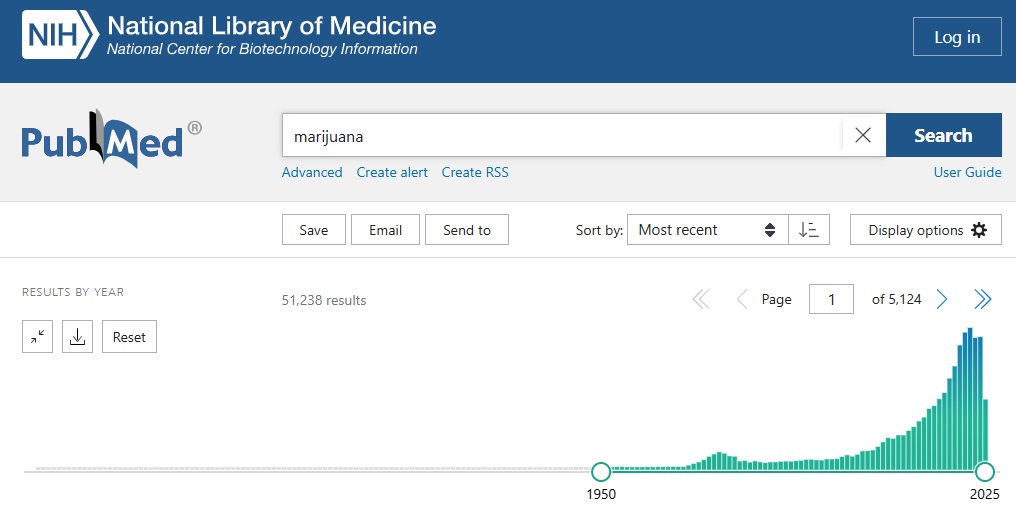
To quantify the increased research in recent decades, one only has to look at search results on PubMed.gov for the term ‘marijuana’, which now yields over 51k results for research conducted between 1950 and today:

pubmed marijuana research results

With that being said, there is still a lot to be learned about the cannabis plant, its uses, and its potential effects. Argentina’s state-owned cannabis company is conducting research focusing on tetrahydrocannabinol (THC) and is reportedly looking for local volunteers.

Cannava SE, the Jujuy state-owned company created to develop cannabis for scientific and therapeutic purposes, began the first Argentine clinical trial studying the effectiveness of THC in the treatment of chronic non-cancer neuropathic pain.” reported El Planteo in its original coverage (translated from Spanish to English).

“The trial is exclusively aimed at residents of the province of Jujuy who suffer from chronic pain , especially neuropathic pain. Participation is part of a formal clinical protocol, with professional monitoring and controlled application of treatment through sublingual drops with a THC-rich formulation.” the outlet also reported.

Argentina’s modern medical cannabis industry got its start in 2017, although it was initially hindered by political issues. Starting in 2019, Argentina has made a big push to boost its domestic cannabis industry, particularly as it pertains to science and research. Back then, Argentina’s Ministry of Science and Technology signed an agreement with a local government, the National University, and other entities.

That was followed by a Presidential decree issued in 2020, which provided a way for medical cannabis patients to, in theory, sign up for a government program to be able to cultivate their own medicine.

In May 2022, lawmakers in Argentina passed a measure that created the framework for a more robust medical cannabis industry in the South American nation, including provisions for boosting exports around the world. Later in 2022, the government established a public company to provide seeds, testing, and training to the nation’s emerging medical cannabis industry.

Cannabis Use Associated With “Substantial Improvements” Among OCD Patients

Obsessive-compulsive disorder (OCD) is a serious mental health condition that involves intrusive, unwanted thoughts and obsessions. It also involves repetitive behaviors or compulsions that a person cannot control. OCD can significantly interfere with a patient’s daily tasks, work, and relationships.

International researchers estimate that roughly 2% of the world’s general population suffers from some level of obsessive-compulsive disorder, ranging from mild cases to severe cases. Symptoms include, but are not limited to: a “fear of contamination by dirt or germs; constant checking; repetitive, intrusive thoughts of a somatic, aggressive, or sexual nature; extreme slowness; and an inordinate concern with orderliness and symmetry.”

A team of researchers based in the United Kingdom recently examined medical cannabis use and its impact on patients suffering from obsessive-compulsive disorder. The researchers’ findings were published in the academic journal Psychoactives.

“Existing treatments may not be suitable or effective for all people with OCD, and there is increasing interest in whether these individuals may benefit from the use of cannabis-based medical products (CBMPs).” the researchers stated.

“We document the characteristics of 257 people reporting a diagnosis of OCD within Project T21, a study of medical cannabis patients, and examined whether the use of prescribed cannabinoids improves quality of life. Individuals with OCD were prescribed an average of 2.2 CBMPs, with most products classified as THC-dominant flowers.” the researchers stated about their methodology.

“Three months after initiating treatment, there were substantial improvements in quality of life (Cohen’s d = 0.48; 95% CI = 0.29–0.65), general health (Cohen’s d = 0.43; 95% CI = 0.26–0.61), mood/depression (Cohen’s d = 0.85; 95% CI = 0.65–1.04), and sleep (Cohen’s d = 0.61; 95% CI = 0.43–0.79). There was a corresponding reduction in anxiety symptoms among the subsample who completed the GAD-7 (Cohen’s d = 1.14; 95% CI = 0.84–1.44). Eight individuals (5.7%) reported a total of 14 adverse effects, with the majority of these (57%) being described as mild.” the researchers found.

“Given emerging evidence that those with OCD can benefit from CBMPs, coupled with the increased availability of these unlicensed products internationally, there is a need for more research, including clinical trials, to identify those who may benefit most from the use of these medicines.” the researchers concluded.

Hemp Geotextiles Hold “Promising Properties” For Stabilizing River Banks

In Germany, Fachagentur Nachwachsende Rohstoffe e.V. (FNR) serves as the central coordinating institution for research, development, and demonstration projects in the field of renewable resources. FNR was originally established in 1993 and is a non-profit organization funded by Germany’s Federal Ministry of Food and Agriculture (BMEL).

An example of recent projects led by FNR includes the Bioshoreline I and II projects, which involve using “new geotextiles made from local, renewable raw materials that can stabilize newly planted banks in their early years.”

Riverbank erosion is a major issue in many parts of the world, and occurs when the natural soil and vegetation holding a river bank in place are weakened or removed. Riverbank erosion can increase the flood risk in the area where the river is located and destroy vital habitats and ecosystems. Stabilizing river banks is an area of research that is increasing in popularity as a result.

The Bioshoreline I and II projects ran in Germany from 2016 to 2024 and involved coconut mats, sheep’s wool, and plastic nonwovens made of polypropylene and polyethylene terephthalate. The researcher determined that “coconut and wool fibers degrade too quickly when used in wet conditions, while plastic nonwovens are not biodegradable at all.”

“Evaluations of the first years of the field trial showed that, as desired, significant degradation did not occur until the third year, but then somewhat too quickly. In addition, root penetration appeared to be in need of improvement in the early years.” reported FNR (translated from German to English).

“Subsequently, the Bioshoreline team produced optimized geotextiles based on 50 percent hemp and flax and 50 percent PLA fibers. These new prototypes have been undergoing practical testing on the banks of the Rhine since 2023. Initial studies indicate promising properties.” FNR also stated. While the initial results from the hemp-based geotextiles are encouraging, further evaluation will need to be conducted.

Separately, a team of researchers based in China recently examined how incorporating a silicone-containing, water-based polyurethane coating impacts hemp fabric and paper’s level of water resistance and their mechanical stability.

“Hemp fabric and cellulose paper are sustainable materials with high application potential – but their limited water resistance and mechanical resilience hinder their wider industrial use.” reported European Coatings in its original coverage of the research. “A research team from China has now developed a functionalised coating that addresses these weaknesses: A water-based polyurethane acrylate coating with silicone components (WPUASi) increases both the hydrophobicity and the strength of the substrates.”

“The emulsion, which is based on an interpenetrating polymer network (IPN), was applied to hemp textiles and filter paper. The water contact angle (WCA) increased from 0° to 127.5° for hemp and to 113.2° for paper. The mechanical characteristics also improved significantly: the tensile strength of the hemp fabric increased by 19 % and the folding strength of the filter paper increased 23-fold.” European Coatings also wrote.

The researchers also applied the protective layer to other materials, including cotton and wood, and it yielded similar results. For hemp specifically, the emulsion seemed to properly adhere, as proven by the treated hemp material retaining ‘most of its hydrophobic and mechanical properties’ after ‘several washing cycles.’

Advances in hemp research increase the potential for the global hemp market. During a recent presentation at the International Cannabis Business Conference in Berlin, leading international cannabis industry economist Beau Whitney, founder of Whitney Economics, provided data demonstrating that the value of the global industrial hemp industry could be as much as $456.2 billion.

International Researchers To Send Cannabis Seeds Into Space

After decades of cannabis research being greatly hindered, if not outright prevented, due to cannabis prohibition policies, the rate and scope of research around the world are increasing. A great example of this can be found in an international research project that involves sending cannabis seeds into space.

“On June 20, we’re sending plant life beyond Earth’s atmosphere to explore how it evolves in zero gravity.” researchers affiliated with a project titled ‘Martian Grow’ wrote in a recent post on LinkedIn. “From Vandenberg to the stars — this is where cannabis research meets deep space.”

“For too long, discovery has been confined to sterile labs and guarded by gatekeepers, but innovation has always thrived where curiosity is free. This project is a call to action—an open experiment driven not by profit, but by the boundless potential of human creativity.” the researchers state on the project’s website. “We are not funded by big pharma or controlled by financial interests. We are fueled by the desire to explore, to question, and to unlock knowledge that belongs to everyone.”

The research project will be organized into a three-part action plan, and people around the world are encouraged to follow along on XFacebook, and Instagram, in addition to signing up for email alerts via the project’s website.

“We launch cannabis seeds into space, exposing them to cosmic radiation and microgravity. This helps us study mutations and adaptations that could improve plant resilience, disease resistance, and genetic robustness, offering new insights into cannabis genetics and its potential for agricultural advancements beyond Earth.” the researchers stated about the first step of the project’s action plan.

“We recreate Martian soil conditions on Earth, testing fertilizers and nutrients to optimize plant survival. By studying how cannabis interacts with simulated Martian soil, we gain crucial insights into its adaptability, genetic expression, and potential for sustaining future extraterrestrial agriculture.” they stated about the second step of their action plan.

“By cultivating cannabis clones in controlled low-gravity environments, we analyze root development, biomass production, and genetic changes. This research helps us understand how plants adapt beyond Earth while expanding our knowledge of cannabis biology at a molecular level.” they conclude about the final step of their action plan.

Per the LinkedIn post embedded earlier in this article, the seeds are set to launch on Friday, June 20th, 2025. Per my communications with one of the lead researchers on the project, Slovenian scientist Božidar Radišič, the seeds are expected to be in orbit for 5-6 hours before coming back to Earth.

Australian Researchers: Cannabis May Reduce Anxiety Symptoms

International researchers have found that anxiety disorders are the world’s most common mental health disorders, and that anxiety disorders affect an estimated 301 million people around the globe. Additionally, anxiety disorders are more common in women than men, and only 1 in 4 people with anxiety disorders receive treatment for it.

A team of academic researchers based in Australia and affiliated with various institutions recently conducted a systematic review focusing on medical cannabis use and how it may impact the symptoms in patients with anxiety-related disorders. The review’s findings were published in the academic journal Psychiatry Research.

“With rising anxiety disorder diagnoses, many individuals are seeking alternatives to standard pharmacotherapies, like medicinal cannabis. This systematic review focuses exclusively on anxiety-related disorders and examines a wide range of cannabis-based preparations and interventions.” the researchers wrote about their review.

“We searched MEDLINE, EMBASE, CINAHL, and PsycInfo (October–December 2023) for peer-reviewed empirical studies, excluding case series, case studies, and review papers. Inclusion criteria were studies on adults (18+ years) diagnosed with anxiety-related disorders, examining the efficacy or effectiveness of medicinal cannabis. Studies on recreational cannabis or cannabis-use-disorder were excluded. The MASTER and QualSyst tools were used to assess bias.” the researchers wrote about their methodology.

“Among the 13 highest-quality studies, 70 % (n = 9) reported a positive improvement for disorders including generalised anxiety disorder (GAD), social anxiety disorder (SAD), and post-traumatic stress disorder (PTSD). 30 % (n = 4) reported a negative result for conditions like obsessive-compulsive disorder, trichotillomania, test anxiety and SAD.” the researchers found.

“Medicinal cannabis demonstrates potential in reducing anxiety symptoms, but the long-term benefits and overall impact on quality of life remain unclear. Further high-quality, longitudinal research with standardised dosing is needed.” the researchers concluded.

The results of the Australian systematic review build on previous research, including a prior clinical trial conducted last year in India, which found that a “CBD oral solution showed therapeutic efficacy, excellent safety, and tolerability in treating not only mild to moderate anxiety disorders, but also associated depression and disturbances in sleep quality with no incidences of withdrawal anxiety upon dose tapering and at the end of the treatment.”

Another prior study conducted in the United Kingdom found that “treatment with CBMPs [cannabis-based medicinal products] is associated with statistically significant improvements across anxiety-, sleep-, and HRQoL-specific PROMs [patients-reported outcome measures] after 12 months…”

The Latest Trends And Innovations In International Cannabis Logistics

Right now is the most exciting time for legal international cannabis commerce than any other time in human history. For many decades, cannabis was prohibited around the world, then for a time, the legal industry operated in siloed markets.

However, the legal cannabis industry has truly gone international in recent years, and cannabis imports and exports are becoming more common in legal medical cannabis markets. The increased activity and excitement are paralleled by an increase in challenges and hurdles to overcome.

Shipping legal cannabis halfway around the globe is not an easy task. For starters, all medical cannabis products have to meet all of the regulatory and legal standards and requirements in every jurisdiction that they travel through, which is sometimes more jurisdictions than just where the products originated and where they will be sold.

If people think that one market’s regulations are difficult to navigate, imagine the regulatory labyrinth and hoops involved when there are multiple countries in the equation. On top of all of that, there are the usual challenges that come with any agricultural crop and products derived from them, such as quality and freshness.

One of the most knowledgeable experts on the topic of international cannabis logistics is Yoram Eshel, CEO of Cannabilog. Yoram Eshel recently presented on the topic of international cannabis logistics at the International Cannabis Business Conference in Berlin, and the information that he shared was invaluable. You can watch his presentation at this link here.

Hydrophobic Protective Layer Could Open New Applications For Hemp

The hemp plant is arguably the most useful and versatile crop in existence, with humans having made use of it for thousands of years for a wide array of applications. Yet, there is still a lot more to be learned about how humans can make the most out of hemp harvests, as demonstrated by the findings of a recent study in China.

A team of researchers based in China recently examined how incorporating a silicone-containing, water-based polyurethane coating impacts hemp fabric and paper’s level of water resistance and their mechanical stability.

“Hemp fabric and cellulose paper are sustainable materials with high application potential – but their limited water resistance and mechanical resilience hinder their wider industrial use.” reported European Coatings in its original coverage of the research. “A research team from China has now developed a functionalised coating that addresses these weaknesses: A water-based polyurethane acrylate coating with silicone components (WPUASi) increases both the hydrophobicity and the strength of the substrates.”

“The emulsion, which is based on an interpenetrating polymer network (IPN), was applied to hemp textiles and filter paper. The water contact angle (WCA) increased from 0° to 127.5° for hemp and to 113.2° for paper. The mechanical characteristics also improved significantly: the tensile strength of the hemp fabric increased by 19 % and the folding strength of the filter paper increased 23-fold.” European Coatings also wrote.

The researchers also applied the protective layer to other materials, including cotton and wood, and it yielded similar results. For hemp specifically, the emulsion seemed to properly adhere, as proven by the treated hemp material retaining ‘most of its hydrophobic and mechanical properties’ after ‘several washing cycles.’

Further research will need to be conducted to see what new ways hemp can be used after being treated with a coating like the one at the heart of this investigation in China. Entrepreneurs and innovators around the globe will no doubt explore a multitude of possibilities, both for industrial applications and beyond.

A team of researchers affiliated with Universitat Politècnica de Catalunya-BarcelonaTech (Spain) and Dresden University of Technology (Germany) recently conducted a separate study that examined hemp and mechanical-chemical cottonization. The results of the study were published in the academic journal Cellulose.

“The hemp treated with a high level of H2O2 stabilizer, according to the established experimental design for the oxidizing process, exhibited superior performance when blended with cotton and spun with a count of 40 tex and a twist coefficient (αm) of 170. These outcomes are of industrial interest for the production of fine yarns because they can be easily implemented using existing machinery devoted to processing cotton.” the researchers determined.

Advances in hemp research increase the potential for the global hemp market. During a recent presentation at the International Cannabis Business Conference in Berlin, leading international cannabis industry economist Beau Whitney, founder of Whitney Economics, provided data demonstrating that the value of the global industrial hemp industry could be as much as $456.2 billion.