
Tag: argentina

Low-Dose Cannabis Extracts Could Help Pain Patients

Chronic pain is one of the most common and serious health conditions around the world. International researchers estimate that as many as 20% of adults suffer from chronic pain globally, and that percentage could rise in the future with more adults being diagnosed every year.

Common treatments for pain include over-the-counter medications, prescription pharmaceutical painkillers, and, in more extreme cases of chronic pain, injections, nerve blocks, and radiofrequency ablation.

The potential side effects of the previously listed pain management options are numerous, including but not limited to: constipation, breathing issues, nausea, chest pains, drowsiness, diarrhea, headaches, and even death. Many pharmaceutical painkillers are very addictive.

A team of researchers affiliated with various academic and health institutions based in Argentina and Ecuador recently examined low-dose cannabis extracts as a treatment for chronic pain. Their findings were published in the Journal of Pain & Palliative Care Pharmacotherapy.

“The aim of this work was to assess the effectiveness of full-spectrum cannabis (THC and CBD) extracts as adjuvants in the treatment of chronic pain.” the researchers wrote. “This is a prospective, open label, longitudinal study. Major cannabinoids were analyzed in herbal preparations using high performance liquid chromatography (HPLC). Subjects were included when chronic pain diagnosis criteria was met according to physicians’ diagnosis.”

“A patient stratification protocol was developed using a visual analogue scale to measure pain, a numerical scale for life quality parameters and a self-administered health survey. Eighty-eight patients aged between 35 and 88 years were included.” the researchers stated about their methodology.

“A significant decrease in both pain and other life quality parameters was observed between time zero and subsequent time intervals, excepting the “appetite” variable. Overall, 51 individuals reported a decrease in pain, 38 a decrease in anxiety and 48 in insomnia, with “decrease” defined as symptom reduction of 50% or more between the first and last consultation. In addition, 23 subjects reduced or discontinued other analgesics and/or anti-inflammatory drugs during the trial.” the researchers found.

“Adverse effects were mild and reversible. These results are consistent with previous studies, supporting effectiveness and safety of cannabis extracts as adjuvants in the treatment of chronic pain.” the researchers concluded.

State-Owned Company Seeks Volunteer Cannabis Product Testers In Argentina

Cannabis research, while still hindered in many ways, has increased in size and scope in recent years thanks to public policy modernization efforts around the world, as well as growing demand for research driven by the emerging legal cannabis industry.

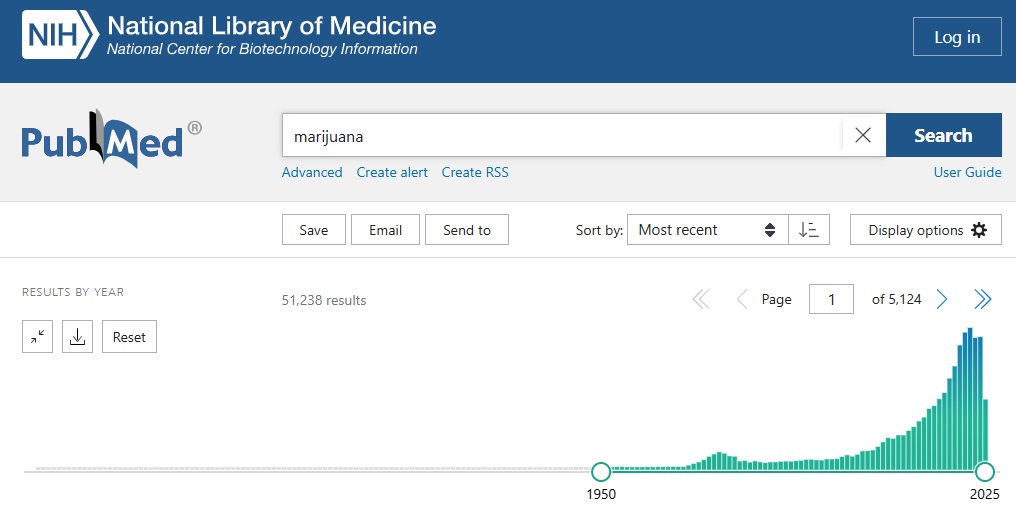
To quantify the increased research in recent decades, one only has to look at search results on PubMed.gov for the term ‘marijuana’, which now yields over 51k results for research conducted between 1950 and today:

pubmed marijuana research results

With that being said, there is still a lot to be learned about the cannabis plant, its uses, and its potential effects. Argentina’s state-owned cannabis company is conducting research focusing on tetrahydrocannabinol (THC) and is reportedly looking for local volunteers.

Cannava SE, the Jujuy state-owned company created to develop cannabis for scientific and therapeutic purposes, began the first Argentine clinical trial studying the effectiveness of THC in the treatment of chronic non-cancer neuropathic pain.” reported El Planteo in its original coverage (translated from Spanish to English).

“The trial is exclusively aimed at residents of the province of Jujuy who suffer from chronic pain , especially neuropathic pain. Participation is part of a formal clinical protocol, with professional monitoring and controlled application of treatment through sublingual drops with a THC-rich formulation.” the outlet also reported.

Argentina’s modern medical cannabis industry got its start in 2017, although it was initially hindered by political issues. Starting in 2019, Argentina has made a big push to boost its domestic cannabis industry, particularly as it pertains to science and research. Back then, Argentina’s Ministry of Science and Technology signed an agreement with a local government, the National University, and other entities.

That was followed by a Presidential decree issued in 2020, which provided a way for medical cannabis patients to, in theory, sign up for a government program to be able to cultivate their own medicine.

In May 2022, lawmakers in Argentina passed a measure that created the framework for a more robust medical cannabis industry in the South American nation, including provisions for boosting exports around the world. Later in 2022, the government established a public company to provide seeds, testing, and training to the nation’s emerging medical cannabis industry.

CBD May Mitigate Severe Behavioral Symptoms In Children With Autism

One of the most sensitive areas of cannabis policy, science, and industry is medical cannabis use by children. No responsible cannabis consumer advocates for kids to consume cannabis except for in the most limited, tailored medical circumstances.

It is an issue that needs to be taken very seriously and parents should only proceed after talking to their family doctor(s) to make sure that it is the right move for their situation.

With that being said, there are instances when medical cannabis therapies can help younger patients. According to the results of a recent study in Argentina, cannabidiol may help mitigate severe behavioral symptoms in children diagnosed with autism. Below is more information via a news release from NORML:

Buenos Aires, Argentina: The adjunctive use of CBD is safe and effective in mitigating severe behavioral symptoms in pediatric patients with autism spectrum disorder (ASD), according to data published in the journal Pharmacology, Biochemistry, and Behavior.

Argentinian researchers assessed the efficacy of purified CBD in young patients (ages three to 17) with autism. CBD was administered as an add-on medication for six to 12 months.

Consistent with prior studies, investigators reported that CBD treatment improved the quality of life of patients and their families. In nearly half of the patients treated, the use of prescription medications decreased following the initiation of CBD therapy.

The study’s authors concluded, “Our results suggest that treatment with purified CBD is effective and safe and could benefit patients with severe ASD by improving some of the core symptoms, including repetitive behaviors and social interaction, as well as associated comorbidities.”

The findings are consistent with those of placebo-controlled trial data showing improvements in ASD-related symptoms following the use of cannabinoid products. Observational studies have also shown that the use of cannabis can provide benefits to young people and adults with autism.

Full text of the study, “Purified cannabidiol leads to improvement of severe treatment-resistant behavioral symptoms in children with autism spectrum disorder,” appears in Pharmacology, Biochemistry, and BehaviorAdditional information on cannabinoids and ASD is available from NORML’s publication, Clinical Applications for Cannabis and Cannabinoids.

Argentina To Revoke All Medical Cannabis Production Permits

In October 2022, regulators in Argentina issued the nation’s first-ever domestic cannabis production license. However, government officials in Argentina announced this month that it plans to revoke all current medical cannabis cultivation permits.

“The Minister of National Security, Patricia Bullrich announced that the Government will cancel permits to grow marijuana.” InfoBae stated in its local coverage.

“We are going to cancel everything, we are going to start from scratch.” Patricia Bullrich stated according to the media outlet.

In April 2023, Argentina’s government participated in the nation’s first legal hemp harvest in roughly 50 years. Starting in 2019, Argentina has made a big push to boost its domestic cannabis industry, particularly as it pertains to science and research. Back then, Argentina’s Ministry of Science and Technology signed an agreement with a local government, the National University, and other entities.

That was followed by a Presidential decree issued in 2020 which provided a way for medical cannabis patients to, in theory, sign up for a government program in order to be able to cultivate their own medicine.

In May 2022, lawmakers in Argentina passed a measure that created the framework for a more robust medical cannabis industry in the South American nation, including provisions for boosting exports around the world. Later in 2022, the government established a public company to provide seeds, testing, and training to the nation’s emerging medical cannabis industry.

Can Cannabis Industry Waste Be Used To Make Supercapacitors?

The cannabis plant can be used for a myriad of purposes to benefit humans, and not just in a medical cannabis capacity. Researchers in Argentina recently examined using discarded cannabis material from the legal cannabis industry to see if it can be an effective component for supercapacitors.

Supercapacitors are organized based on their electrode configurations, being classified as either symmetric, asymmetric, or battery-type supercapacitors. A symmetric supercapacitor, which was the type at the heart of the recent study in Argentina, utilizes two similar electrodes.

Researchers conducting the study in Argentina were affiliated with CIFICEN, UNCPBA-CICPBA-CONICET, Universidad Nacional del Centro de la Provincia de Buenos Aires, and Instituto de Ingeniería Química. Results were published in the Journal of Energy Storage.

“This study proposes valorizing cannabis waste (stems and leaves) by producing and evaluating activated biocarbons as electrode materials for supercapacitors.” the team of investigators stated about their research.

“Cannabis waste were pyrolyzed at 500 °C; then activation conditions were varied from 60 to 180 min; the impregnation ratio was from 1.5 to 4.5 g KOH/g pyrolyzed waste and fixed temperature at 850 °C. Textural properties were evaluated through scanning electron microscopy, infrared spectroscopy, and N2 adsorption/desorption isotherms.” the team of researchers stated about their methodology.

“The electrochemical characterization was done using an alkaline electrolyte in a three and two-electrode configuration. Cyclic voltammetry, galvanostatic charge and discharge measurements, and electrochemical impedance spectroscopy were performed. Activated biocarbon reached high surface areas over 2500 m2g−1 and adequate porosity development.” researchers also stated.

Cannabis is primarily cultivated for human consumption, either for recreational use or medical use. However, not all parts of the cannabis plant are desirable for those purposes. Stems and leaves often get discarded. If that material can be successfully used to help make supercapacitors, supply would, in theory, be potentially plentiful.

“The best electrochemical performance was obtained at 0.1 Ag−1 achieving 195.83 Fg−1 as specific capacitance, 23.3 KWKg−1, and 54.40 WhKg−1 as power and energy density in the electrode cells. A symmetric solid-state supercapacitor of 2.78 F maximum capacitance at 7.5 mA and 1.2 V potential was developed. These results position activated biocarbon derived from cannabis residues as potential electrode materials in supercapacitors.” the researchers concluded.

This study’s research builds on previous research. According to previous research, batteries made from hemp last up to eight times longer compared to lithium-ion batteries. Scientists are using hemp bast fiber, which is often thrown away historically, to make batteries that can be used for almost anything that currently relies on lithium-ion batteries.

Argentinian Cannabis Veterinarians Surveyed About Phytocannabinoid Use

When most people think about cannabis consumption, they tend to think of humans, and rightfully so. After all, humans have a very long history with the cannabis plant. However, humans are not the only creatures on Earth that have endocannabinoid systems.

Two creatures that possess endocannabinoid systems are cats and dogs. Feasibly, just as phytocannabinoids can provide wellness benefits to humans, so too can they do the same for cats and dogs. That theory was at the heart of a recent study in Argentina.

Cannabis research parameters were expanded in Argentina in recent years via “laws 27350 and 27669” as the researchers point out, and that “animals respond to preparations containing phytocannabinoids for treating several conditions.”

“We conducted a web-based survey of Argentinian Cannabis Veterinarians to make a situational diagnosis on the number of veterinary medicine professionals currently developing treatments with cannabinoids focusing on dogs and cats.” the researchers stated about their methodology in the study.

It is estimated that there are as many as 900 million dogs globally, with more than 471 million of them being pets. Germany alone has an estimated 10.3 million pet dogs. It is also estimated that the world has between 600 million and 1 billion cats.

“Among the species treated, 77% corresponded to dogs, while 21% were cats. Pain, seizures, and behavior disorders are the most prevalent conditions in dogs. Seven conditions and combinations were treated in cats. Full-spectrum cannabis extract derived from three different chemotypes was administered alone or with standard medication.” the researchers in Argentina stated regarding the results of their recent study.

“Response to cannabis treatment was characterized based on improvement categorized according to clinical assessment. Both dogs and cats showed different improvement grades in clinical signs.” they also stated.

“This analysis provides promising results regarding the medicinal use of cannabis in dogs and cats. Based on this analysis, we propose to expand the training of professionals, obtain quality preparations, and initiate controlled trials to reinforce knowledge of the use of cannabinoids in veterinary medicine.” the researchers concluded.

Cannabis and animal science is an emerging field of study. With many historical restrictions to research being lifted in various parts of the world, interest and focus on this area will likely increase. The global pet industry is projected to be worth $500 billion by 2030.

Argentina’s Government Participated In First Legal Hemp Harvests In Half A Century

Starting in 2019, Argentina has made a big push to boost its domestic cannabis industry, particularly as it pertains to science and research. Back then, Argentina’s Ministry of Science and Technology signed an agreement with a local government, the National University, and other entities.

That was followed by a Presidential decree issued in 2020 which provided a way for medical cannabis patients to, in theory, sign up for a government program in order to be able to cultivate their own medicine.

In May 2022, lawmakers in Argentina passed a measure that created the framework for a more robust medical cannabis industry in the South American nation, including provisions for boosting exports around the world. Later in 2022, the government established a public company to provide seeds, testing, and training to the nation’s emerging medical cannabis industry.

Recently members of Argentina’s government participated in the nation’s first legal hemp harvests in half a century, marking another milestone for the nation. Per Hoy:

The Ministry of Agriculture, the National Agrifood Health and Quality Service (Senasa) and the National Seed Institute (Inase) participated in the first experimental harvests of industrial hemp on Argentine soil after 50 years, it was officially reported.

The cultivation practices are developed by the national company Industrial Hemp Solutions (IHS), within the possibilities offered by the new regulatory framework for medical cannabis and industrial hemp.

Late last year regulators in Argentina approved new cultivars for the nation’s industry, although it’s unclear what exact genetics were involved in the recent harvests. Hopefully harvests of hemp and non-hemp-categorized cannabis become more common in Argentina as time goes by.

Argentina Creates A National Agency For Cannabis

Argentina’s emerging cannabis industry has evolved at a rapid pace compared to other markets in recent months. As we previously reported, back in April 2022 Argentina’s Ministry of Health issued new rules pertaining to medical cannabis, allowing non-profits to eventually obtain licenses.

Roughly a month later Argentina passed a measure that created a framework for a more robust medical cannabis industry in the South American nation, including provisions for boosting exports around the world.

On the judicial front, Argentina’s Supreme Court rendered a decision in July 2022 that provides some legal protections for home cultivation by medical cannabis patients. Later in 2022, in October, Argentina issued the nation’s first domestic medical cannabis production license.

That same month Argentina’s government launched a public company to provide seeds, testing, and training to the emerging cannabis industry, and now Argentina’s government has created an agency to oversee the emerging industry and hopefully help it reach its full potential. Per InfoBae (translated to English):

In the context of the law sanctioned last May through which the regulatory framework is created to start an industrial process with the cannabis plant in Argentina, finally this Monday the national government created the Regulatory Agency for the Hemp Industry and the Medicinal Cannabis (ARICCAME), the state body whose main task will be to convert the letter of the law into management.

For now, the regulatory decree signed by Juan Manzur, Chief of Staff, and Sergio Tomás Massa, Minister of Economy, only announces the creation of ARICCAME and the appointment of its authorities. The first president in the history of the Agency will be the current mayor of the Buenos Aires city of Castelli, Francisco Echarren . The vice-president will be the doctor Marcelo Morante , historical activist of the cannabis cause, and in charge of the operation of the registry of medicinal users of the national Ministry of Health.

Argentina appears to have a keen eye on cannabis exports, with several comments surfacing in recent months from various leaders expressing a strong desire to make Argentina a top international supplier of medical cannabis products.

Only time will tell if that actually happens, with Argentina being somewhat late to the cannabis export party. The country deserves credit for proceeding in rapid fashion in recent months, however, several other countries are already exporting medical cannabis products around the world. As such, Argentina has some catching up to do.

Argentina’s Minister Of Health Urges Doctors To Prescribe Medical Cannabis

A medical cannabis program is only as good as the number of suffering patients that it helps, and that fact that is applicable anywhere that medical cannabis is legal in one form or another. After all, the whole point of legalizing medical cannabis in the first place is to boost safe access.

Unfortunately, many medical cannabis programs around the globe, while perhaps well intended, largely miss the mark. One of the largest barriers to safe access comes in the form of a doctor referral, with many patients that suffer from a qualifying condition still being unable to access medical cannabis because their doctor is unwilling to sign off for whatever reason.

As we previously reported, there’s a huge gap between the amount of medical cannabis information readily available to doctors and the level of comfort that doctors have when dealing with medical cannabis. A peer-reviewed study out of Canada found that only 6% of doctors indicated that they had some type of medical cannabis education or training.

To be clear, there is no valid excuse for doctors to be unaware of the cannabis plant’s wellness properties and how it may help treat suffering patients. The results of tens of thousands of peer-reviewed studies are available to anyone with internet access, including doctors, and clearly many suffering patients are using medical cannabis or want to. For doctors to refrain from learning more is negligent in many ways.

One country that is struggling with this issue is Argentina, which is home to an emerging medical cannabis program. The country’s Minister of Health recently issued a call to action of sorts to Argentina’s doctors, urging them to embrace medical cannabis more than they have been. Per La Voz (translated to English):

The Minister of Health, Carla Vizzotti, toured the Expo Cannabis fair on Friday afternoon, which takes place in the rural area of ​​the Buenos Aires neighborhood of Palermo until next Sunday, where she pondered the participation of growers, families and activists in the regulation of the medical cannabis , and pointed out the need for more and more doctors to become familiar with its properties and prescribe it.

Vizzotti pointed out that “it is very important that there are already nine authorized seeds, that it is already possible to travel by plane with cannabis oil or with flower jars, and that there are already more than 50 research projects authorized by the Ministry of Health; in the Reprocann there are 180,000 people registered, of which 120,000 are already registered, but there are about 40,000 who are not yet referenced in a health professional”.

Doctors need to base their decisions on science and compassion, and not on harmful political views. Not that it was ever a valid excuse, but any doctor that tries to claim in 2022 that ‘there needs to be more researched conducted before prescribing cannabis’ is making that claim based on something other than science, as there is clearly enough research already out there to be able to know that cannabis is indeed medicine.

Furthermore, doctors need to recognize the number of patients that are already using cannabis to successfully treat their conditions, including outside of a medical cannabis program. Suffering patients are going to use cannabis whether they have a prescription/referral or not. If a doctor truly believes in compassion and helping the suffering, then they will do their part to help ensure that suffering patients don’t have to fear prosecution for using their medicine.