Tag: Europe

The Top European Cannabis Companies In 2023

Europe’s emerging legal cannabis industry is undergoing a significant evolution right now, which is guaranteed to last through at least the rest of this decade. Several countries are pursuing adult-use cannabis reform, most notably Germany, and the continent’s legalization model is starting to take shape.

Meanwhile, Europe’s medical cannabis industry continues to increase in size and scope, and products low in THC, or focused on other cannabinoids such as CBD, are gaining in popularity and availability. Various industry projections currently exist, however, it’s likely that many of them will prove to be too conservative by the time this decade is over.

The coming years in Europe will yield cannabis companies that will likely serve as titans of the continent’s emerging cannabis industry for decades to come. Below are the top companies to keep an eye on (in no particular order).

Weeco Weeco is a European multi-country operator focusing on medical cannabis product development. The company produces pharmaceutical-grade medical cannabis products, conducts cannabis genetics research, and designs product dispensing technology.

DentonsDentons Law Firm is one of the leading firms on the entire planet, and while they represent clients from a variety of industries, they also have an area of practice that is dedicated to the emerging cannabis industry.

CanninteligenceCannIntelligence provides independent, in-depth regulatory and market data and intelligence for the global cannabis and cannabinoid sector.

SOMAÍ Pharmaceuticals SOMAÍ Pharmaceuticals is a specialist biotechnology company delivering transformative treatments to meet the evolving healthcare needs of medical cannabis patients. The company creates novel treatments that truly engage the power of the cannabis plant to alleviate debilitating chronic conditions.

FluenceFluence creates lighting solutions for controlled environment commercial crop production, including cannabis production. Fluence applies the latest research in photobiology, evidence-based design, precise engineering, and advanced technology to foster a healthier and more sustainable cannabis industry.

Little Green PharmaLittle Green Pharma is one of the most recognizable medical cannabis brands in Europe (as well as Australia). The company delivers innovative solutions to world-class operations in both Denmark and Australia.

DEMECANDEMECAN is the only independent German company that is permitted to cultivate medicinal cannabis in Germany. The company’s production facility is near Dresden, and the focus of the facility is to ensure the consistently high quality of DEMECAN’s cannabis products.

Weiss TechnikWeiss Technik is a world market leader for environmental simulation systems and a leader in heat technology, climate technology, and pharmaceutical systems.

HAPA PharmHAPA Pharm is a German company that operates internationally with a focus on the development, production, and distribution of cannabinoid-containing products.

Cansativa GroupCansativa is the central platform and partner of the German Cannabis Agency (BfArM). The company helps Germany’s government facilitate medical cannabis transactions.

CannavigiaCannavigia is Europe’s pioneer compliance software for businesses to trace, secure, and simplify transactions along the entire cannabis supply network. The company’s proprietary system provides transparency for individual processes, interlinked by modules for the cultivation, manufacturing, distribution, and marketing of goods made of cannabis.

Marry Jane CBDMarry Jane CBD is a Switzerland-based retailer specializing in CBD products, including flowers, oils, tinctures, cosmetics, and sports gels.

BATHERABATHERA is a licensed wholesale medical cannabis company based in Germany. Since 2019, BATHERA has been committed to the responsible trade of medical cannabis for therapeutic purposes and only collaborates with high-quality indoor producers and specialized pharmacies.

Storz and BickelStorz and Bickel is the creator of the Volcano, which still ranks as one of the greatest cannabis consumption devices on earth despite being introduced to the world over two decades ago. Storz and Bickel’s products serve as the industry standard for cannabis consumption around the world.

Paradise SeedsParadise Seeds was founded by Luc Krol in 1994 in Amsterdam. More than 50 cups have been won by Paradise Seeds in several cannabis cups since 1999, as well as some honorable mentions, such as Plant of the Year 2003 for Sensi Star (High Times magazine).

BovedaBoveda makes patented two-way humidity control pouches that preserve the rich flavors, delicious aromas, and potent effects of cannabis. The pouches can be stored along with cannabis flower to help extend the cannabis’ shelf life.

420 Pharma420 Pharma is a medical cannabis producer in Germany. The company produces its own cannabis brand “420” which includes both flower and full spectrum extracts.

Futurola – Since 1996, Futurola has served as Amsterdam’s leading brand for rolling papers and personal consumption equipment. The company sells products all over the globe, including rolling machines and various other consumption rolling accessories.

CannaMedicalCannamedical is one of the leading independent licensed pharmaceutical wholesalers in the European Union, specializing in medical cannabis. The company also produces content and the ‘CannaAcademy.’

HuberHuber is a leading supplier of high-precision temperature control solutions for cannabis research and industry. The company’s products ensure precise temperature control in laboratories and production facilities.

PlagronPlagron is a reliable producer and global supplier of high-quality substrates, fertilizers, additives, and germination products for both personal and commercial cannabis gardens.

BedrocanBedrocan produces five cannabis products or plant varieties for medicine development, patients, and clinical use. Each cannabis product is standardized according to pharmaceutical standards with a defined active ingredient composition. Every stage of the manufacturing process is GMP-certified (good manufacturing practice).

TilrayTilray is a global leader in cannabis research, cultivation, processing, and distribution. The company aspires to lead, legitimize, and define the future of the cannabis industry by building the world’s most trusted cannabis and hemp company. Tilray was the first GMP-certified medical cannabis producer to supply cannabis flower and extract products to tens of thousands of patients, physicians, pharmacies, hospitals, governments, and researchers on five continents.

Sanity GroupSanity Group, founded in Berlin in 2018 by Finn Age Hänsel and Fabian Friede, includes Vayamed and AVAAY Medical (medicinal cannabis), Endosane Pharmaceuticals (finished pharmaceuticals), Belfry Medical (medical products and digital applications), VAAY (wellbeing) and This Place (natural cosmetics). Near Frankfurt am Main, Sanity Group also operates a production and processing facility for cannabis extracts.

Sensi SeedsSensi Seeds pioneered the cannabis seed industry in 1985. Today, the company is the world’s largest cannabis seedbank with over 500 varieties. These genetics and the brand name have become true classics in the cannabis community. Additionally, the Dutch government chose Sensi Seeds genetics to develop the medicinal cannabis supplied by pharmacies.

Canopy GrowthCanopy Growth Corporation is a world-leading diversified cannabis company. Canopy operates a collection of diverse brands and curated strain varieties, supports millions of square feet of indoor greenhouse production capacity, and has partnered with some of the leading names in the sector.

HOMEboxHOMEbox is the first indoor greenhouse designed in Germany. For over 20 years, customers worldwide have trusted the market leader HOMEbox. With home cultivation legalization on the horizon in Germany, HOMEbox products will likely experience a big spike in demand in the coming years.

HesiHesi is a thriving international company with a global reach including Europe, America, Asia, and South America. The company makes plant aids and soil additives that are mixed, filled, and packed in the company’s production facility in Kerkrade, the Netherlands.

HBI EuropeHBI Europe produces several popular cannabis consumption brands, including RAW, Elements, and Juicy Jay’s, as well as produces various types of scales.

Lux Light – For over 20 years Lux Light International has specialized in the development, production, and marketing of high-valued horticultural lighting solutions. The company product range concentrates on high-quality lamps, complete fixtures, ballasts, and LED modules for the qualitative and economical demands of cannabis cultivation.

Quality Services International (QSI)QSI is an accredited laboratory with state-of-the-art laboratory equipment and experienced, continuously trained specialist staff. The company is certified to carry out GMP analysis of medical cannabis.

Pure Holding AGPure Holding AG is among the largest, fully vertically integrated cannabis companies in the European market. It covers the entire value chain of the cannabis industry with its 6 entities – Pure Production, DEOM, Puregene, Pure Pharma, Pure Europe GmbH, and Pure Europe Sàrl.

CannaCanna produces nutrients and growing media for cannabis plants. The company was founded in the early 1990s, and all its products are scientifically tested before they are launched.

LUX 99LUX 99 provides express delivery of medical cannabis products throughout Germany. The 2nd generation, family-owned company also has two pharmacy locations.

Cannovum Cannabis AGCannovum is a fully licensed medical cannabis company with the vision that every patient deserves the best therapy.

Attend CannaPortugal On May 19th And 20th

It is a truly historic era right now for cannabis policy, industry, and research, particularly on the European continent. Adult-use legalization is receiving significant attention in Europe right now, and understandably so. However, there’s currently far more going on with the continent’s emerging legal cannabis industry than just the push to legalize adult-use sales.

Europe’s legal medical cannabis industry continues to make strides at the national level, and ‘cannabis light’ is a sector of the industry that is growing in popularity. Products focused on hemp-derived CBD and lesser-known cannabinoids continue to enter the space as well.

All the while laws are being reformed, rules and regulations are being implemented, and consumer and patient trends continue to evolve. With so much going on in Europe’s cannabis industry, it can be difficult to keep up with the best and most timely information.

The CannaPortugal International Hemp and Cannabis Expo will take place on May 19th and 20th at the Centro de Congressos de Lisboa/Junqueira and we are encouraging people that are serious about the cannabis industry to consider attending. The event will bring hundreds of investors and specialists from more than a dozen countries together in a single space, in addition to featuring exhibitors and celebrities from the cannabis research and economic sectors.

“This is an event with established credits, in Lisbon, which aims to disseminate scientific knowledge, add value and accompany the expansion of the hemp sector, in particular, and cannabis, in general, as well as to reinforce the entire production process, without forgetting the positive impact that cannabis activity has in the field of human rights, quality of life, health, sustainability of the planet and economic development.” event organizers stated in a press release.

CannaPortugal integrates several initiatives, with a view to different professional areas and audiences. In addition to the Fair component of the event, with close to a hundred companies and national and international projects, the Expo integrates a B2B (business to business) program.

Additionally, CannaPortugal will feature professional workshops, to be carried out by specialist trainers in the area of ​​cannabis medicine, including:

  • Dr. Tanja Bagar, Slovenia
  • Dr. Neuza Fernandes, Brazil
  • Dr. Rafael Traldi, Brazil
  • Hugo Monteiro, Portugal
  • Chef Luís Pimenta, Portugal

CannaPortugal will also feature debates and round tables, with renowned national and international speakers, including:

  • Luna Stower, USA
  • Marcelo De Vita Grecco, Brazil
  • Del HendriXson, USA
  • João Taborda Gama, Portugal
  • Peter Homberg, Germany
  • Marcelo Demp, Paraguay
  • Elad Kaspin, Israel-Portugal
  • Maria Lourdes Serpa, USA
  • Giocomo Bulleri, Italy
  • Maren Krings, Germany
  • Sofia Fernandes, Portugal
  • Pedro Anastácio, Portugal
  • Bozidar Radisic, Slovenia
  • Carlos Beltrão, Spain
  • Neuza Fernandes, Brazil
  • Grant M. Saxena, USA
  • André Fajardo, Brazil
  • Eric Boone, USA
  • Francisco Almeida Ferraz, Portugal
  • Mila Jansen, Holand
  • Rita Oliveira, Portugal
  • Maurício Galvão, Brazil
  • Aimée- Aimée A. Drouin, USA
  • Carla Da Silva, Canada

The Expo also includes a wide range of innovative cultural activities, including the Global Cannabis Awards to honor personalities, countries, and projects that have contributed to the advancement of the cannabis industry around the globe.

Also, the event will include the HempAction Cannabis Fashion Show by GreenFits and Neuron Bonus with the participation of Weedog (Brazil) Cannabis Holistic Therapeutic Center. There will also be the Cannabis Art Space, a Media Center for the media and influencers, the Enthronement of the Confraria Internacional Cannabis Portugal, a Car Exhibition with hemp components, a Cannabis Food and Drinks Court, as well as music by Carlota Barros, vocalist of Telefonia.

CannaPortugal will be open on May 19th and 20th from 10am to 8pm. On May 21st, CannaPortugal participants and visitors will be offered a special tour of the capital – “Lisbon Cannabis Historical Tour” – which aims to explore the relationship between Portugal and the traditional cultivation of hemp in the country.

You can find out more about CannaPortugal and purchase tickets at: https://cannaportugal.com

The Global Cannabis Industry’s Increasing Momentum Was On Full Display In Barcelona

The emerging legal international cannabis industry is stronger now than at any other time since the dawn of prohibition so many decades ago, and that was on full display last week in Barcelona where leading cannabis investors, entrepreneurs, activists, policymakers, and industry service providers from all over the planet gathered at the International Cannabis Business Conference on March 9th.

March in Barcelona has largely developed into the start of ‘cannabis event season’ for the international cannabis community in recent years, with the International Cannabis Business Conference partnering once again with Spannabis (held March 10th-12th) to put on the world’s largest cannabis super-event in 2023.

The two events combine for what is likely the closest thing in this world to an international cannabis community reunion, and it’s always heartwarming and inspiring to see old friends connecting (in addition to new friendships being created).

International Cannabis Business Conference Barcelona 2023

The International Cannabis Business Conference is Spain’s largest cannabis B2B event and this year’s installment came at a very crucial time for cannabis policy in Spain, as well as for cannabis policy at the continental level. Lawmakers and regulators in Spain are working harder than ever to pass meaningful legislation that will help Spain’s emerging cannabis industry reach its full potential. The same can also be said about many other parts of Europe right now.

With that in mind, it was tremendously beneficial to bring not only leaders from throughout Spain to one venue to network and discuss cannabis policy, but also leaders from other nations that are either working towards the same end goal as Spain or are farther along in the process and were able to impart their wisdom. Those leaders were able to network with each other and additionally were able to network with industry members, which is important for a multitude of reasons.

Cannabis policy reform is still a relatively new phenomenon at the international level and the global cannabis ecosystem is still largely a patchwork of laws, rules, and regulations, and that patchwork extends to efforts to reform and improve current public policies. The saying, ‘teamwork makes the dream work’ is as applicable to global cannabis efforts as anything you will ever find, so seeing leaders from all sectors of society (law, government, industry, activism) networking with each other was very encouraging and uplifting.

The International Cannabis Business Conference’s next event will be in Berlin in June. Buy your tickets today before prices go up!

International Cannabis Business Conference Barcelona 2023

As is always the case, the curriculum at the International Cannabis Business Conference in Barcelona was packed with world-class speakers who are all global leaders in their particular fields. We will be publishing videos of the panel discussions on the event’s YouTube channel, so make sure to check them out in the near future.

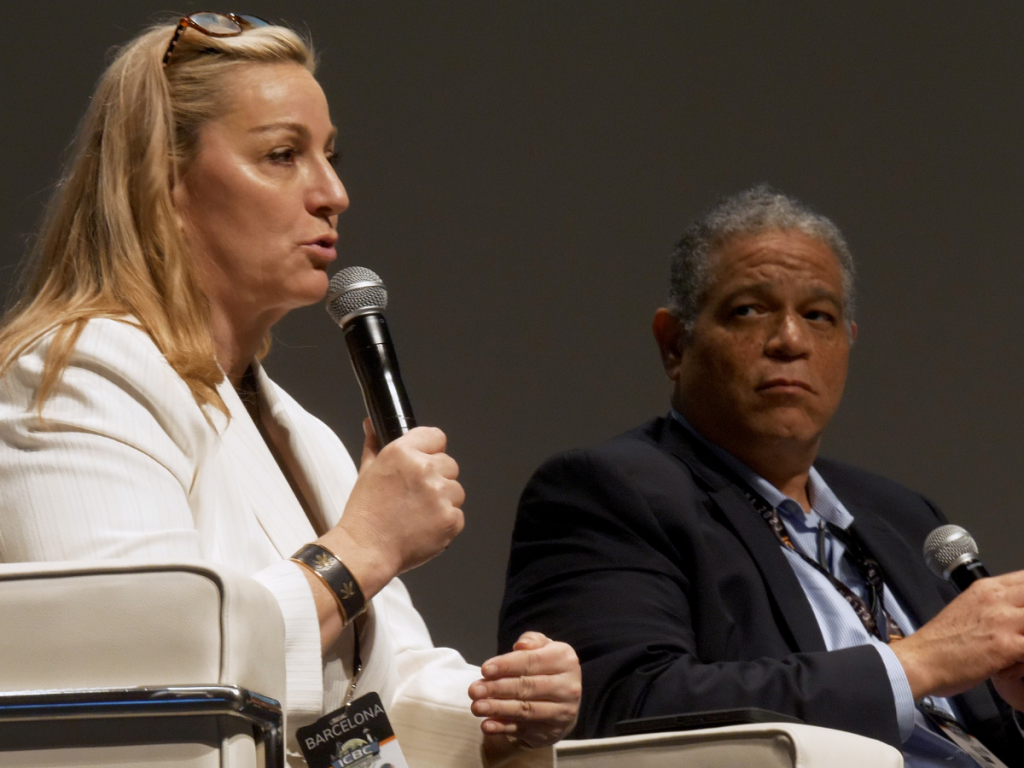
Below is a small sampling of photos from some of the many insightful panel discussions that took place at the 2023 International Cannabis Business Conference Barcelona B2B event:

International Cannabis Business Conference Barcelona 2023

No International Cannabis Business Conference event would be complete without an epic after-party, and this year’s event in Barcelona was no exception.

Below is a sampling of pictures demonstrating the ‘work hard, play hard’ mentality that makes the International Cannabis Business Conference’s events so special:

5 Reasons To Attend An International Cannabis Business Conference Event In Europe

The International Cannabis Business Conference is the world’s leading cannabis industry and policy event series. Below is a list of reasons why you should attend an upcoming event, including our B2B event in Barcelona in March, and our series’ flagship event in Berlin in June.

1. A Truly Global Following

The legal cannabis industry is spreading across the world which is creating unique business opportunities at the continental and global levels. It also creates many additional hurdles, not the least of which is effectively networking with people that are often located on the other side of the planet. The International Cannabis Business Conference makes effective networking significantly easier for attendees, with entrepreneurs, investors, policymakers, and industry service providers from over 80 different countries having attended past events.

2. Timely Information

The emerging cannabis industry is evolving at a faster pace and in more significant ways than any other large industry on earth. Just as laws are being reformed on a seemingly rolling basis in many parts of the world, so too are the regulations that govern the legal cannabis industry. Knowing the right information, and equally important knowing it in a timely fashion, can literally be the difference between a company succeeding or failing in the cannabis space. The International Cannabis Business Conference gathers true experts and leaders from around the globe so that attendees can learn the best and latest information straight from the individuals and entities that are on the frontlines of cannabis policy and industry.

3. Emerging Technologies

The International Cannabis Business Conference has debuted a number of emerging cannabis technologies, including technology related to cultivation and consumption. Every event for several years has featured exhibitors and speakers that are innovating the cannabis world for consumers, patients, and businesses. Being that the International Cannabis Business Conference has a truly global following, inventors and researchers from around the planet know that the best way to get their idea, concept, and/or findings on the world stage is to bring it to an International Cannabis Business Conference event.

4. Amazing Venues

Part of what makes the International Cannabis Business Conference events so special is where they are held. With people traveling to the events from the far reaches of the planet, International Cannabis Business Conference events double as a world class travel experience for many attendees, with the conference locations being recognized internationally as some of the top venues on earth. It’s one of the many reasons why the International Cannabis Business Conference experience is unparalleled.

5. Entertainment in Addition to Education

Anyone that has ever attended an International Cannabis Business Conference event will likely be quick to tell you how amazing the conference after-parties are. In addition to bringing in world class speakers and exhibitors, the International Cannabis Business Conference events also provide attendees with an opportunity to be entertained by renowned international musicians. Attendees can use the opportunity to unwind after listening to presentations and networking all day, or they can continue their conversations in a more relaxed setting. No other cannabis conference series provides the same level of entertainment value as the International Cannabis Business Conference.

Malta To Start Accepting Cannabis Club Applications By February

Malta made continental history late in 2021 when lawmakers passed Europe’s first nationwide adult-use legalization measure. Prior to legalization passing in Malta, the only two other countries that had previously passed national legalization measures were Uruguay in 2013 and Canada in 2018. However, unlike its predecessors, Malta’s legalization model does not provide for sales through pharmacies, storefronts, and for-profit delivery services. Rather, Malta’s legalization model will be built on non-profit cannabis clubs, applications for which people can start submitting as early as February 2023.

Despite legalization’s passage in Malta late last year, there are still no legal means by which to purchase legal adult-use cannabis products. Whereas consumers have a buffet of options from which to make cannabis purchases in Canada, and to a lesser extent Uruguay (residents only), consumers in Malta have continued to wait until the regulatory framework is set up for non-profit cannabis clubs. Thankfully, there appears to be some progress on that front.

Accepting Applications In 2023

The non-profit cannabis club model is not a new concept. Barcelona, where we co-host the world’s largest cannabis super-conference every year along with Spannabis, is home to numerous private cannabis clubs where people can acquire cannabis as well as consume it in a social setting. Uruguay is also home to hundreds of private cannabis clubs, although Uruguay has implemented a regulated system for cannabis clubs compared to Spain where clubs still operate in somewhat of a grey area of the law.

In Malta there will only be two legal sources for adult-use cannabis. One of them is home cultivation. Adult households in Malta can cultivate up to four plants, per the law that was passed late last year. The other source for adult-use cannabis will, of course, be cannabis clubs. However, clubs cannot exist without first having a license, and generally speaking a license cannot be obtained until there is an application and approval process set up. That last part is reportedly finally happening in February 2023 in Malta.

“The Authority for the Responsible Use of Cannabis will be in a position to start accepting applications for cannabis club licenses by next February, according to Parliamentary Secretary Rebecca Buttigieg.” stated Malta Today in its domestic coverage. Malta’s Authority for the Responsible Use of Cannabis will oversee the non-profit sector, including the cannabis club application process. Leonid McKay is currently the executive chair of the authority.

What About The European Union?

Currently, an adult-use legalization measure is looming in Germany, with the nation’s Health Minister Karl Lauterbach currently lobbying the European Union to gain approval prior to formally introducing the measure so that lawmakers in Germany can officially consider it. While some lawmakers in Germany have called for the measure to be introduced immediately, the Health Minister appears to still be seeking EU approval first, at least for the time being.

An obvious question that international cannabis observers are asking on social media and beyond is why is Malta legalizing without so much European Union involvement compared to Germany? It’s a straightforward question that yields some fairly complicated answers. The less complicated answer is that Malta’s legalization model is far more limited than what is being proposed in Germany. Lawmakers in Germany are proposing a nationwide adult-use market where legal purchases will be made at storefronts, similar to what is going on in Canada but on a much larger scale. Malta will have non-profit clubs where people can acquire cannabis, but only if they are members and membership will be limited in many ways I’d assume.

The more complex answer is that Germany’s Health Minister is likely pursuing a strategy that will save legal and political headaches down the road. If the European Union gives its blessing to Germany’s plan, then it largely thwarts potential legal challenges from other EU member nations and mitigates some of the probability of German legalization becoming a political punching bag for cannabis prohibitionists. EU approval would be a final answer in many ways, and while challenges would likely still be pursued, it would be nearly guaranteed that legalization would overcome any challenges if EU approval was granted prior to a legalization measure’s introduction. With that being said, the EU presumably realizes that the decision on Germany will set a precedent, and a big one at that, so it’s not a decision that will be made hastily. The longer it takes for the decision to be rendered, the louder the calls will become within Germany’s borders for lawmakers to hit the gas pedal. In the meantime, the framework for Malta’s limited legalization model will continue to develop.

The EU Is Deciding On More Than Just German Legalization

When it comes to cannabis reform activity, Germany is undeniably on center stage with the international spotlight placed directly on it. Part of that is due to the fact that German lawmakers are actively pursuing adult-use cannabis legalization and the launch of a regulated industry, and part of that is also due to how high the stakes are. Lawmakers from Germany are currently making their opening arguments to continental leaders, both on the supportive side and on the opposition side of the issue. Depending on which side succeeds, it could yield huge ramifications for the rest of Europe.

It’s quite possible that if German legalization efforts receive the blessing of the European Union, that it will be seen as the European Union (EU) giving the green light to any other country that wants to follow in Germany’s footsteps. After all, if Germany is allowed to do it, then why can’t other countries do the exact same? From that perspective, the gravity of what the EU is deciding extends well beyond Germany’s borders.

Lobbying Efforts Underway

Last week lawmakers in Germany started their efforts to educate and lobby the European Union in an attempt to yield their desired outcome. On the ‘pro’ side is German Federal Minister of Health Prof. Dr. Karl Lauterbach. Prof. Lauterbach was in Brussels last week to negotiate with EU leadership. The crux of Minister Lauterbach’s position seems to be, “protection against drug crime, legal safe consumption only for adults.”

Bavaria’s Health Minister Klaus Holetschek was also in Brussels last week. His reported intent was to achieve the opposite result compared to what is being sought by Germany’s Federal Minister of Health. Klaus Holetschek is calling on the EU to refrain from granting permission to Germany’s national legalization effort.

“The federal government’s planned cannabis legalization is not only hazardous to health, but I am convinced it also violates European law,” said the CSU politician on Wednesday according to Bild, after his meeting with the responsible general director, Monique Pariat, in Brussels. It’s unclear at this time what impact, if any, the dueling meetings had on the EU decision making process.

Framing Matters

The words used to describe the motivation behind Germany’s legalization effort will likely play a very big role in whether or not the EU grants its blessing, which was touched on by German cannabis policy expert Kai Friedrich Niermann in a previous article that I posted regarding German legalization and the EU. Kai and his law firm KFN+ advise major CBD and medical cannabis companies around the globe. Kai is also legal advisor to the European Industrial Hemp Association (EIHA), and a regular speaker at International Cannabis Business Conference events.

“In order to comply with its obligations under international drug treaties and EU law, Germany has opted for an interpretative declaration to the monitoring bodies of the UN treaties, referring to its own constitutional principles, the case law of the Federal Constitutional Court and the interpretative declaration already issued on the 1988 treaty. According to the German government, the plan to legalize cannabis in Germany is in line with the purpose and legal requirements of the conventions, as the focus of the reform is the protection of health and young people, and not the promotion of cannabis consumption.” Kai Friedrich Niermann communicated a few weeks ago after Minister Lauterbach’s presentation to the federal cabinet in Germany.

“I assume that preliminary talks have already been held with the European Commission, and that no fundamental reservations are to be expected in this respect. Particularly in view of the fact that a number of member states are also already making preparations for a reform of their national cannabis policies. Minister Lauterbach also assumes that if the EU Commission gives its approval in principle, lawsuits from other member states pursuing a more restrictive cannabis policy will have no chance of success.” he concluded.

That last part of Kai’s statement, touching on potential lawsuits from prohibitionist EU member states, is likely to prove to be tremendously significant in the coming years. Several countries are likely to follow in Germany’s footsteps, including the Czech Republic where leaders are indicating that they will pursue legalization on the same timeline as Germany. It’s likely a safe bet that just as there will be countries trying to join Germany, there will also be countries trying to prevent the spread of legalization. With that in mind, what the EU is currently considering may be specific to Germany, however, the ramifications of the decision will spread throughout the continent, so the significance of the decision cannot be overstated.

Will Europe’s Emerging Cannabis Industry Reach Its Full Potential?

The emerging cannabis industry is now legal in more places in Europe than at any other point in time since the dawn of prohibition, and that is clearly good news for consumers and patients across the continent. A great deal of reform still needs to take place to be sure, however, momentum is building and the European legalization light at the end of the prohibition tunnel continues to shine brighter with every passing year.

One of the best examples of that momentum on display came late last year when Malta became the first European country to pass a national adult-use legalization measure. While Malta’s legalization model is not as robust as the models found in Canada and Uruguay, the passage of a national legalization measure was still historic nonetheless. Adult-use pilot programs are already underway at the local level in Denmark, and those programs are also expected to be launched in the near future elsewhere. Yet another example can be found via low-THC cannabis products, or ‘cannabis light,’ which are now commonly bought and sold all over Europe.

The Biggest Domino Of Them All

The largest cannabis policy elephant in the figurative continental decision-making room is, of course, Germany. The European country is home to the continent’s largest economy and Germany shares more borders with other nations than any other country in Europe. Obviously, Germany holds tremendous political power in Europe and at the international level, so the significance of legalization there cannot be overstated. With the country trending towards launching an adult-use cannabis industry in the coming years, every cannabis observer around the world is glued to what is going on within Germany’s borders.

Not only will Germany likely prove to be the largest domino of them all and open the floodgates to reform elsewhere in Europe, Germany will also likely serve as the blueprint for legalization efforts and models in other countries, especially within the continent. Part of what is enticing about Germany is that it is such an enormous economy with a huge population, however, the fact that Germany is doing a lot of the heavy lifting right now when it comes to crafting cannabis policies and industry regulations on such a grand scale is also significant, as provisions will be adopted in part or entirely by other nations. No country will have to ‘start from scratch’ if they do not want to.

Tolerating The Cannabis Industry Versus Embracing It

Logically, there is a huge difference between European lawmakers and regulators tolerating the cannabis industry versus embracing it. Casual public policy observers may think that simply allowing the cannabis industry to legally operate is enough to ensure success, yet that is not the case. The emerging cannabis industry presents a once in a generation opportunity to do a lot of good for all of society, and thus it should be embraced by lawmakers and regulators as such.

Every government benefit and assistance that is afforded to other large industries in Europe should also be afforded to the emerging cannabis industry. Additionally, all nations need to work together to harmonize regulations to help mitigate unforeseen hurdles and barriers to industry growth. By embracing the emerging cannabis industry governments will then be able to harness it to create much-needed jobs, help suffering patients, boost local economies, and generate public revenue throughout the continent, including in rural areas.

Finding The Right Balance Among European Cannabis Industry Regulatory Models

The entire European continent seems to be trending towards legalization for the most part, and for the small group of nations that are still dragging their feet, the writing is on the wall. It’s only a matter of time before they get on the right side of history because every day that goes by is a day that other nations inch closer to beating them to the cannabis revenue punch.

Cannabis policy is not as straightforward as many seem to think. Simply stating that cannabis should be legal in general terms is one thing. Crafting national cannabis policies and regulations is a completely different matter and requires much more thought and planning, and that is just at a national level.

Just as Europe is a continent made up of many nations, so too will it be a continent made up of many different approaches to cannabis policy and regulation. Below is just a small sampling of cannabis policy facets that lawmakers and regulators need to consider when drafting measures:

  • Home Cultivation – plant limits, canopy size limits, public view restrictions, etc.
  • Commercial Cultivation – zoning, infrastructure needs, licensing
  • Commercial Sales – allowed or continued to be prohibited?
  • Imports/Exports – if yes, what regulations are involved?
  • Social Use – can people consume in clubs, and if so, under what conditions?

Those are just a handful of things that need to be taken into consideration, and even those have several sub-facets as well. It can be a daunting task, especially when considering that Europe is composed of dozens of countries, each with its own identity, culture, and approach to governing.

Right now there are already several different cannabis industry models in existence in Europe. Malta passed an adult use legalization measure late last year, although its model is based on home cultivation and non-profit entities from which consumers can source their cannabis.

Low-THC cannabis, or ‘cannabis light,’ has been sold all over Switzerland since 2017, and a pilot adult-use cannabis industry program for higher THC varieties is launching this summer in the country as well. Pilot programs are also in operation in Denmark, and hopefully soon, the Netherlands.

All nations need to learn from each other and collaborate to enact continental-level rules and regulations to help ensure that public safety concerns are addressed in a way that still allows the industry to reach its full potential (within reason).

Education is key, and with that in mind, we recommend that people check out a timely report from Augur Associates. The report is titled, ‘Which models for cannabis adults use regulation in Europe? – findings, objectives and proposals for legalisation.’

Augur Associates is a Paris-based consultancy agency dedicated to the sustainable and cutting-edge cannabis and hemp industry. In addition to their latest report, they have also published a number of other reports dealing with the emerging cannabis industry and shifting political landscape.

Their latest publication is a robust 271-page report in its complete version, with the additional option of downloading the summary version. Both options are free at Augur and Associates’ website (previously linked to in this article). The report is also coupled with a number of insightful recommendations from the publishers for lawmakers and regulators to consider.

All eyes are on Europe for the foreseeable future, and information of this value does not come along often, especially for free. Check out the latest report from Augur Associates because the more timely information that you know, the better suited you are to make informed decisions. It could mean the difference between you crushing it in the evolving international cannabis industry or fizzling out not long after you get started.

First Of Its Kind Multilateral EU Policy Meeting On Cannabis Held In Luxembourg

The first of many high-level meetings on the legalization of cannabis was held in Luxembourg between representatives from Germany, Luxembourg, and Malta

An unprecedented meeting occurred on Friday, July 15 – just three days before the beginning of the International Cannabis Business Conference’s Global Investment Forum in Berlin.

Ministers from Germany, Luxembourg and Malta met for the first time to kick off a series of meetings between the countries on how to legalize recreational cannabis.

There were three sessions. Two focussed on international and European law. The third looked at the opportunities and challenges ahead as public policy and regulations change.

After the meeting, they issued a highly revealing joint statement along with personal comments from attendees. According to the Luxembourg Minister of Justice, Sam Tanson, “Almost half a century after the entry into force of our law establishing the criminalisation of drug-related behaviour, namely the law of 19 February 1973 on the sale of medicinal substances and the fight against drug addiction, Luxembourg still pursues a drug policy focused mainly on repression. However, as our statistics show, the failure of this approach cannot be denied, and the time has come to develop a new approach, based on dialogue with the states that have made the same observation and the European and international institutions.”

The Key Takeaways

For those who have been watching global developments, this multilateral meeting was actually unprecedented. Nothing has happened quite like it on the path to legalizing the plant in the last decade.

The key takeaways were equally historic. Namely:

  • The demand for cannabis – both for medical and recreational use has grown exponentially. In fact, cannabis now accounts for 39% of all illegal drug traffic in the region. Unless the underground economy is undermined, this represents a major security threat from the amount of cash that is being handed over to organized crime.
  • There is no way to control any form of cannabis unless the laws are changed, and regulations are established.
  • Law enforcement is being challenged by the fact that it is no longer possible to distinguish between cannabinoids without expensive testing.
  • There is a need for EU governments to reassess their cannabis policies which reflect changing realities as well as to strengthen social programs geared towards health and prevention rather than criminalizing use.

There is no word yet on the schedule of meetings, or whether the first group will expand the invitee list to other legalizing countries, but given the broad scope of the inquiry, it would appear that these three countries are setting the table for a European-wide discussion about all cannabis regulation, and for all purposes.

Stay tuned. This is getting interesting.