Tag: Germany

German Study Shows Dramatic Increase In Cannabis Consumption

A study by UKE-Hamburg shows that the number of cannabis users in Europe has increased more than 25% over the second decade of the century.

According to a study conducted by the Centre for Interdisciplinary Addiction Research at the University of Hamburg and the Technical University of Dresden, evaluated publicly available data from EU countries along with the UK, Norway, Turkey and the United Nations Office for Drugs and Crime, cannabis use has increased dramatically across Europe.

According to such data, the number of adults, rather unsurprisingly, who have consumed cannabis has risen by an average of 27%. The strongest relative increase occurred among 35-64-year-olds, but overall regular consumption has also increased.

This is certainly interesting data simply because, both anecdotally and otherwise, even CBD stores are reporting a dramatic uptick in traffic as consumers try to ease Pandemic-related stress and anxiety.

However, this information is also coming at a time when many in Germany are calling for a comprehensive reform of the drug laws here – particularly as they relate to cannabis.

While this data also comes from police and crime interdiction reports (see the UN in particular) what this shows generally is that Europe, which has always been more cannabis-friendly (or at least less draconian) than the United States (see no widespread drug testing for employment as one example of the same), is finally starting to have a more honest conversation generally about the topic of cannabis reform.

With more and more countries admitting that cannabis has medical efficacy, even if grudgingly, as well as several now moving in the direction of home grow if not decriminalization, this data serves to underline a major and critical reality.

Cannabis as a medical drug, adult-use substance like but not as dangerous as alcohol and far less dangerous than tobacco consumption not to mention used in a vast variety of other products from food to cosmetics, building supplies to clothing, has hit the mainstream debate in Europe in a way that it has not before.

Change here may not happen as fast or in the same patterns as it did anywhere else, although it is beginning to resemble the fight for legalization in the United States.

And just like the US, there are starting to be clear movements, as well as official data, which points in the direction, finally of the next phase of cannabis reform – and both at a country and regional level.

Stay tuned to the International Cannabis Business Conference blog for updates about the European cannabis industry.

The German National Elections Will Forward Cannabis Reform – But How Much?

Germans went to the polls last Sunday, returning a not-so-surprising result. What will this new government mean for cannabis reform?

There is a new day in Germany. For the first time in 16 years, Angela Merkel is no longer the Chancellor of the largest and most powerful country in Europe. Beyond this, Sunday’s election means a defeat, at least by the number of seats held, for the CDU – the centre-right party that has held power since 1949 (at least on the Western side of the country).

What this shifting alliance means for cannabis reform is now a topic that has spread across at least the German if not European industry. What is certain, no matter what is that there will be some kind of change – although of course, any specifics must wait for the ruling government alliance to be formed.

Who that could be is still up in the air – but the SPD has already indicated that they are interested in entering an alliance with the Green Party – and both are far more friendly to at least basic cannabis reform than the CDU has ever been.

Here are the basic issues on the table.

  1. The entire cannabis debate must be re-examined and redefined. This includes both of the low hanging fruit at this juncture including removing CBD from the federal Narcotics Act as well as decriminalization of all cannabis possession. The patient count in Germany has continued to climb despite a lot of resistance and patient hurdles which have still not been solved.
  2. If the SPD forms an alliance with either or the Greens and FDP, one thing is certain. Recreational cannabis trials are going to be on the agenda here in a matter of 18-24 months, particularly as both Switzerland and Luxembourg are now hurtling towards the same – although in the case of Luxembourg, there appears to be a new impetus to slowing down that trial based on concerns in some quarters about “chaos” ensuing at the Luxembourgian borders with their European neighbours. If Germany changes its cannabis policy, this will be less of a legitimate excuse (not that this carries any weight now).

Regardless of the particulars and the timeline, this is still unbelievably good news. The biggest possible roadblock might be that the SPD might bring the CDU into the governing coalition. The CDU have been glacial so far in their acceptance of the entire issue.

Even in this scenario however, with so many of the other parties in favour of at least basic and logical steps forward, the next steps of cannabis reform are likely to unfold now far more easily – and with it carry the seeds of change across Europe and the EU.

Big changes are on the way in the German cannabis industry. Be sure to stay tuned to the International Cannabis Business Conference blog for more updates.

What Are The Best Cannabis Events In Germany?

It is an extremely exciting time to be a cannabis enthusiast. Thanks to the hard work of countless cannabis activists, cannabis reform continues to spread across the planet. Cannabis is now legally accessible for medical and/or adult-use purposes in more jurisdictions than ever before since the dawn of prohibition.

Momentum for cannabis reform is particularly strong in Europe where safe access to medical cannabis can be found in most countries, especially in Germany. Germany is now the cannabis capital of the European continent, at least from an industry standpoint. Adult-use legalization in Germany will hopefully happen sooner rather than later.

The rise in cannabis reform has been paralleled by a rise in interest in all things cannabis. People want to learn how to cultivate cannabis, about cannabis science, the latest cannabis products, how to get into the cannabis industry, and much more. It can be very difficult for people to know what information is valuable and what is not, and it’s particularly difficult to network in a real-life setting with other like-minded cannabis enthusiasts in a meaningful way.

The best way to learn a lot about cannabis in a short amount of time while making a lot of new cannabis friends and colleagues is to attend an in-person event. There’s really no adequate substitute for attending an in-person cannabis event, as so much happens when cannabis-curious newbies, leading experts, and folks that are in between are all under one roof socializing, teaching, and learning.

International Cannabis Business Conference Berlin 2021

There are many cannabis events out there these days of all types and sizes, however, not all of them are created equal. Some events are the real deal while many prove to be nothing more than hype. If someone attends a cannabis event they obviously want it to be worth the effort on their part. The last thing that someone wants to do is to buy tickets and travel to a cannabis event just for it to turn out to be lackluster (or worse).

The recent International Cannabis Business Conference in Berlin, which included our Global Investment Forum, brought together entrepreneurs, investors, and policymakers from all over the planet. Below is a recap video of our 2021 conference in Berlin:

One of the many highlights from our conference in Berlin was a truly historic bipartisan political panel featuring current German lawmakers discussing cannabis policy The panel can be viewed below (the panel was held in the German language):

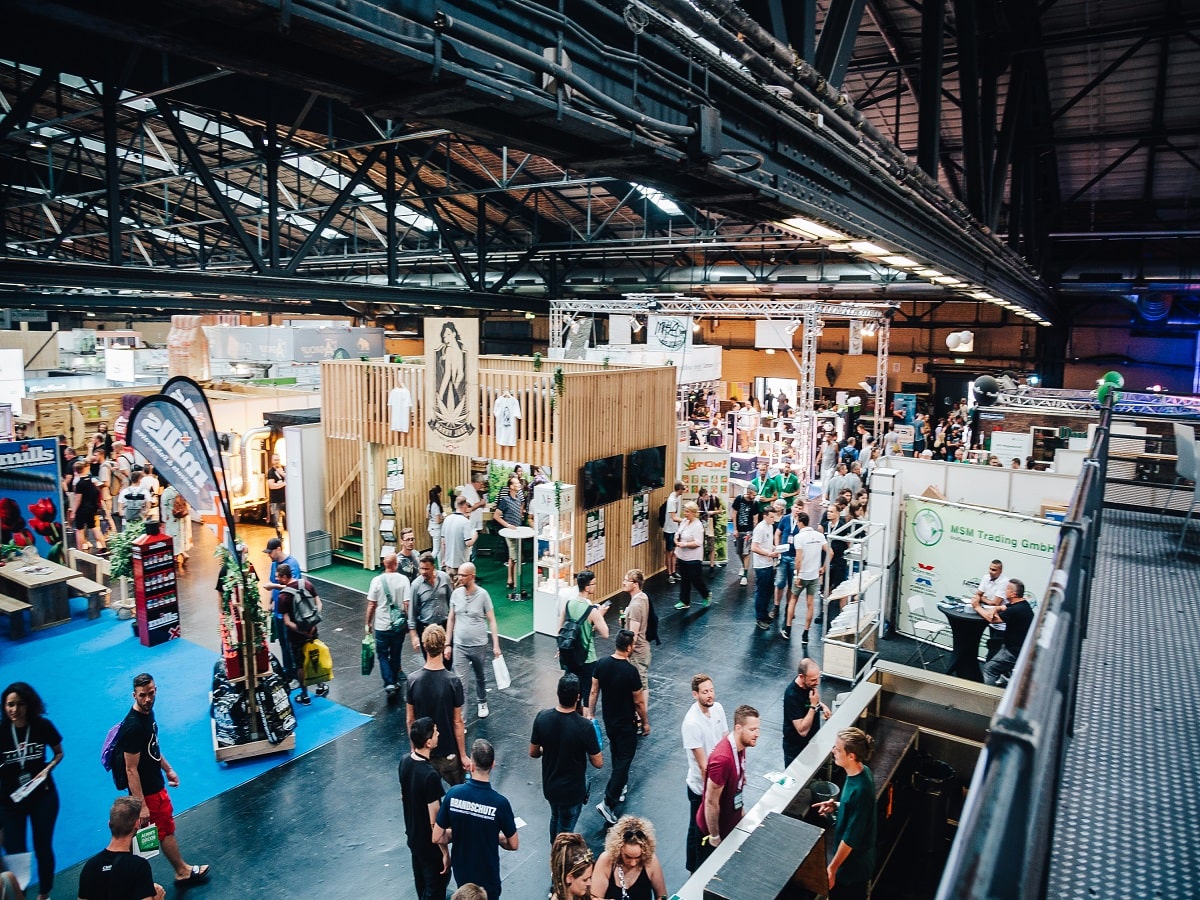
Another event that we are particularly excited about is the Mary Jane Berlin hemp fair coming up on October 22-24, 2021. Mary Jane Berlin is a C2C event and festival and includes an extensive cultural and entertainment program that is offered in conjunction with exhibitors, food stands, live concerts, and congresses on therapeutic properties.

Mary Jane Berlin Hemp Fair 2019

Below is a video recap of Mary Jane Berlin’s last event:

We are very excited about the strong bond that our two events have created and the strategic partnership that we have formed. Mary Jane Berlin is Europe’s fastest-growing C2C cannabis fair and pairs perfectly with our flagship B2B conference in Berlin to provide a comprehensive cannabis experience.

If you want to learn more about cannabis and network with like-minded cannabis enthusiasts, make sure to check out the upcoming Mary Jane Berlin hemp fair and festival. The event is expected to have over 35,000 cannabis-related products on display and it’s almost guaranteed that there will be something that very few cannabis enthusiasts have ever seen before. You can find out more about Mary Jane Berlin, including how to purchase tickets, at their website: https://maryjane-berlin.com/

In addition to the Mary Jane event, also make sure to mark July 19-20, 2022 on your calendars because the International Cannabis Business Conference will be coming back to Berlin and bringing with it our signature blend of industry, policy, and entertainment. Attend both the Mary Jane Berlin C2C fair and our B2B conference in Berlin to take your cannabis pursuits to the next level!

Leading German Politician Erwin Rüddel On Cannabis: “Attitude Is More Open”

Until now, the CDU seemed to be quite isolated with its position on a possible new regulation. While the SPD, the Greens, the FDP and the Left all call for legalization, or at least model projects, in their election campaign programs, the CDU does not mention a possible new regulation of cannabis in a single syllable. Also to an inquiry of krautinvest.de the press office of the CDU answers only with short reference to the current government program.

A few weeks before the election, the CDU member of parliament Erwin Rüddel, who is also the chairman of the health committee of the German Bundestag, sits on a panel with Dirk Heidenblut (SPD), Werner Graf (Greens), Dr. Wieland Schinnenburg (FDP) and Niema Movassat (Left) at the International Cannabis Business Conference – in a rather lost position, one would think.

Far from it. In the interview with krautinvest.de Rüddel makes possible coalition partners hope for compromises, suggests at least model projects as solution. Especially when the CDU would have to negotiate with two other parties, the CDU politician does not seem to believe in maintaining the status quo. And: Even the great challenges of our time – such as Corona, Afghanistan or Corona – he does not let pass as an excuse to put off a possible cannabis re-regulation: “We are a parliament based on the division of labor and accordingly there are also the necessary capacities.”

It will be interesting to see whether possible coalition partners agree to model projects (or push for fundamental legalization) and what these would look like in detail. Should it come to that, a first small market for recreational cannabis is likely to develop in Germany under state control. After all, flowers have to be cultivated or imported, stored and distributed.

krautinvest.de: Five parties are currently being considered for a new government. In all conceivable coalitions, the CDU is the only party that is against any form of legalization. Is legalization completely out of the question if the CDU is in government?

Erwin Rüddel: The CDU/CSU is somewhat isolated in its stance on this issue. That’s why I’d be surprised if the issue didn’t come up in the coalition negotiations after the upcoming federal elections, especially if the CDU/CSU were to negotiate with two other parties. In my view, model projects would be a conceivable compromise.

krautinvest.de: You personally have already hinted at such model projects recently. Can you briefly specify the conditions?

Erwin Rüddel: In any case, such a project would have to be implemented in a well-selected region with a defined group of people entitled to access it, and the dispensing would have to be linked to addiction prevention and counseling. This is done in a similar way in Uruguay, for example. It is important that the THC content of the cannabis distributed is controlled. The biggest problem I see is the involvement of 15- to 18-year-olds. Of course, they should not be able to legally purchase cannabis for consumption, but this group is exactly the one where prevention work is most important and should therefore be taken into account in the evaluation.

krautinvest.de: Could you imagine further new regulations beyond the model projects?

Erwin Rüddel: For me, such a model project would be an open-ended introduction to the topic: Either we get confirmation of the reservations about cannabis or we learn that things should be approached somewhat differently than is the case today. After an appropriate evaluation, further steps can then follow.

krautinvest.de: Hand on heart: How strongly do opinions differ on this topic within the CDU?

Erwin Rüddel: There are certainly very different opinions in our group. In general, however, I have the feeling that the attitude to this issue is more open than it was a few years ago.

krautinvest.de: In addition, the challenges are currently great: climate change, Corona, Afghanistan – does a new regulation of cannabis fall completely under the table, because the concerns are much greater elsewhere and the parties prioritize other areas?

Erwin Rüddel: The fact that we are facing very great challenges does not mean that we cannot tackle other issues. We are a parliament based on the division of labor, and the necessary capacities exist accordingly.

This interview has been first published on krautinvest.de and syndicated with special permission.

Germany’s Drug Commissioner Endorses Decriminalizing Cannabis

In recent years Germany has taken over the title of ‘cannabis capital of Europe’, at least from a cannabis industry perspective. Germany’s medical cannabis industry is booming, and with domestic production ramping up, more industry growth is on the way.

However, on the adult-use side of the cannabis policy equation, Germany is still lagging behind a handful of other countries. Uruguay and Canada have already legalized cannabis for adult use, although each country has its own model.

Legal decisions in countries like Mexico and Italy have carved out some legal protections for adult-use cannabis consumers in those nations, and several countries are pursuing adult-use cannabis pilot programs in some fashion.

German lawmakers rejected an adult-use cannabis legalization measure late last year, although, with a federal election looming support for adult-use legalization could increase depending on the results and who is in office post-election.

Decriminalization On The Horizon

Separate from the push to legalize cannabis for adult use is an effort to at least decriminalize a personal amount of cannabis flower. That is a policy change that appears to be supported by Germany’s federal drug commissioner. Per Spiegle (translated from German):

Now the drug commissioner of the federal government, Daniela Ludwig ( CSU ), has advocated prosecuting cannabis possession up to a personal use limit of six grams nationwide as an administrative offense – and no longer as a criminal offense.

“In my opinion, a limit of six grams would be acceptable – nationwide,” the government representative told the editorial network Germany (RND). ”A limit value above which the possession of cannabis should continue to be punished as a criminal offense and not as an administrative offense must be set with care, because it has a certain signal effect and an influence on consumer behavior.”

Ludwig is advocating for decriminalization in Germany as a compromise between those that want to legalize cannabis for adult use and those that want cannabis to only be legal for medical purposes.

Decriminalization Does Not Go Far Enough

Decriminalizing cannabis up to 6 grams is not as straightforward of a policy as it may seem to some people. Does the 6-gram limit only apply to dried cannabis flower? What about concentrates, edibles, transdermal patches, tinctures, etc.?

Years ago, cannabis decriminalization was more straightforward because the variety of cannabis products was largely limited, and a flower-only decriminalization policy was more encompassing of what consumers had in their possession. That is not the case now, including in Germany.

Those concerns are in addition to the flaws in the basic premise that cannabis decriminalization is a good public policy. Sure, decriminalization is better than outright prohibition and treating cannabis possession as a crime, however, it’s still not ideal.

An ideal national cannabis policy involves embracing the emerging cannabis industry to not only save public funds that were previously being wasted on enforcing prohibition, but also to reap the economic benefits of a booming industry such as job creation, stimulating local economies, and public revenue generation via taxes and fees.

To hammer home that point, consider alcohol decriminalization versus a regulated adult-use alcohol industry. Obviously, there’s a major difference between the two, and one is clearly better than the other. The same is true for cannabis in Germany, and beyond.

Consolidation In The German Cannabis Market? “High-Priced Will No Longer Exist”

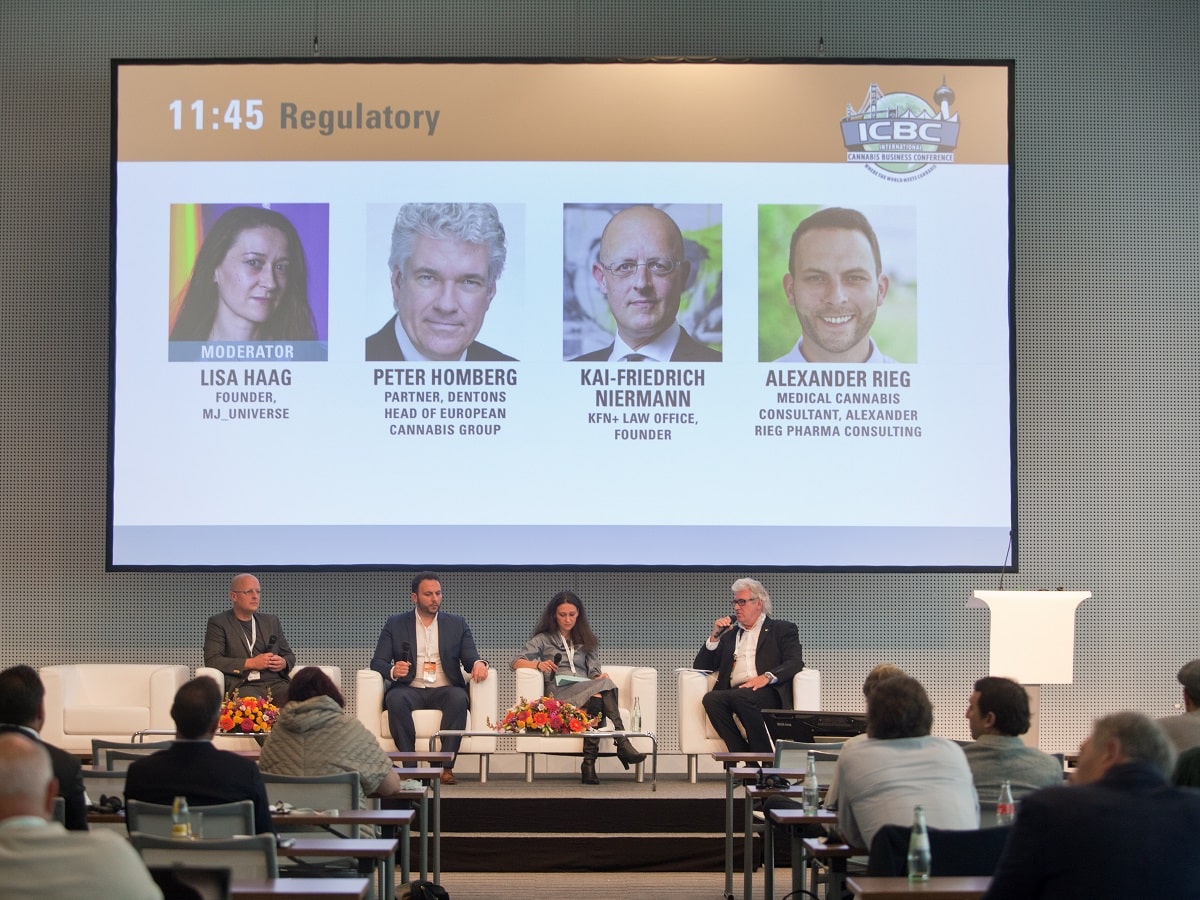
Attorney Peter Homberg, partner at business law firm Dentons, spoke with krautinvest.de ahead of the International Cannabis Business Conference about potential changes to medical cannabis prescribing, pending market consolidation, IP-protected forms of application, clinical trials, cannabis IPOs, uniform EU-wide rules for medical cannabis, and more.

Key Facts:

  • Complex reimbursement practices on the GKV side will be maintained.
  • A way for exclusivity of own products: Patent forms of application.
  • Clinical studies: We always experience surprises – the required effectiveness cannot always be proven. A negative outcome can have an impact on the overall market.
  • In one to two years, the next German cannabis companies will be ready for a successful IPO.
  • The EU is becoming a supplier market.
  • We need uniform standards for medical cannabis in the EU.

krautinvest.de: Hello Mr. Homberg. Since March 2017, medical cannabis has enjoyed a special position in the pharmaceutical industry. Flowers and cannabis extracts, not only finished medicinal products, are allowed to be prescribed. Patient:s must be chronically ill and other treatments have been tried beforehand. There is an authorization requirement. Will this process continue in the coming years?

Peter Homberg: We have to look at two processes: First, the issue of reimbursement. And secondly, the documentation obligation vis-à-vis the BfArM: Which patient is prescribed which application with which success?

I assume that the current complex reimbursement practice on the part of the GKV will be maintained. The GKV funds want to check very carefully who receives cannabis as medicine, in order to avoid at all costs that patients who do not fulfill the prerequisite receive cannabis. The documentation obligation will also be with us for a while, as will the fundamentally positive therapy-open approach.

In this context, we should not forget that in 2017 the legal basis for prescriptions via the detour as “Rezepturarzneimittel” was created very quickly. In the initial phase, this led to an incredible reimbursement level of 20 euros or more per gram because of the “pharmacy surcharge” for prescription drugs. In the meantime, we are already experiencing a price erosion – hardly anyone is still selling for the maximum price of 9.52 euros, which has applied since the new price regulation.

krautinvest.de: In the case of cannabis flower, companies are not incentivized to research because there is no or little chance of patentability. In which cases can researching cannabis companies protect their IP and how?

Peter Homberg: There are different approaches by the industry to gain exclusivity for their products. They certainly can’t do that if they are only growing and distributing flower. One way is to patent forms of application – such as inhalation devices or patches, etc. Of course, there is also the option of bringing finished medicines to market. However, this requires extensive clinical trials, and from my many years in the pharmaceutical industry I know all too well that we always experience surprises in the process, i.e. that the required efficacy cannot always be proven. Admittedly, the situation is somewhat different with cannabis; after all, the companion survey already shows that cannabis has a positive effect. Nevertheless, there is a risk that a clinical trial with a negative outcome for one indication may have an impact on the overall market.

krautinvest.de: What kind of investment costs are we talking about here?

Peter Homberg: For a clinical trial with a cannabis product up to the end of clinical phase 2b, sums of between 80 and 150 million are conceivable, depending on the indication. This is less than for other pharmaceutical products, since, for example, no extensive toxicity testing is required. We already know: Cannabis is safe.

krautinvest.de: Some cannabis companies are already looking at an IPO, partly in order to raise such investments. In Canada, we saw share prices plummet after the initial hype. Are German cannabis companies ready for the IPO?

Peter Homberg: The IPO is one of the variants for raising capital for entrepreneurial activities. If I want to research and grow as an entrepreneur, I need capital. For an IPO, however, I firstly need a good and convincing storyline and secondly I need to have proven sustainability. For this, cannabis companies in Germany are on a very good path, but they are still relatively young. I therefore think that in one to two years, the first companies will be ready for a successful IPO.

We have also seen companies elsewhere that have gone public without proving sustainable profit – in Canada, for example. In my view, companies should first demonstrate some form of profitability in order to manage a successful IPO. In addition, a stable and comprehensible business plan should be a matter of course. Ultimately, the crucial question is how big the companies are and how much capital they can raise.

krautinvest.de: There are now around 100 wholesalers in Germany. Will we see more M&A in the future?

Peter Homberg: We will certainly see consolidation in the German market. In perspective, we will not see 30 to 40 distributors for medical cannabis products in the German market. At what prices the cannabis distributors will sell is difficult to predict. However, in my view, the high prices from the early days will no longer exist. I think that in the meantime you have to cut back and it will also only become clear who is willing to buy.

krautinvest.de: And what will change beyond distribution and research?

Peter Homberg: In the short term, we will certainly see one or the other supplier of cannabis flowers and extracts in Europe. I am thinking, for example, of companies from Portugal, Spain, Greece or even Malta. The EU will therefore turn into a supplier market, which could lead to further pressure on current prices. It also remains to be seen how much “German cannabis” will contribute to this.

krautinvest.de: Keyword EU. EU-wide cannabis programs are partly declared superfluous. Entrepreneurs, on the other hand, complain about a highly fragmented regulatory market at the national level. Germany leads the EU by a wide margin. Do we need our own uniform rules at country and EU level for medical cannabis?

Peter Homberg: Absolutely: Yes! We need uniform standards both within the EU and at the national level. Accordingly, in March 2019, a European Parliament resolution was submitted to the Commission to implement a uniform framework for cannabis at the EU level. Currently, the Commission is working on a directive for the harmonization of the European market for cannabis in European countries. This is also urgently needed. Because all member states of the European Union handle medical cannabis differently, which is very unfavorable for the European single market. This is exactly why the European Cannabis Association was founded. At the ECA, we are particularly committed to industry-friendly harmonization.

About Peter

Peter Homberg is a partner in the Dentons Berlin office. He focuses on life sciences, IP, corporate law and M&A transactions in the life sciences and high-tech sector as well as in R&D and cooperation agreements, cross-border IP licensing and IP strategies. Furthermore, he has extensive experience providing legal advice on compliance issues. Additionally, he is the head of the German Life Sciences Practice and European Cannabis sector group. Peter advises inter alia companies in the pharmaceutical, diagnostics, biotechnology, medical device and medical cannabis industries—from startups to large publicly listed companies. Furthermore, he has broad transactional experience in Southeast Asia. Peter is member of the Licensing Executive Society (LES), the German Association for Intellectual Property and Copyright (GRUR), the German Institution for Arbitration (DIS) as well as the Pharma-Lizenz-Club Deutschland e.V. He regularly holds lectures at seminars and conferences. He is the author of numerous professional articles and other publications regarding corporate or IP law in the field of life sciences and medical cannabis.

At the International Cannabis Business Conference, Peter Homberg will give an update on regulatory changes in Europe and Germany regarding medical cannabis at 9:30 a.m. on Thursday, Aug. 26.

This interview was originally published in German on krautinvest.de and is syndicated with special permission: https://krautinvest.de/konsolidierung-im-cannabismarkt-die-hochpreisigkeit-wird-es-nicht-mehr-geben/

German-Grown Cannabis Available In Pharmacies For First Time

The Tilray/Aphria owned facility becomes the first GMP certified crop to make its way to German pharmacies since the beginning of the tender bid process.

In a victory that has taken literally four years to accomplish, the first German-grown cannabis, produced by the Tilray/Aphria consortium in Neumunster, near Hamburg, has begun to be distributed to German pharmacies.

That said, the process has been torturous, extended and drawn out. On top of this, the terms of the bid were never going to allow any of the producers to come close to producing enough in-country (at least for four years) of demand, which has also steadily grown here since 2017.

The Importance of imports to the German market

While the beginning of domestically cultivated cannabis is an important step, the reality is that imported cannabis will play an important role in the market for years to come. This in turn has already led to feeder markets in countries like Portugal and Greece and attracted cannabis from as far away as Africa and Australia.

Indeed, in terms of trigger events, it is the German bid itself, with the setting of both certification grade and the mandate for health insurance to cover the same, that has created the beginnings of what is going to be the world’s most valuable medical cannabis market and further one that will, as of next year, begin to also see recreational experiments all over the continent.

Indeed, it seems odd and strangely timed (although of course nobody could have predicted Covid and the slowdowns in all that have occurred) that the Tilray/Aphria coalition, which itself is a strange Frankenweed merged company on both sides of the discussion in both Germany and Portugal, plus one of the largest distribution networks in Germany via the acquisition of one of the larger regular distributors (CC Pharma), would begin distribution right before the Swiss and Luxembourg recreational trials are set to begin.

Whatever the coincidence, the reality is that even in Germany, cannabis, even if of “just” the medical kind, is becoming a normalized reality across Europe – and it is the Deutsch market that has led the way.

In the next few years, the many problems caused by normalization will continue to fragment the industry – until the industry comes together and changes the laws on cannabis at a European level. Until then, it is one step and victory at a time, and this announcement is no small feat.

Be sure to book your tickets now to the International Cannabis Business Conference in Berlin!

Germany’s Cannabis Vape Market Likely To Expand Rapidly

An Israeli firm has obtained a first-of-its-kind license from the German regulatory authorities for extracts for inhalation.

The German market remains one of the most interesting in Europe in terms of product approvals and entry. As of last month, an Israeli company, Panaxia, along with its German partner Neuraxpharm, obtained a first of its kind regulatory license from German authorities for the marketing and distribution of medicinal cannabis extracts for inhalation.

The vape market so far is in its infancy so far – namely because of not only approvals but cost. So far, the largest vaped cannabinoid in the country is flower – usually with a medical vape made in Germany.

With the importation of extracts for inhalation, the vape market is likely to expand rapidly – starting with the introduction of Kanabo’s vape pod and associated vape capsules.

How fast they will find acceptance, however, is a discussion that may languish simply because most medical vape products are not affordable to the average patient without specific health insurance approval first.

That said, for existing medical cannabis patients, this alternative may become an alternative their insurers will pick up – especially for those who are fed up with the hassle of vaping flower.

Alternative Product Forms on The German Market

While flos has been the most prevalent new form of the drug for the last five years or so, there are indications that the German medical market is opening to other kinds of medical cannabinoids. Dronabinol is a big part of the market here – about 1/3 of the same – including the liquid kind. Now there will be other forms of cannabinoids that doctors can choose from.

This may increase the interest of doctors in prescribing the drug – especially given medical preference for “dosing.”

What this is also likely to do is create another expensive cannabis drug that insurers are reluctant to cover – and will be more expensive than the average cannabis patient can afford.

Right now, the average cost of cannabis to a patient is still running about 1,000 euro per month if they cannot obtain health insurance approvals upfront. This is a cost that is added to by the cost of a doctor’s prescription.

Change in other words is coming again to the German cannabis market – but the biggest barrier of all to access – cost and doctor prescription, remains unsolved.

Be sure to attend the International Cannabis Business Conference when the conference returns to Berlin in August.

German Cannabis Reform Moves Forward In Curious Ways

A new poll suggests a majority of Germans support the medical use of cannabis as the city of Dusseldorf removes its ban on hemp products. Is more reform on the way?

The German cannabis reform discussion is clearly progressing – but it is proceeding slowly and in curious ways. Unlike in other countries, the driver of reform here is both federal and medical – meaning that the plant as medicine must be slotted into existing pharmaceutical and medical procedures. The reason is that Germany changed its law in 2017 to mandate that cannabis as medicine must be compensated by public health insurance if prescribed by a doctor.

Since then, the battle has raged, and in different ways and different levels. Patients are still fighting to get basic access. However, on the hemp and CBD front, things have stayed strange. Part of the reason is that many German authorities are hostile, generally, to the idea of cannabis reform – even on a local level (as seen in the United States, frequently over the last thirty years of cannabis reform). See California as a perfect example of the same.

However, in the German version of the same, it is hemp that authorities attacked first – in part because the regulated hemp market has clearly staked out territory that appears to be intimidating to those who oppose all kinds of cannabis reform. Indeed, the city of Dusseldorf banned hemp sales – a move which has just been successfully overturned in court. That said, the company involved still had to bear the legal costs.

A new survey by the German research institute Civey has found that 43% of Germans believe that cannabis should only be legal for medical purposes. Only 36% believe that it should be fully legalized, regulated, and taxed. That said, of the 15% who still believe that cannabis should be illegal for all purposes, the vast majority believe that those who use the drug should also be punished.

These numbers, however, seem very familiar to Americans if not Canadians who watched the entire conversation if not poll numbers like these flip drastically upon the introduction of recreational state markets – starting with Colorado and Washington State as of 2014.

As of this April, a Pew Research Center poll found that as of this year a whopping 90% of Americans want Prohibition to end and either medical and or recreational cannabis to be legal. This has changed drastically in the last decade. As of 2011, only 50% of Americans supported cannabis reform, according to Gallup.

Be sure to book your tickets to the International Cannabis Business Conference when it returns to Europe this summer!