Tag: Germany

Legal Medical Cannabis Imports Surged In Q3 In Germany

During the first three full months following Germany’s enactment of the CanG adult-use legalization law (Q3), legal medical cannabis imports increased by over 70% compared to the previous period. The first provisions of Germany’s CanG law, which removed cannabis from the nation’s Narcotics List, took effect on April 1st, 2024.

Germany’s Federal Institute for Drugs and Medical Devices (BfArM) recently published medical cannabis import data for Q3 2024, with the BfArM graph below showing “the total amount of cannabis imported quarterly from abroad to Germany for medical and medical-scientific purposes in the form of dried flowers (in kg )”:
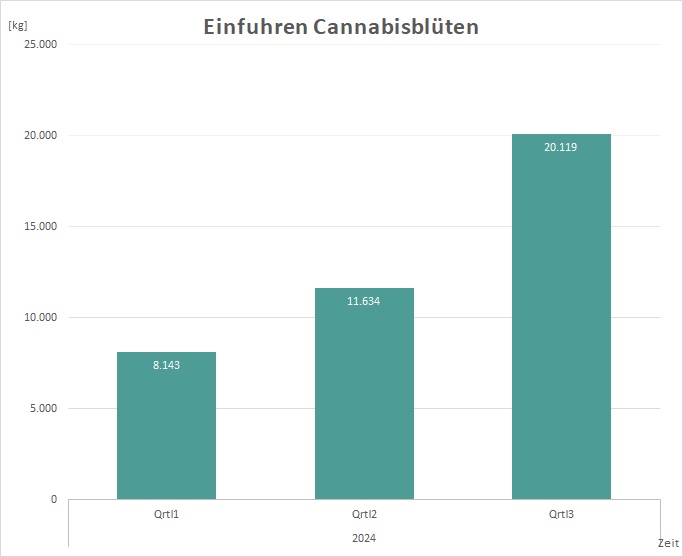
BfArM dried flower cannabis imports germany Q3

“The following figure shows the total amount of cannabis imported into Germany from abroad for medical and scientific purposes in the form of dried flowers and extracts on a quarterly basis. The dried cannabis flowers are included as a weight quantity (in kg ), the extracts as a weight quantity of dried cannabis flowers (in kg ) that were required to produce the respective extracts.” states BfArM (translated from German to English):
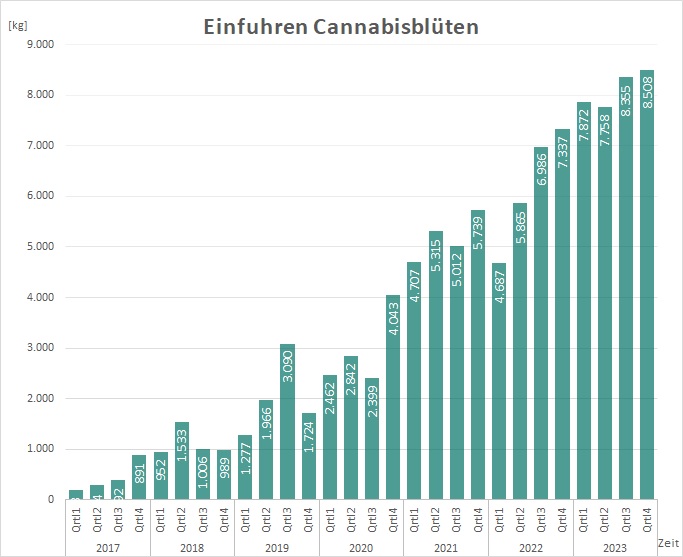
BfArM dried flower and extracts cannabis imports germany Q3

Germany adopted a national adult-use cannabis legalization measure earlier this year. The first provisions of the law permitting personal cultivation, possession, and use went into effect on April 1st, 2024. Additionally, as another part of ‘Pillar 1’ of German legalization, cultivation associations became legal on July 1st, 2024.

‘Pillar 2’ of the nation’s legalization model involves launching regional adult-use cannabis commerce pilot trials. Such trials already operate in the Netherlands and Switzerland and are allowed under European Union law.

The German Cannabis Business Association (BvCW) recently called for no further delays in launching pilot trials in Germany to combat Germany’s unregulated market and for the nation’s new government to not regress on cannabis policies and regulations.

“Legal access options such as home cultivation, cultivation associations, but also commercial models with licensed specialist shops are the best solution to push back the black market. Therefore, a new federal government should ensure that these legal accesses to cannabis are created and maintained,” says Michael Greif, Managing Director of the BvCW. “There is no protection for young people on the black market, dealers do not ask for ID. But there are dangerous additives there. The best way to ensure youth and consumer protection is through a legal and regulated market.”

The German cannabis market is home to 4-8 million consumers with a total potential market value of between €7.8 billion and €15.6 billion according to data provided by leading economist firm Whitney Economics.

To completely supply German demand, and thus eliminate the unregulated market, Germany’s cannabis industry would need to produce over 948,000 kg of flower annually according to Whitney Economics.

Advocates Call For Cannabis Industry Expansion In Germany

The German Cannabis Business Association (BvCW) is calling for the German government to embrace the nation’s emerging legal industry rather than treating people like criminals for consuming cannabis responsibly. The urging by BvCW comes amidst calls by some conservative lawmakers to roll back Germany’s recent cannabis policy changes.

“If the Union factions want to dry up the black market and fight organized crime, the cannabis industry is on their side. However, if this is to be done by criminalizing patients and consumers, this is the wrong way. It is not the users who are criminal, but the actors of the black market,” said Dirk Heitepriem, President of the BvCW, in a recent newsletter.

Germany adopted a national adult-use cannabis legalization measure earlier this year, with the first provisions of the law permitting personal cultivation, possession, and use going into effect on April 1st, 2024. Additionally, as another part of ‘Pillar 1’ of German legalization, cultivation associations became legal on July 1st, 2024.

‘Pillar 2’ of the nation’s legalization model involves launching regional adult-use cannabis commerce pilot trials. Such trials already operate in the Netherlands and Switzerland and are allowed under European Union law. BvCW is calling for no further delays in launching pilot trials in Germany to combat Germany’s unregulated market.

“Legal access options such as home cultivation, cultivation associations, but also commercial models with licensed specialist shops are the best solution to push back the black market. Therefore, a new federal government should ensure that these legal accesses to cannabis are created and maintained,” says Michael Greif, Managing Director of the BvCW. “There is no protection for young people on the black market, dealers do not ask for ID. But there are dangerous additives there. The best way to ensure youth and consumer protection is through a legal and regulated market.”

Lawmakers in Germany adopted the CanG law to boost public health outcomes by permitting adult consumers to obtain, or cultivate their own, cannabis products legally.  EU law does not permit national recreational cannabis commerce, however, it does permit regional pilot trials since they are research-based.

The German cannabis market is home to 4-8 million consumers with a total potential market value of between €7.8 billion and €15.6 billion according to data provided by leading economist firm Whitney Economics.

To completely supply German demand, and thus eliminate the unregulated market, Germany’s cannabis industry would need to produce over 948,000 kg of flower according to Whitney Economics. That would be impossible if Germany’s cannabis laws regressed.
“Reversing the CanG would also set Germany back considerably in international competition and in research opportunities related to cannabis,” explains Dr. Stefan Meyer, Vice President of the BvCW. “The cannabis industry in Germany has created hundreds of jobs in recent years, provided thousands of patients with access to urgently needed therapies and proven that high-quality and safe products can also be produced in Germany.”

“Regulate instead of prohibit – this should also be the motto for a new federal government. The cannabis industry is ready to work together to dry up the black market. This requires commercial opportunities to grow and sell cannabis in Germany, legal access to home-grown cannabis for consumption, safety and reliability for patients, and liberalization of industrial hemp,” said Dirk Heitepriem.

BvCW suggests that as a first step, “the Federal Ministry of Food and Agriculture could now issue the Consumer Cannabis Science Responsibility Ordinance (KCanWV).”

In the middle of the ongoing debate in Germany, the nation is hosting a multi-national conference where various leaders will share their experiences with modernizing cannabis policies and regulations, as first reported by Marijuana Moment.

“Representatives from Luxembourg, Malta, the Netherlands, the Czech Republic and Switzerland were invited by German Commissioner for Addiction and Drug Issues Burkhard Blienert to the meeting in Berlin on Monday and Tuesday to “exchange experiences in regulating cannabis for non-medical purposes.” the outlet reported.

Advocates Urge German Government To Prioritize Industrial Hemp Liberalization Act

Last week, German Chancellor Olaf Scholz announced the firing of Finance Minister Christian Lindner, effectively ending the ruling government’s coalition of Scholz’s Social Democratic Party (SPD), Lindner’s Free Democratic Party (FDP), and the Greens. The coalition was often referred to as the ‘traffic light coalition.’

Chancellor Scholz also announced that Germany’s Parliament will hold a confidence vote in January which could move the next Bundestag elections to March 2025. The collapse of the traffic light coalition is resulting in industrial hemp industry advocates urging the nation’s lawmakers to ensure that the Industrial Hemp Liberalization Act is prioritized.

“Following the upheaval in the federal government, important legislative projects are to be brought through the parliamentary process by the end of the year so that they can come into force before the early elections. The Cannabis Industry Association (BvCW) is calling on the federal government and the parties represented in the Bundestag to put the Industrial Hemp Liberalization Act (NLG) on the priority list.” stated BvCW in a press release.

The Industrial Hemp Liberalization Act was previously approved by German Federal Minister of Food and Agriculture Cem Özdemir last month and includes the removal of the ‘intoxication clause,’ although the law is not yet finalized and still needs to be approved via the parliamentary process. The measure would also legalize the cultivation of industrial hemp indoors.

“Germany is lagging far behind in Europe and the world in the cultivation, research and use of industrial hemp. We cannot wait another few years . The Industrial Hemp Liberalization Act must therefore be passed by the Bundestag as soon as possible in order to finally give farmers and the industry legal certainty and to make Germany competitive again,” warns Dirk Heitepriem, President of the Cannabis Industry Association.

“We ask the legislator to give this law priority. For many agricultural businesses, processing companies and traders, it is essential that the removal of the intoxication clause is finally finalized and thus the considerable – in some cases livelihood-threatening – economic damage is put to an end. This will quickly strengthen the industrial hemp industry and at the same time reduce bureaucracy, costs and risks,” said Michael Greif, interim managing director of the BvCW.

The push for industrial hemp policy and regulatory modernization in Germany comes at a time when much of Europe is doing the same. Market analysts associated with Research and Markets project that the global industrial hemp market will reach $25.33 billion in value by 2032.

“Industrial hemp has enormous potential for the German economy. From renewable, climate-friendly building materials, in vehicle construction or as a regional alternative protein source for humans and animals. At the same time, it offers agriculture great potential, for example in the regeneration of weak and contaminated soils. That is why we need the law now to simplify the cultivation of industrial hemp, create legal clarifications and thus growth impulses for our economy,” explains Marijn Roersch van der Hoogte, Vice President and Department Coordinator for Industrial Hemp.

German Cities Moving Forward With Legal Cannabis Sales Pilot Projects

Germany is currently home to the most progressive cannabis policies in Europe. The German legalization model involves permitting adults to cultivate, possess, and consume cannabis for recreational purposes, as well as to become members of a growing list of cultivation associations.

Another component of Germany’s legalization model involves launching regional adult-use cannabis commerce pilot trials. Pilot trials that are already operating in the Netherlands and Switzerland are research-based and allow lawmakers and regulators to gather local data to be better suited when crafting national policies and regulations.

Both Frankfurt am Main and Hanover, two of Germany’s more populated cities, recently announced plans to launch pilot trials ‘at the beginning of 2025.’

“The pilot project in Hanover, Lower Saxony, will be accompanied by a scientific study carried out by the Hanover Medical School, with around 4,000 people expected to take part.” stated The Local in its coverage.

“The city of Frankfurt in Hesse is also taking part in the pilot project to sell cannabis. Participants will be able to legally purchase cannabis flowers and other products containing tetrahydrocannabinol (THC) for five years in specialised shops set up specifically for this purpose.” the outlet also reported.

Sales outlets involved in Germany’s pilot projects will differ from dispensaries found in North America in that not all adults will be able to make purchases. Anyone of legal age in Canada and legal states in the U.S. can make purchases from licensed dispensaries. In Uruguay, legal sales are limited to residents only.

Adult-use cannabis is also legal in Malta, Luxembourg, and South Africa, although adult-use cannabis sales remain prohibited in those jurisdictions.

Pilot trials in Germany will require adults to register with a local pilot project, at which point they will be able to make legal purchases and participants will be required to provide feedback to regulators for ongoing research purposes. Pilot participants in Germany will still be able to join a cultivation association and cultivate their own cannabis if they choose to.

Lawmakers in Germany initially pushed for a more comprehensive commerce system, akin to what is in place in Canada. However, European Union agreements prohibit such commerce models. German lawmakers opted to implement a multi-pronged approach of permitting home cultivation, cultivation associations, and pilot trials.

The multi-pronged approach in Germany was adopted to boost public health outcomes. A team of researchers associated with Sanity Group recently examined over 300 unregulated cannabis samples from 30 different German cities. According to the results of the study, roughly 80% of the samples of unregulated cannabis were contaminated with various harmful substances, from hairspray to banned pesticides.

“The investigation showed that 74 percent of the samples contained bacteria and viruses, 71 percent contained dangerous pesticides and 65 percent were contaminated with feces. In addition, traces of cocaine were found in 47 percent of cases and hairspray residues in 32 percent. The samples from the major cities of Berlin, Hamburg and Munich were particularly heavily contaminated.” the German Cannabis Business Association (BvCW) stated in a recent newsletter about the study’s findings.

“These worrying results underline the urgency of establishing a comprehensive range of safe, controlled cannabis products in Germany as part of the partial legalization process (“Pillar 2”). This is the only way to ensure the health protection of consumers. The study clearly illustrates the risks of the black market and the need for a regulated supply of cannabis in order to protect the health of consumers.” the association also stated.

Study Finds 80% Of Unregulated Cannabis In Germany Is Contaminated

Starting on April 1st, 2024, adults in Germany can legally cultivate, possess, and consume cannabis for recreational purposes. Germany’s legalization model also includes cultivation associations, and eventually, regional adult-use cannabis commerce pilot trials.

Unfortunately, nationwide adult-use sales like what is permitted in Uruguay and Canada cannot occur in Germany until European Union agreements are modernized to allow such activity. A recent study conducted by Sanity Group highlights why further reform is warranted in Germany and the rest of the EU.

A team of researchers associated with Sanity Group examined over 300 unregulated cannabis samples from 30 different German cities. According to the results of the study, roughly 80% of the samples of unregulated cannabis were contaminated with various harmful substances, from hairspray to banned pesticides.

“The investigation showed that 74 percent of the samples contained bacteria and viruses, 71 percent contained dangerous pesticides and 65 percent were contaminated with feces. In addition, traces of cocaine were found in 47 percent of cases and hairspray residues in 32 percent. The samples from the major cities of Berlin, Hamburg and Munich were particularly heavily contaminated.” the German Cannabis Business Association (BvCW) stated in a recent newsletter about the study’s findings.

“These worrying results underline the urgency of establishing a comprehensive range of safe, controlled cannabis products in Germany as part of the partial legalization process (“Pillar 2”). This is the only way to ensure the health protection of consumers. The study clearly illustrates the risks of the black market and the need for a regulated supply of cannabis in order to protect the health of consumers.” the association also stated.

The main goal of German legalization is to boost public health outcomes, with the main premise being that when adults consume regulated cannabis products instead of unregulated cannabis products they are healthier. To further BvCW’s point, Germany needs a more comprehensive legal cannabis commerce system to achieve the nation’s legalization goal.

Findings from the German study are similar to the results of a separate study conducted in Canada which also found that unregulated cannabis is often contaminated. Whereas regulated cannabis is tested for contaminants and subject to recalls, the same is not true for unregulated cannabis.

Canada implemented the Cannabis Act in late 2018, making it the first G-7 nation to pass a national adult-use cannabis legalization measure. One of the top goals of Canada’s cannabis policy modernization effort was to enact regulations to reduce contamination rates in the products that people were consuming.

“In this study, we describe an expanded 327 multi-residue pesticide analysis in cannabis inflorescence to confirm if the implementation of the Cannabis Act is providing safer licensed products to Canadians in comparison to those of the illicit market.” a team of Canadian researchers stated about their 2023 study.

“An extensive multi-residue method was developed using a modified quick, easy, cheap, effective, rugged, and safe (QuEChERS) sample preparation method using a combination of gas chromatography—triple quadrupole mass spectrometry (GC–MS/MS) and liquid chromatography—triple quadrupole mass spectrometry (LC–MS/MS) for the simultaneous quantification of 327 pesticide active ingredients in cannabis inflorescence.” researchers stated about the testing method used on the samples involved in the study.

“Application of this method to Canadian licensed inflorescence samples revealed a 6% sample positivity rate with only two pesticide residues detected, myclobutanil, and dichlobenil, at the method’s lowest calibrated level (LCL) of 0.01 μg/g.” researchers stated about the regulated samples.

“Canadian illicit cannabis inflorescence samples analysed showed a striking contrast with a 92% sample positivity rate covering 23 unique pesticide active ingredients with 3.7 different pesticides identified on average per sample. Chlorpyrifos, imidacloprid, and myclobutanil were measured in illicit samples at concentrations up to three orders of magnitude above the method LCL of 0.01 μg/g.” researchers stated about the unregulated samples.

The difference in contamination rates largely speaks for itself regarding the effectiveness of regulating cannabis products. In an unregulated market, the number one incentive is to make as much money as possible, and that all but guarantees that humans will cut corners at the expense of consumers.

When consumers are afforded the option to purchase regulated cannabis versus unregulated cannabis in Canada, they choose regulated cannabis more often than not according to the results of a study that was also published in 2023. The same would presumably be true in other markets, including European markets.

Adults are going to consume cannabis whether it is legal to do so or not. Enough time has passed to prove that cannabis prohibition does not lower usage rates. All prohibition does is push consumers to unregulated sources.

Investing In Europe’s Emerging Legal Cannabis Industry

The European continent is the most exciting region for the cannabis industry and policy right now, with several nations working to modernize their cannabis laws and regulations. The most noteworthy example is Germany, where lawmakers enacted the first provisions of a national adult-use legalization measure on April 1, 2024.

Adults in Germany can now cultivate up to three plants in their private residences in addition to being able to possess and consume cannabis for recreational purposes legally. Furthermore, adult consumers in Germany can join a growing list of adult-use cultivation associations.

Before Germany’s legalization, Malta and Luxembourg also adopted national recreational cannabis legalization measures. Regional adult-use cannabis commerce pilot trials are also operating in both the Netherlands and Switzerland. Policy modernization efforts are also gaining traction in other European nations such as in Slovenia and the Czech Republic.

A rise in opportunities for entrepreneurs and investors is paralleling the rise of policy modernization efforts in Europe. Things are moving quickly and it can be difficult to navigate the evolving landscape. Fortunately, there is an opportunity coming up next week in Munich that streamlines the process of identifying and networking with startups and investors.

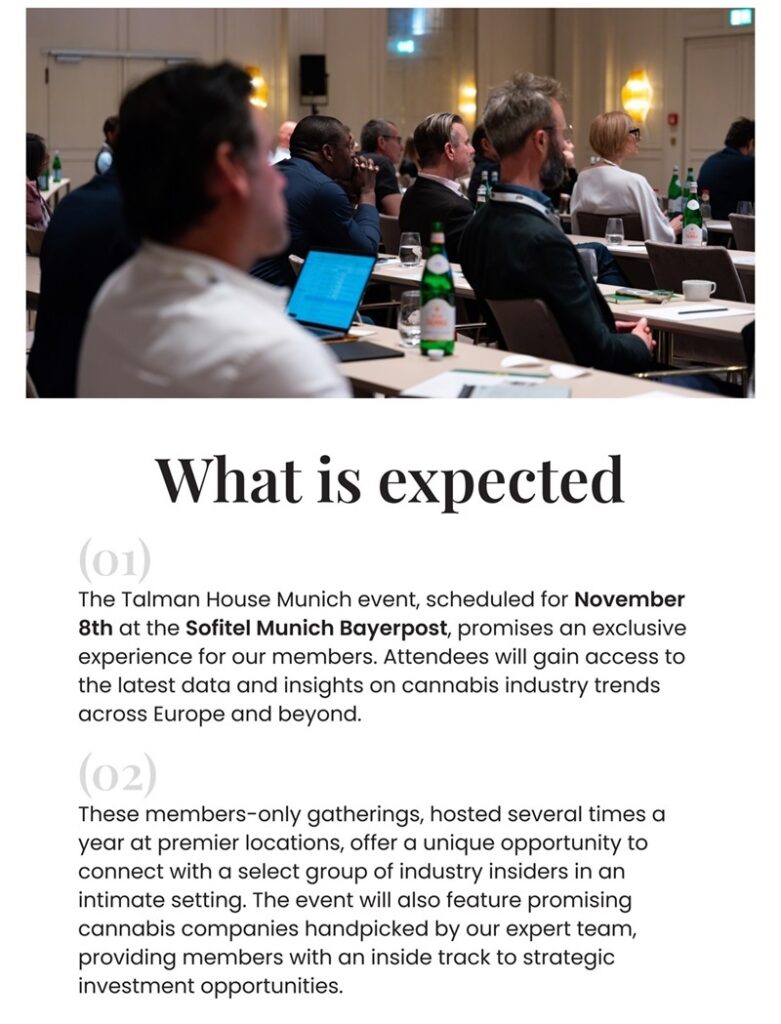
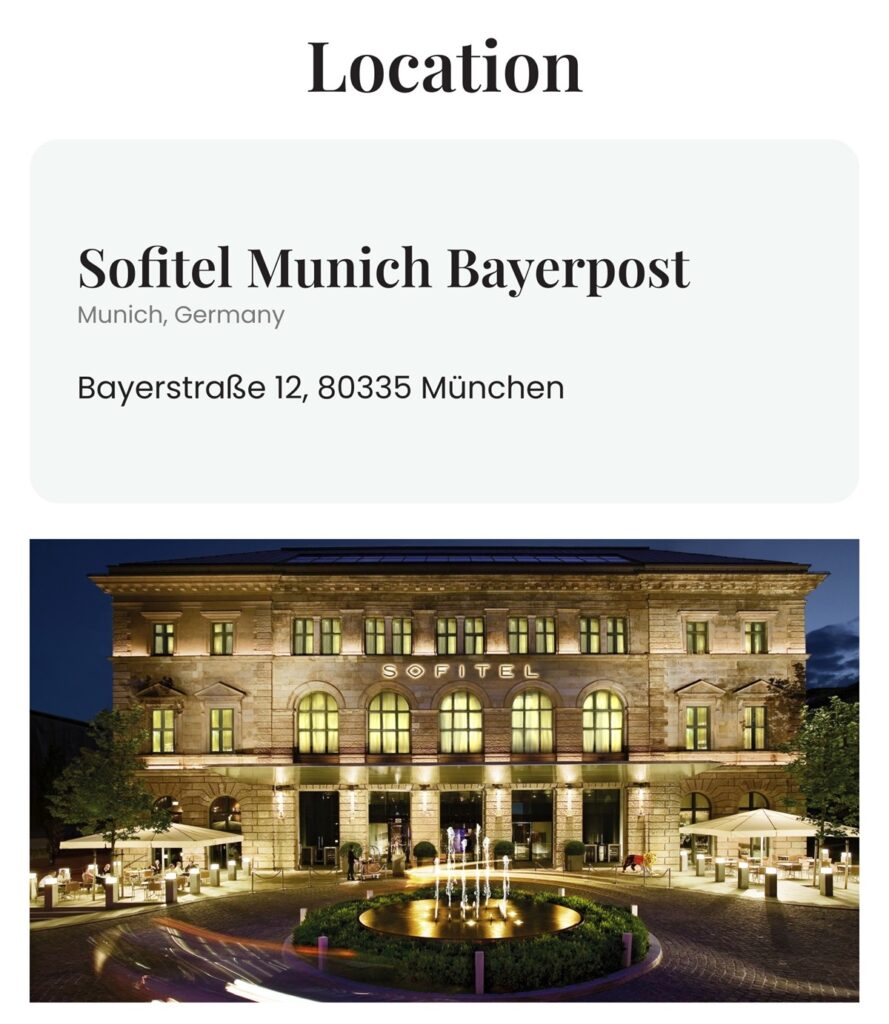
The Talman Group is hosting an investor event in Munich, Germany on November 8, 2024, for Talman House members. Below is a graphic that explains what attendees can expect at the event. To learn more about how you can become a member of the Talman House, click this link here.

Talman House Munich November 2024 1

Talman House Munich November 2024 2

Talman House Munich November 2024 3

German Survey Finds 80% Would Rather Open A Specialty Cannabis Store

Earlier this year, on April 1, 2024, Germany adopted the historic CanG law that legalized cannabis possession, cultivation, and use by adults. Germany may have not been the first country in Europe to do so, but legalization in Germany is undeniably the most significant cannabis policy modernization victory in Europe’s history.

Due to European Union agreements, legalization in Germany differs in many aspects compared to legalization in the Western Hemisphere. Whereas adult-use cannabis products can be sold nationwide in Uruguay and Canada at retail outlets, legalization in Europe focuses more on boosting public health outcomes and research.

Starting on July 1, 2024, people could start applying to launch German adult-use cannabis cultivation associations. The associations are member-based and are one of the main ways that cannabis can be legally obtained by adults in Germany.

The German Cannabis Business Association (BvCW) recently conducted a poll of its members asking if people in Germany would rather open a cannabis cultivation association or a specialty cannabis store.

“In our non-representative survey, which we shared in our newsletter, we asked from 07.10.2024 – 15.10.2024: “If you had the choice, would you rather set up a cultivation association or open a specialty store or licensed point of sale for cannabis as part of a model project?” BvCW stated in a recent newsletter.

“The respondents voted as follows: 50% definitely wanted a specialist shop/licensed point of sale, 30% rather wanted a specialist shop/licensed point of sale, 10% rather wanted a growers’ association, 5% definitely wanted a growers’ association and 5% partly/partly.” BvCW stated about the results of the survey.

“Thus, over 80% said they rather or definitely wanted to open a specialist shop/licensed point of sale.” BvCW also stated.

In addition to home cultivation and cannabis cultivation associations, Germany’s legalization model will eventually also incorporate regional adult-use cannabis commerce pilot trials, similar to what is already in place in the Netherlands and Switzerland but on a much larger scale.

Unfortunately, until European Union agreements are modernized, nationwide sales at retail outlets like what is in place in Uruguay and Canada will have to wait. With that being said, Germany will continue to lead the charge to achieve such policy modernization at the continental level, and a more robust commerce system will no doubt be permitted in Germany in the future.

The Global Cannabis Community Loses A Legend

The International Cannabis Business Conference team posts this article with a heavy heart. The global cannabis community lost a giant this month with the passing of Jürgen Neumeyer. Mr. Neumeyer has been a part of the International Cannabis Business Conference family for many years, and he will be dearly missed by everyone who was blessed to know him.

Below is a message sent out by the German Cannabis Business Association (BvCW) commemorating the life and accomplishments of Jürgen Neumeyer. He was truly a legend:

Our co-founder and managing director Jürgen Neumeyer died unexpectedly on Wednesday, October 9, 2024, during a family visit to his hometown. At the age of 56, he left behind a comprehensive life’s work. He was able to realize his greatest political goal in life, the decriminalization of cannabis, during his lifetime.

For decades, Jürgen had dedicated a large part of his life to the vision that cannabis users in Germany would no longer be criminalized. In various roles in politics and business, he did not lose sight of this goal and was able to celebrate an important milestone on April 1, 2024. The cannabis law would look different today without Jürgen’s tireless work. But not all of his goals have been achieved yet – be it improvements in the area of ​​industrial hemp or the creation of a legal market for recreational cannabis.

His drug policy career began in the 1990s with the Federal Association of Jusos, followed by a career as an employee for various members of the German Bundestag, publicist and networker. As the founding managing director of the “ Netzwerk Berlin” he was committed to the legalization of cannabis, among other things, and published several books on the subject. In addition to his editorial work for the magazine “ Berliner Republik”, he was also active in its management. He was also a co-founder of the think tank “ Das Progressive Zentrum eV”, as well as the non-partisan association “ Walkkreis eV”, which was firmly anchored in the Berlin government district with a political pub of the same name. His passion for cannabis policy led him to head political communications for the German Hemp Association (DHV) for several years. Jürgen recognized early on that an independent interest group was needed. He was the driving force behind the founding of an association for the German cannabis industry and was managing director of the industry association Cannabiswirtschaft e.V. from 2019 until his death. V. (BvCW) and CS Cannabis Service GmbH.

Our association, which represents all sectors of the industry (industrial hemp, medicinal cannabis & stimulants as well as technology, trade & services), grew to over 100 members within 5 years under his management, published over 40 specialist publications, many statements and press releases, and organized parliamentary meetings and specialist events. As a trade association representing all specialist areas of the cannabis industry, we became the largest of its kind in Europe. With all our commitment, we made significant contributions to the creation of the Cannabis Act, the abolition of the Narcotics Act status and the urgently awaited abolition of the intoxication clause with the Industrial Hemp Liberalization Act.

Jürgen Neumeyer had set himself and the association many other tasks, such as setting up the cannabis industry directory and the cannabis specialist publishing house, which are still in their infancy, a cannabis roadshow and the long-term goal of a “House of the Cannabis Industry” in Berlin. The focus was always on the current political goals, such as the model projects for cannabis (“Pillar 2”), but also many other construction projects such as hemp as a building material and the promotion of renewable raw materials.

With his death, we have not only lost a talented manager, friend and networker, but also an empathetic and authentic fellow human being who knew how to lighten up any professional and private conversation with his cheerful nature. He was also notorious for his extensive knowledge of winemaking and beer brewing, as well as his passion as a DJ. He was greatly respected and valued by everyone for his unique style.

Jersey Campaign Highlights How Cannabis Has Gone Mainstream In Germany

One area of society that cuts across political lines and socioeconomic backgrounds is sports. People from all walks of life love sports, with football (soccer) being the most popular sport around the world. Football is especially popular in Europe where hundreds of millions of fans are located.

With that in mind, it was a very big deal when the “Endlich” special jersey campaign was recently launched by SC Paderborn 07, Four 20 Pharma, and the Sanity Group, with part of the campaign involving pro-cannabis messaging being prominently placed at a recent football match.

Sport-Club Paderborn 07 e.V., commonly known as SC Paderborn 07 or SC Paderborn, is a German association football club based in Paderborn, North Rhine-Westphalia.

“Whether it’s the 2nd Bundesliga, Bundesliga or international football: special jerseys have become established and are often a real collector’s item for fans of the respective teams. They are usually issued for a special occasion such as a Champions League game. But sometimes they also have a much more serious background – as with the “Endlich” special jersey campaign by SC Paderborn 07, Four 20 Pharma GmbH (Four 20 Pharma) and the Sanity Group.” Four 20 Pharma GmbH stated about the effort.

“The jersey, which is all green with white accents and in which the SC Paderborn 07 team played against Jahn Regensburg, aims to draw attention to the issue of medicinal cannabis and counteract possible stigmatization and prejudice. There were also a variety of activities in and around the stadium – for example information stands and flyers on the seats.” the company also stated.

Below is footage from the match:

“The SCP07 team came onto the pitch dressed entirely in green and with a striking “Endlich” lettering and presented the jersey to the fans. During halftime, the special jerseys were then distributed using a “jersey cannon”. The oversized, inflatable jersey in the “Endlich” design on the forecourt was also an eye-catcher and a popular photo motif.” Four 20 Pharma GmbH stated.

“The other offers from the Endlich initiative were more informative – for example, the interior interview before the game or the 15,000 flyers that were distributed throughout the stadium and conveyed facts about the topic of medicinal cannabis and drew attention to a special Endlich Instagram filter. At information stands, visitors could also talk to medicinal cannabis experts, learn important facts and clarify questions.” they also stated.

Such a powerful message in such a mainstream setting is a big deal by every measure. Putting pro-cannabis messaging on such a grand stage no doubt reached parts of society that other pro-cannabis efforts simply cannot reach. It is an unparalleled effort that will reduce the stigma surrounding cannabis in Germany and beyond.

“After all, this is how we get into conversation with people who have not yet dealt with the topic or have not dealt with it sufficiently, or who are generally opposed to it. And that is exactly where we want to start: initiate a factual discussion, take the topic out of the dirty corner.” says Finn Hänsel, Managing Director & Founder of the Sanity Group.

“The feedback was overall positive, similar to the presentation of Four 20 Pharma as the main and jersey sponsor. We were happy to support this and with the joint special jersey campaign we helped to bring it even more into the public eye and to remove the taboo.” said Martin Hornberger, SCP 07 managing director.

The effort was also supported by TV presenter Matthias Killing (Sat.1 breakfast television), influencer Max Büchsenschütz, and professional athlete and motocross rider Tristan Hanak, who all participated in the campaign.