Tag: slovenia

Talman Group Co-Founder Alex Rogers Presenting To Slovenia’s National Council

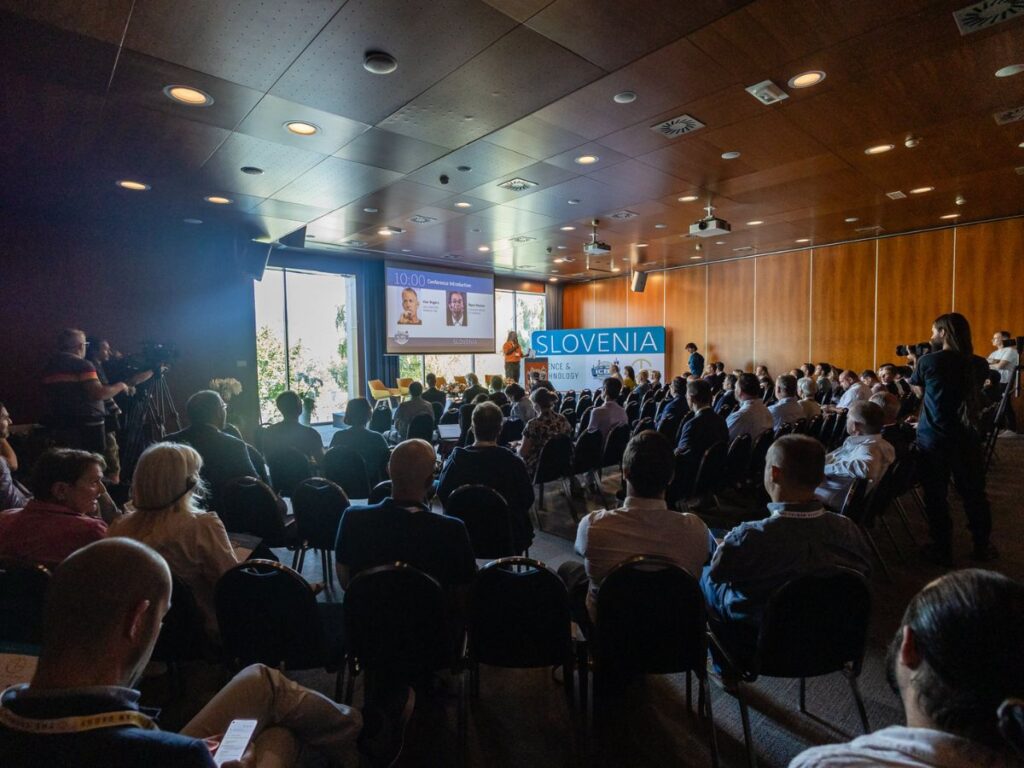
Alex Rogers, owner and CEO of the International Cannabis Business Conference and co-founder of the Talman Group, is presenting to Slovenia’s National Council next week on Friday, February 16th, at 10 am. Rogers will be joined by several other leading policy and science experts at the conference, which is titled, “New Discoveries and Opportunities for Cannabis
Use in Medicine and Industry.”

Slovenia’s National Council is, according to its website, “the representative body for social, economic, professional and local interests. In terms of state functions performed by state authorities, the National Council cannot be considered to be vested with legislative, executive or judicial powers.”

A coalition of advocates led by the Talman Group is working diligently to educate Slovenia’s government about the benefits of modernizing the nation’s outdated cannabis policies and regulations, including benefits specific to boosting public health and economic outcomes. Below is more information about the upcoming National Council conference in Slovenia:

New discoveries and opportunities for cannabis use: Conference in the National Council on the emerging hemp industry

The Association of Cancer Patients of Slovenia and the National Council invite you to a professional conference titled “New Discoveries and Opportunities for Cannabis Use in Medicine and Industry” on Friday, February 16, at 10 a.m. The conference will be held in the hall of the National Council of the Republic of Slovenia at Šubičeva 4 in Ljubljana.

At the beginning of its term, the Government of the Republic of Slovenia prioritized the legalization of medical cannabis use and the adoption of necessary subordinate legislation for its cultivation, processing, and controlled medical use. However, current legislation does not fully exploit the potential of cannabis in industry and medicine and even partially restricts it. Experiences from abroad show that cannabis enables the production of key industrial products with innovative processing methods. Specific cannabis strains have proven beneficial in agriculture and ecology, particularly in phytoremediation, which is important for combating climate change.

The aim of the discussion in the National Council is to highlight key information on the progress of cannabis use in pharmacy and medicine and to emphasize its utility in industry while highlighting the importance of developing science, research, innovations, and appropriate business infrastructure for knowledge transfer into high-value products, which would stimulate the economy and bring benefits to healthcare, agriculture, and industry.

The increasingly relevant topic and opportunities presented by the cannabis industry for Slovenia will be discussed by the President of the National Council of the Republic of Slovenia, Marko Lotrič; the President of the Association of Cancer Patients of Slovenia, Ana Žličar; the Health Secretary in the Cabinet of the Prime Minister of the Republic of Slovenia, Dr. Metka Paragi; the Head of the Scientific Research Department of the Engineering Academy of Slovenia, Prof. Dr. Tamara Lah Turnšek; the Director-General of the Public Health Directorate, Vesna Marinko; the State Secretary at the Ministry of Economic Development and Technology, Tourism and Sport, Matjaž Frangež; and the State Secretary at the Ministry of Agriculture, Forestry and Food, Dr. Blaž Germšek.

Following the introductory addresses, professional presentations will be held by experts from various interdisciplinary fields. The event program is attached to this message.

Confirmation of attendance at the event is desired by sending an email to jakob@thetalmangroup.com by Thursday, February 15, 2024, by 10:00 a.m. The number of applications is limited.

All interested parties will be able to follow the event live at www.ds-rs.si, and the recording will also be available on the National Council’s website.

5 Things Attendees Get From International Cannabis Business Conference Events

The International Cannabis Business Conference is hosting multiple events in different European countries in 2024, including the world’s largest super-conference in Barcelona in March and our flagship B2B conference in Berlin in April. Below are five benefits for attendees.

World-Class Networking Opportunities

Networking plays a vital role in every industry, and that is particularly true for the emerging legal cannabis industry. At the international level, networking is paramount to making a meaningful impact and gaining a foothold in the space. Many people who strike deals in this era will reap the rewards for decades to come as the industry continues to expand. Those deals are not struck via email solicitations. Face-to-face time is a must, and there is no better place to do that than at International Cannabis Business Conference events where attendees get to network with leaders from around the world in an environment that is conducive to generating deal flow.

Fun and Entertainment

The International Cannabis Business Conference has long served as the most exciting and entertaining event series on earth. In addition to providing world-class education and networking, the International Cannabis Business Conference has earned a global reputation for hosting the best events where attendees can work hard and play hard. It’s the only cannabis event series to ever feature multiple Grammy-nominated musical acts. International Cannabis Business Conference events are the perfect place to hang out with current friends, as well as to make new ones from all around the world.

Being A Part Of History

The European continent is in the midst of a cannabis policy revolution. The collective policy modernization efforts in multiple countries will, in turn, create an amazing situation for consumers who will be able to experience freedoms that have not been available since the dawn of prohibition. Future generations will look back on this exact era and likely consider it to be the turning point for the cannabis movement in Europe when nations finally got on the right side of history. International Cannabis Business Conference events provide attendees a front-row seat to these historic times, putting them right in the middle of it all.

Brand Exposure

Gaining a meaningful footprint in the cannabis industry at the international level is one of the most difficult endeavors that a company can embark on for several reasons, not the least of which is geographical logistics. The International Cannabis Business Conference is the only global event series with a truly international following and conferences feature a carefully curated experience completely focused on the cannabis industry at the worldwide level. It’s the ideal place for brands debuting products that are geared towards an international market.

Education

Cannabis reform is happening all over the globe right now, and keeping up with all of it is not an easy task, nor is figuring out how each country’s efforts fit into the larger global cannabis industry puzzle. The International Cannabis Business Conference brings true experts from all over the world to provide the best and most up-to-date information to attendees. Receiving that important and timely information straight from people at the forefront of policy reform and the global industry is invaluable.

Slovenia Cannabis Usage Analysis

This analysis was conducted by Marihuana Marš, Študentska Organizacija Univerze v Ljubljani

1. Cannabis user demographics in Slovenia

As cannabis is illegal in most parts of the world it is impossible to gather exact numbers regarding its use. Most information is collected through surveys, based on a representative population. As there are vast differences between developed countries and the ones in development, the policy of the countries in regard to drugs and data collection on the use of drugs the information presented here is primarily of informative nature.

The information gathered by the United Nations Office on Drugs and Crimes in the World Drug Report from 2015 shows that the annual prevalence of cannabis is in North America, Oceania, and Western Central Africa. There are a few countries in Europe that stand out in regard to the high consumption of marihuana (WHO, 2016, p. 9). Those are the Czech Republic, France, Italy, Spain, Netherlands, and Monaco (UN Drug use prevalence).
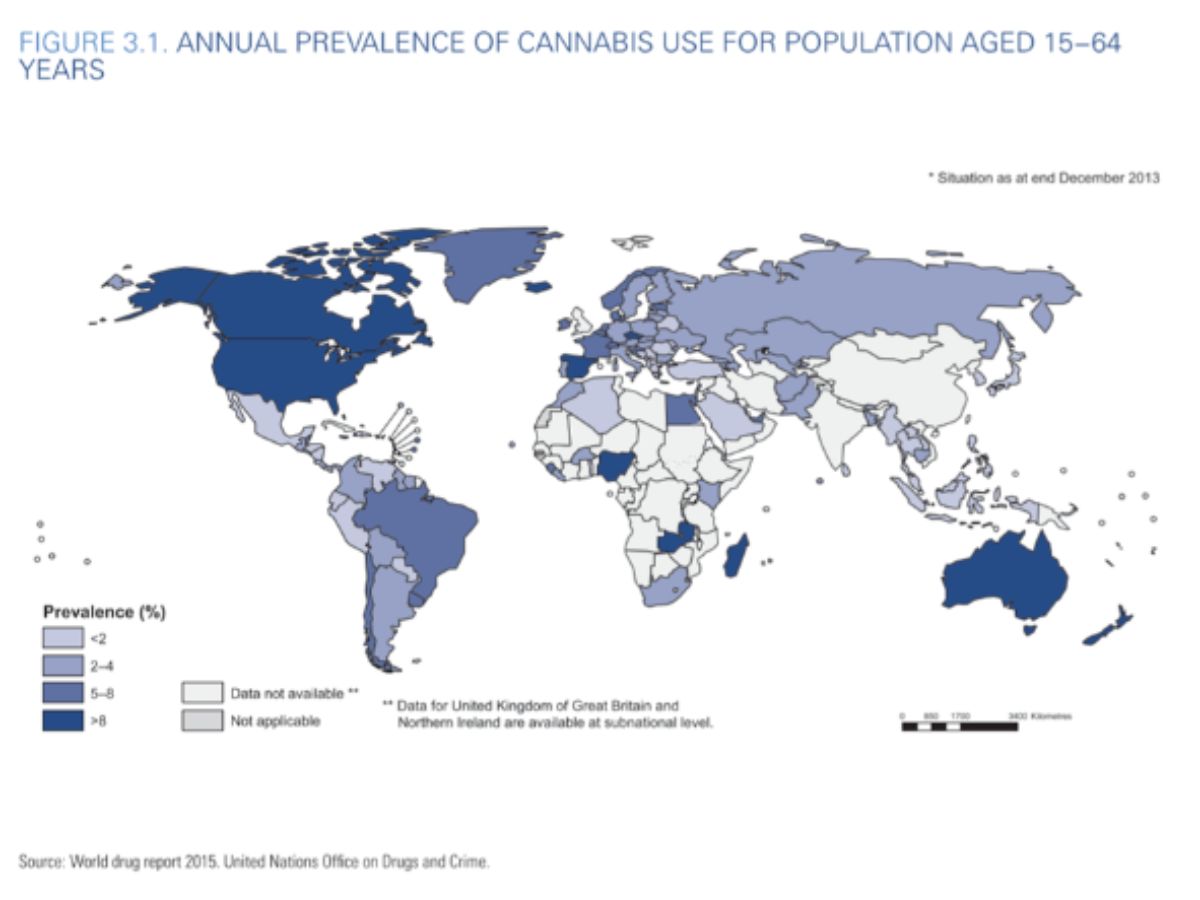
Cannabis Use By Nation

In conclusion, Slovenia is not among the highest per capita marihuana user countries in the world. Furthermore, Slovenia ranks below the EU average in terms of the lifetime prevalence of cannabis use among individuals aged 15-64 with 20,7%, while EU average stands at 27,2% (NIJZ, p. 29-30). This also stands for cannabis use in the past year among young adults aged 15-34, with Slovenia reporting a rate of 12,3%, while the EU average is 15% (NIJZ, p. 30).

Cannabis is the most commonly used illicit drug among the Slovenian population. Age has a negative relationship with marijuana consumption, men are more likely to consume marijuana, married people are less likely to consume marijuana, and the unemployed are more likely to consume marijuana.

Among residents aged 15-34, individuals with the highest level of education, those from upper-class backgrounds in terms of material wealth, those who are unemployed, and those without a partner are more likely to have tried cannabis at least once in their lives. Residents with lower socio-economic status, as well as those with multiple indicators of low socio-economic position, are more likely to continue using cannabis. These socio-economic inequalities are particularly pronounced when it comes to education, and they are more noticeable among women aged 15-34 compared to men. The percentage of men with the highest level of education who have tried cannabis at least once in their lives is 1.5 times greater than that of men with the lowest level of education, while for women, this difference is 1.8 times. The percentage of individuals who continue to use cannabis among all those who have ever used it is 2.4 times higher among men with the lowest education compared to those with the highest education, and for women, this difference is 3.8 times. On the other hand, the percentage of individuals who have quit using cannabis among all those who have ever used it is 2.3 times higher in both men and women with the highest education compared to those with the lowest education.”

2. Cannabis use statistics in Slovenia

2.1. Introduction

Before we delve deeper into the statistics section, we first need to clarify the difference between the major compounds of cannabis called cannabinoids. As far as we know cannabinoids are compounds that are distinct to the genus of plants called Cannabis. The main three naturally occurring cannabinoids are CBGA (cannabigerolic acid), Δ9-THCA (Δ9-tetrahydrocannabinolic acid), and CBDA (cannabidiolic acid). CBGA represents the mother molecule of all cannabinoids which is later transformed via enzymatic reactions to Δ9-THCA or CBDA as we can see in the picture below. Due to this sequence of reactions, CBGA is normally found in lower quantities because most of it gets transformed. When CBGA, Δ9-THCA, and CBDA are exposed to heat, they get transformed from their acidic forms into their so-called active forms: CBG (cannabigerol), Δ9-THC (Δ9-tetrahydrocannabinol) and CBD (cannabidiol). At this point, it is important to know that different strains possess different genes that give rise to THC or CBD-dominant strains. Strains that contain less than 0,3% of THC are referred to as hemp, which is used in agriculture for fiber, seed, and CBD oil production. Meanwhile, THC-dominant strains are referred to as marihuana, which is illegal in most parts of the world and is predominantly used for illicit drug production. (1)
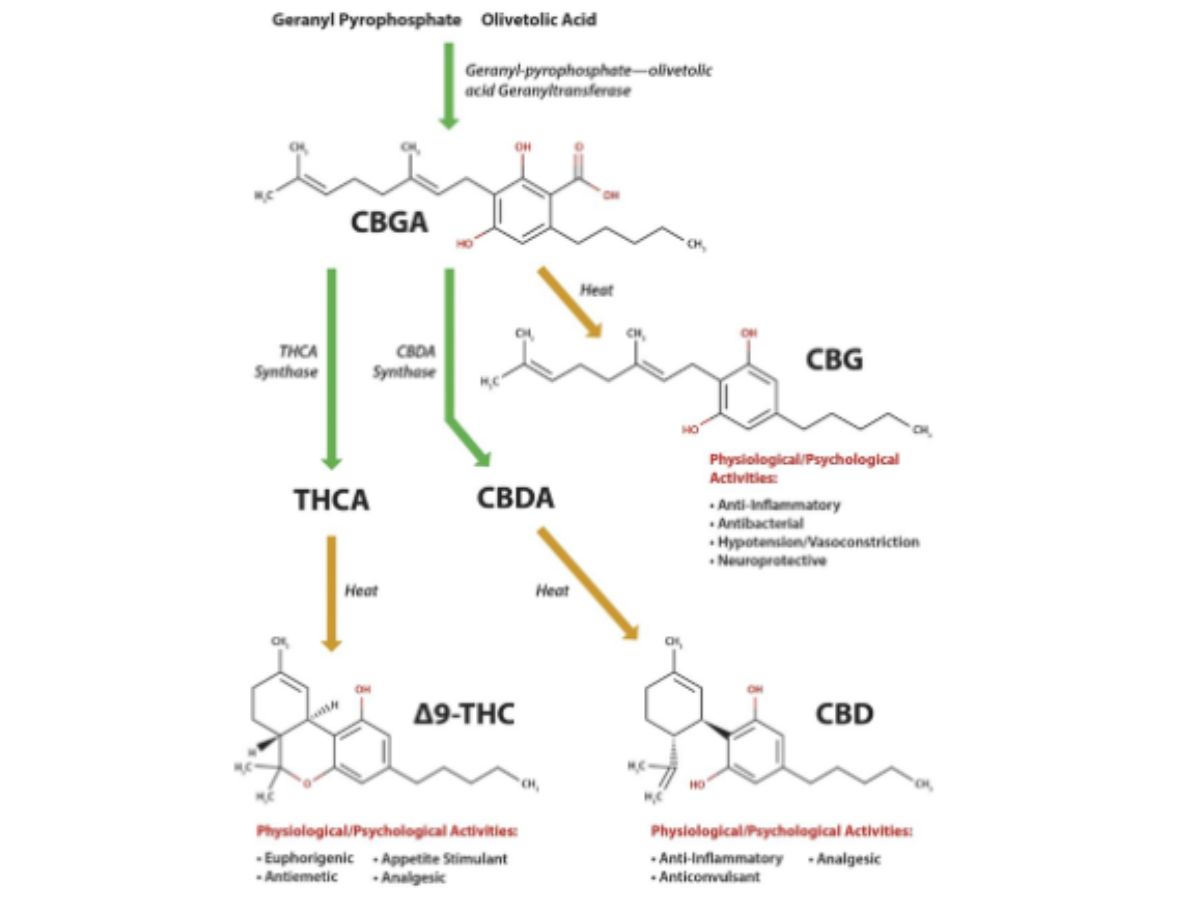
Cannabinoids

We should also mention the different mechanisms of action these molecules have on the human body. If we start off with the most controversial molecule THC. THC is a partial agonist (partially activates) of the CB1 receptor, which is predominantly found in the brain. The partial activation of the CB1 receptor leads to euphoria, relaxation, and anti-nociception (reduces pain sensation). Due to the euphoric effect of THC, cannabis has been used as a recreational drug for centuries, which also led to its inevitable ban. On the other side, THC also shows great promise in the medical field as an analgesic (pain medication), antiemetic, and anticonvulsant. THC also acts as a partial agonist at the CB2 and other receptors, which could also explain some of its actions. CBD on the other hand exerts its action by being a partial agonist of CB2 receptors and by activating some other receptors. Some early clinical studies suggest that CBD could help with anxiety, cognitive and movement disorders, pain, and epileptic seizures. In contrast to THC, CBD either acts as a CB1 antagonist (block activation) or as a CB1 negative allosteric modulator, which means that CBD could potentially lower the toxic effects of THC and lead to a safer profile of action when the two compounds are used together. In between THC and CBD, we have CBG, which is a weak CB1 and CB2 partial agonist. CBG also acts as a strong agonist of ɑ-2 adrenoceptor, antagonist of the serotonin 5-HT1A receptor, and agonist at the PPARγ receptor. Due to CBG being a new interest of cannabinoid research, there are still not enough studies to conclude its efficacy but there are some promising results for the use of CBG in certain cancers as an add-on treatment, in metabolic syndrome (type two diabetes and hypertension) and as a neuroprotective agent. (1) (2)

2.2. How much cannabis is consumed annually in Slovenia in total and per capita?

Cannabis statistics for Slovenia are quite hard to come by especially when amounts consumed are in question. Most of the data focuses on THC-high cannabis, which is considered an illicit drug in Slovenia. On the other hand, very little is known about CBD, CBG, synthetic cannabinoids, and non-flower forms of cannabis. The scarcity of data is probably due to the illegal nature of cannabis and the relatively short period that CBD and associated products have been present on the market. In the sections below we will overview cannabis use for different groups of products.
2.3. How much traditional THC cannabis is consumed?

First, we need to address the most used and problematic type of cannabis which is THC-rich cannabis. In the survey conducted in 2012 (age group 15-64), there were 15.8% lifetime users, 4.4% last year users, and 2.3% last month users. If we compare data from 2012 to the data from the latest survey conducted in 2018, we can see a clear increase in cannabis users, to 20,7% lifetime users, 5.9% last year users, and 3% last month users. From these figures, we managed to estimate the total number of consumers with calculations from the demographic. All the estimates are available in the table below. (3) (4)
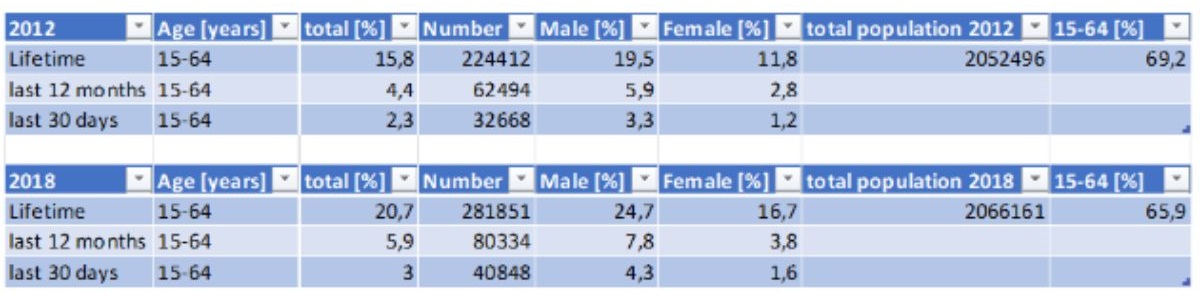
Slovenian Cannabis Usage By Demographic

Regarding quantities of cannabis use, we could find one study called an economic analysis of the illegal marijuana market in Slovenia, which estimated the total amount of cannabis consumption in Slovenia (5). From the online survey they carried out between January and April of 2015, they got 730 valid answers and assumed that this group represents the group of 61459 past year cannabis users (estimate from NIJZ survey in 2012). This group was later further classified into four groups: 1) infrequent users (29,471) (1-11x year), 2) regular users (20,626) (11-50 x year), 3) intensive users (6,637) (51-250 x year), and 4) problematic or heavy users (4725) (250 or more x year). Based on the online survey they also found out that group 1 uses 0,52 g, group 2 uses 0,39 g, group 3 uses 0,66 g and group 4 uses 1,1 gr per typical day use. With these numbers, the researchers estimated that around 3 tons of cannabis was used in Slovenia in 2015. They also stated that cannabis consumption was probably underreported in the survey thus leaving the 3 tons per year estimated to be a conservative estimate. Based on the above-mentioned study we calculate the total amount of cannabis consumed based on the more recent 2018 NIJZ survey. In this calculation, we used the same parameters from the study mentioned above. We used the total number of people from the latest survey of NIJZ from 2018 instead of 2012. We estimated that the tons consumed from 2012 to 2018 increased by 900kg. Just to put the number in perspective this would mean that 1,4 g and 1,8 g of cannabis was consumed on a yearly basis per capita for 2012 and 2018 respectively. It is also stated that Slovenia is a self-sufficient country in the supply of cannabis, which is grown in specially designed facilities. (3) (4) (5)
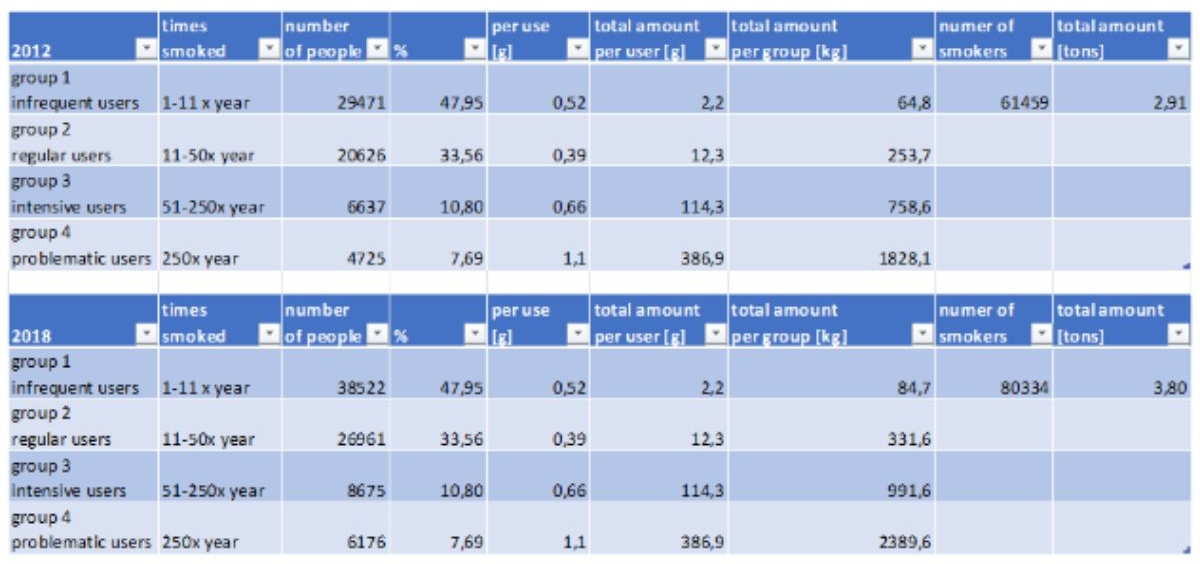
Slovenian Cannabis Frequency Of Use

2.4. How much of CBD, CBG, or natural low THC cannabis is consumed?

In comparison to THC, CBD has managed to spread to various new industries such as cosmetics, food and beverages, wellness, supplements, medicine, and flower (smoking) industries. CBD has the advantage of being non-intoxicating and showing a safe profile of use. After a problematic court case in 2017 in France, which later passed onto the European court, CBD lost the label of a narcotic. The court stated that CBD shouldn’t have been labeled a narcotic under the 1961 UN convention as it doesn’t possess any psychotropic effect and can be qualified as food if all other conditions of the EU Food Safety measures are met. (6) (7)

Currently, CBD has the status of a Novel Food because it wasn’t consumed to a larger degree by humans before 15.5.1997. Only seeds, seed oil, hemp seed flour, defatted hemp seed, and cold pressed flower CBD oil have a history of consumption in the EU before 1997 and therefore, are not considered novel foods and can therefore be marketed without approval in the EU. Other products for consumption as for example CO2 extracted CBD oil need to have an approved application from the European Commission, which is roughly costs around 300.000 in 400.000€. A lot of CBD oil sellers bypass this regulation by selling their oil as cosmetics because in 2021 CBD was included in the cosmetic ingredients database. A similar approach is used for flowers, which are clearly sold for smoking but are labeled as non-consumables, for example as incense, to avoid tobacco and nicotine-related regulations. (7)

In the next section, we will discuss the statistics of CBD use in Europe as we couldn’t find any concrete data in Slovenia. For the market analysis, we chose the report by Prohibition Partners who surveyed 5,234 people across various European countries. The survey concluded that roughly 11% of the people (n=5234) used CBD products in the past year while 4% reported using CBD products in their lifetime but not in the past year. What also seemed promising is that a little more than 50% of the survey respondents have heard of CBD before. If we look at the past year’s users (n=1056) more in-depth, we can see from the survey that 16,4% of the people use CBD products once a day or more, 12% twice or more a week, 12,4 % once a week, 14,4 % once every couple of weeks, 11,5% once a month and 33,2% less than once a month. This means that around 40,4% of the past year users use CBD products at least once a week, which is roughly 3,5% of the people surveyed. (7)

Currently, the most popular product is CBD oil either in consumable or cosmetic form, the second is CBD flower, the third are capsules or pills and the fourth are vapes. This will certainly change over the years as more companies develop new novel foods and drinks with approved applications from the European Commission making the marketing of the products possible. Altogether the young CBD industry seems to be growing at a healthy rate as the number of consumers grows on a yearly basis. The main problem in accordance with CBD products remains the laws and regulations of the EU as slowly evolving policies hinder business stability and growth. (7)The growth of the hemp EU market can be observed in the increase from 20,540 hectares cultivated in 2015 to 33,020 hectares cultivated in 2022 (60% increase) or 97,130 tons to 179,020 tons respectively (84,3% increase). Besides CBD production hemp is also used for fiber production, food and feed, construction, and paper production. For the ending point, we would also like to mention that hemp also provides numerous environmental benefits. For example, one hectare of hemp can remove 9-15 tons of CO2, comparable to a young forest (hemp takes only 5 months to grow!), helps prevent diseases when used in crop rotation, requires little to no pesticide use, and prevents soil erosion. (8)

2.5. How much CBG is consumed?

We will discuss the case of CBG separately since it belongs to a new branch of the cannabis industry. CBG fits into the category of minor cannabinoids, which is a large group of around 100 different cannabinoids (excluding THC and CBD). The leading compound from this group is CBG, which is already present in the European market. In 2022 the very first high CBG strain was registered in the EU plant variety database. Currently, these compounds remain mostly unregulated but before anything can be said about the minor cannabinoids, they must follow the steps of CBD being classified as a non-narcotic and gain approval from the European Commission. The industry also needs to do its part by not abusing psychoactive minor cannabinoids that are currently unregulated such as Δ8-THC. As of now these minor cannabinoids CBG (1425€/kg), CBN (3013 €/kg), and CBC (8550 €/kg) also have higher wholesale prices than CBD (443€/kg). These compounds also show promise as medicine as more and more research studies are done each year. (7)

2.6. How much is synthetic cannabinoid-infused cannabis? (CH4, THCp, etc)

Before we start this section, we need to briefly discuss the effects and different categories of synthetic cannabinoids. This group should be divided into semi-synthetic cannabinoids and fully synthetic cannabinoids. The most popular representative of the former is HHC, which is made from either THC or CBD via one chemical reaction. HHC is relatively new in the EU market since it was discovered for the first time by the Slovenian authorities in 2022. HHC seems to be safer than synthetic cannabinoids because it is more like THC since it works as a partial agonist on the CB1 and CB2 receptors and binds with a weaker affinity. In short, this means that HHC is weaker than THC and in the same way as THC it can’t activate the receptor to its full potential. In comparison to this description, synthetic cannabinoids are fully made in the laboratory with the intention of mimicking the effects of THC. Most of them have a higher affinity for CB1 and CB2 receptors, have a longer time of action, and work as full agonists, which means that they can reach a higher maximum effect of the CB1 receptor compared to THC and HHC. This important difference makes synthetic cannabinoids more dangerous potentially leading to serious side effects such as cardiotoxicity, nephrotoxicity, and neurotoxicity or even death. (4) (9) (10)

Regarding the use of synthetic cannabinoids, we have very little data available. To our knowledge, there was only one survey done in Slovenia among students at Slovenian universities, with 319 correctly filled-out questionnaires. Around 7,9% of students have answered that they have taken synthetic cannabinoids and 28% (2,29% of all students) responded that they are still using them. On the other hand, 33,8% of students were strongly against synthetic cannabis use and 53,9% were not likely to take them. The group in the middle was represented by 11,6% of students who might take them while 0,7% stated that they are very likely to take them. Most of the responders acquired synthetic cannabinoids from their friends (64%), at parties (56%) and dealers (24%). What is also interesting is that some answered that they got these drugs from online shops (8%) and local specialized cannabis shops (12%). The problem with synthetic cannabinoids is that before regulators ban them, they remain legal and accessible in specialized shops. The same problem is currently with HHC products which can be freely sold in shops as they are still legal in the EU.(4) (9) (10)

Most synthetic or semi-synthetic cannabinoids are new compounds we don’t know a lot about. For this reason, most of these compounds pose greater health risks compared to traditional THC cannabis because we know so little about their short- and long-term negative effects. (4) (9) (10)

2.7. How much non-flower forms of cannabis are consumed? (Hash, oil, extracts, vapes, etc)

The data regarding types of cannabis products is also very sparse. According to EMCDDA insights on Cannabis production and markets in Europe 95-99% of Slovenians consume cannabis herb while only 1-5% of people consume resin or hash. The report also states that in 2009 most of the illicit cannabis was produced outside but increases were noticed in more technologically advanced indoor growing like hydroponics. (11)

The only study that made questionnaires on which forms of cannabis were consumed is a study made by the European school survey project on alcohol and drugs among 15–16 years old school children. The study found that 23,2% of all 15-16 year olds tried cannabis in their lifetime. Most of them used it in the form of cannabis flower (19%) or mixed with tobacco (17%), while 6,5% tried it in the form of cannabis oil and 3,3% tried resin or hash. (12)

The use of cannabis oil is also widely used for self-treating certain diseases, especially cancer patients. Most of these applications are not backed by science so people usually buy THC oil on the black market. According to a study from the USA 5% of cancer patients self-medicate with cannabis oil. Sadly a similar study hasn’t been conducted in Slovenia yet but from observations of multiple doctors they say the number is much higher than 5%.(13).

3. Economic impact in Slovenia

3.1. How much cannabis is produced in Slovenia?

We first need to divide the grey and illegal market. If we first look at the illegal market by analyzing the study, we mentioned above “an economic analysis of the illegal marijuana market in Slovenia”. During the study researchers surveyed 730 people who consumed cannabis and how much cannabis they consumed. They extrapolated this data to the survey of NIJZ on cannabis consumption in the Slovenian population. They concluded based on the 2012 NIJZ survey that there were around 2,91 tons of cannabis consumed in 2012. We used the same data from the study and applied it to the 2018 survey of NIJZ and concluded that the total amount of cannabis consumed in 2018 was around 3,80 tons.

While the gray market is harder to analyze since there are no national distinctions for cannabis that is used for the production of flowers, seeds, or fiber. The only data we could find was the report that stated that 500 hectares of cannabis farms in 2014-2015 and 150 hectares in 2022. They also stated that the reason for the drop in production is primarily due to uncertainties in cannabis regulation. From this, we can see that hemp production dropped in Slovenia, while on the other hand, we can see that the production saw an increase in Europe as we stated above. Based on the report of EU production in 2022 above (33,020 hectares 179,020 tons) we can calculate that one hectare gives around 5 tons of cannabis produce (whole plant product not just the flower!). The main problem with these numbers is that we don’t know how much of each part of the plant is produced, whether it is seed, fiber, or flower production. If we look at the EU CBD report, they mentioned the profitability of hemp production in the USA. We can see that one hectare of cannabis production for seeds can bring around 1000$ of revenue, for fiber 3000$, and for flowers 39000$.

3.2. What are the typical prices for cannabis in Slovenia?

The United Nations Office on Drugs and Crime, in a global study on retail and wholesale prices of cannabis, reported the following findings for Slovenia in 2010: The retail price of one gram of cannabis flower with a THC concentration ranging from 0.1% to 23.6% (average 7.4%) averaged 6.5 EUR (calculated as 8.6 USD multiplied by the 2010 average exchange rate of 0.7551 EUR/USD). The wholesale price of one kilogram of cannabis with a similar range of THC concentration was approximately 2250 EUR.

According to the research “An economic analysis of the illegal marijuana market in Slovenia,” the authors estimated that the retail price of high-quality illegal THC cannabis flower ranged between 6 and 8 EUR per gram.

Based on a market research study of the leading Slovenian providers of hemp-derived CBD products, we found that one gram of CBD hemp flower ranges between 6.5 and 10 EUR.

3.3. How much cannabis is imported into Slovenia?

The import of cannabis in Slovenia is difficult to define. Legal cannabis products span various sectors, including pharmaceuticals, food, industry, agriculture, and more. These products, due to their diversity, often share similarities with other products in the same industries, leading to a nomenclature that doesn’t clearly identify whether this range includes permitted cannabis products and their respective proportions.

There is no available data regarding the import of illegal cannabis. Only various studies exist on cases of seized cannabis. Changes in quantities over the years do not necessarily indicate an increase in cannabis imports to Slovenia, as it could have been destined for another country, or the government may have allocated more resources for punitive measures that year.

3.4. What is the value of the cannabis market in Slovenia? (black market and grey market)

By using the data from the NIJZ survey in 2018 and the study called “An economic analysis of the illegal marijuana market in Slovenia” we made an estimate that around 3,8 tons of cannabis was consumed in 2018. If we consider that a gram of cannabis costs around 6-8 € on the black market this would mean that the value of the cannabis market would range from 23 to 30 million EUR. The total market value could also be bigger since people could underreport their use and the retail price could be bigger than it is on the black market. If the estimate is that the excise duty plus tax would be around 80% of the retail price (% for a pack of cigarettes), the cannabis market could bring in around 18-24 million in taxes. This means that for each gram sold the seller would have a margin of 1.2 to 1.6€. The problem with the high tax rate is that small suppliers wouldn’t be profitable since small-scale businesses need 1.5-2 € for the production of one gram. This means that the retail price could be higher than 6-8 € and larger firms would probably take over the market due to lower production costs in mass production. It is important to note that the tax rate and excise duty could be different for cannabis than cigarettes for example. If the tax and excise duty were the same as for tobacco (22% tax, 35% excise duty + 40€ per kilogram) this would amount to 58% in taxes of the retail price of cannabis per kilogram. This means that the cannabis market could bring in around 13-17 million in taxes and the seller would have a selling margin of 2.5-3.3€. In this scenario, even small-scale business owners would be able to make a profit. Until we don’t know the tax rate and excise duty, we can’t say anything for certain, but in all probability, the total tax rate would be somewhere between 58% and 80%. In both cases, the tax revenue would be enough to cover drug-related expenditure which is estimated to be around 0,02-0,03% (12-18€ million) of Slovenia’s GDP (61,75€ billion).

Regarding the grey market, it’s hard to assume market value since we only have data on total hemp production, while we don’t have the data for hemp that is specifically grown for flowers with high CBD content. The main problem with current CBD flowers that are sold on the Slovenian market is the incorrect taxation since they are sold as incense but most of the consumers use the flowers for smoking.

4. Social impact in Slovenia

4.1. How many cannabis-related fines, arrests, and prison sentences are there each year?

In Slovenia, there are currently over 200,000 cannabis users, and each year, approximately 2,000 recorded criminal offenses involve cannabis, according to the Ministry for Internal Affairs (1993-2012). The annual reports from the European Monitoring Centre for Drugs and Drug Addiction (EMCDDA) reveal that Slovenia has one of the highest rates of cannabis seizures and recorded criminal offenses and misdemeanors among European countries. These elevated rates suggest an excessive focus on penalizing drug users rather than indicating the effectiveness of law enforcement or a high prevalence of crime (Nolimal/Kohek, p. 7-8).

Official police statistics show that over 50% of all criminal investigations pertain to drug-related cases, with cannabis being the most prominent (comprising at least 70%). In contrast to the EU, where criminal offenses make up roughly 18% of cases and misdemeanors constitute 82% in the realm of drug-related issues, in Slovenia, the average ratio stands at about 30% for criminal offenses and 70% for misdemeanors (Nolimal/Kohek, p. 8).

In the table below we can see the prevalence of illegal drugs in connection with offenses committed under Slovenian law for the year 2007 (Cahunek, p. 68).
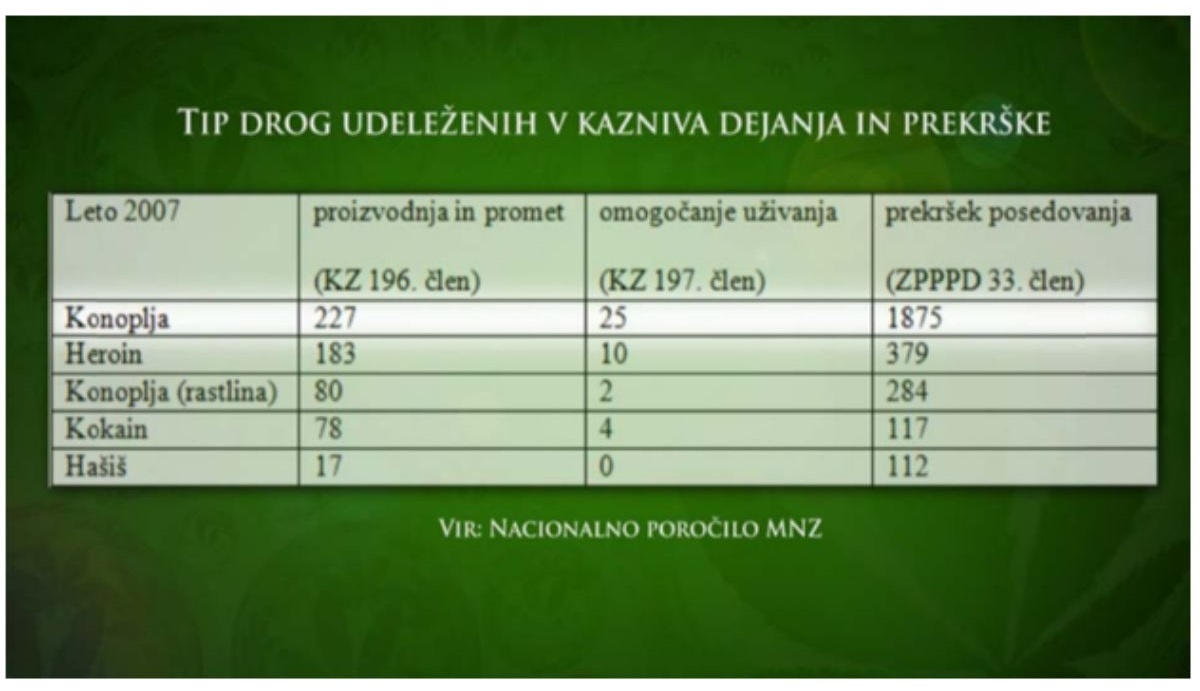
prevalence of illegal drugs in connection with offenses committed under Slovenian law

Furthermore, the number of discovered specially adapted spaces for growing cannabis decreased in 2021, the police believe that the methods and equipment used are improving, resulting in a higher annual production. In 2021, the police uncovered 56 specially adapted spaces for hemp cultivation, which is 14 fewer than the previous year but seized almost half as many hemp plants compared to 2020 (NIJZ 2022, p. 23).

4.2. What % of cannabis citations are violent crimes?

There is no public data for violent crimes in accordance with cannabis use in Slovenia. According to a Canadian study (Godec, p. 28) alcohol is the most frequently abused substance involved in violent acts, accounting for at least 24% of cases. In comparison, cannabis is implicated in 3% to 6% of incidents, and cocaine in 8% to 11%. The authors of the study also found that between 17% and 24% of offenders committed crimes with the intention of obtaining funds for the purchase of specific drugs, most commonly cocaine. Among long-term cannabis users, fewer than 5% engaged in criminal activities (such as theft or robbery) to acquire it. The most common illegal activity related to the supply of cannabis was its sale.

Furthermore, the myth that the use of cannabis results in violence and deviant behavior was rejected already in the year of 1944 when the LaGuardia Committee published the first-ever in-depth study of the effects of smoking cannabis. The study demonstrated that the sole use of cannabis does not lead to violent crimes or serve as a gateway drug (NYAM).

4.3. How much money does Slovenia spend on cannabis enforcement?

Unfortunately, there is no precise number to the question of costs regarding only cannabis enforcement in Slovenia. However, the available data indicates that total drug-related expenditure represented 0.03 % of gross domestic product (GDP) in 2016 and that this proportion varied between 0.02 % and 0.03 % of GDP in the past decade (Drug report 2019, p. 3). Legalization of cannabis would substantially relieve the burden of the prosecution, judicial system, and the police in cannabis-related crime. Consequently, the above-mentioned state organs would be able to focus their time, energy, and resources on prosecuting more serious criminal activities. Finally, the effects would be substantial as for now more than 50 % of all criminal investigations are in the field of drugs of which mostly cannabis, at least 70 % (Nolimal/Kohek, p. 8).

***

Abbreviation of sources for cannabis user demographics in Slovenia:

NIJZ: Uporaba prepovedanih drog, konoplje v zdravstvene namene in zloraba zdravil na recept med prebivalci slovenije, Andreja Drev; Ada Hočevar Grom; Darja Lavtar; Maruša Rehberger; Aleš Korošec, Nacionalni inštitut za javno zdravje, 2021.

WHO, 2016: The health and social effects of nonmedical cannabis use, World Health Organization, 2016.

UN Drug use prevalence: dp-drug-use-prevalence | dataUNODC, last accessed 1.10. 2023

NIJZ: TOBACCO, ALCOHOL AND ILLICIT DRUG USE in Slovenian Population and Inequalities and Combinations of Use

Sources for cannabis usage statistics in Slovenia:

1. The Pharmacological Case for Cannabigerol | Journal of Pharmacology and Experimental Therapeutics [Internet]. [citirano 23. oktober 2023]. Dostopno na: https://jpet.aspetjournals.org/content/376/2/204.long

2. Shahbazi F, Grandi V, Banerjee A, Trant JF. Cannabinoids and Cannabinoid Receptors: The Story so Far. iScience. 20. junij 2020;23(7):101301.

3. Drev A, Grom AH, Čolaković AB, Frič A. REPORT ON THE DRUG SITUATION 2018 OF THE REPUBLIC OF SLOVENIA.

4. Jandl M, Grom AH, Drev A, Čolaković AB, Frič A. REPORT ON THE DRUG SITUATION 2021 OF THE REPUBLIC OF SLOVENIA.

5. Verbič M, Čok M, Perić P. An economic analysis of the illegal marijuana market in Slovenia. Econ Res-Ekon Istraživanja. 1. januar 2019;32(1):657–72.

6. Cannabidiol (CBD) is not considered a ‘narcotic drug’ under European law | www.emcdda.europa.eu [Internet]. [citirano 24. oktober 2023]. Dostopno na: https://www.emcdda.europa.eu/news/2020/cannabidiol-cbd-is-not-considered-a-narcotic-drug-under-european-law_en

7. Prohibition Partners [Internet]. [citirano 25. oktober 2023]. The European CBD Report Health and Wellness. Dostopno na: https://prohibitionpartners.com/reports/the-european-cbd-report-health-and-wellness/

8. Hemp [Internet]. [citirano 25. oktober 2023]. Dostopno na: https://agriculture.ec.europa.eu/farming/crop-productions-and-plant-based-products/hemp_en
9. Matjaž MG, Tomašič T. UPORABA KANABINOIDOV.

10. European Monitoring Centre for Drugs and Drug Addiction. Hexahydrocannabinol (HHC) and related substances: technical report. [Internet]. LU: Publications Office; 2023 [citirano 26. oktober 2023]. Dostopno na: https://data.europa.eu/doi/10.2810/852912

11. Cannabis production and markets in Europe | www.emcdda.europa.eu [Internet]. [citirano 27. oktober 2023]. Dostopno na: https://www.emcdda.europa.eu/publications/insights/cannabis-market_en

12. 17_ESPAD-Slovenija-2019_Rezultati-raziskave.pdf [Internet]. [citirano 27. oktober 2023]. Dostopno na: https://www.infodroga.si/wp-content/uploads/2022/07/17_ESPAD-Slovenija-2019_Rezultati-raziskave.pdf

13. Grošelj B, Oražem M, Kovač V. Učinkovitost kanabinoidov pri zdravljenju raka – mit ali resnica? Onkol Strok-Znan Časopis Za Zdr. 7. julij 2018;8-11 Pages.

Abbreviations of sources for Social impact in Slovenia:

Cahunek: Cahunek, Toni; magistersko delo: Predlogi politike za ureditev statusa konoplje v slovenski zakonodaji; Mentor: izr. prof. dr. Bojan Dobovšek; Ljubljana 2011.

Drug report 2019: European Monitoring Centre for Drugs and Drug Addiction; Slovenia country drug report 2019.

Drug report 2017: European Monitoring Centre for Drugs and Drug Addiction; Slovenia country drug report 2017.

Godec: Godec, Andreja; magistersko delo: Potencialni učinki legalizacije konoplje v republiki sloveniji na prilivno stran proračuna; Mentor: izr. prof. dr. Drago Dubrovski; Koper 2017.
NIJZ 2022: Nacionalni inštitut za javno zdravje; Stanje na področju prepovedanih drog v Sloveniji 2022, Ljubljana 2023.

Nolimal/Kohek: Noliman, Dušan/ Kohek, Maja; Konoplja, etika in družbena odgovornost; available on: Microsoft Word – 06-dusan-nolimal,-maja-kohek-paper-(mm,-sz).doc (irdo.si) (last accessed 23.10.2023)

NYAM: New York Academy of Medicine; available on: 1938 | Mayor LaGuardia Commissions Academy Report on Marijuana Usage | New York Academy of Medicine (nyam.org) (last accessed 23.10.2023)

This article first appeared at TheTalmanGroup.com and is syndicated with special permission

Summary Of Slovenian Cannabis Presentation At The Medical Faculty, University Of Zenica 2023

By Prof. Tamara Lah Turnšek

Invited by Semine Djeraković Siniković, nurse from the Zenica Cantonal Hospital, Vice-Dean for Scientific and Research Work, Assoc. dr. sc. Mirza Oruča and the dean of the Faculty of Medicine in Zenica, prof. dr. sc. Harun Hodžić.

Content of the Symposium:

David Neubauer presented his lecture on Use of cannabinoids and medicinal cannabis in severe neurological disorders of children. First he presented the trajectory of medicinal cannabis through centuries/millenia since it has been first used in Chinese pharmacopeia some 5000 years back, and until the recent events when cannabis was prohibited for nearly 100 years and nowadays when again his excellent treatment properties are being scientifically studied. Then he presented some new studies (some of them evidence-based) on use of cannabinoids in children with severe, resistant epilepsies/developmental encephalopathies in children and some other severe problems during childhood, like cerebral palsy and autism. In the last part of his talk he has presented own experiences with such treatment; namely the publication of cannabidiol (CBD) treatment for resistant epilepsies from 2018, where 20% of children were completely seizure-free after add-on introduction of cannabidiol and compared his study with some similar studies in systematic review articles, where other authors presented similar results. At the end he has presented some new on-going studies where medicinal cannabis with a ratio of cannabidiol (CBD) and 9-delta tetra hydro-cannabidiol (THC) – CBD:THC 10:1 has been used for severe forms of cerebral palsy (level IV and V) and severe behavioural problems in autism and neurodevelopmental syndromes, where also very good results are promising that this will be in the future one of the best therapy for such cases, where no other treatment option is available and effective.

David Neubauer, MD, PhD, Paediatrician and Child Neurologist, University of Ljubljana, Medical Faculty and University Medical Centre Ljubljana, Children’s Hospital, Department of Child, Adolescent & Developmental Neurology, Bohorićeva 20, 1000 Ljubljana

Tamara Lah Turnšek lectured on Cannabinoids in Cancer Treatment and presented the research, carried out at National Institute of Biology on the potential treatment of brain tumors, specifically on most aggressive glioblastoma with cannabinoids.

She started with the introduction on the discoveries of the “Godfather” of cannabinoid discovery, Dr. Raphael Mechoulam saying that the research on Cannabis, thousands of years old plant, opened are an undiscovered pharmacological treasure cannabinoids, and revealed physiologically important endocannabinoids system(ECS) that regulated our normal functioning- homeostasis. Endocannabinoids, synthetic and plant cannabinoids, the most important components of various species of Cannabis Sattiva L. bind to various body cells through specific receptors CB1 and CB2 and less specific ion transport receptors to influence cellular processes autophagy, apoptosis, the immune response, and stimulate neurological response.

The second part of the talk addressed the development, progression and hallmarks of cancer, how these processes are related to the disease and affected by cannabinoids that specifically kill cancer cells, moreover most malignant cancer stem cells. Trying various cannabinoids and their combinations on isolated cells from patients fresh tumours – glioblastoma, the scientist at NIB found a novel activity of less known cannabinoid, cannabigerol CBG, that alone and even more so in combination with cannabidiol (CBD) represents a novel, yet unexplored adjuvant treatment strategy for glioblastoma. Not being hallucinogenic, this cannabinoid can replace psychoactive 9 delta tetra hydro-cannabidiol (THC), having potential side effects on normal brain activity in complementary therapy of brain and possibly other tumours.

Prof. Tamara Lah Turnšek,PhD, Chief Science Officer The Talman Group.com. Cigaletova 7, 100 Ljubljana.

Jasna Kovač, lectured on “What and why a nurse should know about the medical use of cannabis and cannabinoids”. She showed the “Guidelines for Nursing Care of Patients Using Medical Cannabis the MEDCA association – an association of Slovenian nurses and other medical professionals, published by the National Council of State Boards of Nursing in the USA.” As the Chair of the “MEDCA association – an association of Slovenian nurses and other medical professionals” she introduced the association and the field of cannabis treatment. The MEDCA association updated the American Guidelines for Nursing Care of Patients Using Medical Cannabis Slovenian nurses. The first guideline is that the nurse shall be acquainted with the current state of legalization of medical and recreational cannabis use. In Slovenia from 2014, cannabis was re-categorized within the Decree on the classification of illicit drugs Stage II and has been permitted to be used for medical purposes. Other guidelines she mentioned were: (1) The nurse should have a general understanding of the endocannabinoid system, cannabinoid receptors, cannabinoids, and the interactions between them. (2) The nurse should have an understanding of the research associated with the medical use of cannabis. (3) The nurse must be familiar with the possibilities of prescribing and administering medical cannabis in their country. (4)The nurse should know the signs and symptoms of medical cannabis side effects on patients. (5) The nurse should report findings related to cannabis(6=is therapy to other healthcare providers and record them in the patient’s documentation. (6) The nurse should approach the patient without judgment regarding the patient’s choice of treatment or preferences in managing pain and other distressing symptoms. She ended the lecture by explaining why a nurse should have this knowledge. Here, she highlighted the importance of patient integrity, autonomy – the ability to make decisions, and the role of the nurse as their advocate, protector, and teacher.

Jasna Kovač, nurse at Clinics of Cardiology University Medical. Centre, Zaloška 2, 1000 Ljubljana

Roman Štukelj, presented his lecture on “Active compounds in cannabis; extraction and analytics.” First, in the introduction to the lecture, he presented the current activities (organization of educational seminars and research work) related to cannabis at the Faculty of Health. In the second part, he explained the potential therapeutic applications of cannabinoids and terpenes, as well as the methods for extracting them to obtain full-spectrum, broad-spectrum, or isolated products. In the last part, he presented the analytical results of the “Slovenian monitoring of cannabis product.” The samples for monitoring and cannabinoid analysis were collected by the Research Nature Institute. These samples were labeled and taken to the Faculty Analytical Laboratory for cannabinoid profiling. A total of 290 samples were collected over two years. For the study, 286 samples were used, as four of them were excluded due to their small quantity. The samples were categorized according to the recommendations of the United Nations Office on Drugs and Crime. Statistical calculations revealed that the majority of the analysed samples were cannabis oil (74%), followed by dried herbal cannabis (11%), and 3% were cannabis resin (sometimes referred to as “pollinators” or “ice-o-lators.”Additionally, suppositories, tinctures, and salves were received and grouped as “other” (12%). The origin of the monitored samples showed that the vast majority were from the self-sufficiency group of unknown origin (referred to as the “black market”) and the industry (72%, 23%, and 5% respectively). The average total concentrations of Δ-9-THC and CBD in the samples from the industry were all CBD-rich samples. Seven of them were in herbal form, while six were oils. The average values of the total Δ-9-THC in this group of samples were 18.8 mg/g, and 129.7 mg/g for the total CBD. In the population of unknown origin (referred to as the “black market”), the average value of the total CBD was 117.2 mg/g, and the average total Δ-9-THC was 371.1 mg/g. Samples from self-sufficient patients were in the form of oils, herbal products, and others (151, 23, and 34, respectively). Out of these, 34 of the samples had CBD as the dominant cannabinoid, three samples had a ratio of 1:1, while the others had Δ-9-THC as the dominant cannabinoid present in the sample. In conclusion, it was found that in Slovenia, the majority of cannabis patients prefer THC as their primary option, often in the form of extracts. Since the contamination by unwanted substances and potency of the products varies greatly, there is a need for further monitoring at a national level.

Roman Štukelj, Ph.D, Researcher at Analytical Laboratory Faculty of Health Sciences at University of Ljubljana, Zdravstvena pot 5, p.p. 397, 1000 Ljubljana

Božidar Radišič, the founder of the Research Nature Institute, an institution known for organizing scientific conferences in Slovenia and overseas for over a decade, emphasized the pivotal role of education in the integration of cannabis into medical practice. This underscores the importance of medical faculties and other professional organizations taking the lead in educating individuals in this field. The packed auditorium at the college stands as a testament to the enthusiastic desire among young people to acquire knowledge about cannabis in the context of medicine. Furthermore, it’s noteworthy that cannabis is experiencing a significant resurgence in Šharmacopoeias and medical practices worldwide, USA, Canada, Australia also including some states in the European Union, i.e. Germany. With any luck, thanks to today’s event, this resurgence will also extend to Bosnia and Herzegovina.

Lastly, it’s crucial to acknowledge the dedicated efforts of individuals such as Semine Djeraković Siniković, a nurse from the Zenica Cantonal Hospital, Assoc. Dr. Sc. Mirza Oruča, the Vice-Dean for Scientific and Research Work, and Prof. Dr. Sc. Harun Hodžića, the dean of the Faculty of Medicine in Zenica. We express our sincere gratitude to them.

Božidar Radišič. the Research Nature Institute. Mala ulica 8, 1000 Ljubljana

This article first appeared at TheTalmanGroup.com and is syndicated with special permission

Top 5 Economic Effects Of Slovenian Cannabis Policy Modernization

Modernizing a nation’s outdated cannabis policies yields numerous benefits, and not just to people directly involved in the cannabis industry. All members of society benefit from the economic impact of policy modernization. Below are five examples of how Slovenia would benefit from modernizing its cannabis policies to permit regulated cannabis commerce incorporating data from already established legal markets.

Job Creation

One of the most significant economic benefits of permitting cannabis commerce is job creation. The emerging legal industry is made up of several sectors, each with its own workforce needs, requiring nearly every job type imaginable to some degree. Additionally, other than outdoor cultivation operations that rely solely on the sun, industry facilities can feasibly be located anywhere in Slovenia for the purposes of research and product development, bringing jobs to areas that may need them more than others.

The emerging legal industry has already created over 428,000 jobs in the United States where regulated commerce is permitted in certain states. Adult-use reform was first implemented in Canada in 2018, and an analysis by Deloitte determined that Canada’s legal industry had created over 150,000 jobs as of the publishing of its February 2022 report.

Boosting Local Economies

The overall economic boost from Canada’s legalized industry is substantial. Deloitte estimates that the legal cannabis industry in Canada contributed over $43.5 billion to the nation’s GDP between the period of October 2018 and February 2022. Cannabis companies directly invested over $4.4 billion into Canada’s economy, with the remaining boost to GDP coming from “indirect” economic contributions, and “induced” contributions.

Public Revenue

According to the United States Census Bureau, between July 2021 and the end of 2022, the governments of legal U.S. states received more than $5.7 billion in public revenue from the emerging industry via taxes and fees. In fiscal 2021-22 in Canada, national and local governments collected more than $1.12 billion.

The public revenue generated by a regulated industry benefits all members of Slovenia’s society, providing policymakers and government officials additional revenue that they can use for such things as schools, social services, and public infrastructure.

Boosting Existing Industries

Slovenia is already established as an international science and tech hub, and the demand for cannabis-based research and product development is already substantial and increasing with every passing year. Slovenia already possesses the knowledge, facilities, and human capital to gain a significant footprint in the cannabis science and technology sectors. However, the window of opportunity to gain a meaningful market share of the sectors will not be open forever, and delays in policy modernization will impact the potential for existing industries.

Savings From Ending Prohibition Enforcement

While it is unknown exactly how much Slovenia spends enforcing cannabis prohibition, it’s likely that it’s a substantial sum. When Slovenia modernizes its policies to permit legal commerce and refrain from enforcing prohibition against consumers and patients, it will instantly save whatever is currently being spent on cannabis enforcement. In Germany, where lawmakers are working to modernize the nation’s cannabis policies, cannabis prohibition costs the nation 1.3 billion euros a year according to an analysis by the Institute for Competition Economics (DICE) at the Heinrich Heine University in Duesseldorf.

This article first appeared at TheTalmanGroup.com and is syndicated with special permission

Cannabis Seminary For Doctors And Nurses To Be Held At University Of Ljubljana

Check out the upcoming event at the University of Ljubljana titled ‘Hemp and its Active Ingredients in Healthcare III’ on October 11th and 18th, 2023. The event is co-organized by the Research Nature Institute and is the third education seminary of a series involving doctors and nurses from the faculty at the University of Ljubljana.

The first day of lectures will discuss examples of good practices for nurses and doctors in Slovenia and abroad. Topics will include dosage recommendations, destigmatizing cannabis, and the treatment of neurodevelopmental syndromes.

The second day of presentations will explore potential issues and harm-reduction techniques for consuming cannabis for medical purposes. Attendees will hear for the first time how successful the clinical treatment of multiple sclerosis, Parkinson’s, and Alzheimer’s disease is in Uruguay. Below is the event’s program:

Wednesday, 11/10/2023 – hybrid 

16:00 – 16:05 Welcome address
16:05 – 16:45 Education of health workers on the use of cannabis and cannabinoids for medical purposes: literature review
Jasna Kovač, mag. dr. care, Pediatric Clinic UKC, MEDCA
Tatjana Lončar, B.Sc. med sestra Gynecology Clinic UKC, MEDCA
16:45 – 17:25 US Nurses Journey to Reduce the Stigma of Medical Cannabis ( Maureen Smyth, BSN RN, Certified Cannabis Nurse educator (USA) – ZOOM)
17:25 – 17:35 Break
17 :35 – 18:15 Treatment of neurodevelopmental syndromes with cannabidiol and medical cannabis (Prof. Dr. David Neubauer, MD)
18:15 – 19:00 Dosing – Developing a Cannabis Dose-Effect Hypothesis / “The Dosing Project – developing a Cannabis Dose-Effect Hypothesis« (dr. Jean Talleyrand, MD (USA) – ZOOM))

Research and findings in medicine
Wednesday, 18.10.2023 – hybrid

16:00 – 16:40    Kanabinoidi pri zdravljenju raka, primer glioblastoma (prof. dr. Tamara Lah Turnšek (NIB))
16:40 – 17:20    Problematic Cannabis Use of Medicinal Cannabis (dr. Ilya Reznik, MD – ZOOM)
17:20 – 17:30   Odmor
17:30 -18:10    Can Cannabis treat endometriosis (dr. Lumir Hanuš – ZOOM)
18:10 – 18:50  Therapeutic implications of cannabinoid actions in the brain and neurodegenerative diseases. A clinical perspective in Multiple Sclerosis, Parkinson’s disease, Alzheimer’s disease. (dr. Raquel Peyraube, MD (Urugvaj) – ZOOM)

The event will be moderated by journalist Mr. Gorazd Rečnik, who will lead the discussion and enable the lecturers and guests to ask questions online.

The seminar is intended for the general public, experts, health workers, politicians and officials, who will make future decisions in the field easier with the acquired knowledge.

Lectures will be held in Slovenian and English.

METHOD OF IMPLEMENTATION – hybrid:
– live  at the Faculty of Medicine, Zdravstvena pot 5, Ljubljana  or
– in an online environment.

CO-ORGANIZER : RN, Institute for Nature Research, Development and Quality Assurance of Natural Medicines, with which the Faculty of Health UL has been actively cooperating for many years, is a research and educational institution.

APPLICATION

REGISTRATION

30 EUR with VAT (exclusively for both days).

The content of the education is to obtain points from the ZZBNS and the Medical Chamber of Slovenia.

Participants receive certificates.

For more information about individual lectures and lecturers, write to vesna.osojnik@zf.uni-lj.si, call 01 300 11 65, or go to: https://www.zf.uni-lj.si/si/arhiv-obvestil-cvu/1295-konoplja-in-njene-ucinkovine-v-zdravstvu-iii

Cannabis History Is Made In Slovenia At International Event

The International Cannabis Business Conference was held in Bled, Slovenia last week on September 7th and 8th, with a VIP reception held the night before the event. The two-day event was dedicated to emerging international cannabis science and technology.

Among the speakers at the conference, which is part of a series of cannabis events held around the world, was Dr. Metka Paragi, the current Secretary for Health of the Slovenian Prime Minister’s cabinet. Dr. Paragi, a leading international microbiologist, welcomed attendees of the first-ever International Cannabis Business Conference held in Slovenia.

She provided a brief overview of current usage rates in Slovenia, as well as discussed the level of support for policy modernization efforts in the region. Dr. Paragi also provided an update on the current state of cannabis policy and research in Slovenia. It marked the first-ever presentation at an international cannabis conference by a current officeholder at that level of government.

Dr. Metka Paragi International Cannabis Business Conference Bled Slovenia

In addition to Dr. Paragi, presentations at the two-day science and technology conference were made by:

  • Lumír Hanuš – Chief Scientist, Lumir Lab, Asana Bio Group LTD
  • Prof Dr. Tamara Lah Turmšek – Biochemist, Researcher, National Institute of Biology, Ljubljana
  • Peter Homberg – Partner, Dentons, Head of European Cannabis Group
  • Ngaio Bealum – Conference Master of Ceremonies
  • Alex Rogers – CEO & Executive Producer, International Cannabis Business Conference
  • Božidar Radišič – Project Manager and Founder, Research Nature Institute

International Cannabis Business Conference Bled Slovenia

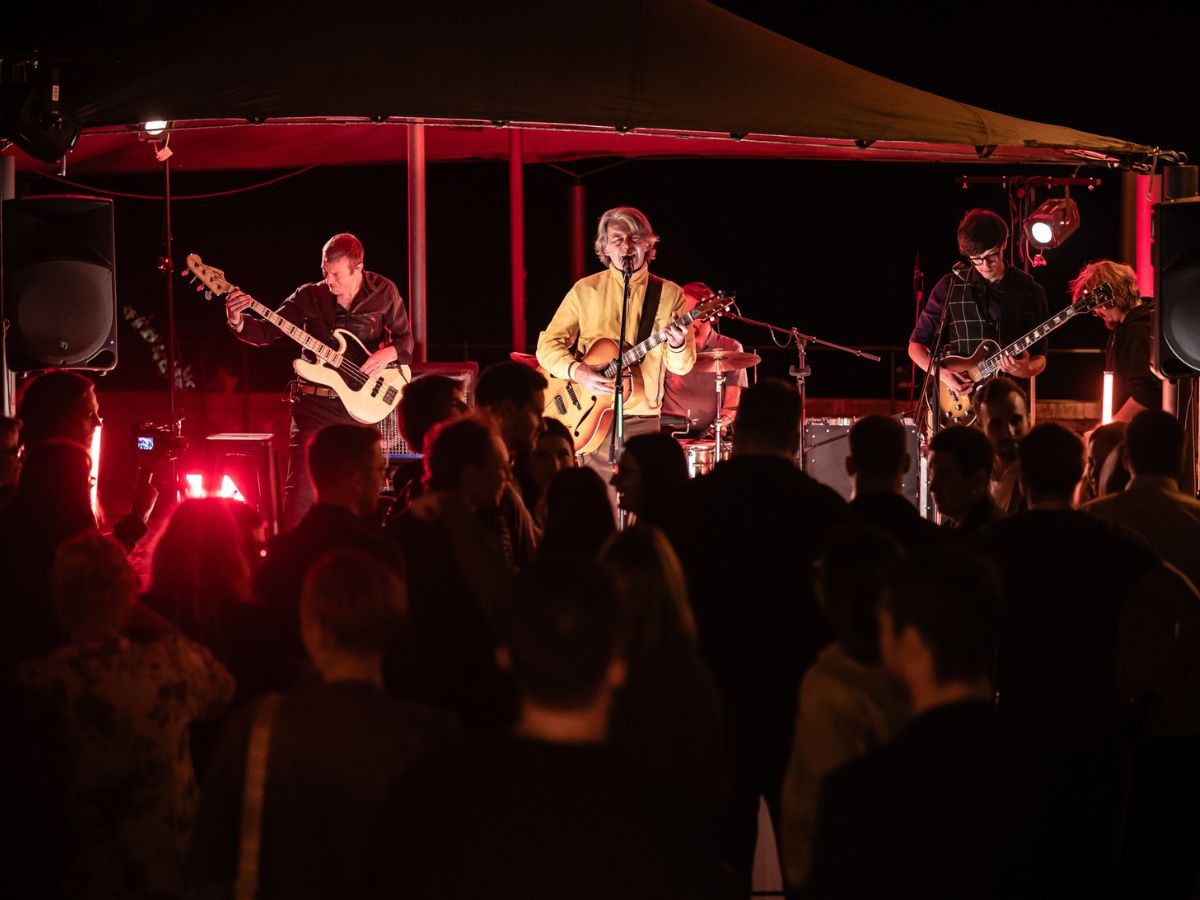
At the conclusion of the event, the International Cannabis Business Conference hosted one of its infamous after-parties, which was headlined by none other than Slovenia’s most famous and loved artist, Magnifico.

Magnifico International Cannabis Business Conference Slovenia 2023

Below are links to media coverage of the event:

Delo

SI21

Dnevnik

RTV Slovenia

24UR

STAznanost

Jutro na Planetu

Make sure to check out the upcoming event at the University of Ljubljana titled ‘Hemp and its Active Ingredients in Healthcare III’ on October 11th and 18th, 2023. The event is co-organized by the Research Nature Institute and is the third education seminary of a series involving doctors and nurses from the faculty at the University of Ljubljana.

To find out more, please visit: https://www.zf.uni-lj.si/si/arhiv-obvestil-cvu/1295-konoplja-in-njene-ucinkovine-v-zdravstvu-iii

The Future Of Cannabis Science And Technology

From the perspective of cannabis science and technology, we currently live in the best era in human history. It doesn’t take a historian to realize that the fields of cannabis science and technology have advanced by leaps and bounds in recent years, as there is evidence of it to be found all over the planet now.

A person could make a list of all of the cannabis science and technology innovations combined from several decades in the past, and it would likely be a shorter list than what has occurred in just the last few years alone.

The advancements in cannabis science and technology in recent years are the direct result of cannabis policy modernization efforts in various parts of the world. More countries than ever before are now permitting medical and/or adult-use cannabis commerce, research, and development.

Scientists and innovators of all backgrounds and areas of focus are taking advantage of newly afforded freedoms to conduct research and development in ways that were completely prohibited in years past, and the results of their work are benefitting humans in their own jurisdictions and beyond.

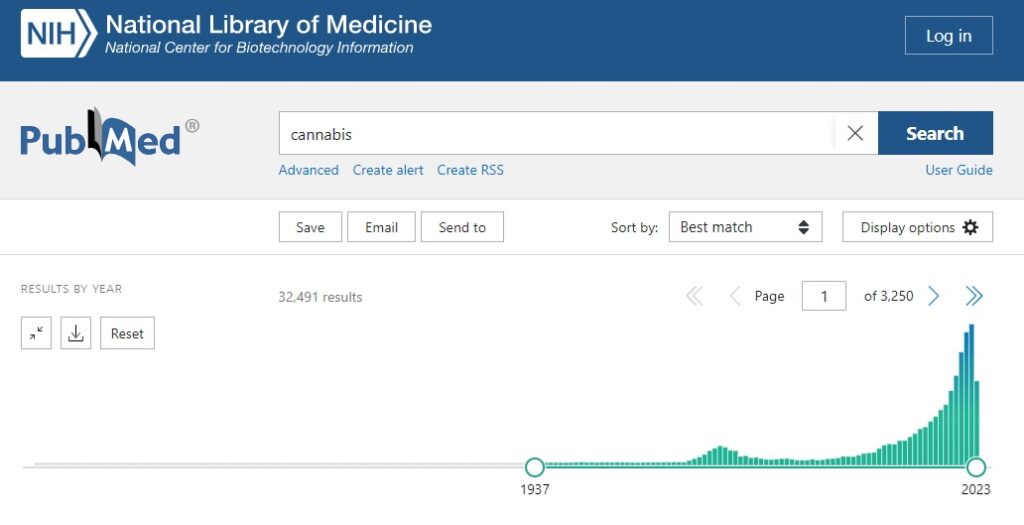
For contextual purposes, consider the graph below showing the number of peer-reviewed cannabis studies listed on PubMed.gov as of the posting of this article, organized by year:

PubMed cannabis study search

Keep in mind, while there are currently 32,491 peer-reviewed cannabis studies listed, which is a substantial amount, that is during a time period when studies were either outright prevented or the results were suppressed. Thankfully, cannabis research censorship is a thing of the past in a growing number of countries, as reflected in the graph above.

The truly inspiring thing about all of it is that we are just starting to scrape the surface. As more countries modernize their cannabis policies, cannabis science and technology innovations are going to hit warp speed and start piling up at an exponential rate. Part of that growth rate of innovation will be driven by profit given the fact that the emerging legal cannabis industry is worth so many tens of billions of dollars (and growing).

Cannabis is being cultivated in many markets now via sophisticated methods on a scale that is truly mind-boggling. It wasn’t that many years ago that a small personal hydroponic garden was considered cutting-edge technology in the cultivation world, and yet, today such a cultivation setup seems prehistoric by many measures.

These days nutrients, tailored feeding schedules, grow mediums, sungrown greenhouses, and supplemental lighting technology are arguably more advanced in the cannabis space than in any other agricultural area of focus, and unlike those other areas of focus, an army of people are working tirelessly around the clock around the globe to come up with the next great cannabis cultivation breakthrough.

Consumption research and technology is a particularly exciting sector of the emerging cannabis industry. While some countries are better at setting up sensible commerce regulations than others, one common thread that can be found in every legal country is that personal consumption is legal.

As global consumers gain confidence in partaking in their newfound freedoms post-legalization, they will continually seek out the newest and funnest ways to consume cannabis. That demand for new devices and gadgets will be met by inventors, and the financial rewards involved will be considerable. If you think that lazer bongs and handheld vaporizers are cool, wait until you see what gadgets people come up with in the near future, as well as what dispensary products hit the market.

Something that is likely not on a lot of cannabis enthusiasts’ radars right now, but certainly should be, are advancements in the area of non-consumption cannabis science and technology. By that, I mean innovating the way cannabis is used in products that are not consumed by humans, such as using hemp to make hempcrete and other building materials. One area that is particularly promising is incorporating cannabis into bioremediation efforts to clean up polluted ecosystems.

The future of cannabis science and technology is brighter than ever before, with no limit to the sector’s potential currently in sight. It can be difficult to keep up with everything, but that is why everyone should attend the upcoming International Cannabis Business Conference in Bled, Slovenia.

The event is dedicated entirely to discussing and demonstrating the world’s latest and greatest cannabis science and technology, and it’s the best place on planet Earth for scientists, innovators, entrepreneurs, investors, regulators, policymakers, and industry service providers to learn and network.

Slovenia is already home to a thriving research and development community, serving as a global hub for several other industries. With local advocates ramping up efforts to modernize Slovenia’s cannabis policies, the Balkan nation is setting up to serve as an international cannabis research and development hub as well. The International Cannabis Business Conference in Bled is the ideal backdrop for the world’s best cannabis minds to meet and discuss their latest endeavors.

The event is being held at the iconic Rikli Balance Hotel on September 7th and 8th. A limited number of tickets are still available. Get yours before prices go up on August 23rd!

Cannabis Opponents Spread Misinformation In Slovenia

Earlier this month cannabis opponents in Slovenia provided an open letter to European Commissioner for Home Affairs Ylva Johansson. The cannabis opponents also issued a press release, which is common for anti-cannabis propaganda efforts. The letter was sent by Preventivna Platforma, which describes itself as ‘a network of NGOs that work in the field of prevention.’ The entity’s professed overall goal is ‘quality in prevention’ and they tout in their publications that their efforts ‘receive financial assistance from Slovenia’s Ministry of Health.’

Preventivna Platforma’s letter was geared towards encouraging Commissioner Johansson to join them in opposing adult-use legalization in Germany. To someone that is not familiar with prohibitionist talking points, the letter may seem scary. However, as any long-time cannabis advocate will quickly point out, the letter is riddled with half-truths, lack of context, and in some cases, claims that are not supported by evidence and reality.

“As non-governmental organizations that work in the field of prevention, treatment, rehabilitation and recovery from drug use and addiction, we strongly oppose the legalization of cannabis. We are convinced that it will increase cannabis use and harm in Germany, and will also undermine the efforts of other EU member states in the field of preventing drug use and related harm.” the letter stated (translated from Slovenian to English.

As is often the case with anti-cannabis propaganda, the letter from Preventivna Platforma makes general claims that are easily refuted with peer-reviewed studies, logical reasoning, and government data from legal jurisdictions. For many years, opponents could make such claims and never be challenged because, after all, there were no legal jurisdictions to point to. That is obviously no longer the case.

We now know what happens when jurisdictions legalize cannabis for adult use; that the sky does not fall, and that the success of legalization in legal jurisdictions is likely why Preventivna Platforma relied so heavily on technical legal arguments in their letter rather than making a case that cannabis prohibition is better public policy than modernized regulation.

“Plans to legalize cannabis in Germany run counter to international drug control conventions, which have been ratified by all EU member states, among others. The International Narcotics Control Board (INCB) has repeatedly criticized similar policies in the United States, Canada and Uruguay.” Preventivna Platforma stated in its letter.

“By legalizing cannabis, Germany would also violate the sixth chapter of the Schengen Agreement, which stipulates that EU member states must respect the UN conventions on the control of illegal drugs and take the necessary measures to prevent illegal traffic in them. In addition, the German plans conflict with the EU Council Framework Decision 2004/757/RIF, which states that EU member states must ensure that the production, acquisition, sale, distribution, marketing, transportation and importation of illicit drugs, including cannabis, a felony.” the letter goes on to say.

Preventivna Platforma states in its letter that, “the German government wants to open up a legal, commercial market for cannabis, something that has not yet happened in any EU member state.” Obviously, there are two countries that have already legalized a cannabis commercial market at a national level, albeit not in Europe, and Preventivna Platforma omitting that fact seems to be purposeful. Cannabis opponents will always try to deflect and distract from legalization succeeding in other places.

A classic cannabis prohibitionist talking point that was incorporated by Preventivna Platforma in its letter ironically makes a strong argument for widespread legalization, which is the only true way to prevent diversion from regulated markets to unregulated markets.

“Undoubtedly, the legalization of cannabis in Germany would have a significant impact at least on neighboring countries. In a single market with open borders, it would be difficult to ensure that hemp grown legally in Germany does not divert to more profitable markets in other countries. Indeed, experience from the United States of America confirms that there is a high risk of diversion of cannabis from legal to illegal markets in other areas where its sale is not allowed.” the open letter states.

The letter goes on to cherry-pick certain information while ignoring other available information that either directly refutes their claims or puts it into proper context.

“After a decade, the legalization of cannabis in the countries where it has been legalized so far is still relatively in its infancy, but the first findings worry us. Data from the US show that cannabis consumption has increased, particularly more intensive use. Canadian data is scarcer, but official statistics show that both regular and frequent cannabis users have increased in the years since legalization.” Preventivna Platforma stated.

For starters, adults consuming more cannabis is not automatically a bad thing, and studies are showing that cannabis is often used as a substitute for more harmful substances, which is clearly a great thing. There seems to never be controls in the collection process of government usage data to calculate for long-time cannabis consumers finally admitting to government data collectors that they consume cannabis.

Government data collectors will record those people as being ‘new users’ when that is not actually the case. Speaking from firsthand experience, there was no way that I was ever going to tell the government that I consumed a product that was prohibited, and it’s logical to assume that I am far from alone in changing my answer after my jurisdiction’s (Oregon) cannabis policies were modernized. People need to keep that in mind when there are ‘rising consumption rates’ reported post-legalization.

Furthermore, and the propaganda letter tries to make it seem as if the two are connected, while adult use may be increasing in legal jurisdictions, the same is not true for kids and young people. It’s a ‘three card monte’ maneuver that prohibitions use because they assume that most people won’t unpack their talking points and that people will assume that if consumption rates are going up, then clearly that extends to young people. But as we know from data out of Canada, which is not ‘scarcer’ despite what prohibitionists claim, as well as data out of the United States, a spike in youth consumption post-legalization has yet to materialize.

Per government data from the Oregon Health Authority, not only was there no spike in youth consumption following the launch of legal adult-use sales and outright possession legalization in 2015; youth consumption rates actually went down from 2012 to 2018 in Oregon. A broader study conducted by researchers at Michigan State University, which involved consumption survey data from over 800,000 respondents in states where cannabis sales were permitted, also found no spike in youth cannabis usage rates.

A study in 2021 conducted by researchers in Canada found ‘no significant differences’ in cannabis consumption rates before and after cannabis legalization in Canada. As of May 2022, data out of Uruguay also demonstrated no sustained changes in youth consumption rates post-legalization.

Another popular prohibitionist talking point that does not provide nearly enough context is that ‘the unregulated cannabis market still exists in Canada and the United States.’

“One of the main goals of legalization was to eliminate the illegal cannabis market. However, there is still a thriving illegal market in all jurisdictions, supplying both the local market and markets in neighboring countries.” Preventivna Platforma stated.

Make no mistake about it, the unregulated cannabis market will always exist, just as the unregulated tobacco and alcohol markets will always exist, and the market for fake apparel and bootlegged entertainment media will always exist. Just because an unregulated market exists to some small degree does not in any way justify prohibition and the economic and social costs that go with it. The goal is to mitigate the unregulated market as much as reasonably possible for various reasons, not the least of which are improving public health outcomes via boosting regulated product availability, and taking money out of the hands of organized crime.

One talking point that is seemingly always included in anti-cannabis propaganda is the ‘terror on the roadways’ talking point.

“The increase in use is accompanied, among other things, by an increase in the number of traffic accidents and accompanying deaths related to cannabis, an increase in the number of visits to emergency centers and hospitalizations…” the letter stated.

However, a study from this month out of Canada found that, per the researchers, “[N]either the CCA [Canadian Cannabis Act] nor the NCS [number of cannabis stores per capita] is associated with concomitant changes in (traffic safety) outcomes. … During the first year of the CRUL’s [cannabis recreational use laws] implementation in Toronto, no significant changes in crashes, number of road victims and KSI [all road users killed or severely injured] were observed.”

The Preventivna Platforma letter goes on to indicate that there is still a lot that is “unknown” when it comes to legalization and that the “consequences” of cannabis hyperemesis syndrome (CHS), which is an extremely rare condition, were “not known until a few years ago.” That claim was made despite the condition being mentioned in a study nearly twenty years ago.

Also, a study from this month out of the legal state of Massachusetts in the U.S. found that CHS only represented .1% of all hospitalizations in 2021. It’s a serious thing that sufferers need to be mindful of, however, it’s far from being an epidemic and the most common treatment for CHS is a warm shower and refraining from consuming cannabis. Furthermore, it’s entirely possible that the current rates for CHS in legal jurisdictions were always what is being reported now, but that people were too afraid to seek out medical advice pre-legalization due to fear of prosecution.

One citation that stood out to me in the letter was applied to the claim that THC vaping is responsible for “an epidemic of serious lung disease.” However, upon further examination, the citation is from the United States Centers for Disease Control’s (CDC) tobacco overview page. The CDC points out on that page that it is not regulated products that are responsible for suspected lung issues, but rather, the unregulated market, and it is classified as an “outbreak” and not an “epidemic.”

“National and state data from patient reports and product sample testing show tetrahydrocannabinol (THC)-containing e-cigarette, or vaping, products, particularly from informal sources like friends, family, or in-person or online dealers, are linked to most EVALI cases and play a major role in the outbreak.” the CDC states on the page that is cited in the Slovenian anti-cannabis propaganda letter.

“Vitamin E acetate is strongly linked to the EVALI outbreak. Vitamin E acetate has been found in product samples tested by FDA and state laboratories and in patient lung fluid samples tested by CDC from geographically diverse states. Vitamin E acetate has not been found in the lung fluid of people that do not have EVALI.” the page goes on to say, which directly refutes the claim in the propaganda letter that THC from regulated products is the culprit for issues.

Again, the cannabis prohibitionists responsible for the recent letter make no genuine effort to argue that cannabis prohibition is an effective policy. Rather, they offer up half-truths, lack of context, and in some cases outright inaccurate information. Much like cannabis prohibitionists found elsewhere in the world, such as Kevin Sabet, they do anything they can to slow down the modernization of cannabis policies because, presumably, they know that the status quo is on their side, and they don’t have to move any needles.

All cannabis opponents must do is muck up the process and try to confuse as many people as possible, and they know it. They presumably believe that doing so will prevent meaningful reform from occurring, and that comes at the expense of having a rational conversation about cannabis policy in Slovenia, Europe, and anywhere else where these types of cannabis propaganda spreaders operate. Hopefully the citizens of Slovenia and European Commissioner for Home Affairs Ylva Johansson will see through the propaganda, and support Slovenia modernizing its cannabis policies for the sake of improved public health outcomes, as well as for the increased economic opportunities that sensible cannabis policies create.