
Tag: United Kingdom

Cannabis Provides Sustained Relief For Cancer-Related Pain In UK Study

Cancer is one of the worst things that can ever happen to a person. Anyone who has survived a battle with cancer or had a friend or family battle cancer knows that unfortunate fact firsthand.

According to estimates from the International Agency for Research on Cancer, “in 2022, there were an estimated 20 million new cancer cases and 9.7 million deaths” and “about 1 in 5 people develop cancer in their lifetime, approximately 1 in 9 men and 1 in 12 women die from the disease.”

One of the ongoing symptoms of cancer is chronic pain. A recent study conducted in the United Kingdom found that cannabis therapies may offer sustained relief for cancer-related pain. Below is more information about the study and its findings via a news release from NORML:

London, United Kingdom: Cancer patients report less pain and improved sleep following their use of cannabis-based medicinal products (CBMPs), according to observational data published in the Journal of Pain & Palliative Care Pharmacotherapy.

British researchers assessed the use of botanical cannabis or oil extracts in 168 cancer patients enrolled in the UK Medical Cannabis Registry. (British specialists are permitted to prescribe cannabis-based medicinal products to patients unresponsive to conventional medications.) Researchers assessed changes in patient-reported outcomes at one, three, and six months.

Patients’ use of cannabis products was “associated with improvements in all pain-specific PROMs [patient-reported outcome measures] at all follow-up periods,” investigators reported. Study participants also reported improved sleep and less anxiety. No significant adverse effects from cannabis were reported.

The study’s authors concluded: “Initiation of CBMPs is associated with improvements in pain-specific and general health-related quality of life outcomes in CP [cancer pain] patients over six months, with a relatively low incidence of mild-to-moderate AEs [adverse events] and no life-threatening AEs. … RCTs [randomized controlled trials] and longer observational case series are warranted, but this study can help inform their rollout, serving as a valuable pharmacovigilance tool for the use of CBMPs in CP, either as an alternative therapeutic option or as one part of multimodal treatment.”

Other observational studies assessing the use of cannabis products among patients enrolled in the UK Cannabis Registry have reported them to be effective for those diagnosed with anxietyfibromyalgiainflammatory bowel diseasepost-traumatic stressdepressionmigrainemultiple sclerosisosteoarthritis, and inflammatory arthritis, among other conditions.

Full text of the study, “UK Medical Cannabis Registry: An analysis of clinical outcomes of medicinal cannabis therapy for cancer pain,” appears in the Journal of Pain & Palliative Care Pharmacotherapy.

Public UK Cannabis Legalization Support Outpaces MP Support

According to a recent poll conducted by YouGov UK, the level of support for cannabis legalization among adults in the United Kingdom is greater than the level of support for adult-use legalization among lawmakers.

“The results show that 50% of MPs are opposed to cannabis legalisation when asked in a support/oppose format, compared to 39% who would be in support.” YouGov UK stated about their poll’s results. “The large majority of MPs do, however, believe that doctors should be allowed to prescribe cannabis for medical use (83%). Only 7% are opposed.”

“On the binary question of legalising cannabis, the British public are split, with 45% in favour and 42% opposed, making the public slightly more pro-legalisation than MPs.” YouGov UK also stated about the poll results.

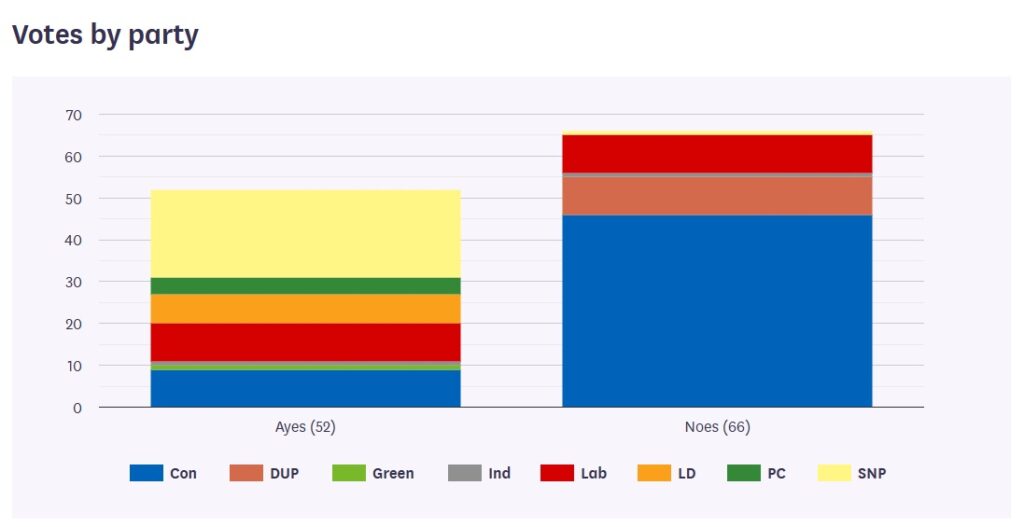
MPs in the United Kingdom voted on a cannabis legalization measure back in December 2018, with the lawmakers defeating the legalization proposal by a vote of 66 ‘no’ votes to 52 ‘yes’ votes. Below is a graphical breakdown of that vote by party via the UK Parliament’s website:

cannabis legalization vote uk 2018

Currently, cannabis is legal for adult use at a national level in Uruguay, Canada, Malta, Luxembourg, Germany, and South Africa. Additionally, recreational commerce pilot trails are operating in the Netherlands and Switzerland, and two dozen states in the U.S. have adopted adult-use cannabis legalization measures.

UK Study Finds Cannabis Helps Patients With Inflammatory Bowel Disease

International health researchers estimate that as many as 4.9 million people worldwide have been diagnosed with inflammatory bowel disease. The highest rates of inflammatory bowel disease are found in China and the United States.

Inflammatory bowel disease is a wider health term used to describe a group of health conditions that cause swelling and inflammation of the tissues in the sufferer’s digestive tract. Ulcerative colitis and Crohn’s disease are examples of inflammatory bowel disease.

A team of researchers in the United Kingdom recently conducted a study involving the use of medical cannabis by patients diagnosed with inflammatory bowel disease. Below is more information about the study and its results via a news release from NORML:

London, United Kingdom: Patients diagnosed with inflammatory bowel disease (IBD) report sustained improvements in their health-related quality of life following their use of cannabis, according to observational data published in the journal Expert Review of Gastroenterology & Hepatology.

British researchers assessed the use of cannabis-based medicinal products (CBMPs) consisting of either botanicals or oil extracts in 116 IBD patients enrolled in the UK Medical Cannabis Registry. (British specialists are permitted to prescribe cannabis-based medicinal products to patients unresponsive to conventional medications.) Researchers assessed changes in patient-reported outcomes at 18 months.

Consistent with prior research, investigators reported, “CBMP treatment was associated with improvement in IBD-specific outcomes in patients and general HRQoL [health-related quality of life] over 18-months.”

According to a literature review published in October in the scientific journal Cureus, “Many IBD patients use cannabis to control disease symptoms, and there is emerging evidence that it may play a role in disease management.”

Other observational studies assessing the use of cannabis products in patients enrolled in the UK Cannabis Registry have reported them to be effective for those suffering from anxietyfibromyalgiapost-traumatic stressdepressionmigrainemultiple sclerosisosteoarthritis, and inflammatory arthritis, among other conditions.

Full text of the study, “UK medical cannabis registry: An updated analysis of clinical outcomes of cannabis-based medicinal products for inflammatory bowel disease,” appears in Expert Review of Gastroenterology & HepatologyAdditional information on cannabis and inflammatory bowel disease is available from NORML’s publication, Clinical Applications for Cannabis & Cannabinoids.

UK Study Finds Cannabis Provides Quality Of Life Improvements In Pain Patients

A team of researchers affiliated with several different healthcare and academic institutions in the United Kingdom found that chronic pain patients reported sustained improvements in their symptoms after medical cannabis use. The researchers published their observational data  in the journal Pain Practice.

“Chronic pain (CP) affects 35.0%–51.3% of the UK population, with 67%–88% reporting sleep disturbances. Cannabis-based medicinal products (CBMPs) have shown therapeutic potential in managing CP. Evidence suggests poor sleep worsens pain perception; therefore, this study aimed to assess patient-reported outcome measures (PROMs) following CBMP treatment in CP patients with and without co-morbid sleep impairment.” the researchers stated about their study.

“The sleep impaired cohort showed improvements in all PROMs at each follow-up (p < 0.010). The sleep unimpaired cohort showed similar results (p < 0.050), except in SQS and ED-5Q-5L: self-care and anxiety/depression scores (p > 0.050). However, the sleep impaired cohort observed greater improvements in BPI pain severity (p < 0.050) and SQS (p < 0.001) than the sleep unimpaired cohort at all follow-ups.” they reported about the results of the study.

“Whilst these results show promise for the effects of CBMPs on CP, they must be examined within the limitations of the study design. These findings provide further evidence to support the design of subsequent randomized controlled trials to verify causality between CBMPs and pain outcomes.” the authors concluded.

Starting in 2018, health specialists in Britain are permitted to prescribe cannabis-based medicinal products to suffering patients unresponsive to conventional medications.

A separate study conducted earlier this year in the United Kingdom found that older patients reported experiencing better general health and well-being following their use of medical cannabis products.

“There were consistent improvements across measures of general health and well-being after three months of treatment. … These findings accord with a growing body of observational and real-world evidence from jurisdictions that have legalized medicinal cannabis that cannabis is effective for improving sleep, mood and quality of health across multiple primary conditions.” the authors of that particular study reported.

U.K. Cannabidiol Market Projected To Reach Over $5 Billion In Value By 2032

According to a market analysis by Vantage Market Research, the value of the United Kingdom’s emerging cannabidiol (CBD) industry is projected to reach over $5 billion by 2032. The analysis valued the U.K.’s CBD industry at $1.355 billion in 2023.

A separate analysis published in September 2024 by CLEAR found that legalizing all forms of cannabis for adult use in the United Kingdom and taxing and regulating sales could generate as much as £9.5 billion per year. However, non-CBD cannabis products are only legal in the U.K. in limited medical circumstances.

“One of the top trends in the U.K. cannabidiol market is the increasing popularity of CBD-infused wellness products, such as skincare and beauty items, driven by consumer demand for holistic health solutions.” researchers at Vantage Market Research previously stated.

Below are other findings from Vantage:

• The U.K. CBD market is rapidly expanding, driven by consumer demand for natural health solutions
• CBD-infused wellness products and beverages are gaining significant popularity
• Transparency and quality assurance are becoming crucial for consumer trust
• There is an increasing integration of CBD into traditional pharmaceuticals
• The therapeutic potential of CBD continues to drive market interest and research investments

Cannabis remains the most commonly used controlled substance in the United Kingdom, with 7.4% of adults between 16 and 59 years old in the UK reporting having used cannabis within the past year according to a 2022 report by the Office for National Statistics.

The National Centre for Social Research recently conducted a poll of United Kingdom citizens in which members of UK society were asked about their opinions regarding cannabis policy modernization efforts in the UK. The poll found a strong majority of support for legalizing cannabis sales in nearly every age group.

According to a separate analysis by The Dales Report, Germany and the United Kingdom are projected to control an estimated 77% of Europe’s emerging legal medical cannabis market by 2028.

“This growth is driven by both expanding legal frameworks and an increasing acknowledgment of the therapeutic benefits of cannabis. As both nations continue to refine their policies and commercial strategies, the focus remains on balancing patient needs with scientific and public health priorities.” The Dales Report stated about both national markets.

UK Study Finds Cannabis Provides Sustained Improvements In PTSD Patients

Global researchers estimate that nearly 4% of the planet’s total population suffers from some form of post-traumatic stress disorder (PTSD). It is one of the most common mental health conditions around the world.

Common treatments for PTSD include different types of trauma-focused psychotherapy as well as pharmaceutical medications. Many of the pharmaceutical medications used to treat PTSD can yield undesirable side effects.

A recent study conducted in the United Kingdom examined medical cannabis therapies and PTSD. Below is more information about the study and its results via a news release from NORML:

London, United Kingdom: Patients with post-traumatic stress report symptom improvements following their use of cannabis, according to observational data published in the journal Medical Cannabis and Cannabinoids.

British researchers assessed the use of THC-dominant cannabis flower in 58 patients with post-traumatic stress. (Since 2018, British specialists have been permitted to prescribe either cannabis or cannabis-based medicinal products to patients unresponsive to conventional medications.) Researchers assessed changes in patient-reported outcomes measures at three months and at six months.

Participants, on average, attained a 16.8-point reduction in their symptom severity scores following six months of cannabis treatment. Patients also reported significant enhancements in general health, mood, and sleep quality.

The study’s authors concluded: “Results from this observational study suggest an association between treatment with THC-predominant cannabis flowers and symptomatic improvement for up to six months in a cohort of UK civilians diagnosed with PTSD. The treatment was safe and well tolerated and characterized by marked effects on quality of sleep, general mood, and severity of PTSD-associated symptoms. … However, further research is needed to evaluate the long-term safety and outcomes of controlled inhalation of CBMP in patients naïve to cannabis.”

Other observational studies assessing the use of cannabis products in patients enrolled in the UK Medical Cannabis Registry have reported them to be effective for those suffering from chronic painanxietyfibromyalgiadepressionmigrainemultiple sclerosisosteoarthritisinflammatory arthritis, and inflammatory bowel disease.

Full text of the study, “Controlled inhalation of tetrahydrocannabinol-predominant cannabis flowers mitigates severity of post-traumatic stress disorder symptoms and improves quality of sleep and general mood in cannabis-experienced UK civilians: A real-world, observational study,” appears in Medical Cannabis and CannabinoidsAdditional information on cannabis and post-traumatic stress is available from NORML’s publication, Clinical Applications for Cannabis & Cannabinoids.

UK Government Announces Reforms To Hemp License Regulations

Government officials in the United Kingdom announced this week that regulators are changing hemp licensing regulations in the country. Starting in 2025, hemp license holders in the UK will no longer have to identify a specific area on a farm property where they intend to cultivate hemp. Rather, the farmers can produce hemp anywhere on the licensed farm.

Furthermore, starting in 2026, the maximum period for a hemp production license will be increased from the current 3 years to 6 years. Hemp producers in the UK will also be able to defer the start date of cultivation by up to one year.

“These reforms will bring an important boost to this industry and cut down the unnecessary burdens that have been placed on businesses.” Dame Diana Johnson, Minister for Crime and Policing, said. “This government will always listen and engage with industry experts, and we want to make it easier for licence holders to capitalise on the economic potential of legally growing hemp.”

“These improvements to the licensing regime for industrial hemp are a positive step for farmers.” Daniel Zeichner, Minister for Food Security and Rural Affairs, said. “Recognising that industrial hemp is a field-grown agricultural crop, these reforms will simplify the license application process and provide greater flexibility within the crop rotation, enabling farmers to fully realise the economic and environmental benefits of the crop.”

In other recent hemp industry news in the United Kingdom, a government-appointed advisory panel, the Advisory Council on the Misuse of Drugs (ACMD), recommended that the UK increase the amount of tetrahydrocannabinol (THC) allowed in hemp from 0.2% to 0.3%.

“The ACMD is supportive of the proposed change to increase the maximum THC content of industrial hemp grown outdoors for seed production or in order to use the non-controlled parts of the plant to produce fibre for use in the construction and textile industries from 0.2% to 0.3%, as the potential benefits outweigh an increased risk of harms.” the panel stated.

“The ACMD recommends the Home Office to conduct an assessment of the impact of the legislative change after 2 years. The ACMD foresees no issues with applying the lower fee of £580 to a raised level of THC not exceeding 0.3%, to align with other international examples.” the panel also stated.

According to the United Kingdom government, the number of hemp licenses in the UK increased from six licenses in 2013 to 136 in 2023. A first-time hemp license in the United Kingdom costs £580. Hemp producers who apply for subsequent licenses pay £326, or less than £109 per year.

Study Finds Cannabis Provides Sustained Benefits For Fibromyalgia Patients

Fibromyalgia is a serious health condition involving widespread musculoskeletal pain accompanied by fatigue, sleep, memory, and mood issues. Ongoing research has determined that fibromyalgia amplifies painful sensations by affecting the way the suffering patient’s brain and spinal cord process painful and nonpainful signals.

According to a peer-reviewed study from January 2023, fibromyalgia “affects up to 5.0% of the world population” and “has a high female predominance, between 80 and 96%.” According to a separate study recently conducted in the United Kingdom, cannabis may provide sustained benefits for suffering fibromyalgia patients.

A team of British researchers affiliated with various academic and private entities assessed the use of cannabis-based medicinal products (CBMP) consisting of cannabis flower or oil extracts in 148 patients enrolled in the UK Medical Cannabis Registry. The researchers assessed changes in patient-reported outcomes at one, three, six, and twelve-month timelines.

The findings from the study were published in the Journal of Pain & Palliative Care Pharmacotherapy.
“Improvements in the generalized anxiety disorder-7 questionnaire, single-item sleep quality scale, fibromyalgia symptom severity score and EQ-5D-5L Index values [a descriptive scale assessing mobility, self-care, usual activities, pain/discomfort and anxiety/depression] were observed at each follow up period compared to baseline,” the researchers reported.

“Positive associations between initiation of CBMP therapy and decreased fibromyalgia severity were observed at all time points.…These findings are complemented by the wider literature.” the study’s authors concluded.

“Other observational studies assessing the use of cannabis products in patients enrolled in the UK Cannabis Registry have reported them to be effective for those suffering from chronic painanxietypost-traumatic stressdepressionmigrainemultiple sclerosisosteoarthritisinflammatory arthritis, and inflammatory bowel disease.” NORML stated in a recent news release, adding additional context and resources about the topic.

UK Researchers Find CBD Mitigates Symptoms In High Risk Psychosis Patients

For many years, cannabis-based research was either outright prohibited in many parts of the world, or at the very least greatly hindered. Meanwhile, a false narrative was pushed by mainstream media and cannabis opponents that cannabis was ‘bad for the human brain in every instance, no exceptions.’

Of course, the truth is that as researchers continue to explore and unlock the wellness benefits of cannabinoids, we are learning that the cannabis plant can be effective at providing relief to suffering patients for a wide array of conditions, including mental health conditions.

A team of researchers recently conducted a clinical trial in the United Kingdom that explored the relationship between cannabidiol (CBD) and symptoms in patients with a high risk of psychosis. Below is more information about it via a news release from NORML:

London, United Kingdom: The daily use of cannabidiol reduces symptom severity in patients at clinically high risk of suffering from psychosis, according to placebo-controlled clinical trial data published in the journal World Psychiatry.

Thirty-one patients completed the study. Subjects received 600 mg of CBD or a placebo daily for three weeks. None of the participants received any prescription medications during the trial. Patients were assessed at baseline, at seven days, and at 21 days.

Compared to the placebo group, those who received CBD had lower total CAARMS (Comprehensive Assessment of At‐Risk Mental States) scores following treatment. CBD dosing was associated with a “reduction in the severity of CHR [clinically high risk] symptoms and the distress associated with psychotic experiences,” investigators reported.

The study’s authors concluded: “Short‐term treatment with CBD can ameliorate the symptoms of CHR state for psychosis and is well tolerated. These results highlight the potential of CBD as a novel treatment for psychosis, and the need for large‐scale efficacy studies to further evaluate its clinical utility.”

Separate studies have demonstrated that the use of CBD reduces psychotic symptoms and the use of antipsychotic medications in patients with schizophrenia.

Full text of the study, “Effects of cannabidiol on symptoms in people at clinical; high risk of psychosis,” appears in World Psychiatry.